 Preview
 Send
Send Share
Share
 Details

 Download
 Similars
 X-Ray
X-Ray Diaporama
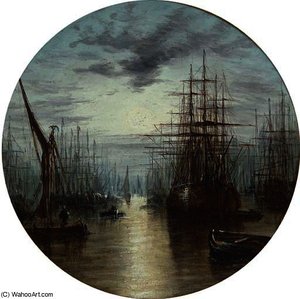
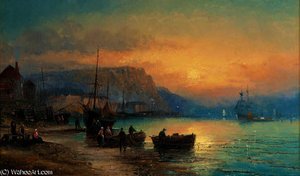
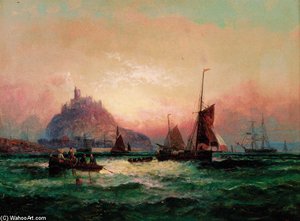
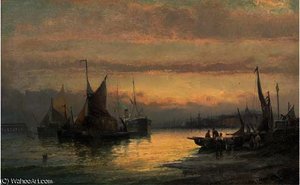
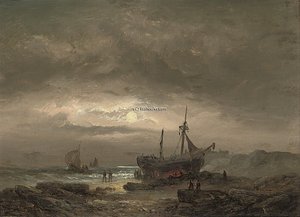
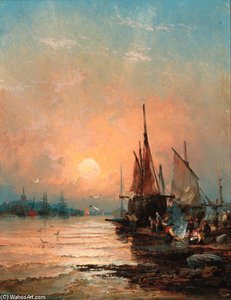
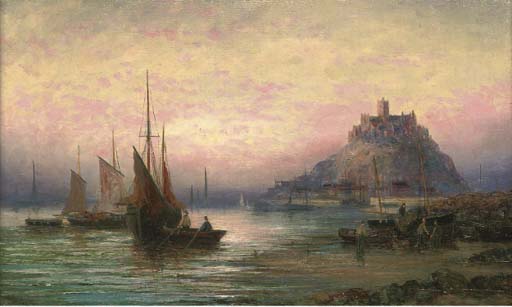
Unloading The Day's Catch Before St. Michael's Mount

 Read More
Hand Made Oil Reproduction
Hand-painted oil on canvas in your size and frame, made to order by our artists. ( Buy Print Buy Image)




































Pick from our preset sizes that match the artwork's original proportions.

You may enter your own dimensions to fit a specific frame or space. If your selected size does not match the original image's proportions, we will either crop the artwork or extend the painting with additional hand-painted elements. A digital mockup will be sent for your approval before production begins.
Please note that the on-screen preview does not reflect the actual cropping or extension. Only the mockup will accurately show the final composition.
While custom sizes are available, we recommend selecting a dimension from the predefined list to preserve the original proportions.
After order, ArtsDot.com team will email client for instructions and provide a mockup preview
Worldwide Delivery () in 3/4 weeks instead of standard 5 weeks. (19 August). No compromise on quality.

Free Worldwide Express Shipping

High-Quality Linen Canvas

Full Shipping Insurance

Customs Tax Refund Guarantee

True Color Matching Guarantee

60-Day Return Policy (Defects Only)

100% Money-Back Guarantee

Bulk Discount Offer
 Glass option is only available in size under 110 CM

Unloading The Day's Catch Before St. Michael's Mount
Reproduction Medium
Reproduction Size
-


Total Price
$ 263
Related Artworks

Artist Biography
The Master of the Coastal Tide: The Life and Legacy of William A. Thornley
In the golden age of British marine art, few artists captured the salt-sprayed romance of the shoreline with as much precision and soul as William Anslow Thornley. Known to many by his signature, Thornley, this late Victorian painter possessed a rare ability to translate the restless energy of the sea into static, luminous canvases. Born in 1847, his early life was rooted in the industrious landscapes of England, yet his heart belonged to the horizon. While historical records suggest a birth connection to Preston, Lancashire, and a family lineage tied to Worcester, it was the rugged coasts of Cornwall, Devon, and Northumberland that provided the true canvas for his burgeoning genius. His journey was one of profound observation, moving from the structured lessons of Marlborough College to the prestigious halls of the Royal Academy, where he studied under the legendary Frederence Leighton.
Under Leighton’s tutelage, Thornley developed an eye for atmospheric perspective and a reverence for idealized beauty that would forever color his maritime scenes. He did not merely paint boats; he painted the very breath of the ocean. His technique was a sophisticated dance of light and shadow, utilizing delicate glazing to achieve a translucent quality in the waves and a shimmering depth in the coastal skies. A master of the palette, Thornley’s work is defined by an exquisite command of blues, emerald greens, and the pearlescent whites of breaking surf. He possessed the technical prowess to render the heavy timber of fishing vessels and the delicate rigging of sails with equal realism, yet he never lost sight of the sublime—that overwhelming sense of nature's grandeur that characterizes the Romantic tradition.
A Symphony of Sea and Shore
Thornley’s artistic evolution was deeply influenced by the giants of British landscape painting. The dramatic, elemental power of J.M.W. Turner and the grounded, observational sincerity of John Constable served as his North Star, guiding him toward a style that balanced emotional intensity with topographical accuracy. Interestingly, his vision was also expanded by the subtle influence of Japanese Ukiyo-e prints, which introduced him to the beauty of asymmetrical compositions and the power of negative space. This fusion allowed him to create works like "Busy Shipping Lanes off a Port"* or "Congestion at the Harbour Mouth, Whitby," where the arrangement of masts and hulls creates a rhythmic, almost musical movement across the frame.
His oeuvre, which spans over three hundred significant paintings, serves as a visual archive of the British maritime experience during a period of transition. Through his eyes, we witness:
- The Vitality of Fishing Harbors: Meticulous depictions of the daily toil and communal life found in coastal villages.
- Atmospheric Transitions: The ability to capture the specific, fleeting light of dusk or the heavy, salt-laden air of a brewing storm.
- Maritime Realism: A profound respect for the textures of wood, rope, and water that brings historical nautical scenes to life.
Ultimately, the significance of William A. Thornley lies in his ability to bridge the gap between mere documentation and high art. He did not just record the locations of Dorset or Cornwall; he captured their spirit. His membership in the Royal Academy was a testament to a career defined by technical excellence and an unwavering dedication to the sea. Today, his works remain cherished windows into a bygone era, reminding us of a time when the rhythm of life was dictated by the tides and the horizon held infinite mystery.
william a. thornley (thornbery)
1857 - 1935 , United Kingdom
Quick Facts
- Artistic Movement Or Style: Marine Painting
- Artists Or Movements Influenced By This Artist: ['Impressionism']
- Artists Who Influenced This Artist:
- John Constable
- George Frederic Watts
- Date Of Birth: 1857
- Full Name: William Anslow Thornley
- Nationality: British
- Notable Artworks:
- The Fishing Boats at Cromer
- The Harbour at Rye
- Place Of Birth: United Kingdom
Related Articles

Romantic Landscapes: 10 Masterpieces for Your Home | ArtsDot
Journey through 10 Romantic landscape masterpieces by Friedrich, Turner & Cole. Explore emotional art, sublime nature scenes & iconic 19th-century paintings. Find museum-quality reproductions for your home at ArtsDot.com – discover the full collection online!

Beyond the Horizon: 10 Landscape Masterpieces for Your Home Decor
Journey through 10 breathtaking landscape paintings by Monet, Van Gogh & more! Explore iconic artworks, artistic techniques & find inspiration for your home decor. Museum-quality reproductions at ArtsDot.com. Discover all masterpieces on ArtsDot.com

Evocations of Place: A Historical Journey Through Landscape Art
Explore the rich history of landscape art with ArtsDot. Discover renowned artists, movements like Impressionism & Romanticism, and expert guidance for collecting timeless pieces. Find your perfect serene escape today!

John Constable's Masterpieces: Explore 25 Iconic Landscapes for Your Home
Journey through John Constable's 25 most celebrated landscapes. Explore Romanticism, Dedham Vale & his masterful use of light in iconic paintings like 'Hay Wain'. Find museum-quality art reproductions and elevate your home decor on ArtsDot.com.
The Sublime and the Picturesque: Exploring Emotion & Nature in Romantic Landscape Painting
Explore the emotional power of Romantic landscape painting! Discover the sublime & picturesque traditions, key artists like Friedrich & Cole, and find your perfect artwork at ArtsDot.