 Preview
 Send
Send Share
Share
 Details

 Download
 Similars
 X-Ray
X-Ray Diaporama
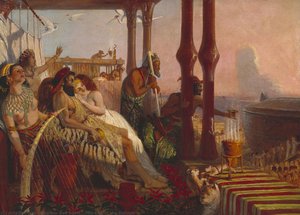
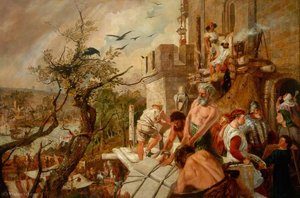
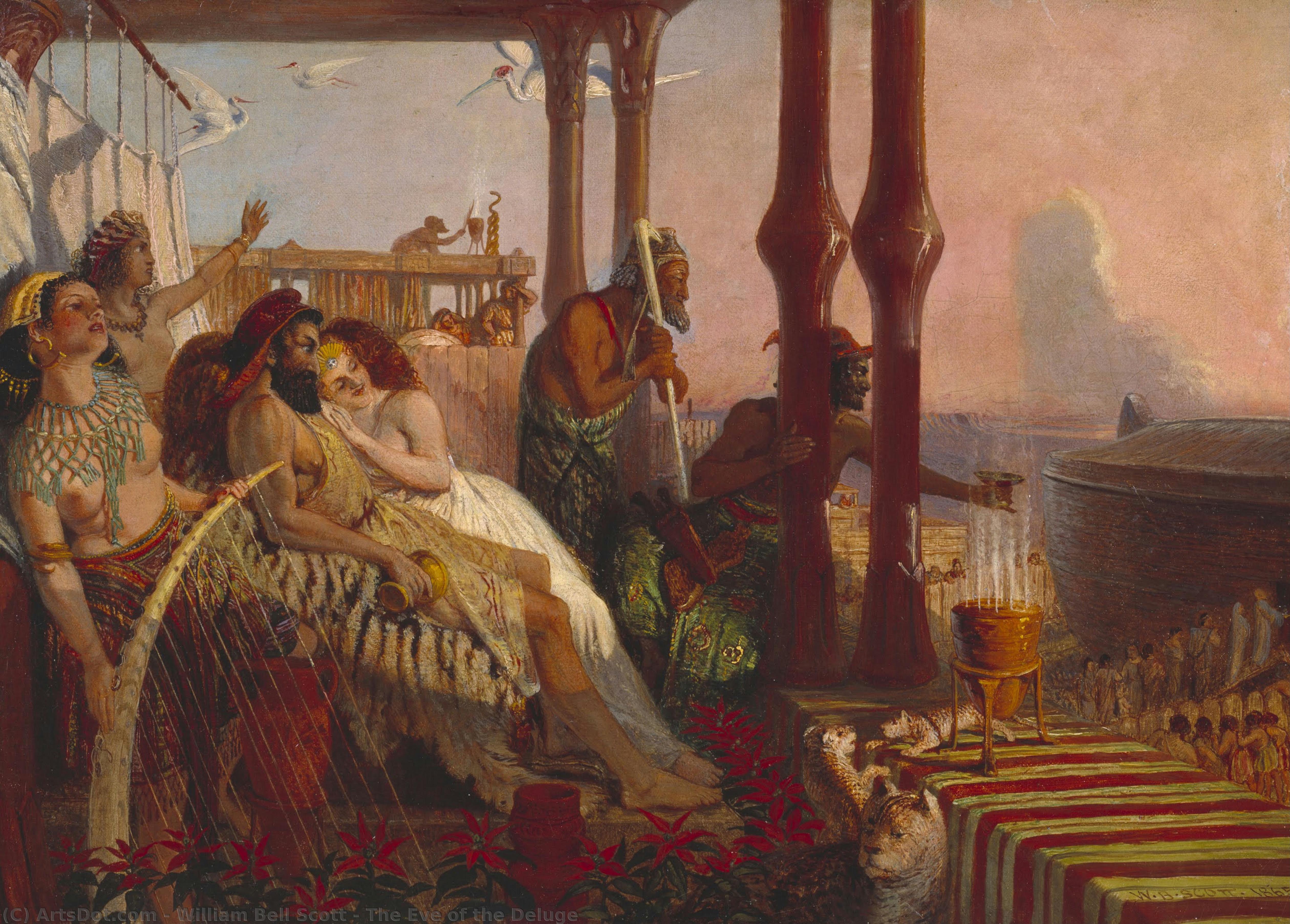
The Eve of the Deluge
 Oil On Canvas
- WallArt
- Pre-Raphaelite Brotherhood
 1865
1865- 19th Century
 44.0 x 32.0 cm
 Tate Britain
 Read More
Hand Made Oil Reproduction
Hand-painted oil on canvas in your size and frame, made to order by our artists. ( Buy Print Buy Image)




P118B $10

P118H $10

P118W $10

P438Z $10

P508JH $12

P508YH $12

P805H $10

P805Z $10

P919BZ $10

P919G $10

P919XJ $10

P959ZH $10

P968JZ $12

W106C $8

W218G $10

W218JH $8

W218Y $10

W307PJ $10

W316G $10

W316PJ $8

W316Y $10

W398PJ $8

W4111J $10

W500HY $15

W500JH $15

W692G $12

W849H $8

W940BG $15

W953PJ $8




Pick from our preset sizes that match the artwork's original proportions.

You may enter your own dimensions to fit a specific frame or space. If your selected size does not match the original image's proportions, we will either crop the artwork or extend the painting with additional hand-painted elements. A digital mockup will be sent for your approval before production begins.
Please note that the on-screen preview does not reflect the actual cropping or extension. Only the mockup will accurately show the final composition.
While custom sizes are available, we recommend selecting a dimension from the predefined list to preserve the original proportions.
After order, ArtsDot.com team will email client for instructions and provide a mockup preview
Worldwide Delivery () in 3/4 weeks instead of standard 5 weeks. (16 August). No compromise on quality.

Free Worldwide Express Shipping

High-Quality Linen Canvas

Full Shipping Insurance

Customs Tax Refund Guarantee

True Color Matching Guarantee

60-Day Return Policy (Defects Only)

100% Money-Back Guarantee

Bulk Discount Offer
 Glass option is only available in size under 110 CM

The Eve of the Deluge
Reproduction Medium
Reproduction Size
-


Total Price
$ 263
Artwork Description
A Moment Suspended Between Worlds
William Bell Scott’s The Eve of the Deluge is not merely a depiction of biblical narrative; it is a profound meditation on choice, consequence, and the inescapable march of divine judgment. The canvas captures that exquisite, agonizing breath held just before catastrophe—the moment when humanity stands at a precipice, forced to confront the weight of their own actions against the backdrop of impending cosmic change. Scott masterfully juxtaposes two distinct realities within this single frame: the doomed opulence of earthly pleasure and the solemn, necessary passage toward salvation.
The Contrast of Civilization and Warning
Observe the composition’s dramatic tension. On one side, we find a tableau vivant of decadent revelry—the "debauched eastern prince and his court." Their costumes suggest exoticism and worldly excess, their interactions radiating a careless joy that seems utterly oblivious to the gathering storm. This group embodies the seductive allure of life lived purely for the moment. Contrasting this vibrant, almost reckless gaiety are Noah and his family. They move with a palpable sense of purpose, their attention drawn upward, toward the ominous cloud dominating the sky. Scott uses light and shadow not just as elements of painting, but as moral signifiers; the bright, warm tones bathing the revelers contrast sharply with the cooler, more somber palette surrounding the ark’s entrance.
Technique and Emotional Resonance
Executed in oil on canvas, this piece showcases Scott's skilled handling of narrative drama. While his connection to the Pre-Raphaelite circle suggests an affinity for rich detail and symbolic depth, the overall effect here is one of sweeping Romantic grandeur. The composition draws the eye across the water—the dividing line between the known world and the unknown passage. For collectors and designers alike, this painting offers unparalleled emotional depth; it speaks to universal themes of hubris versus piety, making it a powerful focal point for any grand hall or library.
Historical Context and Enduring Symbolism
Painted in 1865, the work reflects the Victorian era’s deep engagement with moral allegory and historical narrative. Scott channels that period's fascination with epic storytelling. The symbolism is rich: the ark itself represents preservation and covenant; the cloud signifies divine decree. Owning a reproduction of The Eve of the Deluge allows one to connect with this enduring human struggle—the eternal tension between fleeting earthly pleasures and the profound, guiding truths that await us beyond the visible horizon.
Related Artworks
Artist Biography
A Scottish Visionary: The Life and Art of William Bell Scott
William Bell Scott, born in Edinburgh in 1811, was a figure deeply embedded within the artistic currents of 19th-century Britain. More than simply a painter, he was a poet, an educator, and a keen observer of his time—a multifaceted artist whose work reflected both the romantic spirit of his upbringing and the burgeoning realities of the Industrial Revolution. Coming from an artistic family – his father, Robert Scott, was an engraver, and his brother David also pursued painting – young William’s path seemed predetermined, yet he forged a unique trajectory that blended historical narrative with contemporary life. His early training in Edinburgh provided a solid foundation, but it was his move to London in 1837 that truly ignited his artistic ambitions, coinciding with his marriage to Letitia Margery Norquoy. This relocation marked the beginning of a period of increasing recognition and engagement within the vibrant art scene of the capital.Newcastle, Industry, and the Pre-Raphaelite Circle
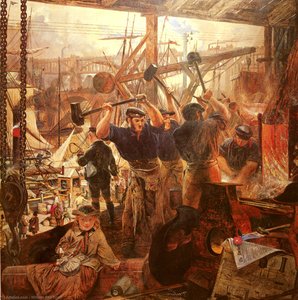
A pivotal moment in Scott’s career arrived in 1843 with his appointment as principal of the Government School of Art in Newcastle upon Tyne. This wasn't merely an administrative role; it was a twenty-year immersion into the heart of industrial England. Unlike many artists who shied away from depicting the changing landscape, Scott embraced it. He became one of the first British artists to systematically portray the processes and impact of the Industrial Revolution, recognizing its significance as a defining feature of his era. This fascination with industry wasn’t detached observation; it was interwoven with his personal life. His relationship with Alice Boyd, a student at the Newcastle School and sister to the Laird of Penkill Castle, began in 1860 with a visit to Penkill, blossoming into a long-lasting connection that profoundly influenced both his artistic output and his emotional landscape. Newcastle also brought him closer to the Pre-Raphaelite Brotherhood, particularly Dante Gabriel Rossetti, who famously painted Maria Leathart’s portrait at Scott's home, cementing their friendship and mutual influence.Murals, Ballads, and Historical Visions
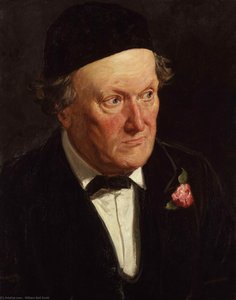
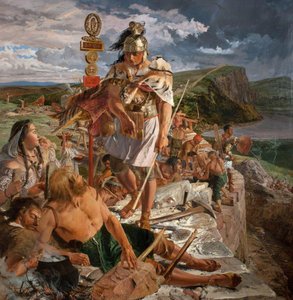
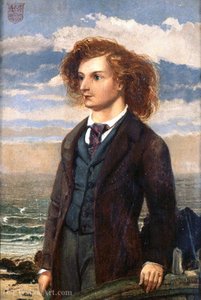
Scott’s most celebrated works are undoubtedly the magnificent murals he created for Wallington Hall in Northumberland, now under the care of the National Trust. These expansive paintings aren’t simply historical illustrations; they are immersive narratives brought to life with dramatic intensity. Eight large compositions depict scenes from border history, populated by figures rendered at life-size, creating a powerful sense of presence and immediacy. Complementing these grand historical visions are eighteen smaller panels illustrating the ballad of Chevy Chase within the hall's arches—a testament to Scott’s skill in blending epic storytelling with intricate detail. A similar historical cycle was undertaken for Penkill Castle in Scotland, where he illustrated James I’s allegorical poem *The Kingis Quair*. These projects demonstrate his ability to translate literary themes into visual form, imbuing them with a romantic sensibility and a meticulous attention to historical accuracy. While not primarily known as a portraitist, Scott's striking portrayal of Algernon Charles Swinburne remains an iconic image, capturing the poet’s complex character with remarkable insight.Legacy and Literary Pursuits
After 1870, Scott divided his time between London and Penkill, deepening his friendship with Rossetti and gaining recognition as both an artist and a man of letters. He wasn't without artistic disagreements; he famously clashed with John Ruskin over aesthetic principles. However, this intellectual friction only served to sharpen his own artistic vision. Beyond painting, Scott was a prolific writer, publishing volumes of poetry – notably *Poems* in 1875, beautifully illustrated with his own etchings – and engaging in art and literary criticism. His poetic voice drew inspiration from the Romantic poets William Blake and Percy Bysshe Shelley, while also bearing the unmistakable influence of Rossetti’s lyrical style. In his later years, Scott dedicated himself to writing his *Autobiographical Notes*, published posthumously in 1892 with a memoir by Professor Minto. These reminiscences offer an invaluable glimpse into the world of Pre-Raphaelite artists and provide a candid account of his own artistic journey. William Bell Scott’s historical significance lies not only in his pioneering depictions of the Industrial Revolution but also in his role as a bridge between Romanticism, Pre-Raphaelitism, and the evolving artistic landscape of Victorian Britain. He remains a compelling figure—a Scottish visionary who captured the spirit of his age with both poetic grace and unflinching realism.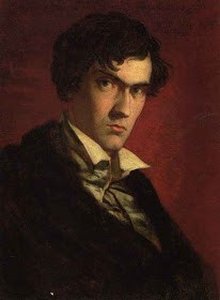
William Bell Scott
1811 - 1890 , United Kingdom
Quick Facts
- Artistic Movement Or Style: Pre-Raphaelite
- Artists Or Movements Influenced By This Artist: ['Pre-Raphaelites']
- Artists Who Influenced This Artist:
- Blake
- Shelley
- Rossetti
- Date Of Birth: 1811
- Date Of Death: 1890
- Full Name: William Bell Scott
- Nationality: Scottish
- Notable Artworks:
- King Egfrid
- Wallington Hall Murals
- Penkill Castle Cycle
- Swinburne Portrait
- Place Of Birth: Edinburgh, UK
Related Articles
Dante Gabriel Rossetti's 25 Masterpieces: A Journey Through Victorian Art & Symbolism | ArtsDot
Explore 25 iconic artworks by Dante Gabriel Rossetti, a leading Pre-Raphaelite artist. Discover the stories behind masterpieces like 'Proserpine' & 'Beata Beatrix'. Find museum-quality art reproductions and elevate your home decor with ArtsDot.com.

The Pre-Raphaelite Brotherhood: Rebellion, Romance & Medieval Revival
Explore the captivating world of the Pre-Raphaelite Brotherhood! Discover their rebellious spirit, iconic masterpieces & lasting influence on art history. Learn about Rossetti, Millais & more.

Giclée Prints: Archival Quality & Aesthetic Nuances for the Discerning Collector
Explore the world of giclée prints with ArtsDot. Learn about archival quality, aesthetic nuances & investment potential. Expert guidance for discerning art collectors seeking museum-quality reproductions and lasting value.
John William Waterhouse: Pre-Raphaelite Mythmaker & Poetic Depictions of Female Identity
Explore the captivating world of John William Waterhouse, a master of Pre-Raphaelite painting. Discover his iconic depictions of mythology and female identity in this expert guide.
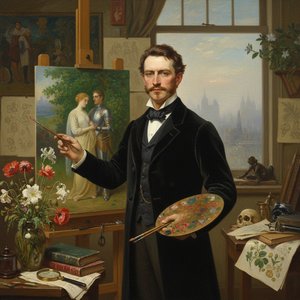
Sir John Everett Millais: Pre-Raphaelite Rebellion & Victorian Narrative Detail
Explore the revolutionary art of Sir John Everett Millais & the Pre-Raphaelite Brotherhood. Discover their radical realism, symbolic narratives, and lasting impact on Victorian aesthetics. A deep dive into 19th-century masterpieces.