 Preview
 Send
Send Share
Share
 Details

 Download
 Similars
 X-Ray
X-Ray Diaporama
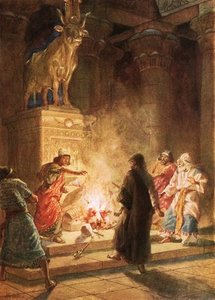
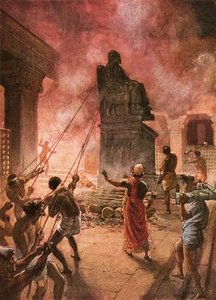
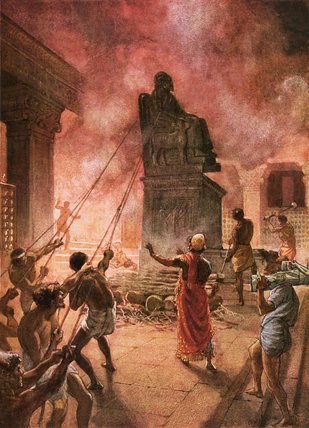
King Josiah Cleansing The Land Of Idols

 Read More
Hand Made Oil Reproduction
Hand-painted oil on canvas in your size and frame, made to order by our artists. ( Buy Print Buy Image)




P118B $10

P118H $10

P118W $10

P438Z $10

P508JH $12

P508YH $12

P805H $10

P805Z $10

P919BZ $10

P919G $10

P919XJ $10

P959ZH $10

P968JZ $12

W106C $8

W218G $10

W218JH $8

W218Y $10

W307PJ $10

W316G $10

W316PJ $8

W316Y $10

W398PJ $8

W4111J $10

W500HY $15

W500JH $15

W692G $12

W849H $8

W940BG $15

W953PJ $8




Pick from our preset sizes that match the artwork's original proportions.

You may enter your own dimensions to fit a specific frame or space. If your selected size does not match the original image's proportions, we will either crop the artwork or extend the painting with additional hand-painted elements. A digital mockup will be sent for your approval before production begins.
Please note that the on-screen preview does not reflect the actual cropping or extension. Only the mockup will accurately show the final composition.
While custom sizes are available, we recommend selecting a dimension from the predefined list to preserve the original proportions.
After order, ArtsDot.com team will email client for instructions and provide a mockup preview
Worldwide Delivery () in 3/4 weeks instead of standard 5 weeks. (30 August). No compromise on quality.

Free Worldwide Express Shipping

High-Quality Linen Canvas

Full Shipping Insurance

Customs Tax Refund Guarantee

True Color Matching Guarantee

60-Day Return Policy (Defects Only)

100% Money-Back Guarantee

Bulk Discount Offer
 Glass option is only available in size under 110 CM

King Josiah Cleansing The Land Of Idols
Reproduction Medium
Reproduction Size
-


Total Price
$ 388
A Fiery Reckoning: Exploring William Brassey Hole’s ‘King Josiah Cleansing The Land’
This dramatic oil painting by William Brassey Hole plunges viewers into a scene of intense religious and political upheaval. Depicting the biblical King Josiah's zealous dismantling of idolatry, the artwork is far from a serene historical illustration; it’s a visceral explosion of destruction rendered in a dynamic composition dominated by fiery reds, oranges, and pinks. The central focus – a crumbling statue within what appears to be a Greek temple – immediately draws the eye, surrounded by figures actively engaged in tearing down symbols of pagan worship. Hole doesn't shy away from portraying the chaotic energy of this moment, with thick brushstrokes and angular forms contributing to a sense of urgency and even violence.Style & Technique: A Blend of Classical Influence and Dramatic Expression
- Classical Roots: While undeniably dramatic, the painting reveals Hole’s grounding in classical artistic principles. The composition echoes elements found in historical paintings depicting battles or mythological scenes, particularly in its crowded arrangement and focus on heroic action.
- Expressive Brushwork: However, Hole moves beyond mere imitation. His application of oil paint is notably expressive, with visible brushstrokes creating a textured surface that enhances the feeling of movement and decay. The layering of color contributes to the painting’s depth and intensity, particularly in the depiction of flames and shadows.
- Color Palette & Light: The overwhelming use of warm colors – reds, oranges, and pinks – isn't simply descriptive; it’s symbolic. These hues evoke fire, passion, and righteous anger, amplifying the emotional impact of the scene. Dramatic lighting further emphasizes these elements, highlighting key figures and architectural details while casting others into darkness.
Historical & Biblical Context: A King's Zeal and a Nation’s Transformation
The painting illustrates a pivotal moment from the Old Testament (2 Kings 23). King Josiah, a righteous ruler of Judah, embarked on a campaign to eliminate idolatry and restore the worship of Yahweh. This involved dismantling pagan altars and temples throughout his kingdom, including those dedicated to Baal and Asherah. Hole’s choice of subject matter reflects a Victorian-era fascination with biblical narratives and moral themes. However, it's important to note that the architectural style depicted is *Greek*, not Judean – suggesting Hole may have been less concerned with strict historical accuracy than with conveying the universal theme of religious reformation and the destruction of false idols. The artwork can be seen as a powerful statement about faith, conviction, and the consequences of challenging established beliefs.Symbolism & Emotional Resonance: Power, Loss, and Renewal
Beyond its biblical narrative, ‘King Josiah Cleansing The Land’ resonates with broader symbolic meanings. The destruction depicted represents not only the dismantling of religious idols but also the fall of civilizations and the loss of cultural heritage. Yet, within this chaos lies a sense of potential renewal. By purging the land of false gods, Josiah sought to create space for a more righteous society. The painting's emotional impact is undeniable – it evokes feelings of awe, fear, and perhaps even a touch of melancholy as we witness the destruction of something once grand. It’s a powerful reminder of the cyclical nature of history and the enduring human struggle between faith and doubt, power and corruption.Related Artworks
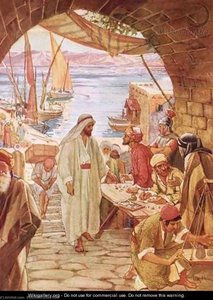
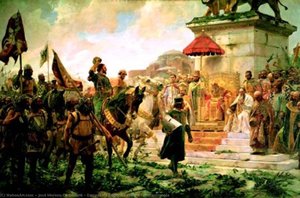
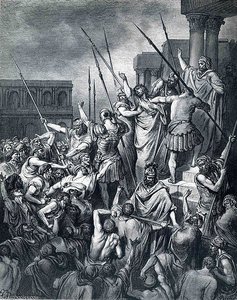
Artist Biography
William Brassey Hole: Life & Art
Early Life and Education
- Born: Salisbury, United Kingdom (1846)
- Died: 1917
- William Brassey Hole’s early life was marked by tragedy. His father, a doctor named Richard Hole, died in the cholera epidemic of 1849 when William was only three years old.
- Following his father's death, the family relocated to Edinburgh, Scotland.
- He received his education at Edinburgh Academy and then served a five-year apprenticeship as a civil engineer – a path he pursued reluctantly, harboring a strong desire to be an artist.
Artistic Development & Influences
- Early Travels: In 1869, Hole embarked on a six-month sketching tour of Italy, beginning in Genoa. This journey proved pivotal in solidifying his artistic ambitions.
- Key Influence: In Rome, he met Keeley Halswelle, who provided invaluable practical advice and critical feedback that encouraged him to pursue painting professionally.
- Upon returning to Edinburgh, Hole attended the School of Design and subsequently gained admission to the life school of the Royal Scottish Academy in 1873.
- He was elected an associate of the academy in 1878 and later became a full member (RSA).
- Hole also joined the Royal Society of Painters-Etchers (RE) in 1885, having already become a member of the Royal Scottish Watercolour Society (RSW) in 1884.
Artistic Style and Themes
- Specialization: Hole specialized in painting industrial scenes, historical events, and biblical narratives.
- Scottish Focus: Despite being English by birth, he devoted much of his energy to depicting Scottish national subjects and purposes.
- Notable Themes: His work often explored themes of industry, history, faith, and the lives of ordinary people, particularly fishermen on the west coast of Scotland.
- He was a master etcher, with critics praising his ability to translate color and handling into this medium.
Major Works & Achievements
- Key Paintings: Some of his principal paintings include “End of the '45” (1879), “Prince Charlie's Parliament” (1882), “If thou hadst known” (1885), and “The Canterbury Pilgrims” (1889).
- West Coast Series: His paintings of fishermen, such as "The Night’s Catch" and "The Fill of the Two Boats," were highly acclaimed.
- Frieze for Scottish National Portrait Gallery (1898): He painted a processional frieze depicting over 150 figures from Scotland's past, considered a significant achievement in mural decoration.
- Biblical Illustrations: Around 1900, he traveled to Palestine to study backgrounds for biblical paintings, resulting in 80 watercolors used as illustrations in his book “The Life of Jesus of Nazareth.”
- He also provided historical paintings for Edinburgh City Chambers and ecclesiastical decorations for other buildings.
- Illustrator: Hole illustrated works by Robert Louis Stevenson, J.M. Barrie, and Robert Burns.
Historical Significance & Legacy
- William Brassey Hole’s work provides valuable insights into 19th-century Scottish life, industry, and religious beliefs.
- Blending Genres: He successfully blended historical accuracy with artistic sensitivity, creating compelling narratives in his paintings.
- Etching Mastery: His etchings remain highly regarded for their technical skill and expressive quality.
- Hole’s contributions to Scottish art and culture are recognized through his works displayed in prominent institutions and collections.
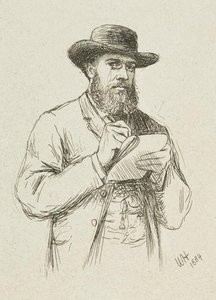
William Brassey Hole
1846 - 1917 , United Kingdom
Quick Facts
- Birth Date: 1846
- Birth Place: Salisbury, United Kingdom
- Death Date: 1917
- Influenced: None, 'influenced by': 'Keeley Halswelle', 'movement': ['Industrial Art', 'Historical Painting'], 'name': 'William Brassey Hole', 'nationality': 'British', 'notable works': [
Related Articles
The Enduring Legacy of Classicism: Principles, Evolution & Influence in Western Art
Explore the enduring legacy of Classicism in Western art! Discover its historical context, key principles, iconic masterpieces & lasting influence. Learn about Renaissance and Neoclassical movements with ArtsDot.
The Enduring Legacy of Classical Style: Form, Narrative & Influence in Art
Explore the enduring legacy of classical art – from ancient Greece & Rome to Neoclassicism. Discover key artists, philosophical roots & build a timeless collection with ArtsDot's expert guidance.
William Brassey Hole: A Victorian Master of Narrative Watercolour & Scottish Life
Explore the captivating paintings of William Brassey Hole, a Victorian master renowned for his dramatic biblical scenes, Scottish landscapes & industrial life. Discover his technique and lasting legacy.
Neo-Classicism's Greatest Hits: 10 Masterpieces for Your Home |
Journey through Neo-Classicism's finest! Explore 10 iconic masterpieces by David, Ingres & Canova. Discover art history, techniques & timeless beauty – perfect for inspiring your home decor. Find museum-quality reproductions at
Timeless Resonance: Exploring Classic Vibe in Art – A Historical & Aesthetic Analysis
Explore the rich history & enduring aesthetic of Classicism art! Discover key movements, iconic artists like Raphael & David, and its lasting influence on Western art. Deepen your appreciation today.