 Preview
 Send
Send Share
Share
 Details

 Download
 Similars
 X-Ray
X-Ray Diaporama
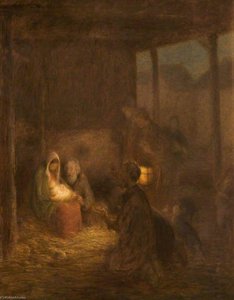
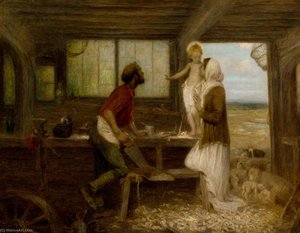
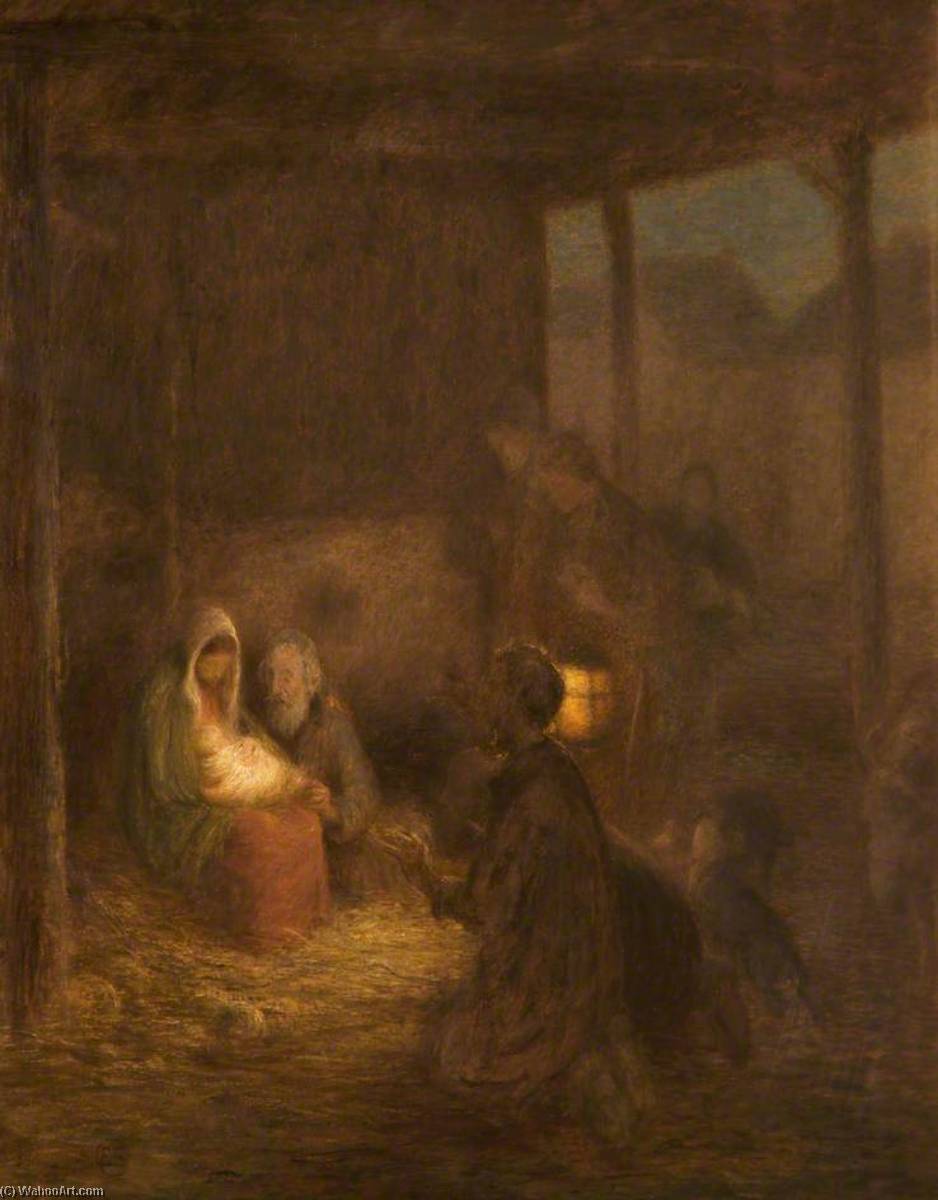
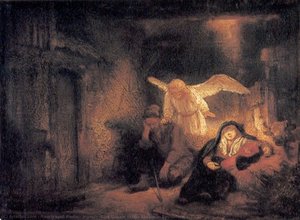
There Was No Room in the Inn
 Oil On Canvas
- WallArt
- Barbizon School
 1910
1910- 19th Century
 83.0 x 66.0 cm
 Touchstones Rochdale
 Read More
Giclée / Art Print
Museum-quality giclée or canvas print with fast production and flexible finish options. ( Buy Hand Made Painting Buy Image)




P118B $10

P118H $10

P118W $10

P438Z $10

P508JH $12

P508YH $12

P805H $10

P805Z $10

P919BZ $10

P919G $10

P919XJ $10

P959ZH $10

P968JZ $12

W106C $8

W218G $10

W218JH $8

W218Y $10

W307PJ $10

W316G $10

W316PJ $8

W316Y $10

W398PJ $8

W4111J $10

W500HY $15

W500JH $15

W692G $12

W849H $8

W940BG $15

W953PJ $8




Pick from our preset sizes that match the artwork's original proportions.

You may enter your own dimensions to fit a specific frame or space. If your selected size does not match the original image's proportions, we will either crop the artwork or extend the image with a mirrored or solid-fill edge. A digital mockup will be sent for your approval before production begins.
Please note that the on-screen preview does not reflect the actual cropping or extension. Only the mockup will accurately show the final composition.
While custom sizes are available, we recommend selecting a dimension from the predefined list to preserve the original proportions.
Worldwide Delivery () in 2 weeks instead of standard 4/5 weeks. (23 August)

Free Worldwide Express Shipping

High-Quality Linen Canvas

Full Shipping Insurance

Customs Tax Refund Guarantee

True Color Matching Guarantee

60-Day Return Policy (Defects Only)

100% Money-Back Guarantee

Bulk Discount Offer
 Glass option is only available in size under 110 CM

There Was No Room in the Inn
Giclée / Art Print
Reproduction Size
-


Total Price
$ 63
Collectible Description
A Sacred Intimacy: The Soul of Stott’s Nativity
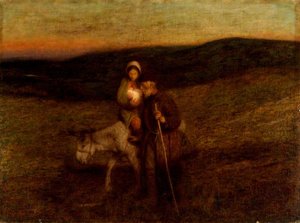
In the quiet, shadowed corners of William Edward Stott’s There Was No Room in the Inn, we find a moment frozen in time, where the weight of history meets the tenderness of a single breath. This evocative oil on canvas, dating from approximately 1910, invites the viewer into a rustic wooden stable that feels less like a mere setting and more like a sanctuary of profound humility. The composition is masterfully crowded, pulling the observer into an intimate circle of figures—Mary, Joseph, and the infant Jesus, surrounded by the weathered faces of onlookers. There is no vast, empty space here; instead, Stott utilizes a shallow depth of field to create a sense of closeness, as if we are kneeling in the straw alongside the holy family, witnessing a miracle unfolding amidst the mundane textures of rural life.
The technique employed by Stott is nothing short of visceral. Moving beyond simple representation, he utilizes a heavy impasto technique, where the oil paint is applied in thick, tactile layers that catch the light and create a physical topography on the canvas. This ruggedness serves the narrative perfectly; the visible, energetic brushstrokes mirror the coarse wooden beams of the stable and the weathered skin of the elderly figures present. The lighting is the true protagonist of the piece, reminiscent of the dramatic chiaroscuro found in Romanticism. A soft, divine glow illuminates the face of Mary and the small, precious form of the Christ child, cutting through the heavy shadows and casting long, contemplative silhouettes that dance across the earthen floor.
Symbolism and the Palette of Devotion
Every hue within this masterpiece has been chosen to evoke a sense of timelessness and reverence. The color palette is dominated by deep ochres, earthy browns, and muted, somber reds—tones that suggest the dust of the earth and the warmth of a flickering hearth. These colors do more than just ground the scene in reality; they symbolize the intersection of the divine with the earthly. The warmth of the light against the dark, muddy tones creates a visual metaphor for hope emerging from hardship. Symbolically, the painting captures the essence of the Nativity narrative: the idea that greatness and sanctity are often found in the most overlooked and impoverished of places.
For the discerning collector or interior designer, this artwork offers a profound emotional anchor. It is a piece that commands attention not through loudness, but through its quiet, melancholic beauty. The sense of peace intertwined with a touch of sorrow—the "melancholy" so characteristic of Stott’s English sensibility—makes it an ideal centerpiece for spaces designed for reflection, such as a study, a library, or a formal sitting room. A high-quality reproduction of this work allows the textured depth and the dramatic interplay of light to breathe within a modern home, bringing a sense of historical weight and spiritual tranquility to any curated collection.
Related Artworks

Artist Biography
A Vision of English Light: The Life and Legacy of William Edward Stott
In the tapestry of late Victorian art, few threads possess the quiet, evocative strength of William Edward Stott. Born in 1855 amidst the industrial landscape of Wardleworth, near Rochdale, Stott emerged from a world defined by the rhythmic toil of Lancashire’s cotton mills. While his father, Samuel Stott, presided over a successful mill, the young artist’s gaze was frequently drawn away from the smoke of industry toward the enduring beauty of the natural world. This early exposure to the stark contrasts between industrial progress and rural tradition would become a cornerstone of his artistic identity, instating in him a profound empathy for the lives of those tethered to the land.
Stott’s journey was one of significant geographical and stylistic evolution. His formal training took him to the heart of the art world in Paris, where he studied under the esteemed academic painter Carolus Duran. While this period provided him with a rigorous foundation in meticulous technique and classical composition, it also placed him at the epicenter of a burgeoning revolution. The whispers of Impressionism and the soulful, earth-bound realism of the Barbizon School began to permeate his consciousness. He found himself deeply moved by the work of Jules Bastien-Lepage, whose ability to marry naturalistic detail with an atmospheric, almost poetic sense of light offered Stott a new vocabulary for his own explorations.
The Art of Atmosphere and Rural Narrative
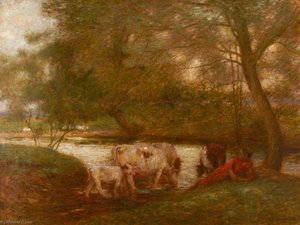
As his style matured, Stott transitioned from the rigid constraints of academicism toward a more fluid, emotive approach. His canvases became windows into a vanishing way of life, capturing the subtle shifts of light that define the English countryside. He did not merely paint landscapes; he painted atmospheres. Whether it was the soft, encroaching shadows in Approaching Night or the warm, sun-drenched serenity found in The Watering Place, Stott possessed a rare gift for rendering the ephemeral qualities of the air and the earth.
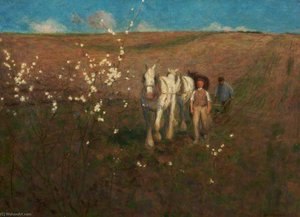
His subject matter often centered on the dignity of rural labor and the quiet rhythms of pastoral existence. In works such as Ploughing, Early Spring, one can sense the connection between the artist and his subjects—a shared understanding of the seasonal cycles and the physical reality of the landscape. His technique utilized a sophisticated palette to evoke mood, often employing:
- Naturalistic Color Palettes: Using earthy tones to ground his scenes in reality.
- Impressionistic Brushwork: Capturing the fleeting movement of light and wind.
- Tonal Depth: Creating a sense of space and melancholy through carefully managed shadows.
Historical Significance and Enduring Resonance
Though Stott may not have attained the global celebrity of his contemporaries like Monet or Renoir, his contribution to the British aesthetic remains vital. He stood at a pivotal historical crossroads, navigating the transition from the structured traditions of the 19th century to the more experimental sensibilities of the early 20th century. His work serves as a poignant historical record, preserving the essence of an English landscape and a social order that were rapidly being transformed by the very industrial forces he witnessed in his youth.
Today, Stott’s paintings continue to resonate with a modern audience, offering a sense of tranquility and a nostalgic connection to the pastoral. His ability to imbue ordinary scenes with extraordinary emotional weight ensures his place in the canon of British Naturalism. To view a Stott painting is to experience a moment of stillness—a chance to witness the quiet dignity of the earth and the enduring, beautiful melancholy of the passing light.
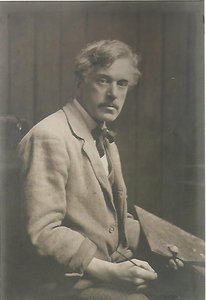
william edward stott
1918 -
Quick Facts
- Artistic Movement Or Style: Naturalism, Barbizon, Impressionist
- Artists Or Movements Influenced By This Artist: ['New English Art Club']
- Artists Who Influenced This Artist:
- Bastien-Lepage
- Corot
- Millet
- Date Of Birth: April 25, 1855
- Date Of Death: March 19, 1918
- Full Name: William Edward Stott
- Nationality: British
- Notable Artworks:
- Approaching Night
- Rural Landscapes
- Place Of Birth: Wardleworth, Rochdale, UK
Related Articles

The Enduring Legacy of Oil on Canvas: Technique, History & Aesthetic Impact
Explore the rich history & techniques of oil painting – from Renaissance masters to Impressionism. Discover pigments, layering methods, and why this timeless medium endures. Expert insights for artists & art enthusiasts.

Oil on Canvas: A Historical & Technical Exploration of a Timeless Artistic Medium
Explore the rich history & enduring techniques of oil painting on canvas. Discover the science behind its longevity, conservation practices, and contemporary relevance. Expert insights for art enthusiasts.
R.A. Benjamin Williams: Victorian Genre Painting & Social Commentary
Explore the captivating world of Benjamin Williams Leader's Victorian genre paintings. Discover his mastery of naturalism, social commentary & lasting influence on British art. Expert insights at ArtsDot.
William Powell Frith: Narratives of Victorian Society & the Rise of Realist Painting
Explore the life & works of William Powell Frith, the 'greatest British painter of social scenes.' Discover his iconic Victorian genre paintings and learn about his lasting impact on realist art. Hand-painted reproductions available.

The Enduring Power of Painting: A Historical & Contemporary Exploration of Form and Emotion
Explore the rich history & enduring techniques of oil painting with ArtsDot. Discover masterpieces, learn about art collecting, and find authentic handmade reproductions crafted by skilled artists.