 Preview
 Send
Send Share
Share
 Details

 Download
 Similars
 X-Ray
X-Ray Diaporama
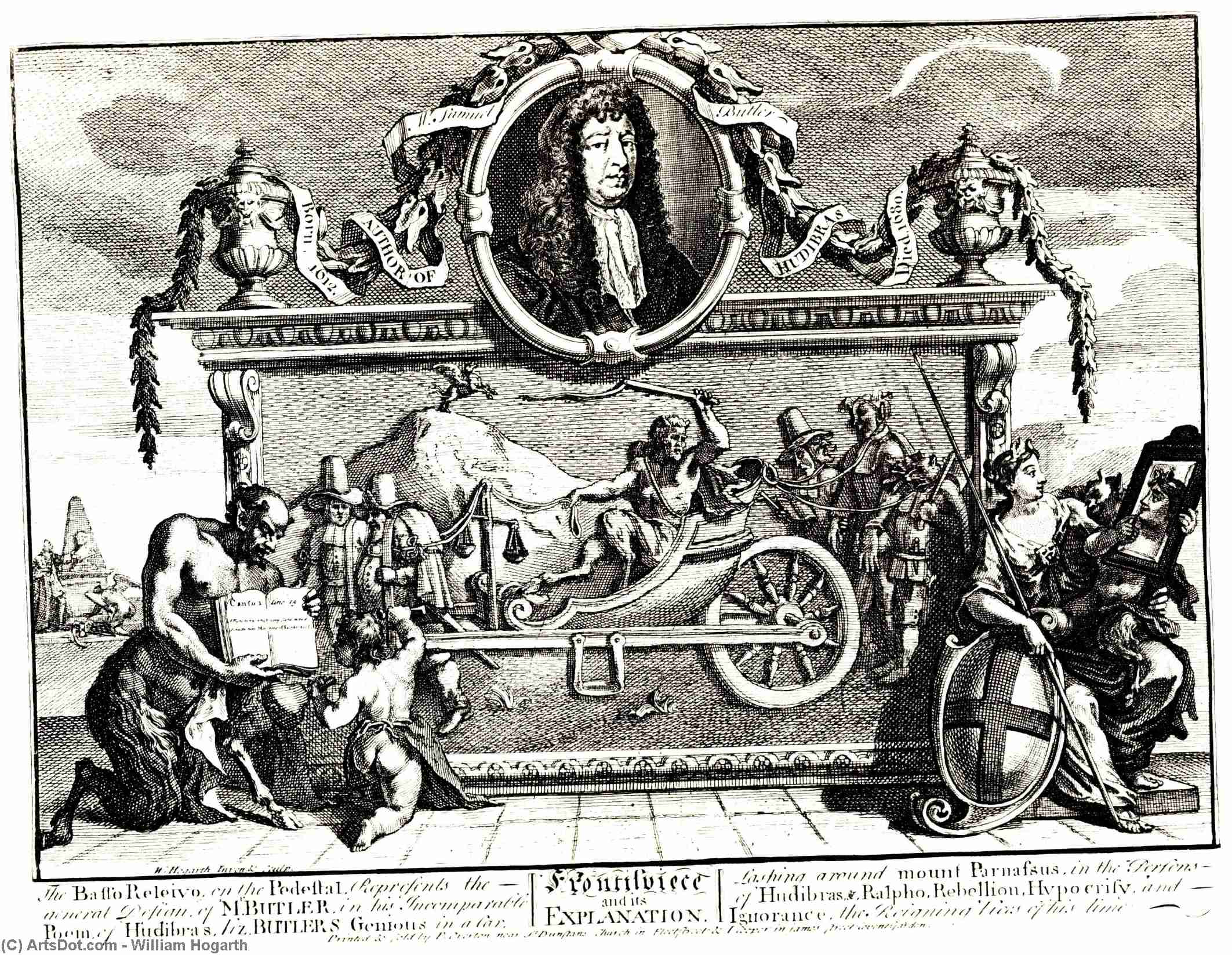
Frontispiece and its explanation (Hurdibras)


 Read More
Hand Made Oil Reproduction
Hand-painted oil on canvas in your size and frame, made to order by our artists. ( Buy Print Buy Image)




P118B $10

P118H $10

P118W $10

P438Z $10

P508JH $12

P508YH $12

P805H $10

P805Z $10

P919BZ $10

P919G $10

P919XJ $10

P959ZH $10

P968JZ $12

W106C $8

W218G $10

W218JH $8

W218Y $10

W307PJ $10

W316G $10

W316PJ $8

W316Y $10

W398PJ $8

W4111J $10

W500HY $15

W500JH $15

W692G $12

W849H $8

W940BG $15

W953PJ $8




Pick from our preset sizes that match the artwork's original proportions.

You may enter your own dimensions to fit a specific frame or space. If your selected size does not match the original image's proportions, we will either crop the artwork or extend the painting with additional hand-painted elements. A digital mockup will be sent for your approval before production begins.
Please note that the on-screen preview does not reflect the actual cropping or extension. Only the mockup will accurately show the final composition.
While custom sizes are available, we recommend selecting a dimension from the predefined list to preserve the original proportions.
After order, ArtsDot.com team will email client for instructions and provide a mockup preview
Worldwide Delivery () in 3/4 weeks instead of standard 5 weeks. (20 August). No compromise on quality.

Free Worldwide Express Shipping

High-Quality Linen Canvas

Full Shipping Insurance

Customs Tax Refund Guarantee

True Color Matching Guarantee

60-Day Return Policy (Defects Only)

100% Money-Back Guarantee

Bulk Discount Offer
 Glass option is only available in size under 110 CM

Frontispiece and its explanation (Hurdibras)
Reproduction Medium
Reproduction Size
-


Total Price
$ 613
Artwork Description
A Satirical Symphony in Ink: Unveiling Hogarth’s Masterpiece
In the heart of eighteenth-century London, amidst the swirling social transformations of the Georgian era, William Hogarth captured the very soul of a nation in flux. His etching, Frontispiece and Its Explanation (Hurdibras), is not merely an illustration but a profound, biting window into the anxieties and contradictions of Enlightenment England. As one gazes upon this intricate work, they are immediately swept into a dense, chaotic panorama that serves as a satirical tableau of a society struggling with its own moral identity. The piece functions as a visual critique, where every line and figure contributes to a larger narrative of social decay hidden beneath an elaborate, allegorical veneer.
The composition is anchored by a commanding verticality, centered around a grand carriage that dominates the viewer's field of vision. This central axis acts as a stage for a complex drama; above the carriage, an oval portrait frame houses the likeness of Samuel Butler, rendered with such meticulous precision that the texture of his attire and the depth of his expression feel almost tangible. Below this focal point, the scene erupts into a lively, often unsettling, crowd. Supplicants kneel in desperation while observers watch with varying degrees of detachment or curiosity, creating a sense of restless energy that mirrors the intellectual and cultural debates of the time.
The Mastery of Line and the Art of Detail
For the discerning collector or lover of fine printmaking, the technical brilliance of this work is nothing short of breathtaking. Hogarth, having honed his skills through a rigorous apprenticeship, employs the medium of line engraving to achieve a level of detail that borders on the miraculous. Through the sophisticated use of hatching and cross-hatching, he sculpts light and shadow, giving weight to the heavy fabrics of period clothing and a lifelike quality to the weathered skin of the figures. The interplay of fine, closely spaced lines creates a rich tonal range, allowing for a sense of depth that pulls the viewer into the crowded London streets depicted within the frame.
This technical virtuosity serves a higher purpose than mere decoration; it is the vehicle for Hogarth's storytelling. The texture of the metal, the roughness of the earth, and the intricate patterns of the carriage all contribute to an atmosphere of overwhelming sensory detail. This density of information demands slow, contemplative viewing, rewarding those who linger to discover the subtle nuances hidden within the shadows. For interior designers seeking a piece with profound character, this artwork offers a sophisticated layer of intellectual depth, providing a focal point that invites conversation and endless discovery.
Symbolism and the Emotional Resonance of Satire
Beyond its technical prowess, Frontispiece and Its Explanation is a work of deep emotional and symbolic resonance. Hogarth utilizes the language of allegory to critique the hypocrisies of his age. The very structure of the piece—the contrast between the elevated portrait and the chaotic scene below—speaks to the widening gaps in social hierarchy and the perceived erosion of traditional values. Every interaction, every gesture of a kneeling figure or a passing stranger, is laden with potential meaning, inviting the viewer to participate in a decoding of eighteenth-century morality.
The emotional impact of the work is one of controlled tension. There is an underlying sense of unease, a feeling that beneath the polished surface of the carriage and the formal portrait lies a world of turbulence and moral ambiguity. It is this very tension that makes Hogarth's work so enduringly relevant. To possess a high-quality reproduction of this etching is to bring into one's space a piece of history that challenges, provokes, and inspires. It is an ideal acquisition for those who appreciate art that does not merely decorate a room but enriches the intellectual landscape of a home.
Related Artworks
Artist Biography
A London Life in Ink and Paint: The World of William Hogarth
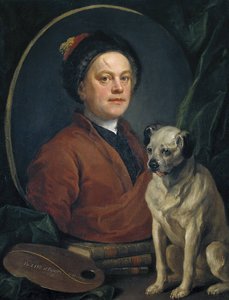
William Hogarth, born into the bustling heart of 18th-century London in 1697, was more than just an artist; he was a visual historian, a keen observer of human nature, and a satirical commentator on the societal currents of his age. His life story is inextricably linked to the very fabric of England during a period of significant transformation – its burgeoning ambitions, underlying anxieties, and pervasive hypocrisies all finding potent expression in his remarkably detailed and often biting works. The son of a struggling Latin schoolmaster, Hogarth’s early experiences instilled within him both a love for learning and a sharp awareness of social inequalities, a foundation that would prove crucial to shaping his artistic vision. Initially apprenticed to an engraver, he quickly demonstrated a talent extending beyond mere technical skill; he possessed an innate ability to observe the nuances of human behavior and translate them into compelling visual narratives. However, he chafed against the constraints of traditional engraving, seeking a more expressive outlet for his burgeoning creativity. This led him to studies at both St Martin’s Lane Academy and under Sir James Thornhill, where he honed his skills in painting and composition, absorbing influences that would later inform his unique style.The Birth of Modern Moral Subjects
Hogarth's true innovation lay not simply *what* he painted, but *how*. He pioneered what he termed “modern moral subjects” – series of pictures designed to tell a story, often imbued with a strong satirical edge. These weren’t isolated portraits or landscapes; they were visual novels unfolding before the viewer’s eyes, offering pointed commentary on contemporary society. A Harlot's Progress, created in 1742, stands as perhaps his most famous example. This series of six paintings meticulously follows the tragic downfall of Mary, a young woman arriving in London full of hope but quickly succumbing to the temptations and dangers of city life. Each scene is rendered with painstaking detail, filled with symbolic elements that reveal the moral decay surrounding her. Similarly, A Rake's Progress, begun in 1733, charts the reckless decline of Tom Rakewell, a man who squanders his inheritance on gambling, debauchery, and ultimately, madness. These weren’t merely cautionary tales; they were unflinching portraits of a society grappling with issues of class, morality, and social mobility. Hogarth's genius resided in his ability to elevate everyday scenes – the bustling streets of London, the opulent interiors of the wealthy, the squalid lives of the poor – into works of art that resonated deeply with his audience. He didn’t shy away from depicting the harsh realities of life, presenting them with a blend of humor and pathos that forced viewers to confront uncomfortable truths about themselves and their society.Technique and Influences: A Synthesis of Styles
Hogarth's artistic style was a unique amalgamation of diverse influences. He greatly admired the realism and narrative detail found in the works of Dutch genre painters like Pieter de Hooch, evident in his meticulous depictions of interiors and everyday life. The satirical prints produced in France also played a role in shaping his approach to social commentary. However, Hogarth wasn’t simply imitating these sources; he was synthesizing them into something entirely new and distinctly his own. His technique was characterized by a masterful use of line and shading, particularly evident in his engravings. He employed a distinctive cross-hatching technique that created depth and texture, bringing his scenes to life with remarkable clarity. He also possessed an exceptional eye for composition, arranging figures and objects within the frame to create dynamic and engaging narratives. Beyond visual art, Hogarth was influenced by literary works, particularly those of Jonathan Swift and Henry Fielding, whose satirical wit informed his own social observations. He believed that art should not merely be beautiful but should also serve a moral purpose, challenging viewers to confront uncomfortable truths about themselves and their society. He sought to hold a mirror up to nature, reflecting both its beauty and its ugliness with unflinching honesty.Legacy and Lasting Impact
The impact of William Hogarth extends far beyond the realm of 18th-century art. His work gained immense popularity thanks to the mass production of prints based on his paintings, making his satirical commentary accessible to a wider audience than ever before. He is widely considered a precursor to political cartooning and comic strips, laying the groundwork for visual storytelling in popular culture. Artists like James Gillray and George Cruikshank were directly influenced by his style, carrying forward his tradition of social satire. Even Charles Lamb, the celebrated essayist, recognized the narrative power of Hogarth’s images, famously remarking that they were “like books to be read rather than merely looked at.”- Hogarth established a distinctly British artistic identity.
- His work provides invaluable insights into 18th-century English society.
- He influenced generations of artists and satirists.
William Hogarth
1697 - 1764 , United Kingdom
Quick Facts
- Artistic Movement Or Style: Satire, Realism
- Artists Or Movements Influenced By This Artist:
- James Gillray
- Political cartooning
- Artists Who Influenced This Artist:
- Pieter de Hooch
- Jonathan Swift
- Date Of Birth: 1697
- Date Of Death: 1764
- Full Name: William Hogarth
- Nationality: British
- Notable Artworks:
- A Harlot's Progress
- A Rake's Progress
- Marriage A-la-Mode
- Place Of Birth: London, UK
Related Articles
Engraving's Golden Age: 10 Masterpieces That Redefined Art | ArtsDot
Journey through art history with our Top 10 Legendary Engravings! Explore masterpieces by Dürer, Rembrandt & Goya. Discover the stories behind these iconic prints and find museum-quality reproductions for your home at ArtsDot.com.
Etching: A Historical Survey of Technique, Aesthetic Qualities & Enduring Artistic Significance
Explore the rich history of etching, from its origins to Rembrandt's masterful innovations. Discover the technique, aesthetic qualities & enduring legacy of this captivating art form. Expert insights for collectors and enthusiasts.
Etching Masters: 10 Legendary Prints That Revolutionized Art | ArtsDot
Journey through 10 legendary etching masterpieces by Rembrandt, Dürer & Goya. Explore the history of printmaking and discover timeless art for your home. Find museum-quality reproductions at ArtsDot.com.
The Intricate World of Engraving: A Historical Survey of Technique, Artistic Expression & Enduring Legacy
Explore the rich history of engraving with ArtsDot. Discover techniques, iconic artists like Dürer & Callot, collecting tips, and expert guidance for preserving your art investment. Learn about intaglio printing & more!
Engraving: A Historical Survey of Technique, Artistic Expression & Enduring Legacy
Explore the rich history of engraving with ArtsDot. Discover techniques, iconic artists like Dürer & Callot, collecting tips, and expert guidance for preserving your art investment. Learn about intaglio printing & more!