 Preview
 Send
Send Share
Share
 Details

 Download
 Similars
 X-Ray
X-Ray Diaporama
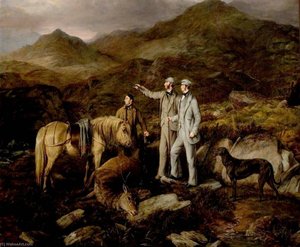
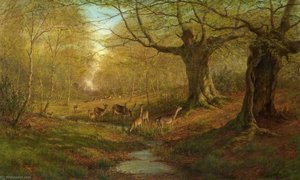
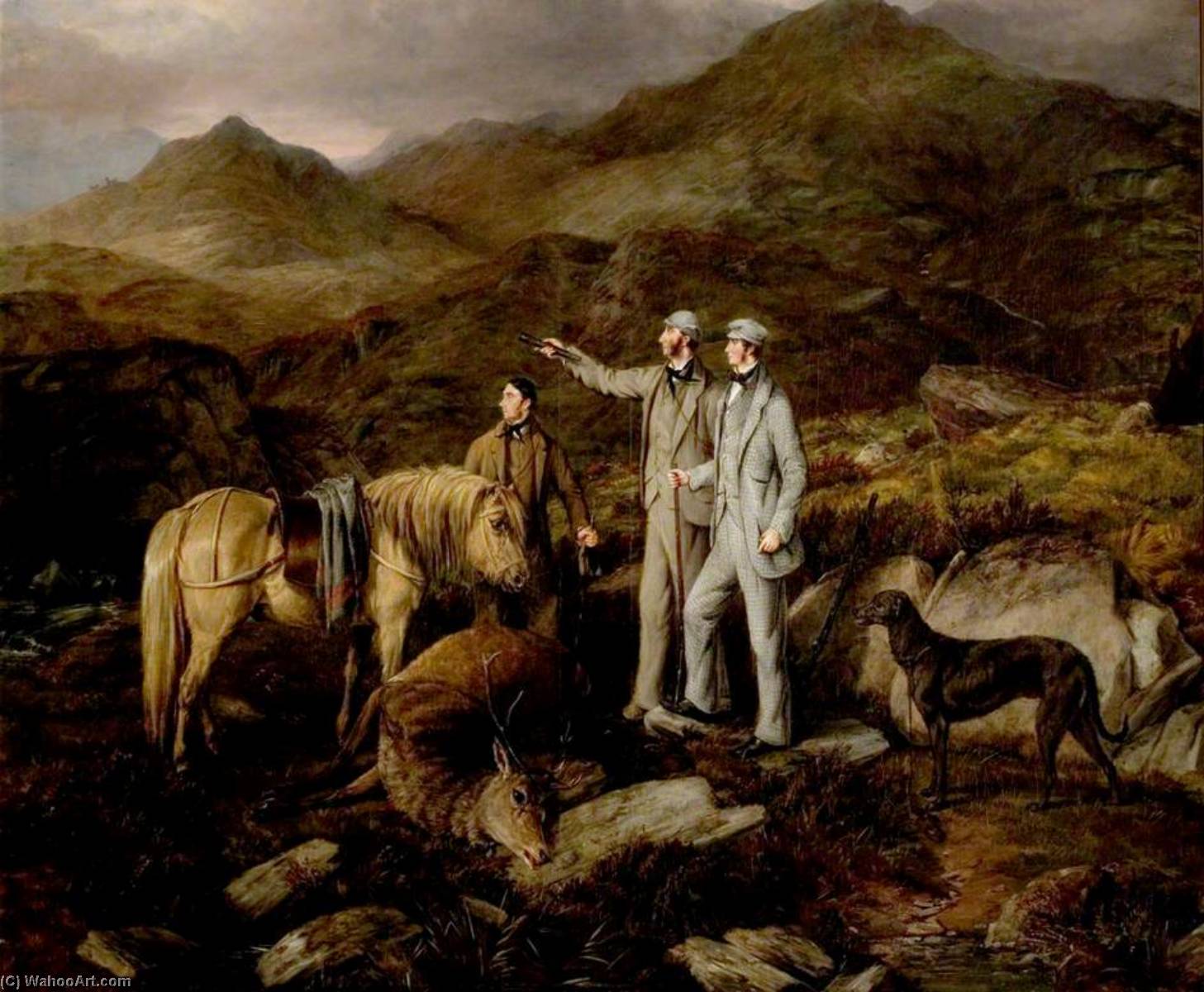
Stag Hunt in Scotland
 Contemporary Realism
 1852
1852 145.0 x 173.0 cm
 Read More
Hand Made Oil Reproduction
Hand-painted oil on canvas in your size and frame, made to order by our artists. ( Buy Print Buy Image)




































Pick from our preset sizes that match the artwork's original proportions.

You may enter your own dimensions to fit a specific frame or space. If your selected size does not match the original image's proportions, we will either crop the artwork or extend the painting with additional hand-painted elements. A digital mockup will be sent for your approval before production begins.
Please note that the on-screen preview does not reflect the actual cropping or extension. Only the mockup will accurately show the final composition.
While custom sizes are available, we recommend selecting a dimension from the predefined list to preserve the original proportions.
After order, ArtsDot.com team will email client for instructions and provide a mockup preview
Worldwide Delivery () in 3/4 weeks instead of standard 5 weeks. (17 August). No compromise on quality.

Free Worldwide Express Shipping

High-Quality Linen Canvas

Full Shipping Insurance

Customs Tax Refund Guarantee

True Color Matching Guarantee

60-Day Return Policy (Defects Only)

100% Money-Back Guarantee

Bulk Discount Offer
 Glass option is only available in size under 110 CM

Stag Hunt in Scotland
Reproduction Medium
Reproduction Size
-


Total Price
$ 288
Related Artworks
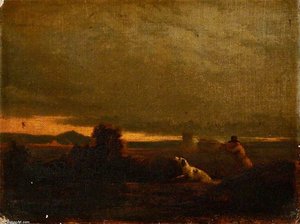
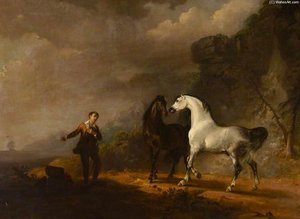
Artist Biography
William Luker (1867-1909): A Victorian Master of Pastoral Light
William Luker, a British artist working primarily during the late 19th and early 20th centuries, remains a captivating figure within the landscape art tradition. Often overshadowed by his more prominent contemporaries, Luker’s meticulous detail and evocative use of light have secured him a devoted following amongst collectors and scholars alike. Born in London in 1867, he inherited a passion for painting from his father, William Luker Sr., a renowned artist celebrated for his depictions of rural England – a lineage that profoundly shaped Luker's artistic trajectory.
Luker’s early life was marked by familial challenges. His father’s struggles with depression and financial instability cast a long shadow over the family, influencing the young William to seek solace and creative expression through art. This period of hardship instilled in him a deep appreciation for the beauty of the natural world – a refuge from personal turmoil. He received his initial artistic training under his father, absorbing not only technical skills but also a particular sensibility towards capturing the serene essence of the English countryside.
The Language of Light and Landscape
Luker’s distinctive style is immediately recognizable through his masterful manipulation of light and color. He eschewed the dramatic, often brooding tones favored by some of his contemporaries, instead opting for a softer, more luminous palette. His paintings are characterized by an almost ethereal quality – as if bathed in the golden glow of late afternoon sunlight. This deliberate choice wasn’t merely aesthetic; it reflected Luker's desire to convey a sense of tranquility and harmony with nature.
His subjects typically centered around idyllic rural scenes: rolling hills dotted with sheep, meticulously rendered hunts in Scottish glens, and charming village life. However, Luker’s skill extended beyond simple representation. He possessed an uncanny ability to capture the fleeting effects of light on water, foliage, and stone – transforming ordinary landscapes into moments of breathtaking beauty. He frequently employed a technique of layering thin washes of color, building up depth and atmosphere with subtle gradations.
Notable Works and Artistic Development
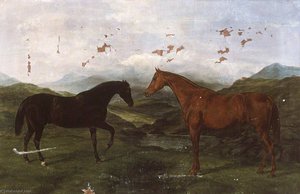
Among Luker’s most celebrated works is “Two Hunting Horses in a Landscape” (1852), a dynamic depiction of a Victorian hunting scene. The painting showcases his remarkable ability to convey movement and drama, capturing the energy of the horses and the intensity of the hunt with impressive detail. “A Halt in the Desert” (circa 1890) offers a contrasting study – a quiet, contemplative scene featuring a lone rider against a vast expanse of sand, demonstrating Luker’s versatility across different subject matter.
“Stag Hunt in Scotland” (1852), a particularly striking example of his work, exemplifies the artist's meticulous attention to detail and his ability to capture the rugged beauty of the Scottish Highlands. The painting is renowned for its dramatic lighting and the realistic portrayal of the animals and hunters. Luker’s artistic style evolved subtly throughout his career, reflecting both his technical mastery and his growing personal vision.
Legacy and Influence
Despite not achieving widespread fame during his lifetime, William Luker's work has gained increasing recognition in recent decades. His paintings are now held in prestigious collections worldwide, and his influence can be seen in the works of later landscape artists. Luker’s legacy lies not only in his individual achievements but also in his embodiment of a particular aesthetic sensibility – a quiet reverence for nature and a profound understanding of light.
His dedication to capturing the subtle nuances of the English countryside, combined with his exceptional technical skill, ensures that William Luker remains a significant figure in Victorian art history. Further research into his life and work continues to reveal new insights into this talented and often overlooked artist.
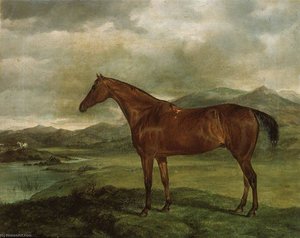
william luker
1867 - 1909
Quick Facts
- Artistic Movement Or Style: Animal painting
- Artists Who Influenced This Artist: ['William Luker Sr.']
- Date Of Birth: 1867
- Date Of Death: 1951
- Full Name: William Luker Jr.
- Nationality: British
- Notable Artworks:
- Shire Horse & Foal 1940s
- The King of The Castle
- Shetland Ponies Winter
- Rabbits
- Fallow Deer Winter
- Place Of Birth: London, England
Related Articles
William James Müller: Navigating Victorian Sentiment & Realism in British Landscape Painting
Explore the captivating landscapes of William James Müller, the leading artist of the Bristol School. Discover his Victorian masterpieces, Egyptian travels & Lycian sketches – a journey through 19th-century art and technique.

Beyond the Horizon: 10 Landscape Masterpieces for Your Home Decor
Journey through 10 breathtaking landscape paintings by Monet, Van Gogh & more! Explore iconic artworks, artistic techniques & find inspiration for your home decor. Museum-quality reproductions at ArtsDot.com. Discover all masterpieces on ArtsDot.com
William Brassey Hole: A Victorian Master of Narrative Watercolour & Scottish Life
Explore the captivating paintings of William Brassey Hole, a Victorian master renowned for his dramatic biblical scenes, Scottish landscapes & industrial life. Discover his technique and lasting legacy.
William Henry Hunt: Luminosity & Detail in Early 19th-Century Watercolour Painting
Explore the captivating watercolour paintings of William Henry Hunt (1790-1864). Discover his mastery of naturalistic detail, luminous technique & influence on 19th-century art. Learn about collecting Hunt's work and its enduring value.
Sir William George Gillies: A Scottish Colourist's Journey Through Landscape & Abstraction
Explore the captivating world of Sir William George Gillies, a leading Scottish Colourist. Discover his journey from Cubism to iconic landscapes & still lifes. Expert insights for collectors and art enthusiasts.