 Preview
 Send
Send Share
Share
 Details

 Download
 Similars
 X-Ray
X-Ray Diaporama
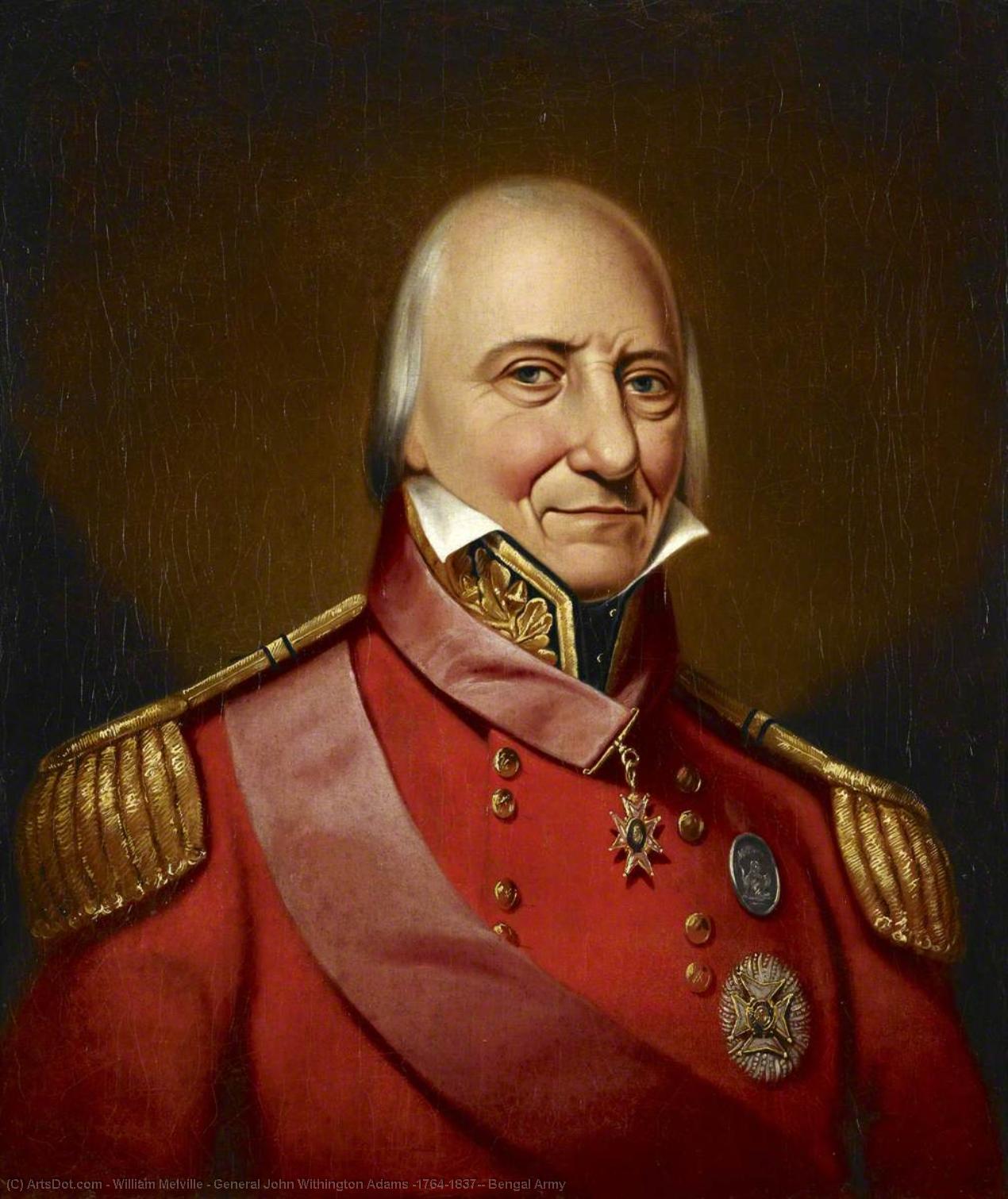
General John Withington Adams (1764–1837), Bengal Army
 Oil
Oil- WallArt
- Realism
 1837
1837- 19th Century
 68.0 x 56.0 cm
 British Library
 Read More
Purchase a high-resolution, enhanced digital image, far superior to the online preview.
Each file is meticulously prepared by our in-house specialists using advanced tools and expert manual retouching. We ensure every image has exceptional clarity, precise color accuracy, and fine detail.
The final file is delivered via email within 72 hours, optimized for immediate use in professional, editorial, and print environments. This is the same quality trusted by top-tier design studios, publishers, and galleries.
Digital Image
Download a high-resolution file for personal display, printing, and creative projects. ( Buy Print Buy Hand Made Painting)
Included in Every Digital Image Order
Expert Digital Delivery, Guaranteed
When you choose ArtsDot.com, you're not just getting an image - you're receiving a professionally enhanced digital artwork, crafted with precision and backed by a satisfaction guarantee. Here's everything that comes with your order, automatically:

Fast Email Delivery
Your high-resolution digital image file will be emailed to you within 72 hours of ordering - ready for immediate use.

AI-Enhanced Digital File
Your artwork is professionally optimized using advanced AI tools and manual editing, ensuring maximum detail, clarity, and color accuracy.

Free Lifetime Re-Delivery
Accidentally deleted or lost your file? No worries - we'll resend it to you anytime, free of charge.

No Import Fees - Ever
Enjoy your artwork instantly with zero customs, duties, or delivery fees - digital downloads are always tax-free.

Color Accuracy Guarantee
We ensure your digital image reflects the original colors as closely as possible using professional tools and color management.

60-Day Satisfaction Guarantee
If you're not satisfied with your digital image, we'll revise it or refund 100% within 60 days - no questions asked.

100% Money-Back Guarantee
Not satisfied? Get a full refund within 60 days of receiving your digital file - no questions asked.

Bulk Order Discounts
Buy 3 images, save 10% - Buy 5, save 15% - Buy 10+, save 20%. Great for creative projects, galleries, and agencies.
Collectible Description
A Portrait of Command: The Presence of General John Withington Adams
In the quiet, commanding presence of General John Withington Adams, we encounter more than just a likeness; we encounter the very essence of nineteenth-century military prestige. Painted in 1837 by the evocative William Melville, this portrait serves as a profound window into an era defined by imperial expansion and the rigid hierarchies of the Bengal Army. The subject sits with an unmistakable air of authority, his gaze steady and resolute, embodying the weight of leadership during a transformative period in British colonial history. Through Melville’s masterful hand, the canvas transcends mere documentation, becoming a psychological study of a man shaped by duty and the complexities of command.
The visual impact of the piece is immediately striking, driven by a sophisticated use of contrast and color. The deep, shadowy background acts as a void, pushing the figure forward and demanding the viewer's undivided attention. This technique, reminiscent of classical portraiture traditions, ensures that every detail of the General’s attire is rendered with exquisite clarity. The vibrant crimson of his uniform provides a bold splash of color against the darkness, while the crisp white of his cape and the intricate gold lace create a rhythmic interplay of light and texture. These elements do more than just signify rank; they symbolize the splendor and the heavy burden of the officer class during the height of the British Raj.
Beyond the grandeur of the uniform, Melville captures the human element with remarkable sensitivity. The fine details of the General’s facial features—the texture of his beard, the subtle lines around his eyes, and the dignified set of his mouth—offer a glimpse into the character of a man who lived through decades of global upheaval. There is a palpable sense of gravity in his expression, a reflection of the strategic responsibilities held by high-ranking officials in the Bengal Army. For the discerning collector or interior designer, this painting offers a sophisticated focal point that brings a sense of historical weight and timeless elegance to any space.
Integrating such a piece into a contemporary interior allows for a captivating dialogue between the past and the present. Whether placed in a formal study, a library, or a grand hallway, the portrait of General Adams acts as an anchor of tradition. Its rich palette and dramatic composition provide a sense of depth and narrative complexity that modern minimalist works often lack. As a high-quality reproduction, this artwork allows enthusiasts to possess a fragment of history, inviting conversation about empire, identity, and the enduring power of the painted portrait to capture the human spirit across the centuries.
Related Artworks
Artist Biography
A Life Painted Across Empires: The World of William Melville
William Melville, a name perhaps less celebrated than some of his contemporaries, nonetheless occupies a fascinating and important niche in 19th-century art history. His canvases offer a compelling visual record of a world undergoing dramatic transformation – the height of British imperial power, specifically its presence in India, and the social fabric of Britain itself. While biographical details remain somewhat elusive, the body of his work speaks volumes about a life deeply immersed in military affairs, landscape painting, and the burgeoning Orientalist movement. Melville wasn’t simply *recording* scenes; he was interpreting them, shaping perceptions, and contributing to a visual narrative that defined an era. His paintings are not just historical documents but windows into the complex relationship between colonizer and colonized, power and representation.Early Life and Artistic Formation
The precise details of Melville's early life remain shrouded in some mystery. Born sometime in the 19th century (exact dates are currently unavailable), his artistic journey appears to have been inextricably linked with his connection to the British military. It’s widely believed he spent a significant portion of his career documenting scenes from India, particularly those involving the Bengal Army. This suggests either direct service within the army or close association with its officers and administration. The influence of established landscape painters is evident in Melville's work – a meticulous attention to detail, a romantic sensibility towards nature, and a mastery of light and atmosphere. He likely received formal training, though records are scarce. What *is* clear is that he developed a distinctive style characterized by a blend of topographical accuracy and narrative storytelling. His early works often depict military encampments, parades, and scenes of daily life within the army, rendered with a precision that suggests a desire to capture authenticity alongside aesthetic appeal.The Indian Canvas: Documenting an Empire
Melville’s most significant contribution lies in his depictions of India during the period of British rule. He wasn't merely painting picturesque landscapes; he was portraying the machinery of empire – the soldiers, the infrastructure, and the social interactions that defined colonial life. His paintings frequently feature scenes from the Bengal Army, showcasing both the grandeur of military operations and the more mundane aspects of soldiering.- Military Precision: Melville’s attention to detail in depicting uniforms, weaponry, and formations is remarkable, offering valuable insights into the appearance and organization of the British Indian Army.
- Social Context: Beyond military subjects, his work also captures glimpses of local life – villages, markets, and portraits of individuals, providing a broader context to the imperial narrative.
- Orientalist Influences: While not as overtly exoticizing as some Orientalist painters, Melville’s depictions of India are nonetheless shaped by prevailing Western perceptions of the East. His work reflects a fascination with the unfamiliar customs and landscapes of the subcontinent.