

 Preview
 Send
Send Share
Share
 Details

 Download
 Similars
 X-Ray
X-Ray Diaporama
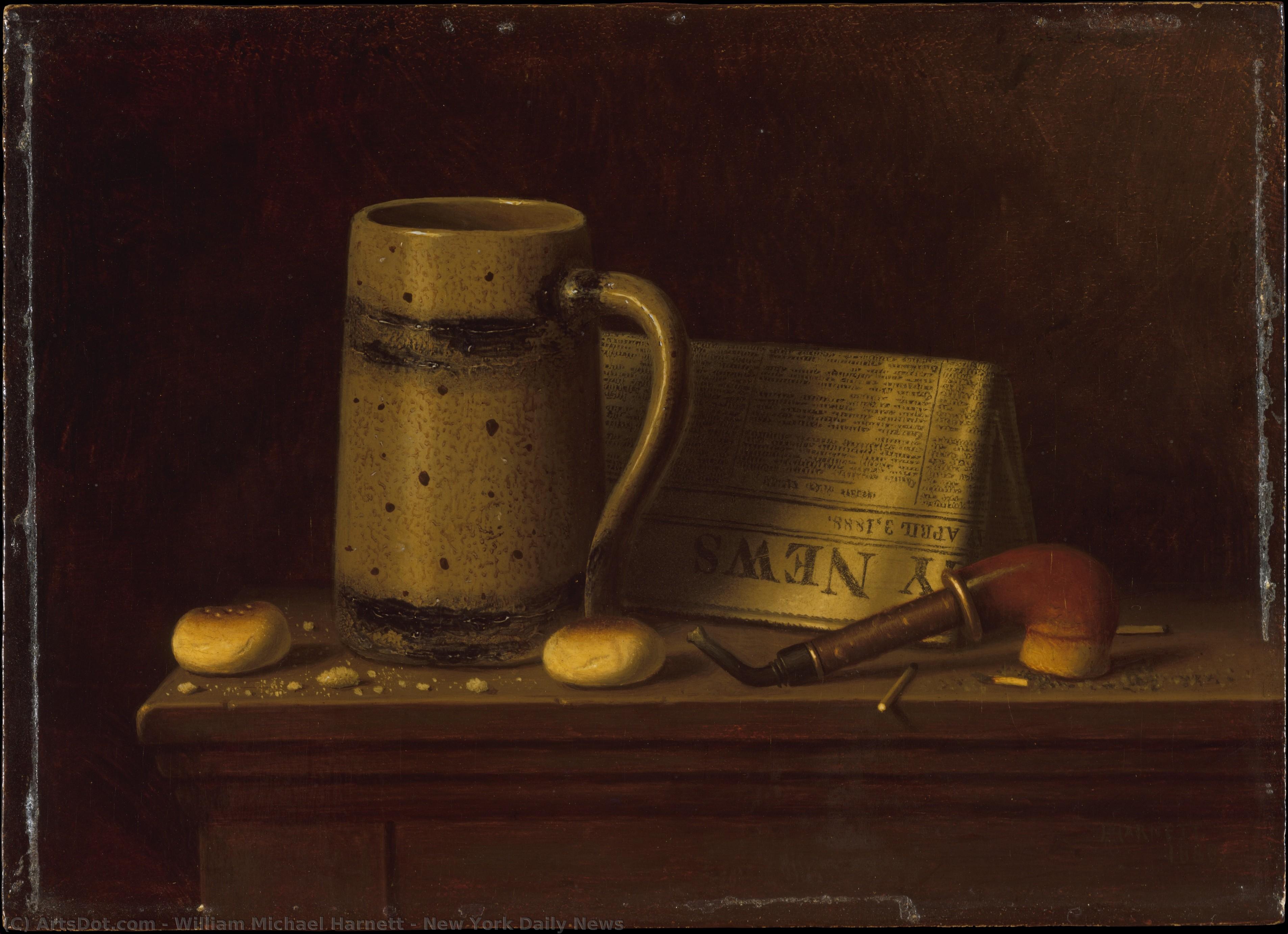
New York Daily News
 Painting
- Contemporary Realism
 1888
1888- 19th Century
 14.0 x 19.0 cm
 Metropolitan Museum of Art
 Read More
Purchase a high-resolution, enhanced digital image, far superior to the online preview.
Each file is meticulously prepared by our in-house specialists using advanced tools and expert manual retouching. We ensure every image has exceptional clarity, precise color accuracy, and fine detail.
The final file is delivered via email within 72 hours, optimized for immediate use in professional, editorial, and print environments. This is the same quality trusted by top-tier design studios, publishers, and galleries.
Digital Image
Download a high-resolution file for personal display, printing, and creative projects. ( Buy Print Buy Hand Made Painting)
Included in Every Digital Image Order
Expert Digital Delivery, Guaranteed
When you choose ArtsDot.com, you're not just getting an image - you're receiving a professionally enhanced digital artwork, crafted with precision and backed by a satisfaction guarantee. Here's everything that comes with your order, automatically:

Fast Email Delivery
Your high-resolution digital image file will be emailed to you within 72 hours of ordering - ready for immediate use.

AI-Enhanced Digital File
Your artwork is professionally optimized using advanced AI tools and manual editing, ensuring maximum detail, clarity, and color accuracy.

Free Lifetime Re-Delivery
Accidentally deleted or lost your file? No worries - we'll resend it to you anytime, free of charge.

No Import Fees - Ever
Enjoy your artwork instantly with zero customs, duties, or delivery fees - digital downloads are always tax-free.

Color Accuracy Guarantee
We ensure your digital image reflects the original colors as closely as possible using professional tools and color management.

60-Day Satisfaction Guarantee
If you're not satisfied with your digital image, we'll revise it or refund 100% within 60 days - no questions asked.

100% Money-Back Guarantee
Not satisfied? Get a full refund within 60 days of receiving your digital file - no questions asked.

Bulk Order Discounts
Buy 3 images, save 10% - Buy 5, save 15% - Buy 10+, save 20%. Great for creative projects, galleries, and agencies.
Collectible Description
The Intimate Still Life: A Glimpse into Harnett's World
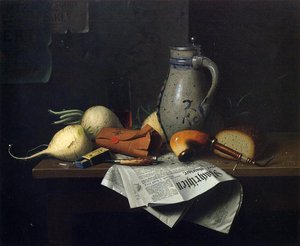
To stand before William Michael Harnett’s New York Daily News is not merely to observe an arrangement of objects; it is to step directly into the meticulously curated, quiet moments of late nineteenth-century urban life. This painting possesses an almost startling intimacy, drawing the viewer close enough to discern the texture of aged paper, the subtle sheen on a ceramic mug, and the varied patina of everyday detritus. Harnett elevates the humble still life—the discarded crumbs, the forgotten matches, the very ephemera of daily existence—into subjects worthy of high art. His genius lay in transforming the mundane into something profoundly beautiful, forcing us to reconsider what we deem worthy of artistic contemplation.
Mastery of Illusion: Technique and Detail
Harnett’s technical prowess is nothing short of breathtaking. He was a master illusionist, employing techniques that bordered on the trompe-l'œil, making his painted objects seem startlingly real upon the canvas. The impasto, rich in color and texture, gives weight and substance to every element depicted. Whether it is the convincing rendering of a ceramic glaze or the delicate scattering of tobacco flakes, one notes an almost obsessive attention to detail. This precision stems from his early training in engraving design on table silver—a discipline that demanded absolute accuracy. When considering a reproduction of this work for your space, you are acquiring not just an image, but a testament to painstaking, skilled craftsmanship.
A Reflection of Masculine Culture and Urbanity
The subject matter itself speaks volumes about the world Harnett inhabited—a world steeped in masculine pursuits. While the specific arrangement seen here includes items like books and fruit alongside the titular newspaper, the overall collection echoes his lifelong fascination with objects associated with intellectualism, leisure, and the urban grind. The New York Daily News serves as a historical anchor, grounding the piece firmly in its time. These objects—the pipes, the mugs, the printed word—are artifacts of a specific cultural moment, inviting us to ponder the rhythms of life in turn-of-the-century New York City.
Symbolism and Emotional Resonance
What does this collection whisper to us today? It speaks of transience. Every object pictured carries the weight of its use—a half-eaten biscuit, a spent matchstick. Harnett captures the beauty inherent in decay and passage. Emotionally, the painting offers a sense of quiet contemplation; it is a pause button pressed on the relentless march of time. For collectors and designers alike, this piece adds an intellectual depth to any room, suggesting that true richness is often found not in grand pronouncements, but in the accumulated beauty of small, lived-in moments.
Related Artworks
Artist Biography
William Michael Harnett: The Illusionist of Everyday Life
William Michael Harnett (1848 – 1892) stands as a singular figure in American art history, celebrated for his masterful trompe-l'œil paintings that elevate the mundane into breathtaking illusions. Born in Clonakilty, County Cork, Ireland, Harnett’s early life was marked by emigration to Philadelphia shortly after his birth, shaping him into an artist deeply rooted in both European tradition and burgeoning American realism. His formative years were spent honing skills in engraving design on table silver – a craft that instilled precision and attention to detail – alongside pursuing formal artistic training at institutions like the Pennsylvania Academy of Fine Arts and Cooper Union.- Early Training & Technique: Harnett’s dedication to mastering technique began with night classes at Penn and NYAD, where he absorbed influences from luminaries like Raphael Peale Jr., who pioneered tabletop still life in America. This influence is palpable in Harnett's distinctive style – a deliberate departure from prevailing academic conventions.
- The Trompe-l’œil Vision: Harnett’s breakthrough came with his embrace of trompe-l’œil, a technique borrowed from 17th-century Dutch masters like Pieter Claesz. Unlike traditional depictions that strive for accurate representation, trompe-l'œil seeks to deceive the eye, creating an illusion of depth and dimensionality within a flat surface. Harnett skillfully manipulated perspective, shading, and texture to achieve this astonishing feat.
Notable Works & Artistic Style
Harnett’s oeuvre is characterized by its unwavering focus on commonplace objects – pipe, newspaper, tobacco pouch, violin, apple, wine bottle—presented with an extraordinary level of realism that borders on hallucinatory. His paintings aren't merely representations; they are invitations to engage in a perceptual puzzle. Consider “After the Hunt,” a quartet of canvases depicting hunting paraphernalia and deceased game animals. Harnett’s meticulous rendering captures every nuance of texture and light, exploiting the limitations of trompe-l'œil to heighten its impact. The shallow space of these paintings is crucial – any movement by the viewer disrupts the illusion, emphasizing Harnett’s genius in manipulating visual perception.- “After the Hunt” Series: This series exemplifies Harnett’s technique perfectly, demonstrating how he utilizes optical tricks to create a convincing illusion of depth within a confined space.
- Recurring Themes: Recurring motifs include instruments (particularly violins), tobacco pouches, and meticulously arranged fruit – objects that speak to both the artist's personal interests and his broader engagement with artistic precedents.
Recognition & Legacy
Harnett’s work gained considerable acclaim during his lifetime and continues to resonate with contemporary audiences. Museums such as the Albright-Knox Art Gallery, the American Museum of Natural History, and The Metropolitan Museum of Art proudly display his paintings, ensuring that his vision persists across generations. Harnett's influence extends beyond stylistic imitation; he championed a new approach to realism—one that prioritized illusionistic depth over mere surface accuracy. His legacy is cemented in the works of artists who followed him, particularly Jefferson David Chalfant, whose trompe-l’œil technique owes considerable debt to Harnett’s pioneering vision.Further Exploration
To delve deeper into William Michael Harnett's artistic journey and explore his captivating paintings, visit ArtsDot.com for detailed information about his life and oeuvre. Also consider exploring the collections of institutions like Residenz in Munich and The Philadelphia Museum of Art to experience Harnett’s art firsthand.
William Michael Harnett
1848 - 1892 , Ireland
Quick Facts
- Artistic Movement Or Style: Trompe l'œil painting
- Artists Or Movements Influenced By This Artist: ['American Realism']
- Artists Who Influenced This Artist:
- Raphaelle Peale
- Pieter Claesz
- Date Of Birth: August 10, 1848
- Date Of Death: 1892
- Full Name: William Michael Harnett
- Nationality: Irish-American
- Notable Artworks:
- After the Hunt
- The Old Violin
- Music and Good Luck
- Place Of Birth: Clonakilty, Ireland

