 Preview
 Send
Send Share
Share
 Details

 Download
 Similars
 X-Ray
X-Ray Diaporama
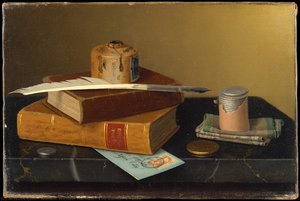
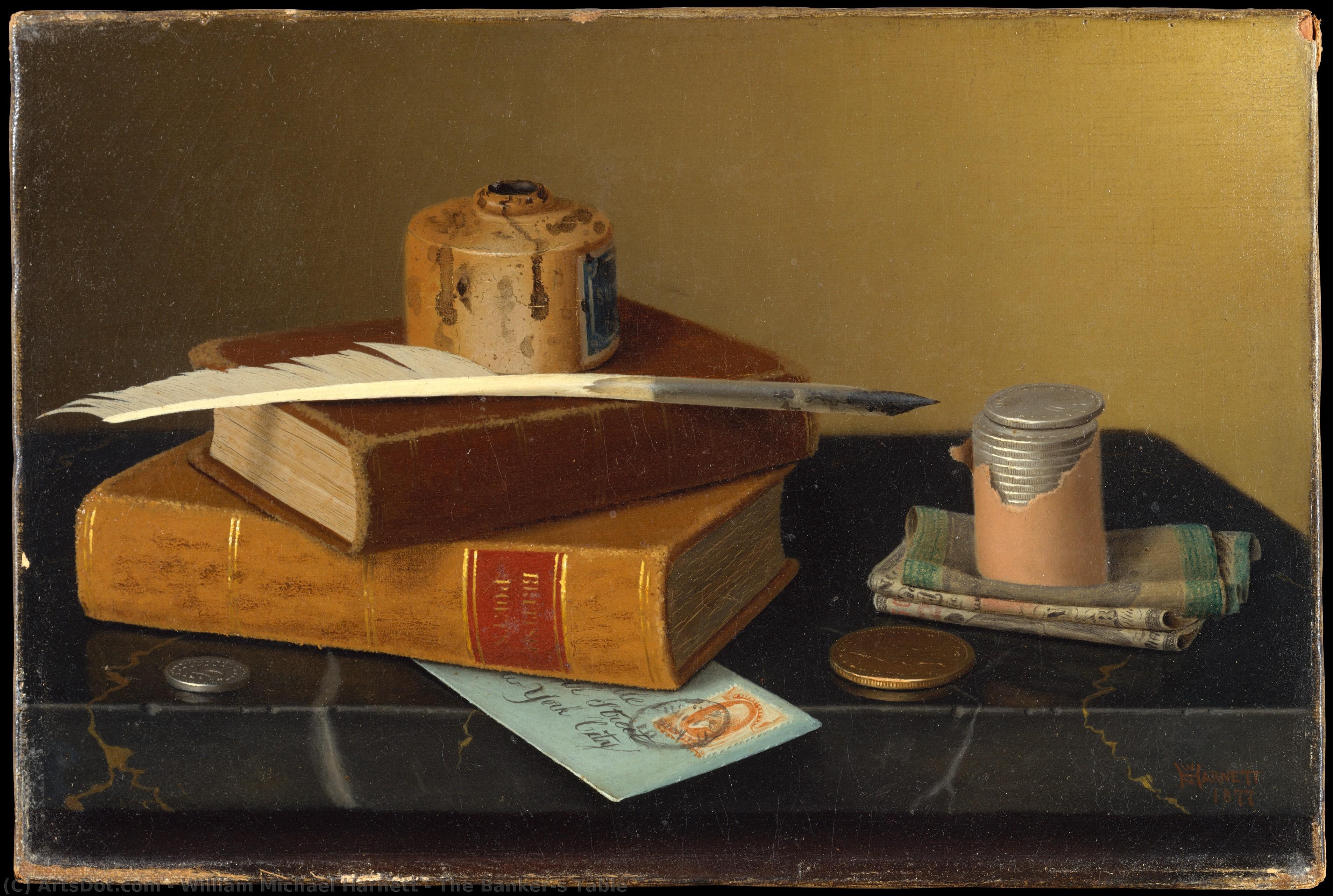
The Banker's Table
 Oil On Paper
- Contemporary Realism
 1877
1877- 19th Century
 20.0 x 31.0 cm
 Metropolitan Museum of Art
 Read More
Hand Made Oil Reproduction
Hand-painted oil on canvas in your size and frame, made to order by our artists. ( Buy Print Buy Image)




P118B $10

P118H $10

P118W $10

P438Z $10

P508JH $12

P508YH $12

P805H $10

P805Z $10

P919BZ $10

P919G $10

P919XJ $10

P959ZH $10

P968JZ $12

W106C $8

W218G $10

W218JH $8

W218Y $10

W307PJ $10

W316G $10

W316PJ $8

W316Y $10

W398PJ $8

W4111J $10

W500HY $15

W500JH $15

W692G $12

W849H $8

W940BG $15

W953PJ $8




Pick from our preset sizes that match the artwork's original proportions.

You may enter your own dimensions to fit a specific frame or space. If your selected size does not match the original image's proportions, we will either crop the artwork or extend the painting with additional hand-painted elements. A digital mockup will be sent for your approval before production begins.
Please note that the on-screen preview does not reflect the actual cropping or extension. Only the mockup will accurately show the final composition.
While custom sizes are available, we recommend selecting a dimension from the predefined list to preserve the original proportions.
After order, ArtsDot.com team will email client for instructions and provide a mockup preview
Worldwide Delivery () in 3/4 weeks instead of standard 5 weeks. (17 August). No compromise on quality.

Free Worldwide Express Shipping

High-Quality Linen Canvas

Full Shipping Insurance

Customs Tax Refund Guarantee

True Color Matching Guarantee

60-Day Return Policy (Defects Only)

100% Money-Back Guarantee

Bulk Discount Offer
 Glass option is only available in size under 110 CM

The Banker's Table
Reproduction Medium
Reproduction Size
-


Total Price
$ 263
Artwork Description
The Allure of the Everyday Object
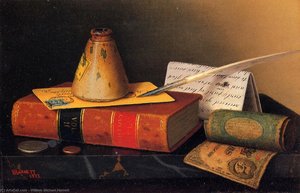
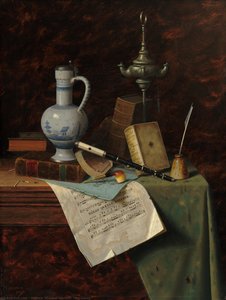
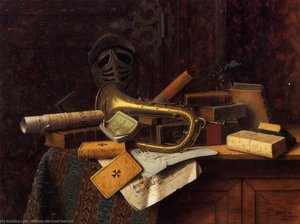
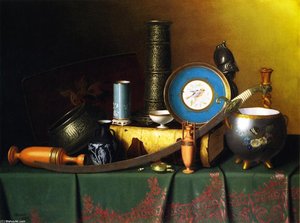
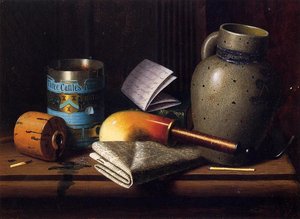
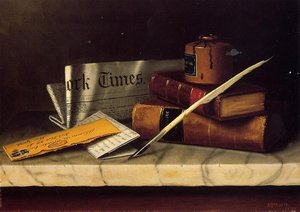
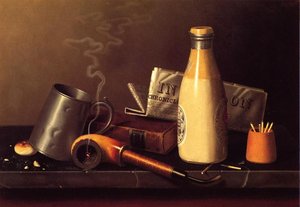
William Michael Harnett’s The Banker's Table invites us into an intimate glimpse of a bygone era—a world where commerce, scholarship, and the passage of time converged upon a single wooden surface. Unlike the lush bounty of fruit that characterized some of his earlier still lifes, this piece turns its meticulous gaze toward the manufactured artifacts of intellectual and financial life. It is a masterclass in elevating the mundane; Harnett does not merely paint objects, he captures the very essence of their existence, suggesting stories whispered between leather bindings and tarnished metal.
A Study in Texture and Time
Observe the exquisite detail that defines this work. The varied textures are nothing short of breathtaking—the smooth, worn patina of the ink bottle contrasts sharply with the crisp edges of the stacked volumes. One can almost feel the grain of the aged leather or the slight resistance of the rolled coins. Harnett possessed an unparalleled gift for rendering these subtle material differences, a skill honed by his early practice in engraving on silver. The inclusion of items like the quill pen and the letter opener speaks to a life lived with purpose, a workspace that has absorbed the residue of countless decisions made over years.
Symbolism of Industry and Intellect
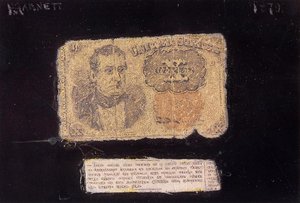
While the title suggests a connection to banking through its currency motifs, the painting’s narrative scope is far broader. It functions as a rich allegory for human endeavor itself. The books represent accumulated knowledge, the ink symbolizes communication, and the tools—the scissors, the opener—are emblems of action and refinement. Harnett masterfully uses these objects not just as subjects, but as silent narrators, suggesting that true wealth is often found not in gold alone, but in the confluence of ideas and diligent craftsmanship.
Bringing the Study Home
For the discerning collector or designer seeking to infuse a space with history and quiet sophistication, this reproduction offers more than mere decoration. It is an artifact of contemplation. Imagine this scene rendered on your mantelpiece or console table; it anchors a room in a sense of cultivated permanence. Harnett’s ability to capture "the mellowing effect of age" allows the piece to feel both timelessly grand and intimately personal, transforming any corner into a distinguished study worthy of deep thought.
Related Artworks
Artist Biography
William Michael Harnett: The Illusionist of Everyday Life
William Michael Harnett (1848 – 1892) stands as a singular figure in American art history, celebrated for his masterful trompe-l'œil paintings that elevate the mundane into breathtaking illusions. Born in Clonakilty, County Cork, Ireland, Harnett’s early life was marked by emigration to Philadelphia shortly after his birth, shaping him into an artist deeply rooted in both European tradition and burgeoning American realism. His formative years were spent honing skills in engraving design on table silver – a craft that instilled precision and attention to detail – alongside pursuing formal artistic training at institutions like the Pennsylvania Academy of Fine Arts and Cooper Union.- Early Training & Technique: Harnett’s dedication to mastering technique began with night classes at Penn and NYAD, where he absorbed influences from luminaries like Raphael Peale Jr., who pioneered tabletop still life in America. This influence is palpable in Harnett's distinctive style – a deliberate departure from prevailing academic conventions.
- The Trompe-l’œil Vision: Harnett’s breakthrough came with his embrace of trompe-l’œil, a technique borrowed from 17th-century Dutch masters like Pieter Claesz. Unlike traditional depictions that strive for accurate representation, trompe-l'œil seeks to deceive the eye, creating an illusion of depth and dimensionality within a flat surface. Harnett skillfully manipulated perspective, shading, and texture to achieve this astonishing feat.
Notable Works & Artistic Style
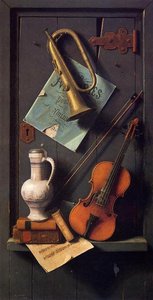
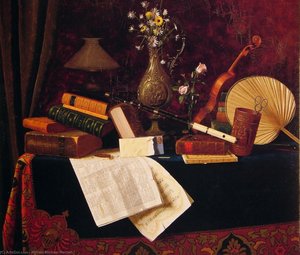
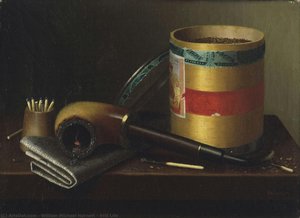
Harnett’s oeuvre is characterized by its unwavering focus on commonplace objects – pipe, newspaper, tobacco pouch, violin, apple, wine bottle—presented with an extraordinary level of realism that borders on hallucinatory. His paintings aren't merely representations; they are invitations to engage in a perceptual puzzle. Consider “After the Hunt,” a quartet of canvases depicting hunting paraphernalia and deceased game animals. Harnett’s meticulous rendering captures every nuance of texture and light, exploiting the limitations of trompe-l'œil to heighten its impact. The shallow space of these paintings is crucial – any movement by the viewer disrupts the illusion, emphasizing Harnett’s genius in manipulating visual perception.- “After the Hunt” Series: This series exemplifies Harnett’s technique perfectly, demonstrating how he utilizes optical tricks to create a convincing illusion of depth within a confined space.
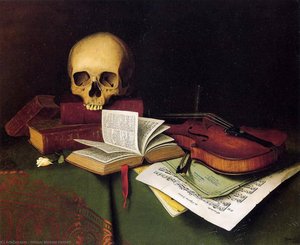
- Recurring Themes: Recurring motifs include instruments (particularly violins), tobacco pouches, and meticulously arranged fruit – objects that speak to both the artist's personal interests and his broader engagement with artistic precedents.
Recognition & Legacy
Harnett’s work gained considerable acclaim during his lifetime and continues to resonate with contemporary audiences. Museums such as the Albright-Knox Art Gallery, the American Museum of Natural History, and The Metropolitan Museum of Art proudly display his paintings, ensuring that his vision persists across generations. Harnett's influence extends beyond stylistic imitation; he championed a new approach to realism—one that prioritized illusionistic depth over mere surface accuracy. His legacy is cemented in the works of artists who followed him, particularly Jefferson David Chalfant, whose trompe-l’œil technique owes considerable debt to Harnett’s pioneering vision.Further Exploration
To delve deeper into William Michael Harnett's artistic journey and explore his captivating paintings, visit ArtsDot.com for detailed information about his life and oeuvre. Also consider exploring the collections of institutions like Residenz in Munich and The Philadelphia Museum of Art to experience Harnett’s art firsthand.
William Michael Harnett
1848 - 1892 , Ireland
Quick Facts
- Artistic Movement Or Style: Trompe l'œil painting
- Artists Or Movements Influenced By This Artist: ['American Realism']
- Artists Who Influenced This Artist:
- Raphaelle Peale
- Pieter Claesz
- Date Of Birth: August 10, 1848
- Date Of Death: 1892
- Full Name: William Michael Harnett
- Nationality: Irish-American
- Notable Artworks:
- After the Hunt
- The Old Violin
- Music and Good Luck
- Place Of Birth: Clonakilty, Ireland
Related Articles
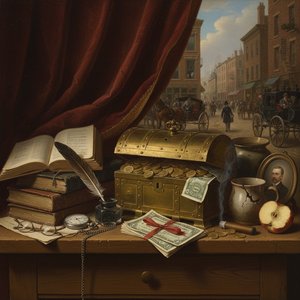
William Michael Harnett: Still Life, Realism & the American Pursuit of Materiality
Explore the captivating still lifes of William Michael Harnett, a master of American realism and trompe l'oeil painting. Discover his technique, legacy & the cultural context behind his iconic works.
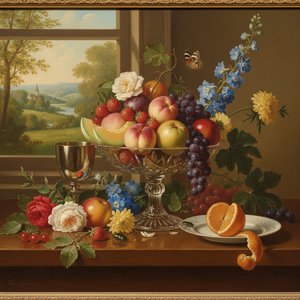
Severin Roesen: Evoking National Identity Through American Still Life Painting
Explore the captivating world of Severin Roesen, a major American still life painter influenced by Dutch masters. Discover his lush compositions and the symbolism within his art – a window into 19th-century America.

Cézanne's Masterpieces: 25 Iconic Artworks to Transform Your Space
Journey through 25 iconic artworks by Paul Cézanne – a master of Impressionism and Post-Impressionism. Explore his landscapes, still lifes, and the stories behind these timeless masterpieces. Discover museum-quality reproductions & curated decor at ArtsDot.com.
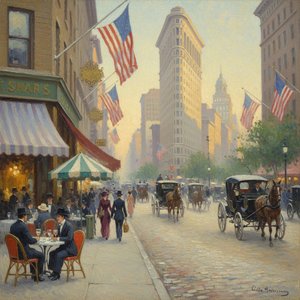
Frederick Childe Hassam: American Impressionism's Chronicler of Light & Modern Life
Explore the captivating world of Frederick Childe Hassam, a pioneer of American Impressionism. Discover his iconic paintings capturing light, urban life & coastal beauty. Learn about his legacy and influence on American art history.

Capturing a Nation's Light: Exploring the American Impressionist Movement
Explore the captivating world of American Impressionism! Discover key artists, techniques & its lasting impact on art history. Find museum-quality reproductions and expert guidance at ArtsDot.