 Preview
 Send
Send Share
Share
 Details

 Download
 Similars
 X-Ray
X-Ray Diaporama
Christ on the Cross
 Oil On Canvas
- WallArt
- Northern Renaissance
 1490
1490- Renaissance
 50.0 x 63.0 cm
 Courtauld Gallery
 Read More
Giclée / Art Print
Museum-quality giclée or canvas print with fast production and flexible finish options. ( Buy Hand Made Painting Buy Image)




P118B $10

P118H $10

P118W $10

P438Z $10

P508JH $12

P508YH $12

P805H $10

P805Z $10

P919BZ $10

P919G $10

P919XJ $10

P959ZH $10

P968JZ $12

W106C $8

W218G $10

W218JH $8

W218Y $10

W307PJ $10

W316G $10

W316PJ $8

W316Y $10

W398PJ $8

W4111J $10

W500HY $15

W500JH $15

W692G $12

W849H $8

W940BG $15

W953PJ $8




Pick from our preset sizes that match the artwork's original proportions.

You may enter your own dimensions to fit a specific frame or space. If your selected size does not match the original image's proportions, we will either crop the artwork or extend the image with a mirrored or solid-fill edge. A digital mockup will be sent for your approval before production begins.
Please note that the on-screen preview does not reflect the actual cropping or extension. Only the mockup will accurately show the final composition.
While custom sizes are available, we recommend selecting a dimension from the predefined list to preserve the original proportions.
Worldwide Delivery () in 2 weeks instead of standard 4/5 weeks. (22 August)

Free Worldwide Express Shipping

High-Quality Linen Canvas

Full Shipping Insurance

Customs Tax Refund Guarantee

True Color Matching Guarantee

60-Day Return Policy (Defects Only)

100% Money-Back Guarantee

Bulk Discount Offer
 Glass option is only available in size under 110 CM

Christ on the Cross
Giclée / Art Print
Reproduction Size
-


Total Price
$ 63
Collectible Description
A Vision of Devotion: The Dramatic Crucifixion
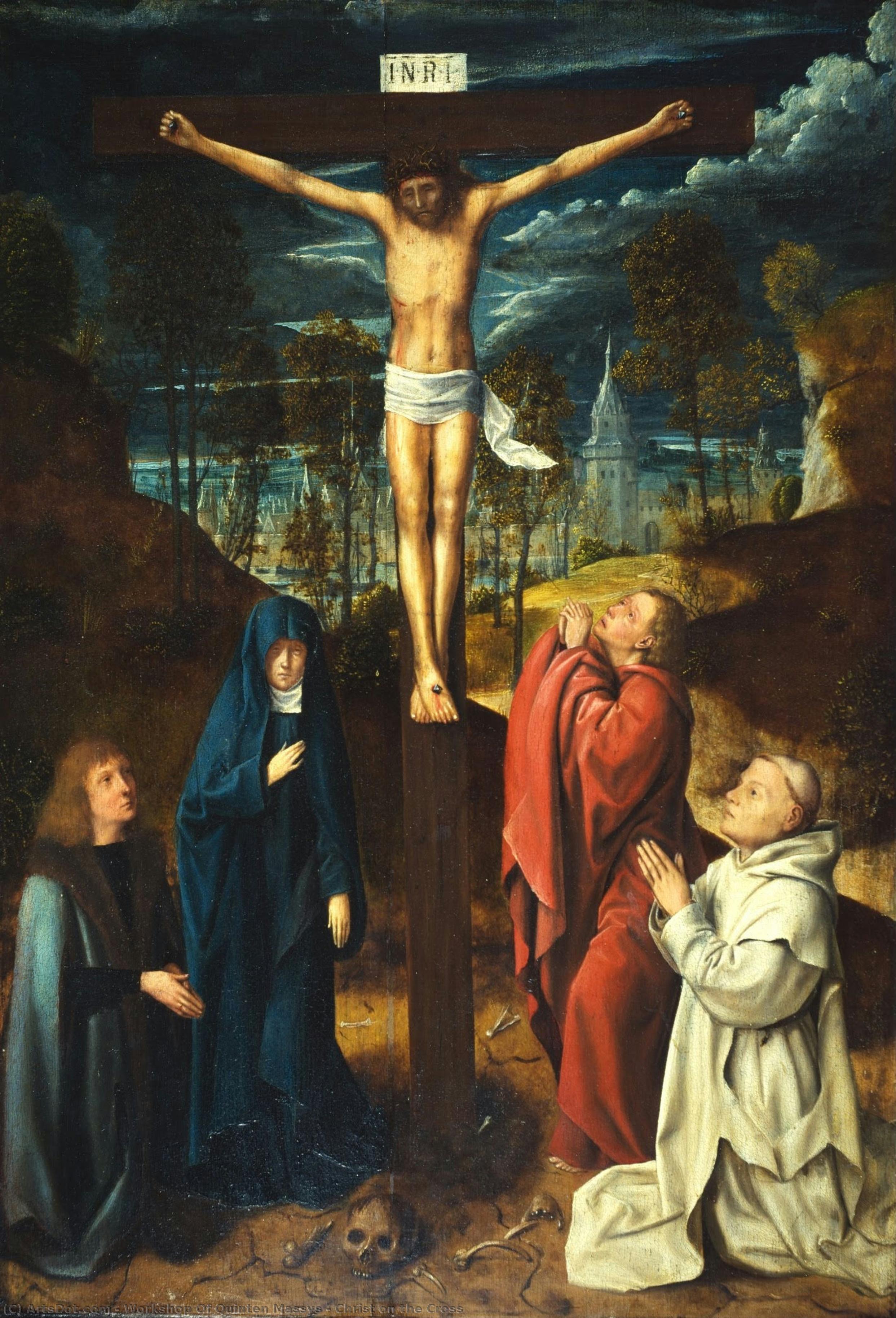
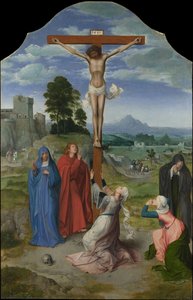
In the somber, atmospheric depths of this Northern Renaissance masterpiece, we encounter a moment of profound spiritual intensity. Christ on the Cross serves as a breathtaking window into the late 15th century, capturing the raw, visceral emotion of the crucifixion with a precision that transcends time. The composition is anchored by the central, vertical figure of Christ, whose suffering is set against a brooding, dark sky that seems to weep alongside the mourners below. This is not merely a depiction of a historical event, but an immersive experience designed to evoke deep empathy and contemplation in the viewer.
The scene unfolds with a meticulous attention to detail characteristic of the Workshop of Quinten Massys. At the foot of the cross, the narrative weight is carried by a group of figures whose varied expressions of grief create a powerful emotional tapestry. A distressed Virgin Mary and Saint John stand as pillars of sorrow, their faces etched with the agony of loss. Flanking them are two remarkably different men: a Carthusian monk, embodying the quiet solitude of prayer, and a wealthy figure draped in a luxurious, fur-lined coat. This juxtaposition of monastic humility and worldly opulence suggests a complex story of patronage and perhaps a shared familial devotion, inviting collectors to ponder the human connections behind the canvas.
Mastery of Light and Northern Renaissance Technique
The technical brilliance of this work lies in its ability to marry realism with profound symbolism. Executed in oil on canvas, the painting utilizes a sophisticated layering technique that builds a sense of tangible texture—from the heavy, angular folds of the mourners' drapery to the delicate, pale skin tones of the central figure. The lighting is masterfully dramatic, employing sharp contrasts and deep shadows to heighten the sense of despair and divine tragedy. This use of light does more than define form; it directs the eye through the landscape, leading from the immediate agony of the foreground toward a distant, hazy town that suggests the wider world continues, indifferent to the cosmic sacrifice occurring in the center.
Every element within the frame is imbued with symbolic significance. The skull at the base of the cross serves as a poignant memento mori, a reminder of mortality and the inevitability of death, while the deep blues, reds, and earthy browns of the palette create a melancholic atmosphere that resonates with the theme of redemption. For the discerning interior designer or art enthusiast, this piece offers more than just aesthetic beauty; it provides a focal point of immense character and historical gravity. A high-quality reproduction of this work brings a sense of timelessness and intellectual depth to any space, making it an exquisite choice for those looking to curate a collection defined by emotional resonance and classical mastery.
Related Artworks



Artist Biography
The Enigmatic Workshop of Quinten Massys: A Legacy in Antwerp Renaissance Painting
The name “Workshop of Quinten Massys” represents a fascinating, and often deliberately obscured, chapter in the history of 16th-century Netherlandish art. It’s not a single artist we speak of, but rather a collaborative enterprise centered around the prolific and highly influential Quinten Matsys (also spelled Massys), one of Antwerp's earliest masters. Understanding this workshop is crucial to appreciating the breadth and depth of artistic production in that burgeoning center of commerce and creativity. Born likely around 1465 or 1470, Matsys himself emerged from a background steeped not in traditional art training but in craftsmanship – he was initially a painter of playing cards and other decorative items. This unusual path would profoundly shape his aesthetic, imbuing his work with a meticulous attention to detail and a keen observation of everyday life that set him apart from many contemporaries. He rose quickly through the ranks of Antwerp’s Guild of Saint Luke, becoming guild master in 1509 and serving as its head multiple times, demonstrating both his artistic prowess and his standing within the community. While biographical details remain somewhat sparse, it is clear Matsys was a pivotal figure in establishing a new naturalism and psychological depth in Flemish painting.A Hub of Artistic Production: The Workshop’s Structure and Style
Matsys' workshop wasn’t simply a place where apprentices mechanically copied his designs. It functioned as a complex system, with the master undertaking the most important commissions and often executing key elements of paintings himself – frequently the faces and hands of central figures. Assistants, each possessing varying degrees of skill, would be responsible for backgrounds, drapery, still lifes, and less prominent parts of compositions. This division of labor was common practice at the time, but Matsys’ workshop is particularly notable for the consistently high quality of its output, even in works largely executed by his followers. Identifying paintings definitively attributable to Matsys versus those produced *in* his workshop can be challenging, leading to ongoing scholarly debate. Generally, works displaying a particularly refined technique, complex symbolism, and psychological nuance are considered more likely to be directly from the master’s hand. However, even pieces with a greater degree of assistant involvement showcase the distinctive characteristics of the Matsys style: a remarkable realism, often combined with subtle humor and moralizing undertones. The workshop's production extended beyond panel paintings to include altarpieces, portraits, and smaller devotional works, catering to a diverse clientele that included merchants, religious institutions, and wealthy patrons.Influences and Innovations: Bridging Tradition and Renaissance Ideals
Matsys’ artistic development was shaped by a confluence of influences. Early Flemish masters like Jan van Eyck and Rogier van der Weyden provided a foundation in meticulous detail and realistic representation. However, Matsys moved beyond the purely devotional focus of these earlier artists, embracing humanist ideals that were beginning to circulate throughout Europe. His travels to Italy – documented in guild records – exposed him to Renaissance art and likely inspired his interest in classical antiquity and idealized forms. This is evident in works like *The Virgin Mary with Saints*, where the figures exhibit a more sculptural quality and are set within architectural settings reminiscent of Italian palazzi. He was among the first Netherlandish painters to incorporate elements of Italian Renaissance painting into his work, but he did so selectively, adapting them to suit his own aesthetic sensibilities and the tastes of his patrons. His integration of classical motifs with Northern realism proved highly influential, paving the way for a new generation of Flemish artists who sought to reconcile tradition with contemporary trends. Furthermore, Matsys’ fascination with genre scenes – depictions of everyday life – was groundbreaking. His *The Money-Changer and his Wife* is considered one of the earliest examples of this type, offering a nuanced commentary on human greed and morality.Major Achievements and Lasting Legacy
Among Matsys’ most celebrated works are his religious paintings, such as *The Descent from the Cross*, which showcases his mastery of composition, anatomy, and emotional expression. His portraits, including those of prominent Antwerp citizens, are renowned for their psychological insight and meticulous rendering of detail. However, it is perhaps his genre scenes that have had the most enduring impact on art history. These works not only demonstrate his technical skill but also reveal a deep understanding of human nature. The workshop’s output was prolific, ensuring Matsys' style permeated Antwerp painting for decades after his death in 1530. His influence can be seen in the work of his sons, Jan and Cornelis Matsys, who continued to operate the workshop after their father’s passing, as well as numerous other artists who trained within its walls. The legacy of the Workshop of Quinten Massys extends beyond specific paintings; it lies in the establishment of a new artistic standard – one that valued realism, psychological depth, and moralizing undertones. His work helped to define the character of Antwerp Renaissance painting and continues to captivate audiences today with its beauty, complexity, and enduring relevance.Historical Significance: A Cornerstone of Northern Renaissance Art
The Workshop of Quinten Massys occupies a pivotal position in the development of Northern Renaissance art. It represents a crucial transition from the late Gothic traditions of Jan van Eyck to the more humanist-influenced styles of the later 16th century. Matsys’ success was instrumental in establishing Antwerp as a major artistic center, attracting artists and patrons from across Europe. His emphasis on realism, combined with his subtle moralizing themes, resonated deeply with the burgeoning merchant class of Antwerp – a society increasingly focused on worldly affairs and individual achievement. The workshop's collaborative structure also had a significant impact on the organization of art production in the Netherlands, paving the way for the development of specialized workshops that catered to a growing demand for paintings. While attributing specific works remains a complex undertaking, the collective output of the Workshop of Quinten Massys stands as a testament to the artistic innovation and cultural dynamism of Antwerp during the Renaissance. The enduring appeal of these paintings lies not only in their technical brilliance but also in their ability to capture the complexities of human life with remarkable sensitivity and insight.
Quick Facts
- Artistic Movement Or Style: Renaissance painting
- Date Of Death: Living
- Full Name: Workshop Of Quinten Massys
- Nationality: Flemish
- Notable Artworks:
- The Last Judgment
- Saint Jerome in his Study
Related Articles
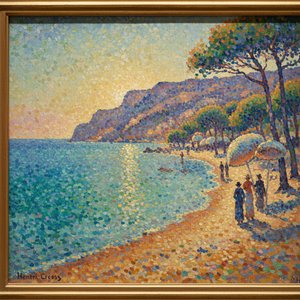
Henri Edmond Cross: A Pioneer of Neo-Impressionism & the Divisionist Aesthetic
Explore the life & art of Henri Edmond Cross, a pivotal Neo-Impressionist painter. Discover his innovative divisionist technique, political affiliations, and lasting influence on modern art movements like Fauvism. Learn about key works & legacy.

Fra Angelico's Masterpieces: 25 Renaissance Paintings for Your Home | ArtsDot
Explore 25 breathtaking masterpieces by Fra Angelico, a Renaissance master. Discover the stories behind his iconic frescoes, Annunciations & religious art. Find museum-quality reproductions and elevate your home decor with ArtsDot.com.
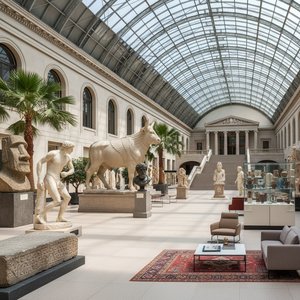
British Museum Masterpieces: Explore 25 Iconic Artworks & Decor Inspiration
Journey through 25 iconic artworks at the British Museum, London! Explore masterpieces from Egyptian sculptures to Renaissance paintings & uncover their stories. Find museum-quality art reproductions and curated decor ideas on ArtsDot.com.

Early Netherlandish Masters: 10 Paintings That Revolutionized Art & Decor
Journey into the world of Early Netherlandish painting! Explore 10 masterpieces by Jan van Eyck, Rogier van der Weyden & more. Discover stunning detail, symbolism & Renaissance art for your home decor. Find museum-quality reproductions on ArtsDot.com
Harmonizing Heritage: A Cross-Cultural Approach to Interior Design with Asian, European, and African Art Reproductions
Discover the art of cross-cultural interior design with ArtsDot.com. Explore museum-quality reproductions & expert guidance to create a globally inspired, sophisticated home. Shop now!