Early Influences & Realist Beginnings: Laying the Foundation
Henri-Edmond Cross, born Henri-Edmond-Joseph Delacroix in 1856, embarked on an artistic journey that would ultimately redefine the landscape of French painting. His early life in Douai and Lille offered little immediate indication of the revolutionary path he would forge. Initially drawn to Realism, a dominant force in the art world of his youth, Cross’s first works reflected the somber palettes and meticulous detail characteristic of the movement. He sought formal training, studying under Carolus-Duran and François Bonvin, absorbing their techniques but harboring an underlying desire for distinction – a need to move beyond the established conventions that felt restrictive. This nascent yearning led him to adopt the name “Henri Cross” in 1881, a subtle yet significant act of artistic self-determination, distancing himself from the legacy of his famous namesake, Eugène Delacroix.
These early paintings, though competent and exhibiting technical skill, lacked the vibrancy and personal expression that would later define his oeuvre. His initial forays into the Salon des Artistes Français met with modest success, but Cross remained restless, seeking a visual language capable of conveying not merely what he saw, but how he *felt*. Influences from artists like Jules Bastien-Lepage and Édouard Manet lingered during this period, yet they served as stepping stones rather than destinations. The gradual shift towards brighter colors, inspired by the burgeoning Impressionist movement, signaled a pivotal turning point in his artistic development.
The Embrace of Neo-Impressionism: A Shift in Palette and Technique
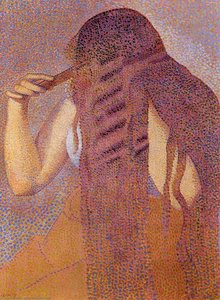
The year 1891 marked a watershed moment for Cross. After years of experimentation, he fully embraced Neo-Impressionism, a scientific approach to color and light pioneered by Georges Seurat and Paul Signac. His first large-scale work in this style – a divisionist portrait of Madame Hector France – was a bold declaration of his new artistic allegiance. This wasn’t merely a change in technique; it represented a fundamental shift in Cross’s understanding of perception and representation.
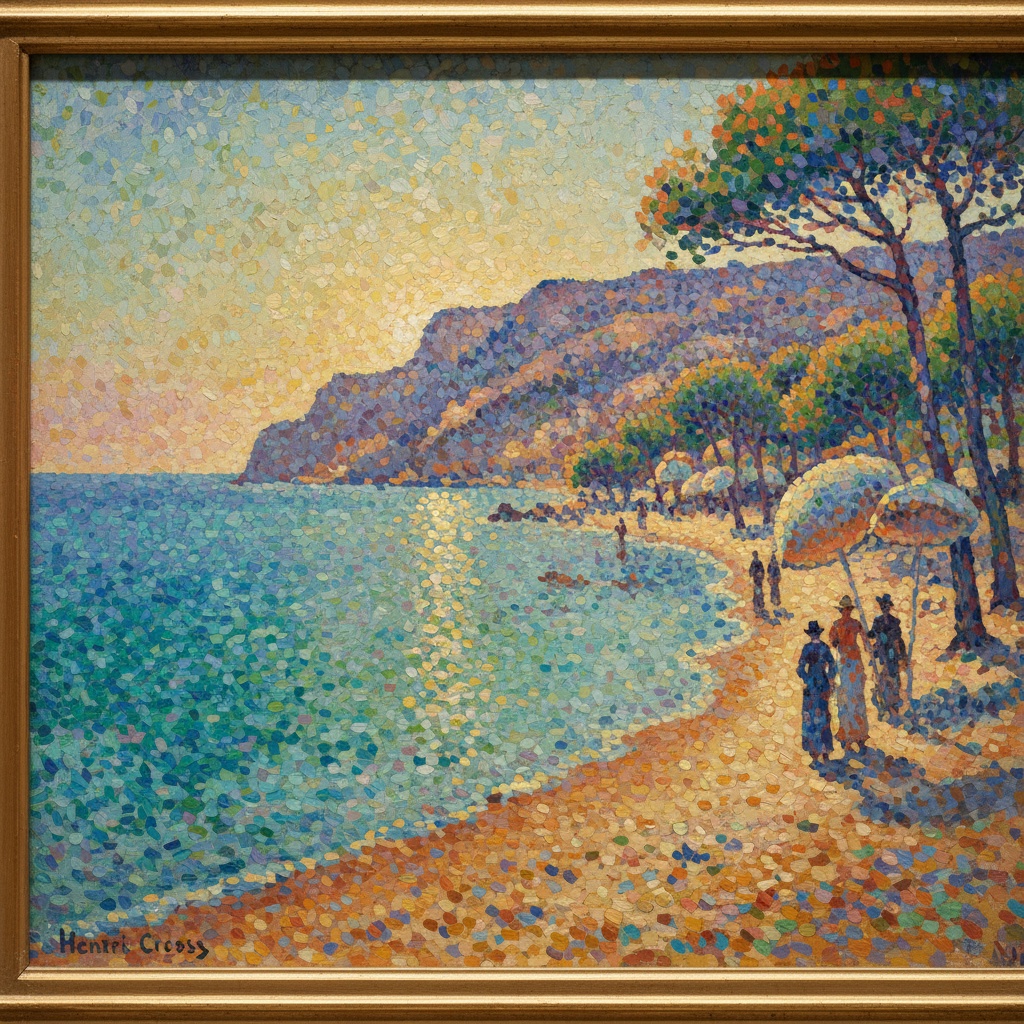
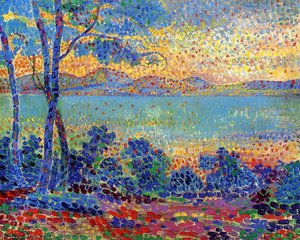
The move to southern France, necessitated by health concerns stemming from rheumatism, proved transformative. The intense Mediterranean light and vibrant landscapes provided the ideal environment for exploring the principles of Neo-Impressionism. He settled initially in Cabasson, near Le Lavandou, before finding a permanent home in Saint-Clair. Here, surrounded by the natural beauty that would become his muse, Cross dedicated himself to mastering the intricacies of divisionism – the systematic application of tiny dots of pure color intended to blend optically in the viewer’s eye.
Divisionism in Practice: Exploring Cross’s Signature Style
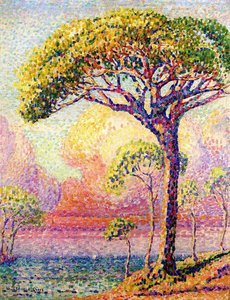
Cross didn't simply replicate Seurat’s Pointillist method. While initially adhering to strict scientific principles, he gradually loosened his brushwork, moving towards broader, more expressive blocks of color. This evolution is evident in works like “The Farm, Evening,” where the vibrant hues and dynamic composition capture not just a scene but an atmosphere – a sense of warmth, tranquility, and rural life. His technique became increasingly sophisticated, utilizing complementary colors to create luminosity and depth.
He meticulously layered pigments, understanding that the perceived color was not inherent in the paint itself, but rather a product of optical mixing within the viewer’s eye. This required a deep understanding of color theory and an almost mathematical approach to composition. However, Cross never sacrificed artistic sensibility for scientific rigor; his paintings remained imbued with emotion and poetic beauty.
Art, Anarchism, and Utopian Visions: The Political Dimension
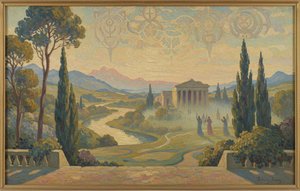
Cross’s embrace of Neo-Impressionism wasn't solely an aesthetic choice. It was deeply intertwined with a broader intellectual and political milieu. He shared anarchist principles with contemporaries like Signac and Camille Pissarro, believing in the power of art to envision a more just and equitable world. This conviction found expression in his paintings, which often depicted scenes of idyllic rural life – utopian visions of a society free from oppression.
His 1896 lithograph, “L’Errant” (The Wanderer), published in the anarchist journal *Les Temps Nouveaux*, exemplifies this political dimension. The image portrays a solitary figure traversing a landscape, symbolizing the individual's search for freedom and autonomy. While not overtly didactic, Cross’s art subtly conveyed his belief in anarchism as a path towards social harmony.
Legacy & Influence: Paving the Way for Fauvism and Modern Art
Despite ongoing health struggles, Cross remained remarkably productive throughout his career, culminating in a successful solo exhibition in 1905. His late-career works proved particularly influential, serving as a crucial bridge between Neo-Impressionism and the emerging Fauvist movement. Artists like Henri Matisse, André Derain, and Maurice Marquet were deeply inspired by Cross’s bold use of color and his rejection of traditional academic conventions.
Cross's paintings liberated color from its descriptive function, allowing it to become an expressive force in its own right. His influence extended beyond Fauvism, impacting subsequent generations of artists who sought new ways to represent the world around them. Today, Henri-Edmond Cross is celebrated as a master of Neo-Impressionism – a pioneer whose innovative techniques and unwavering artistic vision continue to resonate with audiences worldwide.
Key Works by Henri-Edmond Cross: A Closer Look
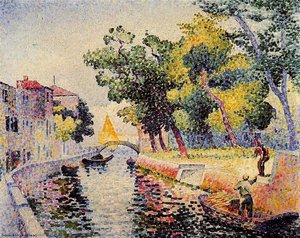
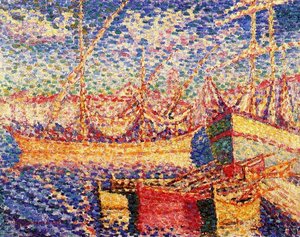
Cross’s oeuvre is rich with captivating landscapes and evocative portraits. “Saint-Clair Landscape” (1908), for example, showcases his mastery of watercolor, capturing the light and atmosphere of the Provençal countryside with loose brushwork and vibrant colors. “The Farm, Evening,” as previously mentioned, exemplifies his divisionist technique and anarchist themes. Other notable works include numerous scenes of Saint-Tropez and various portraits that reveal his evolving style.
His paintings are held in prestigious collections around the globe, including the Metropolitan Museum of Art in New York and the Musée d’Orsay in Paris – testaments to his enduring legacy. At ArtsDot.com, we offer meticulously crafted reproductions of Cross's masterpieces, allowing you to experience the beauty and brilliance of his work firsthand. Explore our collection today and discover the captivating world of Henri-Edmond Cross.