 Preview
 Send
Send Share
Share
 Details

 Download
 Similars
 X-Ray
X-Ray Diaporama
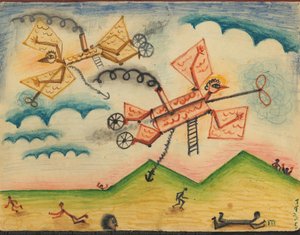
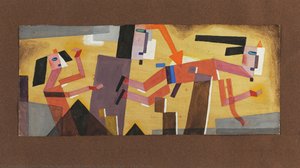
Two mestizos of airplane and people
 Surrealism
 1935
1935- Modern
 5.0 x 22.0 cm
 Read More
Hand Made Oil Reproduction
Hand-painted oil on canvas in your size and frame, made to order by our artists. ( Buy Print Buy Image)




P118B $10

P118H $10

P118W $10

P438Z $10

P508JH $12

P508YH $12

P805H $10

P805Z $10

P919BZ $10

P919G $10

P919XJ $10

P959ZH $10

P968JZ $12

W106C $8

W218G $10

W218JH $8

W218Y $10

W307PJ $10

W316G $10

W316PJ $8

W316Y $10

W398PJ $8

W4111J $10

W500HY $15

W500JH $15

W692G $12

W849H $8

W940BG $15

W953PJ $8




Pick from our preset sizes that match the artwork's original proportions.

You may enter your own dimensions to fit a specific frame or space. If your selected size does not match the original image's proportions, we will either crop the artwork or extend the painting with additional hand-painted elements. A digital mockup will be sent for your approval before production begins.
Please note that the on-screen preview does not reflect the actual cropping or extension. Only the mockup will accurately show the final composition.
While custom sizes are available, we recommend selecting a dimension from the predefined list to preserve the original proportions.
After order, ArtsDot.com team will email client for instructions and provide a mockup preview
Worldwide Delivery () in 3/4 weeks instead of standard 5 weeks. (22 August). No compromise on quality.

Free Worldwide Express Shipping

High-Quality Linen Canvas

Full Shipping Insurance

Customs Tax Refund Guarantee

True Color Matching Guarantee

60-Day Return Policy (Defects Only)

100% Money-Back Guarantee

Bulk Discount Offer
 Glass option is only available in size under 110 CM

Two mestizos of airplane and people
Reproduction Medium
Reproduction Size
-


Total Price
$ 263
Artwork Description
A Visionary Flight Through Xul Solar's Dreamscape
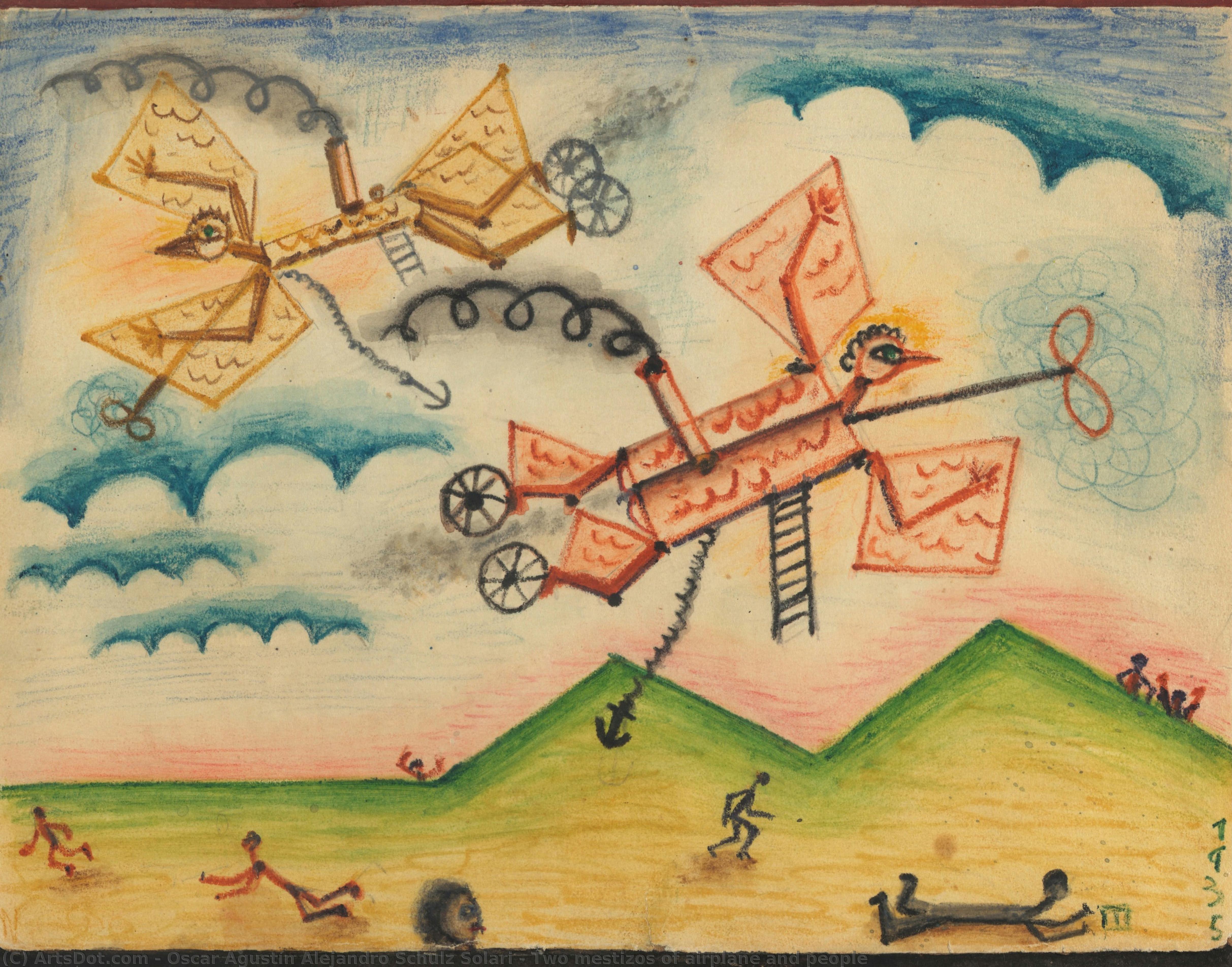
In the mesmerizing realm of Xul Solar, reality is never static; it is a fluid, breathing entity where the boundaries between the mechanical and the organic dissolve into pure imagination. His 1935 masterpiece, Two mestizos of airplane and people, serves as a profound window into this esoteric universe. The painting captures a moment of surrealist transcendence, featuring a central figure navigating a whimsical contraption that defies the laws of physics—a hybrid vessel that marries the skeletal grace of a bicycle with the aerodynamic spirit of an early aircraft. This is not merely a depiction of travel, but a metaphor for the human soul’s ascent through layers of consciousness, a theme that resonates deeply with collectors of avant-garde and symbolic art.
The composition vibrates with a unique, kinetic energy. As the protagonist glides atop his ingenious machine, he is surrounded by a tapestry of onlookers—figures scattered across the canvas like notes on a musical score. Some observers are anchored in the foreground, their presence grounding the viewer, while others drift into the hazy distance, creating an incredible sense of depth and atmospheric mystery. This interplay between the solitary traveler and the collective crowd evokes a sense of shared wonder, suggesting that the journey toward innovation and spiritual enlightenment is both a personal odyssey and a communal experience.
The Alchemy of Technique and Symbolism
Executed with the delicate precision characteristic of Solar’s mastery, the work utilizes a palette that feels both ancient and futuristic. The artist’s background in architecture and music informs the structural integrity of his dreamscapes; every line in Two mesticulous of airplane and people feels intentional, contributing to a geometric harmony that balances the chaotic energy of the scene. His use of tempera and watercolor allows for a luminous quality, where light seems to emanate from within the figures themselves rather than from an external source. This technique imbues the piece with a spiritual glow, transforming a simple scene of movement into a sacred ritual of flight.
Symbolically, the "mestizo" nature of the subject—the blending of man, machine, and perhaps even celestial elements—reflects Solar’s lifelong obsession with synthesis. He sought to merge disparate worlds: the occult and the scientific, the ancient and the modern, the terrestrial and the astral. For the discerning interior designer or art enthusiast, this painting offers more than just visual beauty; it provides a profound intellectual depth. It is a piece that invites contemplation, acting as a focal point that sparks conversation about the limitless potential of human ingenuity and the enduring power of the subconscious mind.
An Eternal Inspiration for Modern Spaces
For those seeking to curate a collection that transcends the ordinary, this reproduction of Xul Solar’s vision offers an unparalleled opportunity. The artwork possesses a rare ability to harmonize with diverse interior aesthetics, from the minimalist sophistication of a contemporary gallery setting to the eclectic warmth of a classic study. Its vibrant narrative and rhythmic composition bring a sense of movement and intellectual vitality to any wall it inhabits.
Owning a piece that captures such a pivotal moment in Argentine Surrealism is an investment in a legacy of innovation. Two mestizos of airplane and people remains a testament to the era's fascination with progress and the mystical, making it an essential acquisition for anyone moved by the magic of the avant-garde. It is not just a painting; it is an invitation to take flight alongside one of history's most enigmatic visionaries.
Related Artworks
Artist Biography
A Luminary of the Avant-Garde: The Enigmatic World of Xul Solar
Oscar Agustín Alejandro Schulz Solari, known to the world as Xul Solar, was a figure who defied easy categorization. Born in San Fernando, Argentina, in 1887, his life and art were a vibrant tapestry woven with threads of cosmopolitan upbringing, esoteric exploration, and an unwavering dedication to artistic innovation. His parents—a Baltic German father and an Italian mother—instilled in him a sensibility open to diverse cultural currents, a foundation that would profoundly shape his artistic journey. Though initially educated as both a musician and architect, it was during extensive travels through Europe – London, Paris, Turin, Genoa, Milan – that Schulz Solari discovered his true calling: painting. He began with watercolor, later embracing tempera and occasionally oils, each medium serving as a vehicle for increasingly complex visions. The adoption of the name “Xul Solar” itself is deeply revealing; derived from the Latin "lux" (light) and "solar," it embodies the artist’s fascination with illumination, energy, and the universal forces that underpin existence. It wasn't merely a pseudonym but an invocation of his artistic philosophy.Influences and Artistic Development
Xul Solar’s early work reflected the prevailing European avant-garde movements, yet he quickly transcended imitation to forge a uniquely personal style. His encounter with British occultist Aleister Crowley in 1924, though brief, left an indelible mark, sparking an interest in mysticism and symbolism that would permeate his art. Upon returning to Buenos Aires, Xul Solar became a central figure in the “Florida Group” (also known as the "Martín Fierro group"), a hub of intellectual and artistic ferment. Here, he forged close friendships with literary giants Jorge Luis Borges and Leopoldo Marechal, relationships that fostered a cross-pollination of ideas and profoundly influenced his creative output. This association wasn’t merely social; it was an exchange of philosophical inquiries, linguistic experimentation, and shared explorations of the subconscious. His paintings began to incorporate invented alphabets, geometric abstractions infused with occult symbolism, and dreamlike landscapes populated by enigmatic figures. He didn't simply depict reality; he constructed alternate realities governed by his own internal logic.A Universe of Symbols and Languages
The core of Xul Solar’s artistic practice lay in the creation of a personal mythology—a universe brimming with invented languages, symbolic systems, and fantastical creatures. He developed two complete artificial languages: “Neocriollo,” a poetic blend of Portuguese and Spanish intended for spoken communication, and “Panlengua,” an ambitious attempt at a universal language linking mathematics, music, astrology, and the visual arts. These linguistic endeavors weren’t merely intellectual exercises; they were integral to his artistic vision, informing the intricate patterns and coded messages embedded within his paintings. He believed that language held the key to unlocking deeper truths about the universe, and he sought to create a system of communication that transcended cultural boundaries. This fascination extended to other areas: he designed musical instruments based on esoteric principles and even invented a complex board game called “Panajedrez,” governed by rules derived from his semiotic experiments.Legacy and Lasting Impact
Despite achieving recognition during his lifetime, with a significant exposition at the Musée National d'Art Moderne in Paris in 1962, Xul Solar remained somewhat of an enigmatic figure until after his death in Tigre, Argentina, in 1963. Emilio Pettoruti’s biography published five years later helped to solidify his place within the canon of Argentine art and beyond. Today, Xul Solar is celebrated as a pivotal figure of the Latin American avant-garde—an artist whose work anticipated many of the concerns that would come to define Surrealism and other 20th-century movements. His paintings, with their vibrant colors, intricate symbolism, and otherworldly atmosphere, continue to captivate audiences worldwide. Naná Watzin, Leader of Snakes, and Four Indian Women are just a few examples of his masterpieces that showcase his unique artistic vision. Xul Solar’s legacy extends beyond the realm of painting; he was a visionary thinker, an inventor, and a cultural innovator who dared to imagine alternative realities and challenge conventional modes of thought. His work remains a testament to the power of art to transcend boundaries, explore the mysteries of existence, and illuminate the hidden dimensions of the human experience.
Xul Solar
1887 - 1963 , Argentina
Quick Facts
- Artistic Movement Or Style: Avant-garde, Surrealism
- Artists Or Movements Influenced By This Artist:
- Jorge Luis Borges
- Leopoldo Marechal
- Artists Who Influenced This Artist:
- Emilio Pettoruti
- Arturo Martini
- Date Of Birth: December 14, 1887
- Date Of Death: April 9, 1963
- Full Name: Oscar Agustin Schulz Solari
- Nationality: Argentine
- Notable Artworks:
- Naná Watzin
- Leader of Snakes
- Four Indian Women
- Colonial House
- Holy Dance
- Place Of Birth: San Fernando, Argentina
Related Articles
Surrealist Painting Masterpieces: 10 Artworks That Redefined Reality | ArtsDot
Journey into the dreamlike world of Surrealism! Explore 10 masterpieces by Dali, Magritte & Miró that redefined art. Discover their stories & find museum-quality reproductions to elevate your home decor on ArtsDot.com.
Surrealism's Visionaries: 10 Masterpieces for Your Home | ArtsDot
Journey into the dreamlike world of Surrealism! Explore 10 masterpieces by Dali, Magritte & Miró that redefined art. Discover their stories & find museum-quality reproductions to elevate your home decor on ArtsDot.com.
Oscar Domínguez: Surrealist Visions & the Poetics of Decay
Explore the haunting surrealist world of Oscar Domínguez. Discover his innovative decalcomania technique, recurring themes & lasting influence on 20th-century art. High-quality reproductions available.
Mikhail Larionov: Rayonism, Primitivism & the Dawn of Russian Avant-Garde Painting
Explore the revolutionary art of Mikhail Larionov & the Russian Avant-Garde. Discover Rayonism, Primitivism's influence, and his lasting impact on modern painting. Expert insights for collectors.
Decoding Dalí: The Secrets of the Paranoiac-Critical Method and Surrealist Symbols
Unlock the mysteries of Salvador Dalí. Explore the profound secrets behind his Paranoiac-Critical Method and decode the surrealist symbols that define his legendary dreamscapes in this expert art history guide.