 Preview
 Send
Send Share
Share
 Details

 Download
 Similars
 X-Ray
X-Ray Diaporama
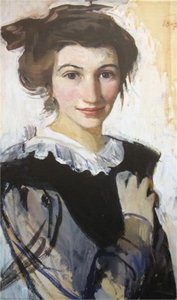
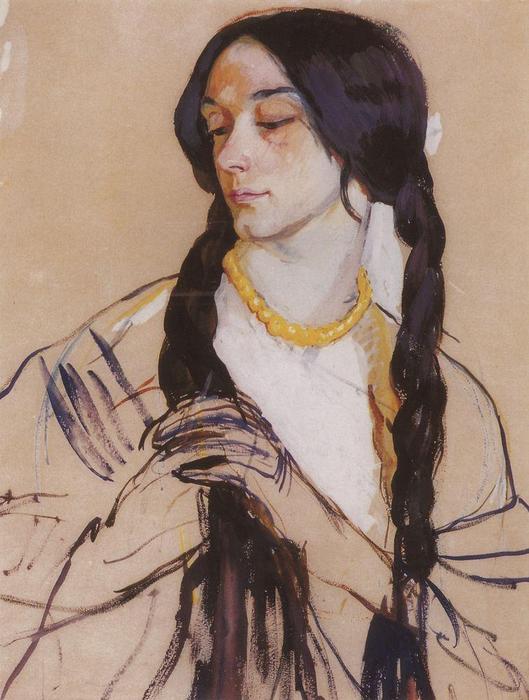
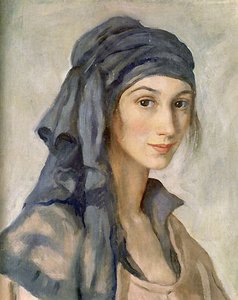
Portrait of K. Lancere


 Read More
Hand Made Oil Reproduction
Hand-painted oil on canvas in your size and frame, made to order by our artists. ( Buy Print Buy Image)




































Pick from our preset sizes that match the artwork's original proportions.

You may enter your own dimensions to fit a specific frame or space. If your selected size does not match the original image's proportions, we will either crop the artwork or extend the painting with additional hand-painted elements. A digital mockup will be sent for your approval before production begins.
Please note that the on-screen preview does not reflect the actual cropping or extension. Only the mockup will accurately show the final composition.
While custom sizes are available, we recommend selecting a dimension from the predefined list to preserve the original proportions.
After order, ArtsDot.com team will email client for instructions and provide a mockup preview
Worldwide Delivery () in 3/4 weeks instead of standard 5 weeks. (26 August). No compromise on quality.

Free Worldwide Express Shipping

High-Quality Linen Canvas

Full Shipping Insurance

Customs Tax Refund Guarantee

True Color Matching Guarantee

60-Day Return Policy (Defects Only)

100% Money-Back Guarantee

Bulk Discount Offer
 Glass option is only available in size under 110 CM

Portrait of K. Lancere
Reproduction Medium
Reproduction Size
-


Total Price
$ 263
Artwork Description
A Glimpse into Intimacy: Zinaida Serebriakova's Portrait of K. Lancere
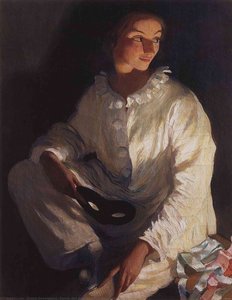
This captivating portrait, painted around 1910 by the renowned Ukrainian-Russian artist Zinaida Serebriakova, offers a poignant glimpse into the life of its subject, identified as K. Lancere. More than just a likeness, it’s an exploration of quiet contemplation and understated elegance, rendered with the delicate touch characteristic of Serebriakova's impressionistic style. The sitter is depicted in profile, her long dark hair cascading over her shoulders in intricate braids – a fashionable detail of the era. She wears a light-colored garment with a simple white collar, suggesting a refined yet unostentatious lifestyle. Her gaze, directed slightly downwards and to the left, conveys a sense of introspection, inviting viewers to ponder her thoughts and emotions.Impressionistic Technique and Artistic Influences
Serebriakova’s mastery lies in her ability to capture fleeting moments with remarkable sensitivity. This portrait exemplifies her impressionistic approach, evident in the loose, visible brushstrokes that define the subject's hair, clothing, and even the subtle nuances of light and shadow. Unlike a strictly realistic depiction, Serebriakova prioritizes conveying the *essence* of K. Lancere – her mood, her character – over meticulous detail. The soft, subdued color palette further enhances this gentle atmosphere, creating a sense of tranquility and intimacy. Her artistic training under Ilya Repin and Osip Braz, coupled with exposure to European art movements during her travels in Italy and Paris, shaped her unique style, blending realism with the fluidity of Impressionism and hints of Intimism.The Lancere Family and Russian Aristocratic Life
The subject's surname, Lancere, reveals a connection to a prominent Russian aristocratic family. Several portraits by Serebriakova depict members of this family, suggesting a close relationship and frequent patronage. The early 20th century in Russia was a period of significant social and political change, yet the aristocracy maintained a degree of privilege and cultural influence. This portrait offers a window into that world – a moment of quiet reflection amidst a backdrop of impending upheaval. The understated elegance of K. Lancere’s attire and demeanor reflects the refined sensibilities of her social circle. Further research reveals other portraits by Serebriakova featuring members of the Lancere family, including Olga Konstantinovna Lancere and E.E. Zelenkova nee Lancere, highlighting a recurring theme of portraying women with grace and dignity.Emotional Resonance and Lasting Appeal
Beyond its historical significance, this portrait resonates with viewers on an emotional level. The sitter’s contemplative expression evokes feelings of quiet introspection and perhaps even a touch of melancholy. Serebriakova's ability to capture such subtle nuances in her subject’s demeanor is what makes this painting so compelling. The minimalistic background allows the viewer’s focus to remain entirely on K. Lancere, intensifying the emotional impact of the portrait. This piece exemplifies Serebriakova's talent for portraying intimate moments with grace and subtlety, making it a timeless work of art that continues to captivate audiences today. It is an ideal addition to any collection seeking to showcase both artistic skill and profound human connection.Related Artworks
Artist Biography
A Life Etched in Light: The World of Zinaida Serebriakova
Zinaida Yevgenyevna Serebriakova, a name resonating with the quiet power of early 20th-century Russian art, emerged from a lineage steeped in creative brilliance. Born in 1884 at Neskuchnoye, her family estate near Kharkov in Ukraine, she was destined to inhabit a world where artistry wasn’t merely a profession but a way of life. Her grandfather, the celebrated architect Nicholas Benois, and uncle, the renowned painter Alexandre Benois – a founding figure of *Mir iskusstva* (The World of Art) – laid the foundation for her artistic awakening. This familial embrace of beauty and innovation profoundly shaped young Zinaida’s sensibilities, nurturing an eye for detail and a deep appreciation for form that would define her oeuvre. The loss of her father at a tender age propelled her into the heart of Saint Petersburg's vibrant artistic community, residing with the Benois family and absorbing the atmosphere of creativity surrounding them.Formative Years and Artistic Pilgrimage
Serebriakova’s formal education was rigorous and multifaceted. She began her studies in 1901 at the art school established by Princess Maria Tenisheva, a pivotal patron of the arts, where she first encountered the tutelage of Ilya Repin, a master of Russian realism. This early exposure to Repin's techniques – his masterful handling of light and shadow, his commitment to portraying life with unflinching honesty – left an indelible mark on her artistic approach. Further honing her skills between 1903 and 1905 under Osip Braz, she delved deeper into portraiture and the nuances of capturing human emotion. A sojourn in Italy from 1902-1903 broadened her horizons, introducing her to the classical traditions that would subtly inform her work. This artistic pilgrimage culminated with studies at the Académie de la Grande Chaumière in Paris (1905-1906), where she absorbed the influences of modern European painting while forging her own unique path. It was during this period that she married Boris Serebriakov, a union that would provide both personal and artistic support for years to come.A Synthesis of Realism and Intimacy
Serebriakova’s style is characterized by a remarkable synthesis of realism, intimacy, and a profound sensitivity to light and form. While often associated with *Mir iskusstva*, she distinguished herself through her focus on everyday life – the lives of women, children, and rural communities – rendered with an honesty and tenderness that resonated deeply with audiences. Her paintings aren’t grand historical narratives or mythological allegories; they are quiet observations of domesticity, motherhood, and the beauty found in simple moments. She possessed a unique ability to imbue her subjects with dignity and grace, even within the context of labor or hardship. *At the Dressing Table* (1909), perhaps her most iconic work, exemplifies this quality – a strikingly honest self-portrait that established her reputation and garnered significant public acclaim. This painting, born from a period of isolation during a snowstorm, showcases her mastery of light and shadow, creating an atmosphere of quiet contemplation. Other notable works like *Bleaching Cloth* (1917) demonstrate her ability to capture the physicality of labor with both realism and empathy.Navigating Tumultuous Times and Enduring Legacy
The tumultuous events of the early 20th century – revolution, war, and political upheaval – profoundly impacted Serebriakova’s life and work. The death of her husband in 1919 left her a single mother struggling to support her family amidst widespread hardship. Despite these challenges, she continued to paint, adapting her techniques to the limitations imposed by circumstance. She transitioned from oil paints to more affordable mediums like charcoal and pencil, yet maintained her commitment to artistic expression. Later in life, she faced further displacement and adversity, eventually finding refuge in France in 1947. Though recognition was sporadic during her later years, Serebriakova’s legacy has endured. Her paintings offer a poignant glimpse into the social and cultural landscape of Russia during a period of immense change, providing invaluable insights into the lives of ordinary people. She stands as a testament to the power of art to transcend political boundaries and capture the enduring spirit of humanity. Today, her works are celebrated for their technical brilliance, emotional depth, and unwavering commitment to portraying the beauty and dignity of everyday life.Influences and Artistic Kinship
- Russian Realism: Serebriakova’s foundation was firmly rooted in the Russian realist tradition, inheriting a dedication to accurate representation and social commentary from masters like Ilya Repin and Osip Braz.
- Mir Iskusstva: While not strictly adhering to all tenets of the *Mir iskusstva* movement, she shared their aesthetic sensibilities – an emphasis on beauty, refinement, and a rejection of purely utilitarian art.
- Anna Ostroumova-Lebedeva: A contemporary who also focused on portraying women and domestic scenes, Ostroumova-Lebedeva shares stylistic affinities with Serebriakova in her sensitive depiction of female subjects.
- Intimism: Her work resonates with the principles of Intimism, a style characterized by intimate portrayals of domestic life and quiet moments of reflection. This is evident in paintings like *At the Dressing Table* and numerous depictions of motherhood.
Zinaida Serebriakova
1884 - 1967 , Ukraine
Quick Facts
- Artistic Movement Or Style: Realism, Intimism
- Artists Or Movements Influenced By This Artist: ['Anna Ostroumova-Lebedeva']
- Artists Who Influenced This Artist:
- Ilya Repin
- Osip Braz
- Date Of Birth: December 12, 1884
- Date Of Death: 1967
- Full Name: Zinaida Serebriakova
- Nationality: Russian/French
- Notable Artworks:
- Country Girl
- Orchard in Bloom
- At the Dressing-Table
- Bleaching Cloth
- Place Of Birth: Kharkiv, Ukraine
Related Articles
Zinaida Serebriakova: A Pioneer of Russian Modernism & Embodiment of Female Experience
Explore the life & art of Zinaida Serebriakova, a pioneering Russian Modernist painter. Discover her intimate scenes, striking self-portraits, and lasting impact on 20th-century art. A deep dive into her world.
Igor Grabar: Bridging Impressionism & National Identity in Russian Modern Art
Explore the life & art of Igor Grabar, a pivotal figure in Russian Modernism. Discover his Impressionist landscapes, crucial role in art history, and legacy at the Tretyakov Gallery. A deep dive into a master painter & scholar.
Ivan Bilibin: A Synthesis of Folklore, Modernism & National Identity in Russian Illustration
Explore the enchanting world of Ivan Bilibin, a master Russian illustrator who synthesized folklore, Art Nouveau & national identity. Discover his iconic fairy tale illustrations and legacy with ArtsDot.
Konstantin Korovin: A Master of Russian Impressionism & Evocative Light
Explore the captivating world of Konstantin Korovin, a leading Russian Impressionist painter renowned for his vibrant landscapes & innovative theater designs. Discover his life, legacy, and enduring artistic impact.

Cézanne's Masterpieces: 25 Iconic Artworks to Transform Your Space
Journey through 25 iconic artworks by Paul Cézanne – a master of Impressionism and Post-Impressionism. Explore his landscapes, still lifes, and the stories behind these timeless masterpieces. Discover museum-quality reproductions & curated decor at ArtsDot.com.