Introduction: Redefining the Canon Through Female Vision
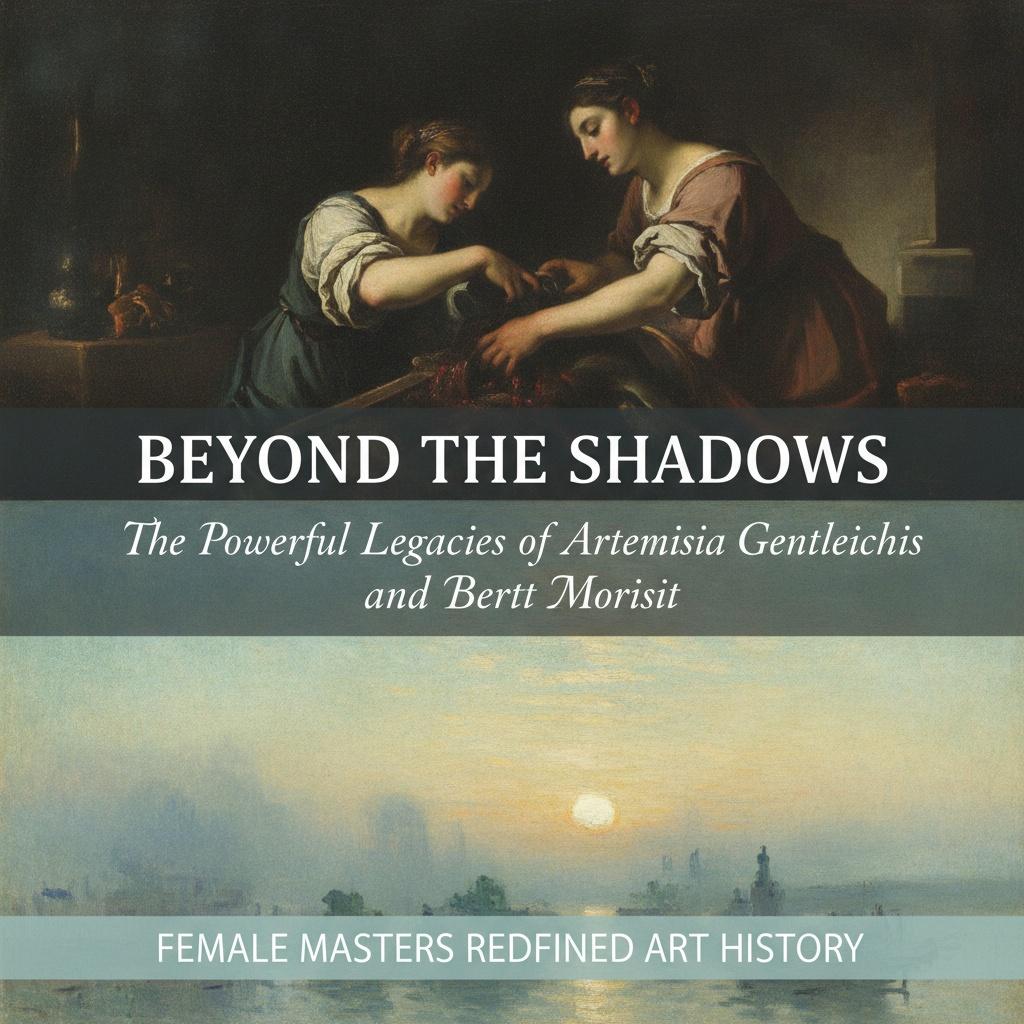
 Beyond the Shadows: The Powerful Legacies of Artemisia Gentileschi and Berthe Morisot
Introduction: Redefining the Canon Through Female Vision To traverse the corridors of art history is to encounter a narrative often written by the victors, a chronicle that for centuries relegated female brilliance to the periphery of the grand canon...
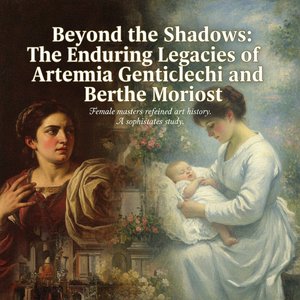
To traverse the long, winding corridors of art history is to encounter a narrative often written by the victors—a chronicle that for centuries relegated female brilliance to the periphery of the grand canon. For the modern enthusiast, discovering art is not merely about admiring beauty; it is about uncovering the truths hidden beneath layers of historical dust. Beneath these layers lie the profound, unarmored legacies of women who did not simply participate in their respective movements but fundamentally redefined them. This exploration seeks to move beyond the shadows of obscurity to illuminate the lives and works of two titans: Artemisia Gentileschi and Berthe Morisot. Though separated by two centuries and vastly different aesthetic philosophies—one rooted in the dramatic, tenebristic tension of the Italian Baroque, the other in the luminous, ephemeral atmosphere of French Impressionism—both artists shared a common thread of extraordinary vision. They utilized the specific tools of their eras to carve out spaces for agency, truth, and an unprecedented psychological depth that continues to resonate with the modern collector and historian alike.
Artemisia Gentileschi: The Drama of Chiaroscuro and Resilience
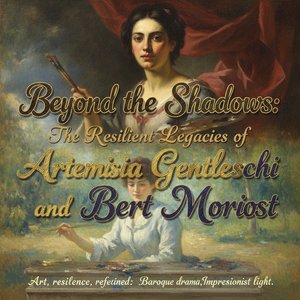 Beyond the Shadows: The Resurgence of Female Masters Artemisia Gentileschi and Berthe Morisot
The Baroque Rebellion: Artemisia Gentileschi and the Power of Chiaroscuro To step into the world of the Italian Baroque is to enter a realm where light does not merely illuminate, but actively contends with the darkness. At the heart of this dramatic...
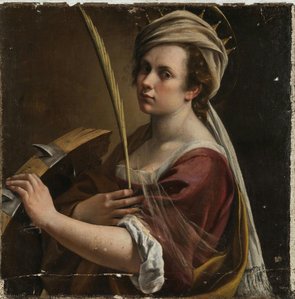
Stepping into the world of the Italian Baroque is to enter a realm where light does not merely illuminate but actively contends with the darkness. At the heart of this dramatic struggle stands Artemisia Gentileschi, a painter whose brush possessed the rare ability to translate human resilience into pigment. Born in Rome in 1593, she entered a milieu steeped in artistry, nurtured within the workshop of her father, Orazio Gentileschi, a respected painter deeply influenced by the revolutionary realism of Caravaggio. From her earliest years, Artemisia’s gift was undeniable, yet she operated in a chauvinistic world where women were often forbidden from entering the Academy or painting human nudes.
Artemisia's artistic development was profoundly shaped by Caravaggio’s
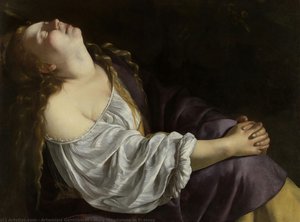
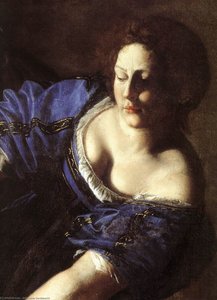
tenebrism—the stark, dramatic contrast between light and dark that imbues paintings with intense emotionality. However, she did not simply mimic the masters; she forged a unique voice characterized by raw psychological depth. In her hands, the technique of
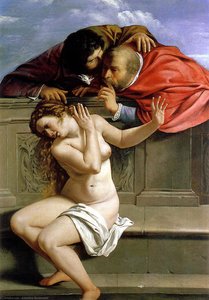
chiaroscuro serves as more than a stylistic choice; it is a metaphor for the struggle of existence. In masterpieces such as
Susanna and the Elders, we witness a departure from the passive, idealized female figures common in the 17th century. Through her mastery of dramatic realism, Artemisia imbues her subjects with a palpable sense of agency and resistance. Her shadows are not empty voids; they are heavy with tension, pressing against the light to emphasize the physical and emotional weight of her narratives, making her triumph through art all the more profound.
Berthe Morisot: Capturing the Luminous Pulse of Impressionism
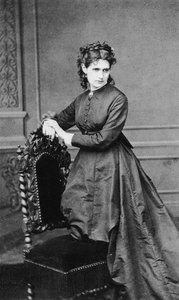 Berthe Morisot
A Life Immersed in Light and Intimacy Berthe Morisot, born in Bourges, France, in 1841, emerged as a pivotal figure within the Impressionist movement, yet her story extends far beyond simply being a “female Impressionist.” To define her solely by gen...
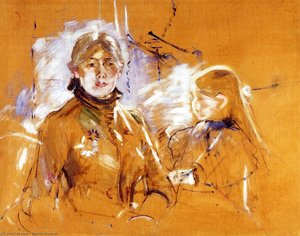
As we transition from the heavy, dramatic shadows of the Baroque to the luminous, ephemeral atmosphere of the late 19th century, we encounter the delicate brilliance of Berthe Morisot. Born in Bourges, France, in 1841, Morisot emerged as a pivotal figure within the Impressionist movement, yet her story extends far beyond the label of a “female Impressionist.” To define her solely by gender diminishes the profound originality of her vision and her unwavering commitment to capturing the fleeting moments of modern life. Descended from a bourgeois family with artistic lineage—related to the celebrated Rococo painter Jean-Honoré Fragonard—Morisot received an education that nurtured her innate talent and fostered a lifelong dedication to the canvas.
Her artistic journey was one of light, intimacy, and movement. Influenced by the
plein air techniques of Jean-Baptiste-Camille Corot, Morisot mastered the art of working outdoors to capture the ephemeral qualities of atmosphere with remarkable sensitivity. She was not merely a subject for her male contemporaries; she was a founding member of the Impressionist circle alongside Monet, Degas, and Renoir. In works like
The Cradle, we see her ability to transform a quiet, domestic moment into a profound exploration of tenderness and light. Her brushwork, often characterized by a certain sketch-like freedom, allowed the viewer to feel the very pulse of the Parisian afternoon, turning the canvas into a window through which we glimpse the shimmering beauty of the everyday.
A Study in Contrast: From Baroque Shadows to Impressionist Light
 Impressionism's Masterpieces: 10 Paintings That Defined a Movement | ArtsDot
Introduction To gaze upon an Impressionist painting is to step into a fleeting moment, captured not with photographic precision, but with the vibrant pulse of light and emotion. It’s a journey back to a time when artists dared to break from tradition...
When placed side by even the most subtle comparison, the divergence between these two masters reveals the evolution of human perception itself. Artemisia Gentileschi’s world is one of weight, texture, and gravity. Her palette is often deep and earthy, anchored by the heavy presence of shadows that demand a visceral reaction from the viewer. There is a certain theatricality to her work, an operatic intensity where every highlight on a blade or a fold of fabric feels earned through struggle. In contrast, Berthe Morisot’s world is one of weightlessness and air. Her palette is bright, airy, and infused with the soft glow of sunlight, where boundaries between objects often dissolve into a sea of color and light.
Yet, despite these aesthetic polarities, a shared spirit of rebellion connects them. Where Artemisia used the darkness to highlight the strength of the female spirit against oppression, Morisot used the brilliance of light to assert the importance of the domestic and the intimate as worthy subjects of high art. One fought against the literal shadows of her era, while the other sought to break free from the rigid, dark confines of academic tradition by embracing the sun. Both artists utilized their specific technical mastery—be it the controlled tension of
chiaroscuro or the spontaneous energy of Impressionist brushstrokes—to challenge the status quo and expand the boundaries of what art could represent.
The Enduring Influence of Female Mastery on Modern Aesthetics
 Impressionism's Legacy: 10 Masterpieces That Transformed Art & Decor
Introduction Imagine stepping into a world bathed in dappled sunlight, where colors dance and shimmer with an ethereal glow. This is the essence of Impressionism – a revolutionary art movement that dared to capture not just *what* was seen, but *how*...
The legacies of these women continue to ripple through the contemporary art world, influencing how we perceive color, composition, and narrative in our modern spaces. For the modern collector, the works of Gentileschi and Morisot offer more than historical interest; they provide a blueprint for emotional resonance. The dramatic tension found in Baroque reproductions can anchor a room with authority and depth, while the light-drenched textures of Impressionist pieces can breathe life and tranquility into a bright, airy interior.
Today, we see their influence in the way we approach "remixing" art history—the ability to take a modern moment and view it through the lens of classical technique. The psychological depth pioneered by Artemisia and the atmospheric sensitivity perfected by Morisot have become cornerstones of aesthetic appreciation. Their lives remind us that true mastery is found when an artist uses the limitations of their time as a springboard for innovation, creating works that remain as vital and provocative today as they were in their original centuries.
Conclusion: Reclaiming the Narrative of Art History
Reclaiming the narrative of art history requires us to look beyond the traditional names and recognize the profound impact of those who worked from the margins. Artemisia Gentileschi and Berthe Morisot did not merely exist within their movements; they were architects of them. By moving beyond the shadows of obscurity, we gain a richer, more complete understanding of the human experience as captured through pigment and canvas. Their stories are testaments to resilience, vision, and an unyielding commitment to truth.
At
ArtsDot.com, we celebrate this enduring legacy by making these masterpieces accessible to all. Whether you are drawn to the powerful, hand-painted textures of a Baroque reproduction or the luminous, light-filled beauty of an Impressionist canvas, our mission is to help you bring these profound stories into your own home. From custom oil portraits that transform your personal memories into historical treasures to museum-quality prints that capture every delicate brushstroke, we invite you to discover and decorate your world with the strength and light of the masters.