The Medici Court & Bronzino’s Rise: A Painterly Chronicle
 untitled (6221)
Agnolo Bronzino (1503-1572) was a prominent Florentine painter of the High Renaissance and Mannerism periods. As court painter to the Medici family, he produced numerous portraits renowned for their elegance, refined detail, and reserved composure. H
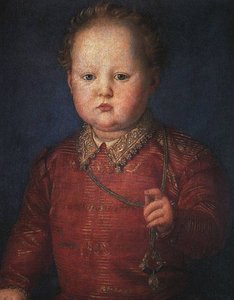
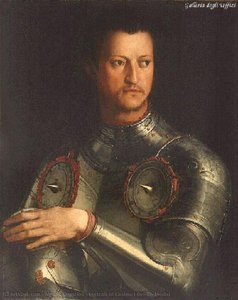
Agnolo Bronzino, a name synonymous with the refined elegance of Florentine Renaissance portraiture, wasn't merely a painter; he was a chronicler of power, ambition, and the intricate social dance of the 16th century. Born in Florence in 1503, his ascent to artistic prominence was inextricably linked to the patronage of the Medici family, particularly Cosimo I de’ Medici, Grand Duke of Tuscany. While early influences included Raffaellino del Garbo and, crucially, Pontormo – whose expressive style initially shaped Bronzino's hand – it was within the ducal court that his distinctive voice truly emerged. The commission for decorations celebrating Cosimo’s marriage to Eleonora di Toledo in 1539 proved pivotal, catapulting him into a position of exclusive favor. This wasn’t simply about creating beautiful images; it was about constructing an enduring visual narrative of Medici legitimacy and authority. Bronzino understood this implicitly, transforming portraits into carefully calibrated statements of status, intellect, and dynastic continuity.
Decoding the Reserved Composure: Style & Technique in Bronzino's Portraits
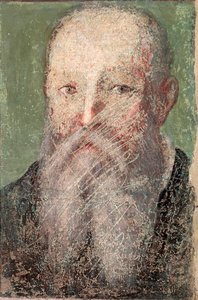 Agnolo Bronzino
Explore the refined elegance of Agnolo Bronzino, Florentine Mannerist master & court painter to the Medici. Discover his iconic portraits and allegorical works.
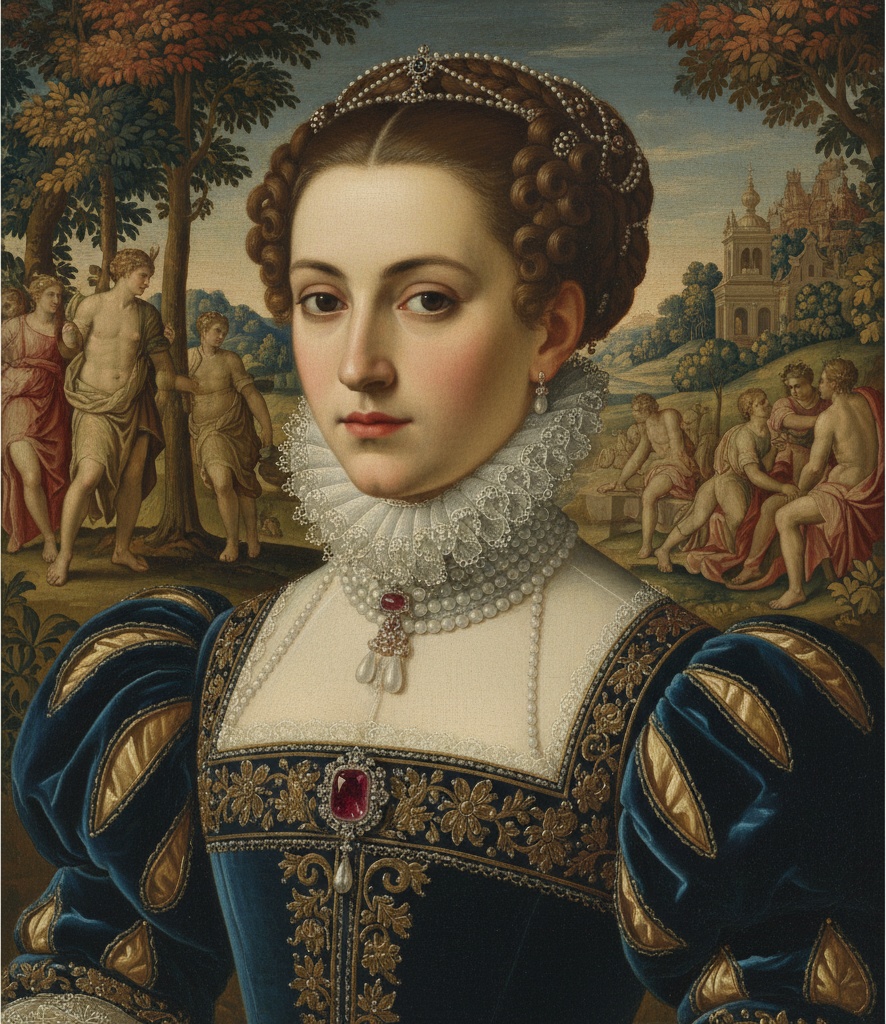
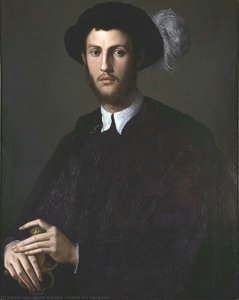
What immediately distinguishes a Bronzino portrait is its remarkable composure – an almost unsettling stillness that sets it apart from the more emotionally demonstrative works of his contemporaries. Figures are often depicted with an aristocratic aloofness, their gazes direct and unwavering, yet rarely revealing inner sentiment. This isn’t to suggest a lack of skill in rendering emotion; rather, it reflects a deliberate aesthetic choice rooted in the ideals of *sprezzatura*, a cultivated nonchalance that masked underlying intelligence and control. Technically, Bronzino was a master of detail. His surfaces are impeccably smooth, achieved through meticulous layering of oil paint on cotton canvas. He possessed an extraordinary ability to capture the textures of fabrics – silks, velvets, jewels – with breathtaking realism. The precision extends to facial features, rendering skin tones with subtle gradations and capturing the play of light across bone structure. Consider ‘Portrait of a Young Man’ (c. 1530s), where the book held open in his hand isn't merely an accessory but a symbol of learning and social standing, meticulously rendered to emphasize his refined character.
Beyond Likeness: Symbolism and Allegory in Florentine Portraiture
To view Bronzino’s portraits as mere representations of physical likeness is to miss the profound depth of their symbolic language. Every element – clothing, jewelry, posture, even the background – was carefully considered for its allegorical weight. The elaborate costumes worn by Eleonora di Toledo, for example, weren't simply fashionable; they were statements of wealth, power, and her lineage as a member of Spanish nobility. The inclusion of specific objects often alluded to virtues or intellectual pursuits. Books signified learning, musical instruments represented harmony, and certain flowers carried coded meanings related to love, fidelity, or mortality. Bronzino’s most celebrated allegorical work, ‘Venus, Cupid, Folly and Time’ (c. 1544-45), exemplifies this approach. The complex interplay of figures isn't a straightforward mythological scene but a meditation on the fleeting nature of beauty, pleasure, and the inevitable passage of time – themes deeply relevant to the Medici court and their desire for enduring legacy. He wasn’t simply painting *what* he saw; he was constructing meaning through visual metaphor.
Bronzino and Mannerism: Innovation, Artifice, and a New Aesthetic
Bronzino Portrait of a Young Man, oil on panel, 1530s (Metropolitan Museum of Art) and Bronzino, Lodovico Capponi, Oil on panel, 1550-55 (Frick Collection) ...
Agnolo Bronzino is considered one of the leading exponents of Florentine Mannerism, a style that emerged as a reaction against the harmonious balance of the High Renaissance. While drawing inspiration from masters like Michelangelo and Raphael, Mannerist artists favored compositional tension, elongated forms, and an emphasis on artifice over naturalistic representation. Bronzino’s work embodies these characteristics perfectly. His figures often possess elegant, almost serpentine poses, their bodies subtly distorted to create a sense of dynamism and grace. He frequently employed flattened pictorial space and complex compositions that challenged traditional notions of perspective. This wasn't about rejecting realism entirely; it was about elevating art beyond mere imitation of nature. The focus shifted from accurately depicting the world to creating sophisticated, intellectually stimulating images that showcased the artist’s virtuosity. The influence of Pontormo is visible in this transition, but Bronzino refined and intensified these tendencies, establishing a uniquely polished and reserved Mannerist aesthetic.
Key Works & Lasting Influence: A Legacy of Elegance
Beyond ‘Venus, Cupid, Folly and Time’ and the iconic portraits of Cosimo and Eleonora, Bronzino's oeuvre includes numerous other masterpieces that demonstrate his exceptional skill. ‘Lodovico Capponi’ (1550-55), for instance, showcases his ability to capture character through subtle details of expression and gesture. His drawings, often preparatory studies for paintings, reveal a meticulous approach to anatomy and composition. Bronzino's influence on European court portraiture was profound. His style – characterized by its elegance, composure, and attention to detail – became the standard for aristocratic representation throughout the 16th and 17th centuries. Artists across Europe emulated his techniques, adapting his aesthetic to their own cultural contexts. Even today, Bronzino’s portraits continue to captivate viewers with their timeless beauty and enigmatic allure.
Collecting Bronzino Today: Considerations for the Discerning Connoisseur
Acquiring a work attributed to Agnolo Bronzino is an investment in art history – a testament to a master portraitist who shaped the visual language of power and elegance. However, navigating the market requires careful consideration. Given his prolific output and the high demand for his paintings, attributions can be complex. Workshop versions and copies abound, making expert authentication crucial. Provenance – the documented history of ownership – is paramount in establishing authenticity. Look for works with a clear lineage tracing back to reputable collections or historical records. Condition is also vital; restoration work should be carefully assessed by a qualified conservator. ArtsDot.com offers museum-quality reproductions of Bronzino’s masterpieces, allowing collectors to experience the beauty and sophistication of his art firsthand. For those seeking original works, consulting with an experienced art dealer or appraiser is highly recommended. Ultimately, collecting Bronzino isn't simply about owning a beautiful object; it’s about acquiring a piece of Renaissance history – a tangible connection to a world of ambition, intellect, and artistic brilliance.