Defining Contemporary Abstraction: Selecting Between Geometric Precision and Emotional Expression
 Contemporary Abstract Art: A Professional Buyer's Guide to Large-Scale Modern Decor for Hospitality and Corporate Interiors
Defining Contemporary Abstraction: From Geometric Precision to Emotional Expression Abstract art Abstract art uses visual language of shape, form, color, and line to create a composition which may exist with a degree of independence from visual refer...
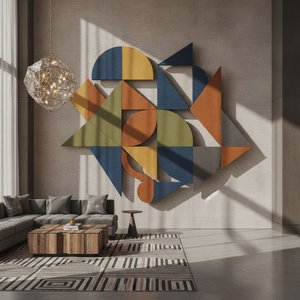
In the high-stakes arena of hospitality design, the selection of artwork serves as a silent yet powerful narrator of a brand's identity. To master the use of contemporary abstraction, one must first navigate the profound spectrum between two distinct visual languages: the mathematical clarity of geometric abstraction and the visceral energy of abstract expressionism. Geometric abstraction, rooted in the legacies of pioneers like Auguste Herbin, offers a world stripped to its essential forms—lines, shapes, and colors that resonate with structural logic. For the corporate environment or a modern boutique hotel, this style provides an atmosphere of stability, order, and intellectual rigor. It is a visual language of precision, where every angle and intersection contributes to a sense of universal harmony.
Conversely, for spaces intended to evoke intimacy, drama, or movement—such as lounge areas or signature suites—the tradition of abstract expressionism offers an unparalleled emotional depth. Drawing from the mid-century New York School, this approach embraces subjectivity and the spontaneous gesture. When a designer selects works reminiscent of Mark Rothko’s color field paintings or the energetic layers of Gerhard Richter, they are not merely decorating a wall; they are inviting guests into a dialogue with emotion. These works utilize broad washes of color and soft, blurred edges to create a sense of spatial expansion and introspective calm. The choice between these two poles is a strategic decision that defines whether a space will feel anchored by structural certainty or energized by human impulse.
Strategic Integration: Utilizing Large-Scale Abstract Works for Hotel Lobbies and Corporate Corridors
 Abstract Painting
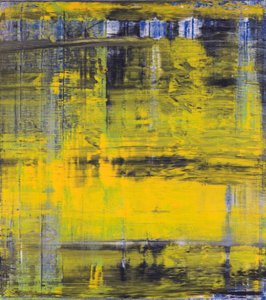
A Symphony of Color and Texture: Exploring Gerhard Richter’s Abstract Painting (1978) This monumental abstract painting by Gerhard Richter , created in 1978, is a captivating example of his mature abstract style. Measuring an impressive 201 x 336 cm,...
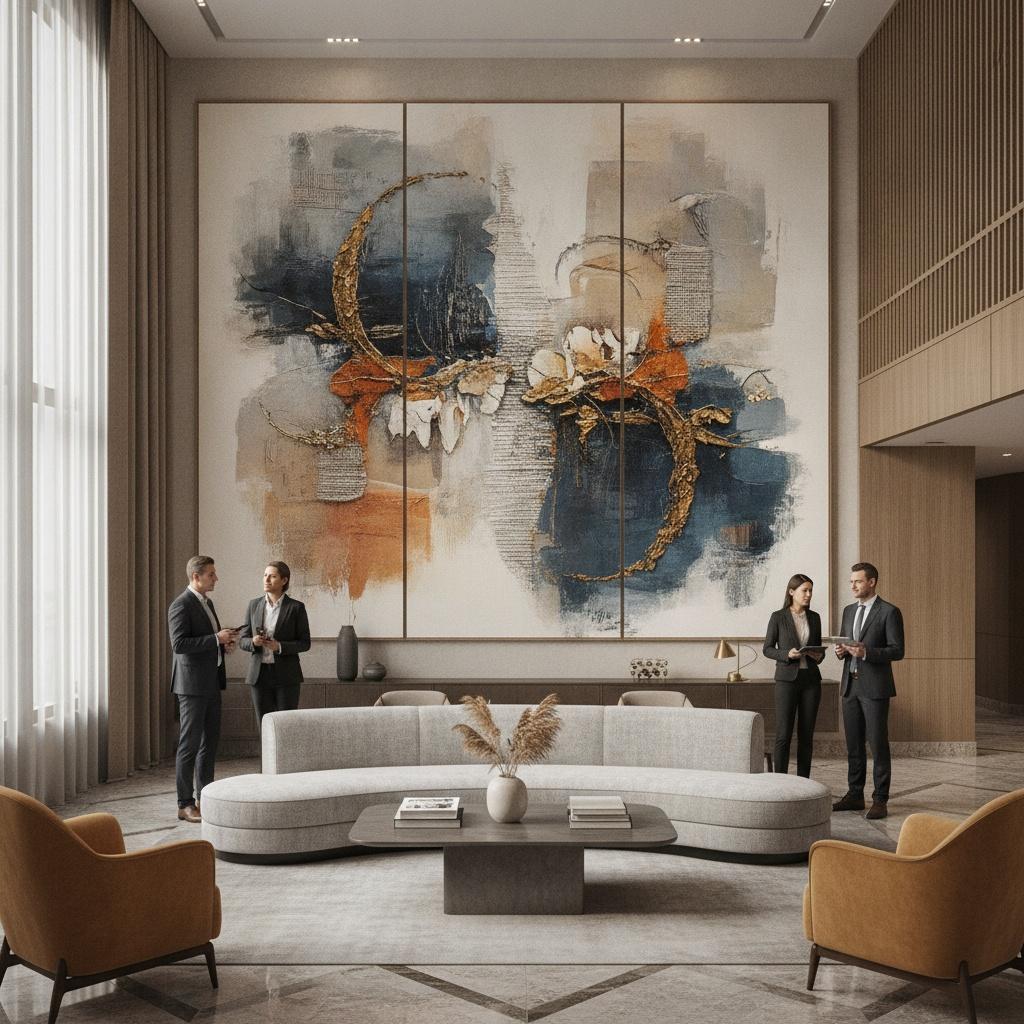
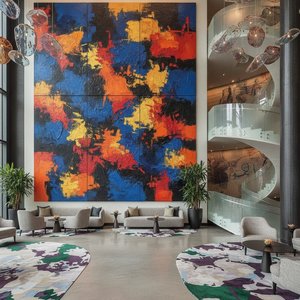
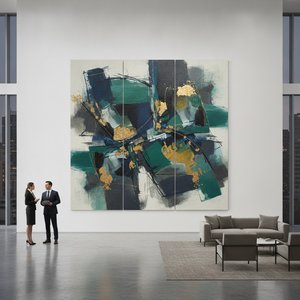
The implementation of large-scale abstract works requires a sophisticated understanding of architectural flow and visual hierarchy. In expansive hotel lobbies, a singular, monumental canvas acts as a focal point that anchors the entire design concept. A painting of significant scale—much like Richter’s massive 201 x 336 cm compositions—commands attention, transforming a transit space into a destination. Such works possess the unique ability to bridge the gap between the physical architecture and the psychological experience of the guest, providing a sense of grandeur that smaller, fragmented pieces cannot achieve.
In more linear environments, such as long corporate corridors or hotel walkways, the strategy shifts toward rhythmic continuity. Here, the use of multi-panel layouts, or triptychs, becomes an essential tool for the designer. By splitting a cohesive abstract composition across three, four, or even five panels, one can mirror the longitudinal movement of the hallway. This technique, often utilized in modern architectural design, prevents the visual fatigue that can occur with repetitive wall treatments. When executed correctly, these multi-panel series guide the eye through the space, creating a sense of progression and discovery that enhances the overall guest journey.
Texture and Materiality: The Impact of Impasto, Layering, and Physical Depth in Modern Decor
PaintingPainting is a visual art, characterized by the practice of applying paint, pigment, color, or other medium to a solid surface. The medium is commonly applied to the base with a brush. Other implements, such as palette knives, sponges, airbrushes, the...
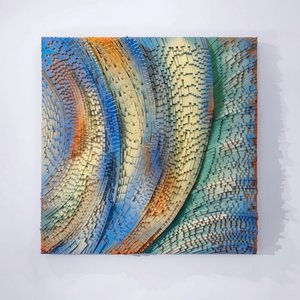
Beyond color and form, the true soul of an abstract painting lies in its tactile dimension. For the professional buyer, understanding the impact of texture is critical to achieving a premium aesthetic. The technique of impasto—the thick, heavy application of paint—creates a three-scale surface that interacts dynamically with ambient lighting. In a well-lit lobby, the raised ridges of oil paint catch highlights and cast subtle shadows, lending a physical presence to the artwork that digital prints simply cannot replicate. This palpable depth invites viewers to engage with the work on a sensory level, making the art feel like an integral part of the room's architecture rather than a mere surface addition.
The complexity of modern abstraction is often achieved through meticulous layering and the use of diverse implements, from palette knives to squeegees. These processes create a rich, variegated surface where colors do not merely sit side-by-side but emerge from beneath one another. This layering provides a tonal range that is far deeper than what is found in standard commercial posters. Furthermore, the availability of specialized finishes, such as an aged or cracked
craquelure effect, allows designers to introduce a sense of historical weight and permanence into even the most contemporary settings. The materiality of the medium—the visible brushstrokes and the interplay of light on textured oil—is what transforms a decorative element into a lasting investment.
Customization and Scale: Implementing Multi-Panel Triptychs and Bespoke Dimensions for Architectural Features
![Abstract Composition [triptych]](/media/artworks/images/thumbnails/e5/3d/e53db42ea02644b9a8e722f9d4dd3742.jpg) Abstract Composition [triptych]
Abstract Composition [triptych]Abstract Composition [Triptych] by Vaclav Vytlacil (1937). Explore this dynamic black & white triptych featuring bold lines, textures & geometric shapes. A key example of American modernism.
One of the greatest challenges in large-scale interior projects is the reconciliation of standard art sizes with non-standard architectural dimensions. This is where the power of bespoke customization becomes indispensable. For designers working with expansive feature walls, custom-sized canvases allow for a seamless integration that respects the proportions of the building. Whether it is an ultra-wide panoramic piece for a conference room or a vertical monumental work for a grand staircase, the ability to dictate dimensions ensures that the artwork complements rather than competes with the structural elements.
The "multi-panel" trend offers a sophisticated solution for covering vast surfaces without the logistical burden of a single, unwieldy monolith. By utilizing custom-engineered canvas wraps or extended edges, artists can ensure that the visual narrative flows uninterrupted across multiple panels. This approach is particularly effective in creating a cohesive, modern architectural look that feels tailor-made for the property. Furthermore, the ability to "remix" history—requesting a specific color palette to match existing upholstery or requesting a stylistic shift toward a more muted tone—allows the designer to maintain absolute control over the interior's chromatic harmony.
Procurement Logistics: Managing Large-Scale Art Orders, Custom Sizing, and Global Delivery Timelines
For procurement managers and hospitality professionals, the aesthetic value of art must be balanced with operational reliability. Managing large-scale projects requires a supplier that understands the pressures of timelines, budgets, and international logistics. A professional procurement process should be characterized by transparency and efficiency, beginning with clear communication regarding production windows—typically ranging from 2 to 4 weeks for hand-painted oils—and concluding with secure, tracked global delivery via partners like DHL or FedEx.
Reliability in the art supply chain is built on a foundation of meticulous order management. This includes the provision of digital mockups for approval before painting begins, ensuring that color matching and composition meet the designer's exact specifications. For large-scale hospitality rollouts, the ability to handle bulk orders with consistent quality and provide tax-compliant documentation, such as VAT invoices, is paramount. Ultimately, the goal is a seamless transition from the design concept to the physical installation, where the artwork arrives in reinforced, professional packaging, ready to elevate the space and fulfill the long-term vision of the property.
All professional art procurement services, custom commissions, and large-scale architectural solutions featured in this guide are provided by ArtsDot.com.