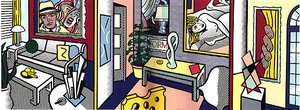
The Impact of Expressionist Abstraction on Hospitality Atmosphere
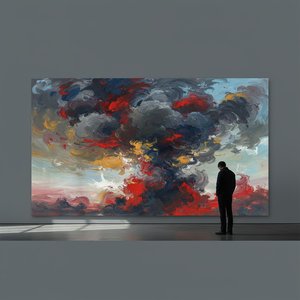 Beyond Representation: Exploring the Emotional Landscape of Abstract Expressionism
The Genesis of Feeling: Post-War America and the Rise of Abstract Expressionism The Raw Emotion of Expressionism: A Revolution in 20th-Century Art Explore the revolutionary world of Expressionism with . Discover key artists like Kirchner & Nolde, und...
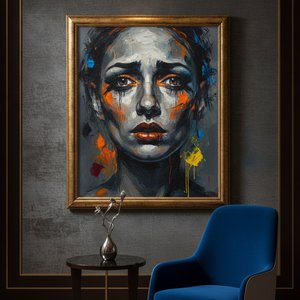
In the high-stakes world of hospitality design, the atmosphere of a lobby or lounge is not merely a backdrop; it is a silent communicator of brand identity and emotional resonance. To step into a space adorned with Expressionist Abstraction is to enter a realm where the boundaries of reality dissolve into pure, unadultered feeling. Unlike representational art, which directs the eye toward a recognizable subject, abstract expressionism invites the guest into a subjective dialogue. It offers a visceral outpouring of the human spirit that can transform a sterile corridor into a sanctuary of movement and light.
The historical weight of this movement, born from the seismic shifts of the post-war era, provides an inherent depth to any modern interior. When a designer selects works reminiscent of the New York School or the lyrical abstractions of artists like Peter Upward, they are introducing a sense of intellectual gravity and emotional complexity. This is not art that merely sits on a wall; it is art that acts upon the viewer. In a hotel setting, where the goal is to evoke both comfort and intrigue, the spontaneous, gestural brushstrokes of an abstract masterpiece can stimulate the senses, breaking the monotony of modern minimalism with a profound, rhythmic energy.
Strategic Color Selection: Using Bold Palettes to Define Hotel Zones
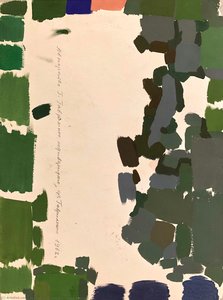 Abstraction
Abstract painting by Hryhorii Havrylenko (1963). Bold greens & blues, gestural brushwork, & expressive composition evoke tranquility. Explore Ukrainian avant-garde art.
For the procurement professional, color is one of the most functional tools in the architectural toolkit. Expressionist abstraction offers a sophisticated palette that can be used strategically to delineate different zones within a large-scale property. Consider the use of vibrant, warm tones—deep ochres, fiery reds, and sun-drenched yellows—to energize a breakfast lounge or a high-traffic social hub. These colors stimulate appetite and conversation, creating an inviting pulse that draws guests into the heart of the space.
Conversely, in more intimate settings such as executive suites or quiet library lounges, one might look toward the cooler, more contemplative side of abstraction. Works featuring deep blues, forest greens, and muted teals—reminiscent of the tranquil landscapes found in the Schlossmuseum Murnau collection—can induce a sense of serenity and psychological retreat. By selecting pieces that utilize these contrasting temperature shifts, a designer can use art to guide the guest's emotional journey through the building, using color as an invisible wayfinder that defines the mood of each unique environment.
Scale and Composition: Integrating Large-Format Abstractions in Modern Architecture
 Abstract Painting
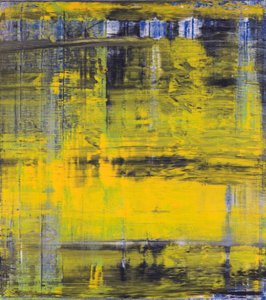
A Symphony of Color and Texture: Exploring Gerhard Richter’s Abstract Painting (1978) This monumental abstract painting by Gerhard Richter , created in 1978, is a captivating example of his mature abstract style. Measuring an impressive 201 x 336 cm,...
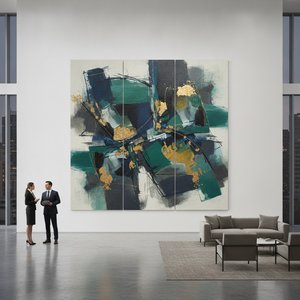
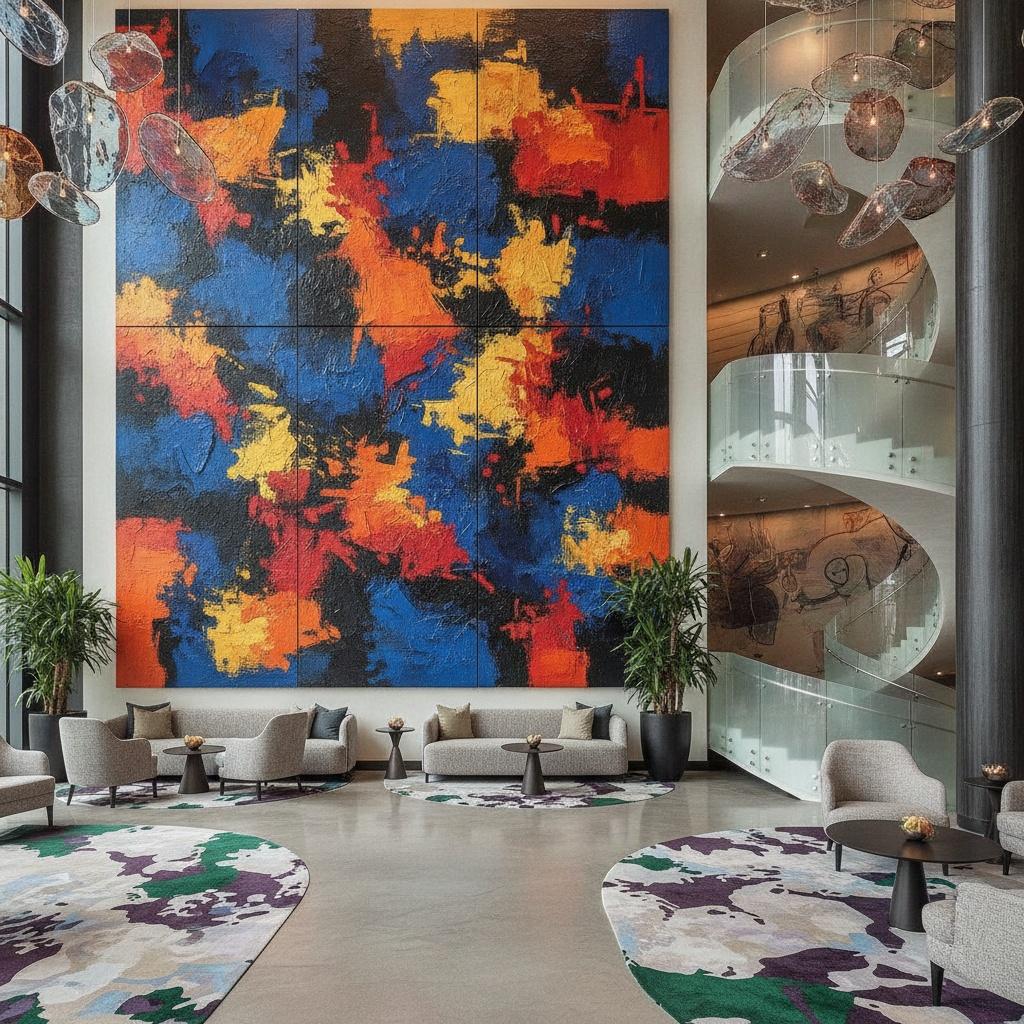
The architectural grandeur of modern hotels demands art that can hold its own against soaring ceilings and expansive glass facades. Small, scattered works often fail to command attention in such vast volumes; instead, they risk being swallowed by the architecture. This is where large-format abstraction becomes essential. A single, monumental canvas—perhaps a multi-panel configuration spanning several meters—acts as a focal point that anchors the entire room. The sheer scale of an abstract work allows for a more immersive experience, where the viewer can lose themselves in the intricate layers of impasto and the complex network of intersecting lines.
- Multi-Panel Configurations: Utilizing 3, 4, or 5-panel layouts to bridge wide walls or staircases, ensuring a seamless flow of color across architectural transitions.
- Vertical Orientation: Using tall, vertical compositions to draw the eye upward, emphasizing the height and grandeur of atrium spaces.
- Immersive Texture: Selecting works with heavy impasto techniques that create a three-dimensional effect, adding tactile depth to flat, modern surfaces.
Integrating these large-scale pieces requires careful consideration of composition. A well-placed abstract work does not compete with the architecture but rather completes it. When the brushwork is designed to echo the movement of the room—perhaps following the curve of a reception desk or the rhythm of a structural column—the art becomes an integral part of the building's very DNA.
Sourcing for Volume: Procurement Logistics for Multi-Unit Art Installations
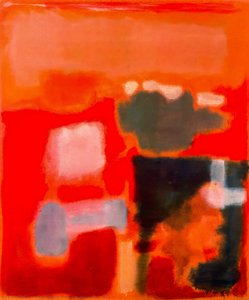
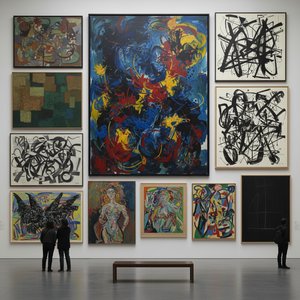 Abstract Expressionism's 10 Defining Masterpieces |
Introduction To gaze upon these ten canvases is to step into a realm where emotion reigns supreme, where the very act of painting became a visceral outpouring of the human spirit. The Abstract Expressionist movement, born in the aftermath of World Wa...
For procurement managers and hospitality chains, the challenge of art selection is often compounded by the need for consistency, scalability, and budget predictability. Furnishing a single boutique hotel is an aesthetic endeavor; furnishing a global chain is a logistical one. The ability to source high-quality, hand-painted reproductions that can be ordered in volume is critical. This requires a supplier who understands the necessity of repeatable standards, reliable shipping timelines, and clear, tax-compliant documentation for corporate accounting.
Efficiency in sourcing means having access to a deep catalog where styles can be replicated across multiple properties while maintaining a unique identity for each. The professional designer needs a partner who can manage the complexities of bulk-order flows—providing digital mockups for approval, ensuring color matching across different batches, and delivering finished, framed works via reliable carriers like DHL or FedEx. In this context, art procurement is about more than just beauty; it is about operational reliability, the ability to provide VAT invoices, and the assurance that every piece arrives ready for immediate installation without the friction of customs delays.
Durability and Maintenance: Preserving Hand-Painted Masterpieces in High-Traffic Spaces
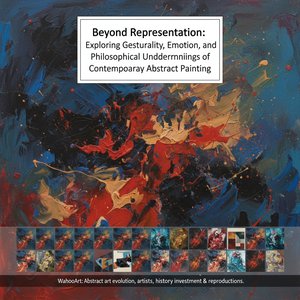 Beyond Representation: Exploring Gesturality, Emotion, and Philosophical Underpinnings of Contemporary Abstract Painting
The Genesis of Abstraction: From Modernism to Post-War Expression Abstract expressionism Abstract expressionism in the United States emerged as a distinct art movement in the aftermath of World War II and gained mainstream acceptance in the 1950s, a ...
In the demanding environment of a hotel, art must be as resilient as it is beautiful. While the emotional impact of an abstract painting is paramount, its longevity is the true measure of value for any property owner. Hand-painted oil reproductions on high-quality cotton canvas offer a level of durability that digital prints simply cannot match. The use of professional-grade materials—such as flexible gesso to prevent cracking and specialized oils like saffara to prevent yellowing—ensures that the pigments remain vibrant for decades, resisting the atmospheric pollutants and temperature fluctuations common in public spaces.
Furthermore, the application of a protective Damar varnish serves as a vital shield against dust and moisture. For designers, selecting works that are finished with this archival-grade protection means reducing long-term maintenance costs and ensuring that the "soul" of the artwork—its texture, its light, and its movement—remains intact through years of guest interaction. When investing in art for high-traffic zones, the focus must remain on the chemistry of the materials as much as the aesthetics of the brushstroke, ensuring that the visual legacy of the hotel remains as enduring as its architecture.