Early Life & Artistic Foundations: From Sheffield to Canada
 Wikipedia: Arthur Lismer
Arthur Lismer, LL.D. (27 June 1885 – 23 March 1969) was an English-Canadian painter, member of the Group of Seven and educator. He is known primarily as a landscape painter and for his paintings of ships in dazzle camouflage. == Early life == Lism...
Arthur Lismer’s journey toward becoming a cornerstone of Canadian art began not amidst the vast landscapes he would later immortalize, but in the industrial heartland of Sheffield, England. Born in 1885, his early life was steeped in the practicalities of apprenticeship – first at a photo-engraving company, then through dedicated study at the Sheffield School of Art from 1898 to 1905. These formative years instilled a discipline and technical foundation that would prove invaluable, even as he later embraced a more expressive style. A scholarship allowed him to broaden his horizons in Antwerp, Belgium, where he absorbed the influences of Barbizon naturalism and burgeoning post-impressionist movements. However, it was his 1911 arrival in Canada – a land vastly different from the grimy streets of Sheffield – that truly ignited his artistic spirit. Hired by Grip Limited, a Toronto commercial art firm, Lismer found himself amongst kindred spirits like J.E.H. MacDonald and Franklin Carmichael, artists who shared a growing dissatisfaction with conventional academic approaches and a yearning to capture the unique character of the Canadian wilderness.
The Rise of the Group of Seven: A Collective Vision Takes Shape
The early 20th century in Canada was a period of burgeoning national identity, and within this context, a collective of artists began to coalesce around a shared vision. Lismer, alongside MacDonald, Carmichael, Lawren Harris, A.Y. Jackson, Frank Johnston, and later Frederick Varley, formed what would become known as the Group of Seven. Though initially met with resistance from established art circles, their determination stemmed from a belief that a truly Canadian artistic voice could only emerge through direct engagement with the country’s untamed beauty. The tragic early death of Tom Thomson in 1917 cast a long shadow, yet his influence – particularly his bold use of color and simplified forms – became foundational to the group's aesthetic. They weren’t merely depicting landscapes; they were attempting to convey an emotional and spiritual connection to the land, rejecting European conventions in favor of a uniquely Canadian sensibility. Their exhibitions, though often controversial, sparked a national dialogue about art, identity, and the very essence of what it meant to be Canadian.
Lismer's Distinctive Style: Landscapes, Camouflage & Beyond
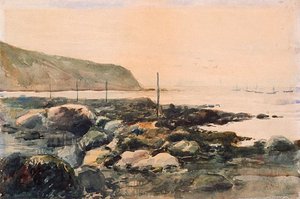 Landscape With Boats
Discover Arthur Lismer’s ‘Landscape With Boats,’ a captivating watercolor capturing coastal tranquility. Explore its Impressionistic style & muted palette – a serene piece of art history.
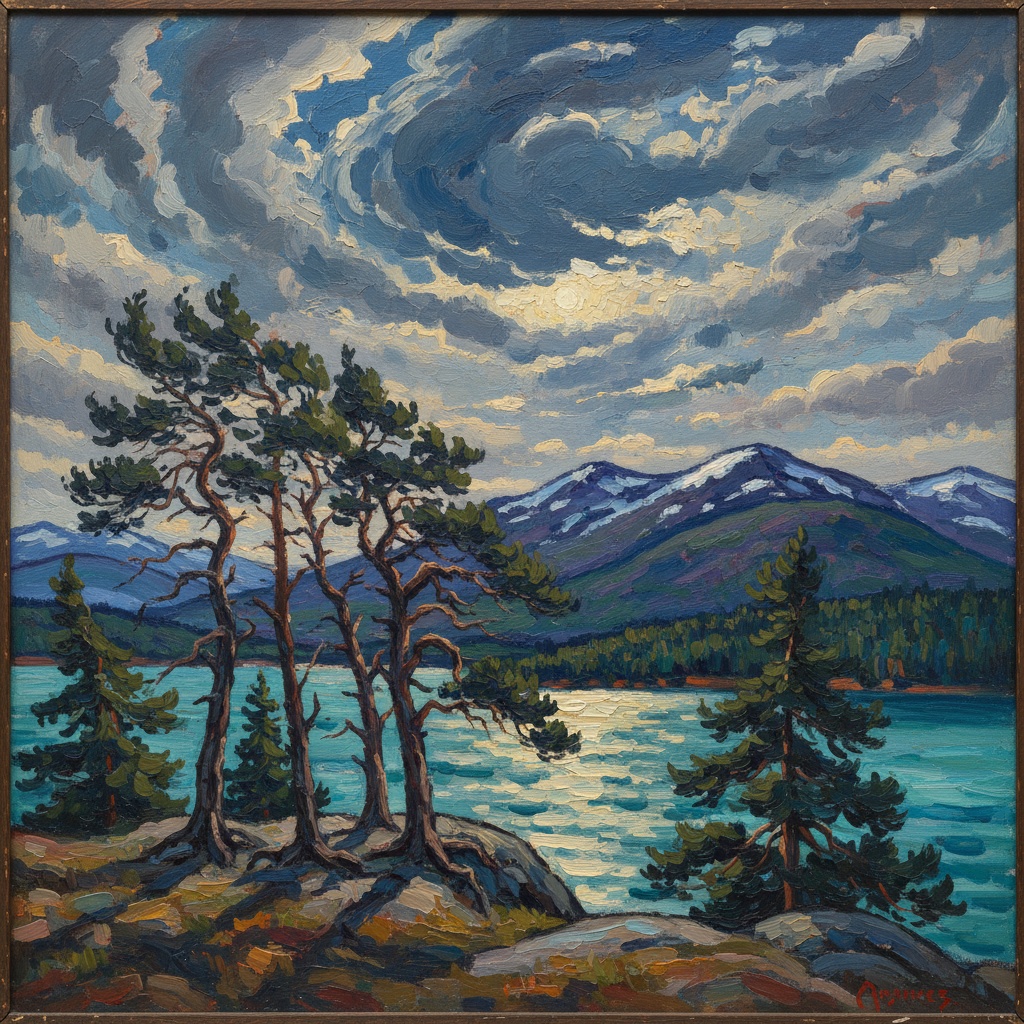
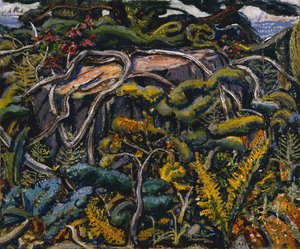
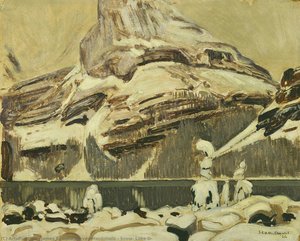
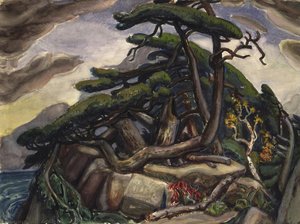
While unified by their shared goals, each member of the Group of Seven possessed a distinctive artistic voice. Lismer’s style evolved from early Impressionistic tendencies towards a more angular and expressive approach, reflecting the ruggedness of the Canadian terrain. His paintings are characterized by vibrant colors, tactile brushwork, and a dynamic energy that captures the raw power of nature. However, his artistic output wasn't limited to idyllic landscapes. During World War I, Lismer’s skills were put to a unique purpose: designing dazzle camouflage for ships – a fascinating intersection of art and wartime necessity. This experience profoundly influenced his later work, imbuing it with a sense of pattern, movement, and an almost abstract quality. Works like ‘Habitant Farm,’ painted in the 1920s, exemplify his ability to blend observation with emotional resonance, capturing not just the physical appearance of rural Canada but also its enduring spirit. Other pieces, such as 'Two Standing Figures With Caps', demonstrate a willingness to experiment with form and composition, even within the context of black and white reproductions.
A Dedicated Educator: Shaping Canadian Art Through Teaching
Arthur Lismer’s influence extended far beyond his own canvases; he was a profoundly dedicated educator who played a pivotal role in shaping generations of Canadian artists. From 1916 to 1917, he served as principal of the Victoria School of Art and Design in Halifax, Nova Scotia, where he documented the devastating aftermath of the Halifax Explosion with powerful drawings that captured the city’s resilience. He later became vice-principal of the Ontario College of Art (OCA) in Toronto, championing innovative teaching methods and encouraging students to find their own artistic voices. His commitment to art education wasn't confined to Canada; he also taught in South Africa, New York, and Montreal, spreading his philosophy of direct observation and expressive freedom. Lismer believed that art should be accessible to all, and he was a tireless advocate for child art education, recognizing the inherent creativity within every individual.
Legacy and Influence: Lismer’s Enduring Impact on Canadian Modernism
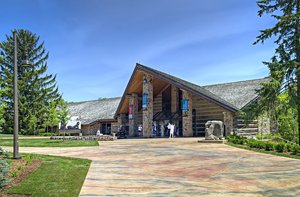 McMichael Canadian Art Collection
Discover Canada’s artistic soul at the McMichael Canadian Art Collection! Explore 7,000+ works by Tom Thomson & the Group of Seven, plus stunning Indigenous art amidst beautiful landscapes in Vaughan, Ontario.
Arthur Lismer died in 1969, leaving behind a rich artistic legacy that continues to inspire. His contributions as a painter, educator, and advocate for Canadian art are immeasurable. The Group of Seven, with Lismer at its core, fundamentally altered the course of Canadian art history, establishing a national school of painting that celebrated the country’s unique landscapes and fostered a sense of cultural identity. His work can be found in major collections across Canada, including the Art Gallery of Ontario and the National Gallery of Canada, and his influence is evident in the works of countless artists who followed in his footsteps. Institutions like the McMichael Canadian Art Collection serve as vital repositories of this artistic heritage, allowing future generations to connect with the spirit of Lismer and his contemporaries. Discovering Lismer’s art isn't simply about appreciating beautiful paintings; it’s about understanding a pivotal moment in Canada’s cultural evolution – a time when artists dared to forge a new path, guided by their passion for the land and their unwavering belief in the power of artistic expression. His dedication continues to resonate today, reminding us of the importance of connecting with nature, embracing individuality, and celebrating the unique beauty of our surroundings.