The Caricaturist’s Eye: Nadar Before Photography
 Wikipedia: Nadar
Gaspard-Félix Tournachon (French: [ɡaspaʁ feliks tuʁnaʃɔ̃]; 5 April 1820 – 20 March 1910), known by the pseudonym Nadar (French: [nadaʁ]) or Félix Nadar, was a French photographer, caricaturist, journalist, novelist and balloonist who was a proponent...
Before he became synonymous with the striking portraits that captured the essence of 19th-century Parisian society, Gaspard-Félix Tournachon – known to the world as Nadar – honed his observational skills and a decidedly subversive wit as a caricaturist. Born in 1820, Nadar’s early career wasn't focused on capturing likenesses but rather dissecting them, exaggerating features and societal foibles for publications like Le Charivari. This period was formative; it instilled within him a keen understanding of character, an ability to perceive the underlying personality beneath the surface, and a willingness to challenge established norms – qualities that would profoundly shape his photographic work. His caricatures weren’t merely humorous sketches; they were insightful commentaries on the political landscape and the burgeoning cultural scene of France. This early engagement with satire wasn't abandoned when he turned to photography but rather refined, becoming a subtle undercurrent in his portraits, hinting at the complexities within each subject.
Redefining Portraiture: Intimacy, Realism & Challenging Convention
Portrait photography, or portraiture, is a type of photography aimed toward capturing the personality of a person or group of people by using effective lighting, backdrops, and poses. A portrait photograph may be artistic or clinical. Frequently, por...
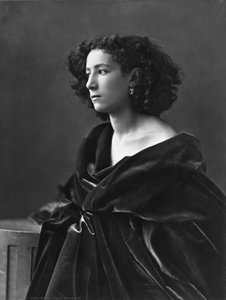
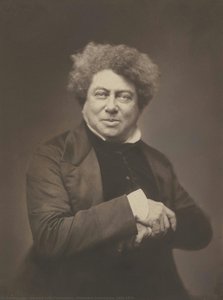
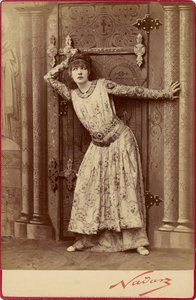
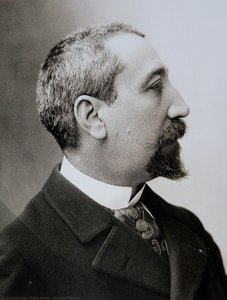
The advent of photography in the mid-19th century offered Nadar a new medium to explore his fascination with personality. However, he quickly grew dissatisfied with the prevailing style of portraiture – stiff, formal poses and contrived settings that prioritized social status over genuine representation. He rejected the opulent backdrops and artificiality favored by many photographers, instead opting for simplicity and natural light. This wasn’t merely a technical choice; it was a philosophical one. Nadar believed that true character couldn't be revealed through artifice but only through an honest depiction of the individual. His studio became a space where subjects could relax, converse, and reveal themselves – or at least, allow their personalities to subtly emerge. This approach, revolutionary for its time, resulted in portraits that possessed an unprecedented level of intimacy and realism. He sought not to create idealized images but rather to capture the essence of his sitters, flaws and all.
Nadar's Studio: A Crucible of Bohemian Paris and Artistic Innovation
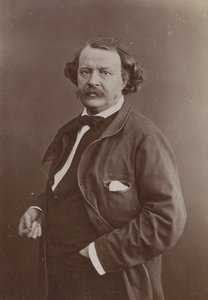 Félix Nadar
Félix Nadar (1820-1910): French photographer & pioneer of aerial photography, known for striking portraits of Baudelaire, Hugo & innovative use of light.
The studio at 113 rue St. Lazare (later moving to 35 Boulevard des Capucines) wasn’t simply a place of business; it was a vibrant hub for the intellectual and artistic elite of Paris. Nadar cultivated relationships with writers like Charles Baudelaire, Gérard de Nerval, and Théophile Gautier, as well as painters such as Corot and Delacroix. These connections weren't merely social; they were integral to his artistic vision. His subjects trusted him – a rare feat in an era where photography was still viewed with suspicion – allowing him access to their inner worlds. In 1874, Nadar’s studio played host to the first Impressionist exhibition, solidifying its position as a cornerstone of modern art. This act wasn't accidental; it reflected his belief in artistic freedom and his willingness to champion unconventional talent. The studio became a space where ideas were exchanged, boundaries were pushed, and the foundations of new movements were laid.
Beyond the Likeness: Exploring Psychological Depth in Nadar’s Portraits
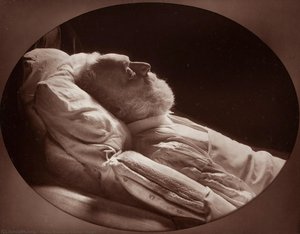
What truly sets Nadar's portraits apart is their psychological depth. He wasn't content with simply recording a physical likeness; he sought to capture the *soul* of his subjects. This was achieved through careful observation, subtle manipulation of lighting and pose, and – perhaps most importantly – genuine engagement with each individual. His portrait of Théophile Gautier, for example, reveals not just the writer’s distinctive features but also a sense of his intellectual curiosity and melancholic spirit. The gaze is direct, challenging yet inviting, hinting at a complex inner life. Similarly, his portraits of Baudelaire capture the poet's brooding intensity and artistic sensitivity. Nadar understood that a portrait wasn't merely an image; it was a narrative – a glimpse into the subject’s character, emotions, and aspirations. He pioneered techniques to convey these nuances, using shadows and light to sculpt form and reveal personality.
Aerial Visions: Nadar’s Pioneering Photography from Above
Nadar's restless spirit extended beyond the confines of the studio. Driven by a fascination with flight – he was a passionate proponent of heavier-than-air machines – he embarked on an ambitious project to capture aerial photographs using hot air balloons. In 1858, he became the first person to successfully photograph the earth from above, a feat that required immense ingenuity and technical skill. The challenges were considerable: preparing and developing wet plate collodion negatives while suspended in a basket hundreds of feet in the air was no easy task. He devised innovative solutions, including gas-proof cotton covers for his balloons, to stabilize the imaging process. While his aerial photography wasn't immediately commercially successful, it demonstrated his unwavering commitment to pushing the boundaries of the medium and exploring new perspectives. This venture also inspired Jules Verne’s *Five Weeks in a Balloon*, cementing Nadar’s legacy as both an artist and an adventurer.
A Lasting Legacy: Nadar’s Influence on Modern Photography & Beyond
Félix Nadar's impact on photography is immeasurable. He not only revolutionized portraiture by prioritizing intimacy and realism but also expanded the possibilities of the medium through his pioneering aerial work. His studio served as a catalyst for artistic innovation, fostering connections between painters, writers, and photographers that shaped the course of modern art. His emphasis on capturing personality – rather than simply recording appearance – continues to inspire photographers today. Nadar’s portraits remain iconic, offering a unique glimpse into the lives and minds of some of the most influential figures of the 19th century. His legacy extends beyond the technical advancements he pioneered; it lies in his ability to see beyond the surface and reveal the human spirit within. At ArtsDot.com, we celebrate Nadar’s enduring vision by offering high-quality reproductions of his most celebrated works, allowing you to bring a piece of photographic history into your home or office. Explore our collection today and discover the timeless beauty and psychological depth of Félix Nadar's masterpieces.