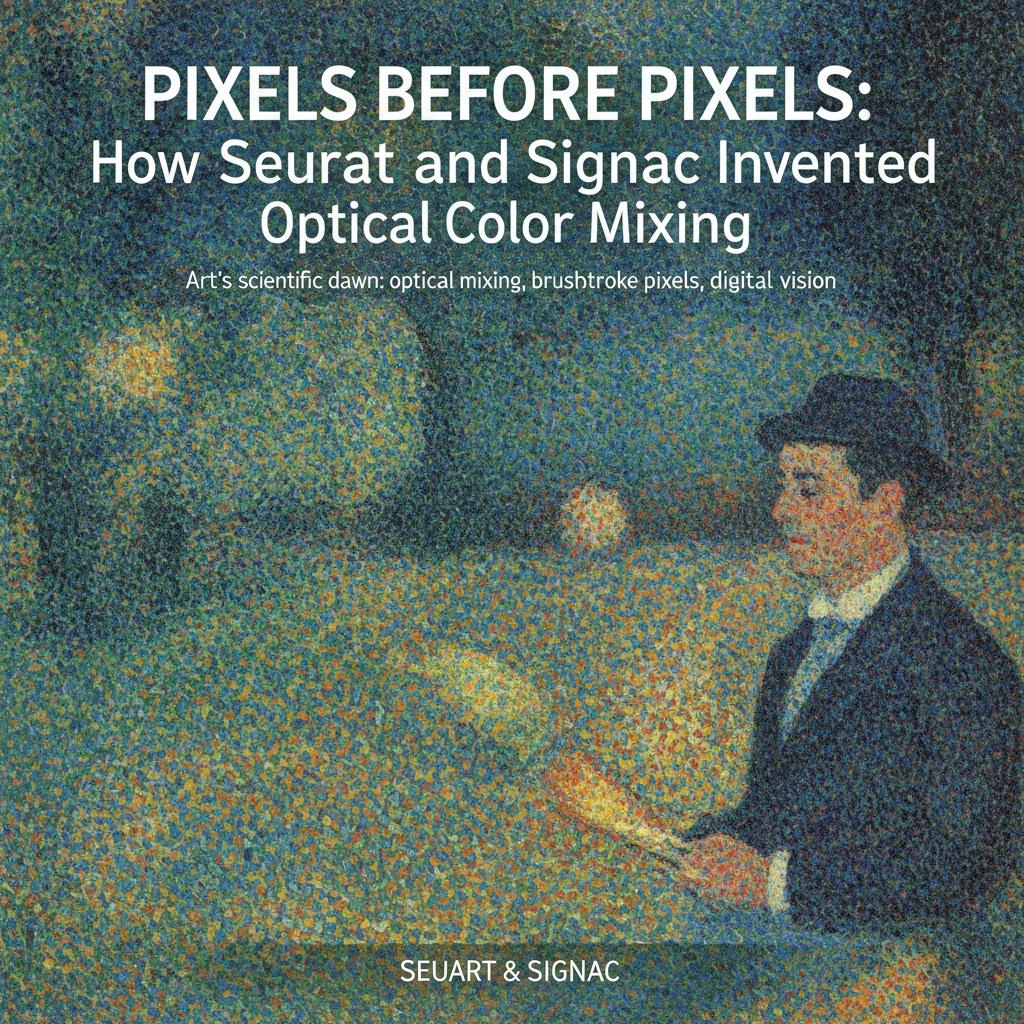
The Original Glitch: Breaking Down the Science of Pointillism
Long before we lived in a world of high-resolution Retina displays and 4K streaming, there was a radical movement that sought to decode the very DNA of light. We often think of "glitches" or fragmented visuals as modern digital phenomena, but in the late 19th century, Georges Seurat and Paul Signac were performing a manual version of this same visual disruption. They weren't interested in the soft, blurry edges of traditional Impressionism; instead, they wanted to inject a sense of scientific precision into the chaos of perception. This was the birth of Pointillism, a technique that felt less like a brushstroke and more like an intentional, calculated arrangement of data points.
To understand this movement, one must look past the surface beauty and see the underlying mechanics. Seurat didn't just want to paint a scene; he wanted to engineer an experience. By applying tiny, distinct dots of pure color, he bypassed the traditional method of mixing pigments on a palette, which often results in a muddy, desaturated mess. Instead, he relied on the viewer's own brain to do the heavy lifting. This was a high-stakes experiment in neuro-aesthetics, testing how much information the human eye could process before the fragments coalesced into a coherent, glowing reality.
The brilliance of this approach lies in its audacity. It challenged the idea that art should be an emotional outpouring and suggested instead that it could be a mathematical triumph. Every dot was a deliberate choice, a single bit of visual information placed with surgical intent to manipulate the viewer's physiological response to light and shadow.
Dots vs. Pixels: The High-Definition Vision of Seurat and Signac
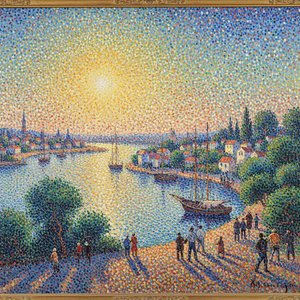
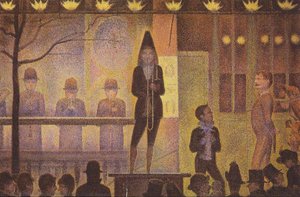
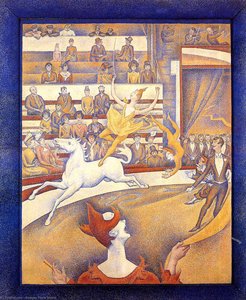
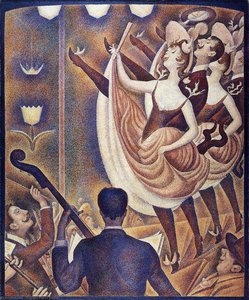
If you were to zoom in on a modern digital photograph, you would eventually hit the pixel—the smallest unit of a digital image. If you zoom into a masterpiece like Chahut or The Poppy Field, you encounter something strikingly similar: the point. Seurat and Signac were essentially the first digital artists, working with an analog resolution that predated the computer by a century. They understood that a continuous line is actually an illusion created by a series of closely spaced points, much like how our screens refresh thousands of times per second to create smooth motion.
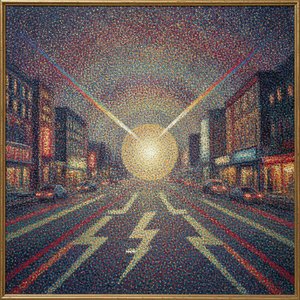
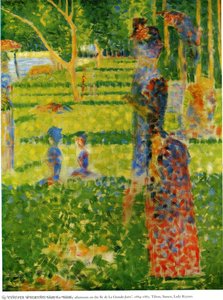
This "pre-digital" high definition allowed for a level of luminosity that traditional painting simply couldn't match. When we look at The Rope-Colored Skirt, we aren't just seeing paint; we are seeing a vibrating field of light. Because the colors remain unmixed on the canvas, they retain their original intensity. This creates a shimmering effect, a visual "pop" that feels incredibly contemporary, almost like the vibrant, high-contrast aesthetics found in modern graphic design or street art. The artists were essentially building a low-resolution map that our eyes would upscale into a high-fidelity masterpiece.
This connection between the 19th-century canvas and the 21st-century screen is more than just a metaphor; it is a shared logic of construction. Both the Pointillist dot and the digital pixel serve the same master: the illusion of seamless reality through the accumulation of discrete, fragmented parts. Seurat was essentially coding with oil paint, creating a visual language that remains the foundation for how we perceive everything from a classic painting to a high-end gaming interface.
Color Theory Hack: How Optical Mixing Creates Luminous Vibrancy
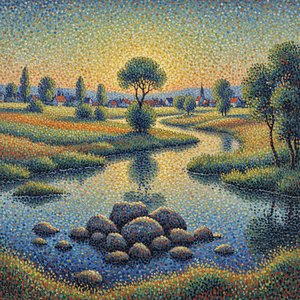
The true "secret sauce" of Neo-Impressionism is the concept of optical color mixing. In traditional art, if you want green, you mix blue and yellow on your palette. But in doing so, you lose the brilliance of the individual pigments. Seurat and Signac bypassed this limitation by placing a dot of pure blue directly next to a dot of pure yellow. From a distance, the eye cannot distinguish the boundaries between them; instead, it perceives a vibrant, electric green that seems to glow from within.
This technique relies on the science of chromatic harmony and discord. By strategically placing complementary colors—like orange against blue or red against green—the artists created a visual vibration. This isn't just an aesthetic choice; it is a psychological one. The tension between these opposing hues forces the retina to work harder, creating a sense of movement and energy that static, pre-mixed colors lack. It is the ultimate color theory hack, turning the viewer's biology into part of the artistic process.
This mastery of light and shadow through color placement allowed for an unprecedented atmospheric depth. The artists could simulate the way sunlight filters through leaves or reflects off water by varying the density and temperature of their dots. The result is a painting that feels alive, breathing with a rhythmic, pulsing light that captures the very essence of the Belle Époque Parisian life.
Beyond the Brush: The Neo-Impressionist Blueprint for Modern Visuals
The impact of Pointillism extends far beyond the museum walls. The structured, almost graphic approach taken by Seurat and his contemporaries laid the groundwork for much of the visual culture we consume today. You can see the DNA of Neo-Impressionism in the bold, flat color planes of Pop Art, the rhythmic patterns of Op Art, and even the hyper-saturated aesthetics of contemporary digital illustration. The idea that an image can be broken down into its most fundamental, high-impact components is a concept that continues to drive design innovation.
Artists like Henri Edmond Cross further pushed these boundaries, using the technique to explore atmospheric landscapes that influenced the later Fauvist movement. This lineage of "color-first" thinking moved art away from mere representation and toward pure, expressive abstraction. The Neo-Impressionists proved that color could be used as a structural element, a tool for building form and emotion through scientific observation rather than just imitation.
In an era where we are constantly bombarded by rapid-fire imagery, the Pointillist blueprint feels more relevant than ever. It teaches us to appreciate the construction of the image—to look closely at the fragments that make up our visual world. Whether it is a street art mural or a complex digital composition, the legacy of Seurat lives on in every high-contrast, visually striking piece of art that dares to manipulate light and color to command our attention.
The Legacy of Light: From 19th Century Canvas to Digital Screens
As we navigate an increasingly digital landscape, the connection between the masters of the past and the creators of the present becomes even more profound. The "pixels before pixels" era was a period of intense discovery, where the boundaries between science and art were blurred in the pursuit of capturing light. Seurat and Signac didn't just invent a new way to paint; they invented a new way to see.
Today, we carry this legacy in our pockets. Every time we look at a smartphone screen, we are experiencing a modern evolution of the Pointillist dream—a world constructed from millions of tiny, glowing points of light that coalesce into a seamless reality. The fascination with texture, vibrancy, and optical illusion remains the heartbeat of visual culture. From the heavy impasto of a hand-painted reproduction to the sharp lines of digital art, the quest for luminosity continues.
At ArtsDot.com, we celebrate this enduring connection between historical mastery and modern impact. We specialize in bringing these legendary techniques into the contemporary home through high-quality, hand-painted reproductions that capture the true soul and texture of the masters. Whether you are looking to transform a personal memory into a masterpiece or find a bold, high-impact piece for your space, our mission is to make the brilliance of art history accessible to everyone, everywhere.