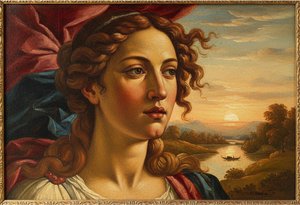
The Venetian Vibe: A Republic Forged in Light and Water
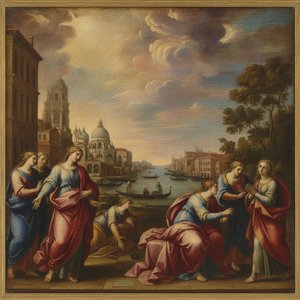 Venetian Renaissance: The Mastery of Color, Light, and the Art of Colorito
The Venetian Atmosphere: A Republic Forged in Light and Water The Golden Light of Innovation: Exploring the Venetian Renaissance Art Movement (1430–1580) A Republic Forged in Light: The Unique Context of Venetian Art Petrarch’s description of Venice ...
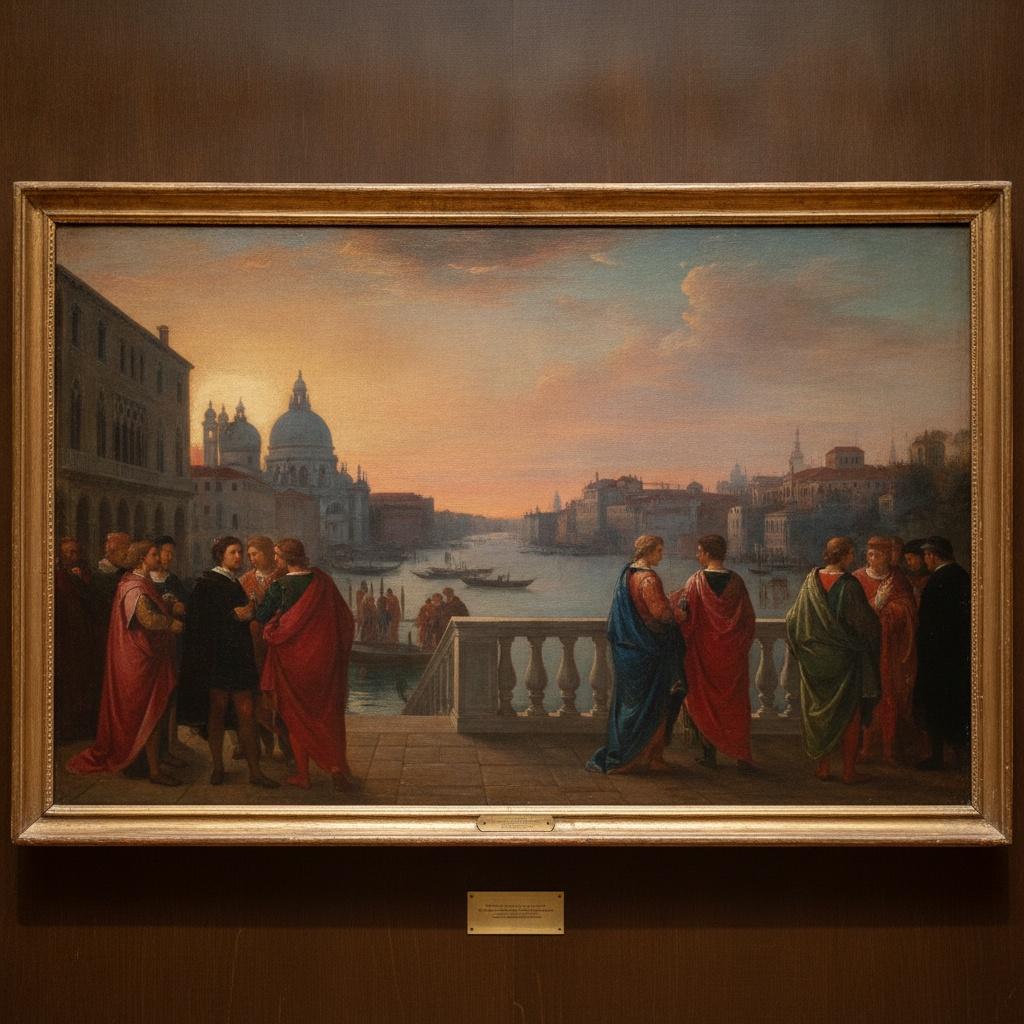
To understand the soul of the Venetian Renaissance, one must first surrender to the sensory experience of the city itself. Unlike the terrestrial ambitions of Florence or Rome, Venice was a
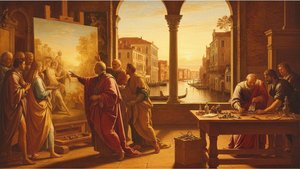
mundus alter—another world—as described by Petrarch. It was a republic born of the sea, a maritime empire built on a complex network of trade that connected the Orient with the West. This unique geopolitical position meant that Venice was not just a political powerhouse, but a vibrant hub where the air itself seemed saturated with moisture and light. The constant dance of the Adriatic sun upon undulating canals and marble palaces created an environment where nothing was static.
This environmental reality dictated a new way of seeing for the artists residing within the lagoon. While other Italian city-states were defined by rigid structures and intellectual rigor, Venice offered a landscape of shimmering reflections and soft, atmospheric hazes. The wealth of the Republic did not flow from vast land ownership but from the movement of the sea, bringing with it an influx of exotic pigments, luxurious textiles, and Byzantine influences. This confluence of styles created a crucible for innovation, encouraging artists to move away from strict classical imitation and toward a visual language capable of capturing the ephemeral beauty and sensual richness of their watery home.
Colorito vs. Disegno: The High-Stakes Battle for Visual Dominance
Venetian Color and Florentine Design--- title: Venetian Color and Florentine Design - The Metropolitan Museum of Art author: Jean Sorabella url: https://www.metmuseum.org/essays/venetian-color-and-florentine-design hostname: metmuseum.org description: Florentine color was frequently mo...
The history of the Italian Renaissance is often framed as a tension between two opposing philosophies:
disegno and
colorito. In the intellectual hubs of Florence and Rome, the masters were preoccupied with
disegno—the rigorous, disciplined pursuit of line, structural precision, and anatomical accuracy. For the Florentines, art was an intellectual exercise in geometry and form, where the boundary of every object was clearly defined by a sharp, decisive stroke. It was a cerebral approach, prioritizing the underlying architecture of the subject over its surface appearance.
Venice, however, staged a revolution through
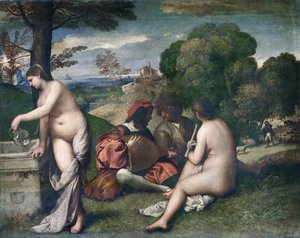
colorito. Here, the artists sought to capture the intangible. Rather than relying on hard outlines, they allowed form to emerge from the harmonious interplay of color and light. In the hands of the Venetian masters, the boundaries of an object were not drawn with ink but dissolved into the atmosphere. This was a sensory-driven approach where pigment was applied in layers to achieve a glowing richness, creating a sense of depth and volume that felt alive. This shift from the linear to the painterly changed the trajectory of Western art forever, moving the focus from the mind's eye to the eye's perception of light and texture.
Titian the Titan: Redefining the Canvas through Pigment and Texture
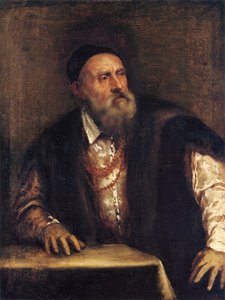 Titian
The Venetian Titan: A Life in Color and Canvas Tiziano Vecellio, known to the world as Titian, stands as a monumental figure of the Italian Renaissance—perhaps its most celebrated colorist and a master who redefined the possibilities of oil painting....
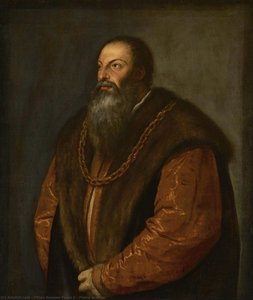
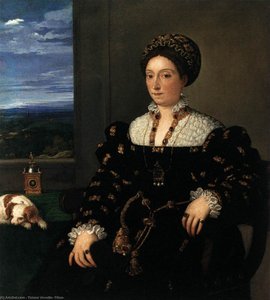
At the heart of this revolution stood Tiziano Vecellio, known to history as Titian, a monumental figure who redefined the very possibilities of oil painting. Born amidst the dramatic landscapes of the Venetian Alps, Titian’s journey from humble beginnings to international acclaim is a testament to his dedication to artistic innovation. He was perhaps the most celebrated colorist of his age, a master who understood that paint could be more than just a medium for representation; it could be a living, breathing substance.
Titian revolutionized the canvas by treating color as the primary architect of form. In his works, we see the birth of a technique where texture and pigment density create a tactile experience. He utilized the richness of oil to build up layers that caught the light, creating a sense of warmth in skin tones and a profound luminosity in fabrics. His brushwork could range from delicate lyricism to bold, expressive strokes that anticipated much later movements. By prioritizing the way light interacts with the surface of the paint, Titian ensured that his subjects possessed a visceral, human presence that resonated far beyond the frame, establishing a standard of excellence that would influence generations of painters.
The Atmospheric Edge: Capturing the Ephemeral Beauty of the Lagoon
 Venetian Renaissance: The Golden Age of Color, Light, and Luminous Artistry
The Venetian Atmosphere: Mastering Light and Color through Colorito To understand the soul of the Venetian Renaissance, one must first surrender to the sensory experience of the city itself. Unlike the intellectual rigor of the Florentine school, whi...
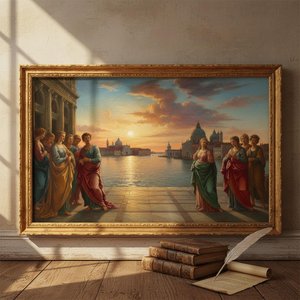
The true genius of the Venetian School lay in its ability to capture the ephemeral—the fleeting moment when light hits water or a cloud passes over the sun. The artists were captivated by how the Adriatic sun could dissolve hard edges into a soft, atmospheric haze, creating a sense of depth known as aerial perspective. This was not merely about painting a landscape; it was about painting the air itself. They mastered the art of the "glow," using subtle gradations of tone to suggest the humidity and warmth of the Venetian climate.
This mastery of atmosphere allowed for a unique kinded of emotional resonance. A portrait by a Venetian master does not just sit on the canvas; it breathes within an environment. The interplay of light and shadow, or
chiaroscuro, was used not just for drama, but to integrate figures into their surroundings. Whether it was the soft light filtering through a landscape or the way reflections shimmered upon a canal, the Venetian artists achieved a level of atmospheric realism that made their worlds feel infinitely deep and perpetually moving, inviting the viewer to step into a realm of pure sensory delight.
Legacy of the Masters: From Renaissance Glow to Baroque Drama
 jacopo palma il giovane
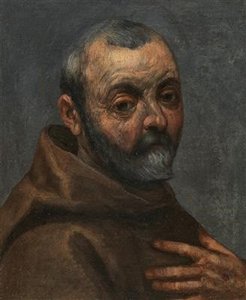
The Radiant Legacy of Jacopo Palma il Giovane In the golden twilight of the Venetian Renaissance, a period defined by unparalleled mastery of color and light, there emerged a painter whose brush bridged the gap between the High Renaissance and the bu...
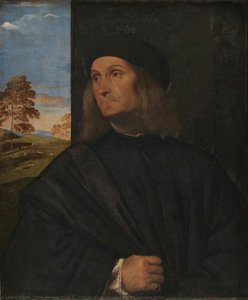
The influence of the Venetian Renaissance did not vanish with the decline of the Republic; instead, its practices persisted, proliferating through Europe well into the 19th century. The lineage of excellence established by figures like Giovanni Bellini and Titian provided the foundation for subsequent masters to push the boundaries of drama and emotion even further. As the era transitioned toward the Baroque, the seeds of Venetian innovation—the emphasis on color, texture, and light—blossomed into a new era of theatrical grandeur.
Artists such as Jacopo Palma il Giovane served as vital links in this continuity, bridging the gap between the High Renaissance and the burgeoning drama of the Baroque. By synthesizing the sophisticated command of light from Titian with the dynamic energy and narrative urgency of Tintoretto, these later painters were able to transform biblical and mythological themes into visceral human experiences. The Venetian legacy remains a testament to the power of color to move the soul, leaving behind a visual heritage that continues to inspire collectors and art lovers seeking the profound beauty of the master's touch.