The Floating World: Why Ukiyo-e is the Original Pop Art
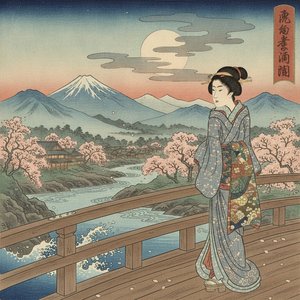 Ukiyo-e's Greatest Hits: 10 Masterpieces That Shaped a Movement | ArtsDot
Introduction Imagine a world captured not in grand historical narratives or regal portraits, but in fleeting moments of everyday life – a Kabuki actor frozen mid-performance, the delicate beauty of a courtesan, a surging wave threatening to engulf al...
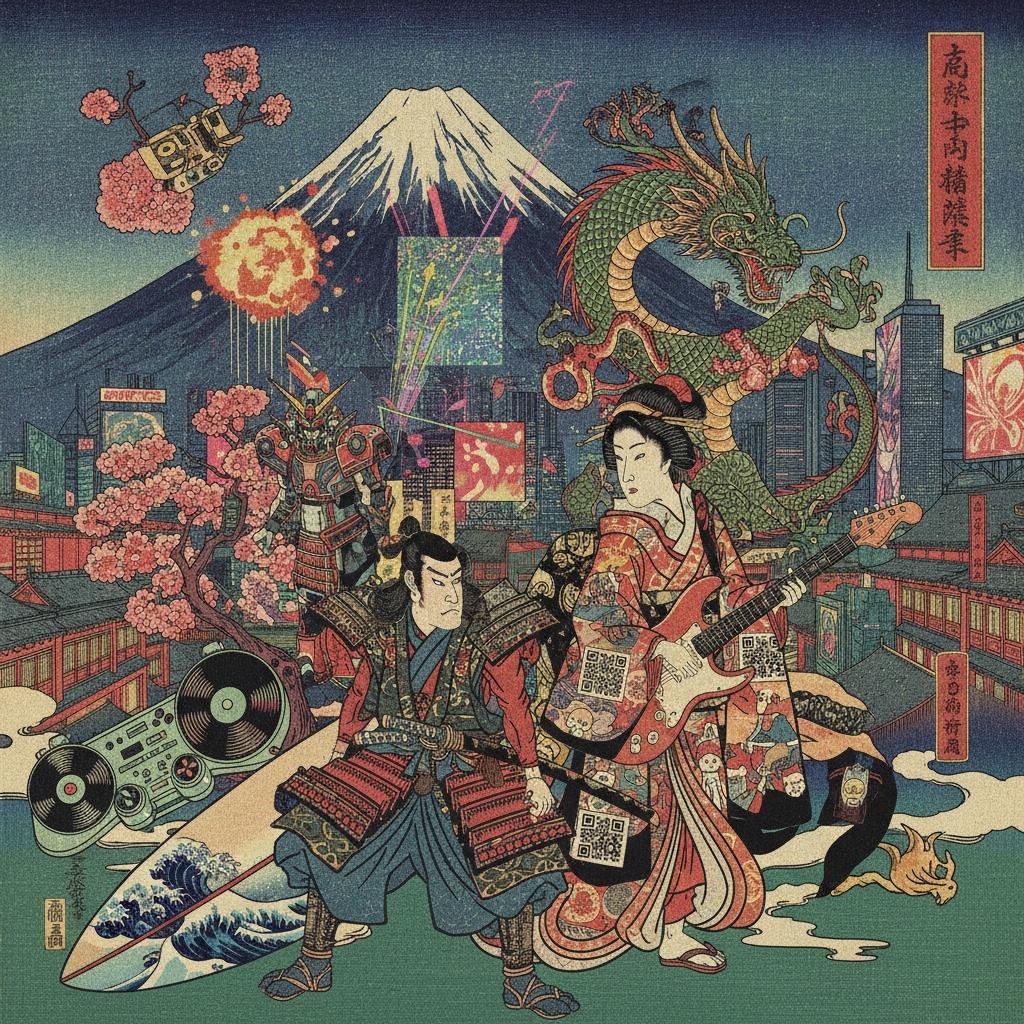
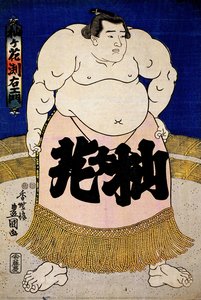
Before we had Instagram feeds, glossy magazines, or high-definition street art, there was Ukiyo-e. To understand this movement, you have to strip away the idea that "fine art" must be a stuffy, aristocratic affair reserved for museums and emperors. Emerging during Japan’s Edo period, Ukiyo- e—literally translated as “pictures of the floating world”—was the raw, unfiltered pulse of the streets. It was an art form born from the energy of a rising merchant class that found beauty not in religious icons or grand historical tragedies, but in the fleeting, high-octane moments of everyday life: the thrill of a Kabuki performance, the elegance of a fashion icon, and the sheer spectacle of nature.
This wasn't art meant for quiet contemplation in a dark gallery; it was mass-produced, accessible, and designed to be consumed. Much like today’s pop culture, Ukiyo-e thrived on the ephemeral. It captured the "now"—the transient pleasures of the pleasure quarters and the vibrant urban landscape. By utilizing woodblock printing technology, artists could replicate their visions thousands of times, making art something you could hold in your hands, much like a modern poster or a limited-edition print drop. This democratization of imagery is exactly why Ukiyo-e stands as the spiritual ancestor to everything we call "Pop" today.
Visual High-Voltage: The Bold Lines and Hyper-Vibrant Colors of Edo Japan
Ukiyo-e represents the final phase in the long evolution of Japanese genre painting. Drawing on earlier developments that had focused on human ...
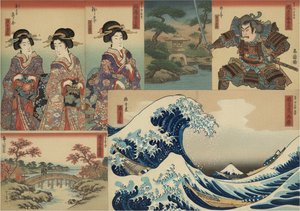
If you look at an Ukiyo-e print, the first thing that hits you isn't subtlety—it’s impact. There is a graphic intensity here that feels strikingly contemporary. The masters of this era mastered the use of bold, flowing outlines to define form, creating a sense of movement that feels almost cinematic. These weren't soft, blended shadows like you might find in Western Renaissance oil paintings; instead, they used flat, saturated areas of color that jump off the paper with an electric energy.
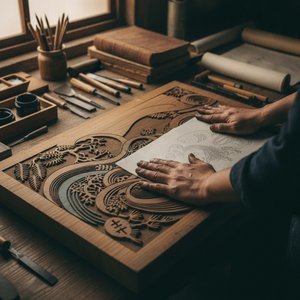
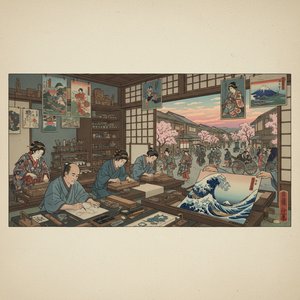
The technical precision required for this was insane. Each print was a collaborative feat of engineering, involving a designer, a carver, and a printer. They worked with multiple woodblocks—sometimes dozens for a single image—to layer pigments like Prussian blue, which revolutionized the color palette of the era. This layering allowed for deep, rich tones that could contrast sharply against stark whites or earthy reds. When you see the way light hits a patterned kimono or the crest of a wave, you are seeing the result of a meticulous process designed to maximize visual punch. It is a masterclass in composition and color theory that continues to influence graphic designers and digital artists in the 21st century.
Icons of the Era: From Hokusai’s Waves to Kuniyoshi’s Supernatural Legends
 Hokusai's Masterpieces: 25 Iconic Prints & Paintings for Art Lovers | ArtsDot
Introduction To embark on a journey through the 25 most celebrated artworks of Katsushika Hokusai is to enter a world where ink blossoms into waves, mountains breathe with life, and everyday scenes resonate with profound beauty. These pieces aren’t m...
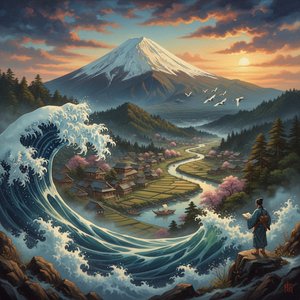
Every great movement needs its heavy hitters, and Ukiyo-e boasts a roster of legends that rival any modern icon. At the summit stands Katsushika Hokusai, a man whose name is synonymous with visual perfection. His work, particularly the iconic Great Wave off Kanogawa, transcends mere landscape; it captures a cosmic tension between the power of nature and the fragility of human existence. Hokusai’s ability to make ink blossom into living, breathing landscapes turned the natural world into a character of its own, blending profound beauty with an almost terrifying scale.
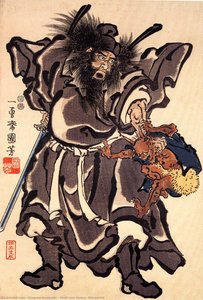
But if Hokusai provided the soul, artists like Utagawa Kuniyoshi provided the adrenaline. Kuniyoshi was the master of the spectacular and the supernatural. His prints were often filled with legendary warriors, heroic battles, and yurei—ghostly spirits that emerged from waterfalls or shadows to confront the living. There is a dark, cinematic quality to his work that feels like a precursor to modern horror and action manga. Alongside him, we see the delicate grace of artists like Okumura Toshinobu, who brought a softer, more intimate charm to the theater scenes, proving that the movement could pivot from high-octane action to subtle, romantic storytelling without losing its edge.
Street Style & Social Media: How Woodblock Prints Preceded Modern Visual Culture
--- title: The Floating World of Ukiyo-E Overview url: https://www.loc.gov/exhibits/ukiyo-e/intro.html hostname: loc.gov description: Although Ukiyo-e was initially considered "low" art, by and for the non-elite classes, its artistic and technical ca...
It is easy to forget that Ukiyo-e functioned as the social media of its time. In an era before digital photography, these prints were how news, fashion trends, and celebrity culture traveled. If a particular Kabuki actor wore a revolutionary pattern on his robe, or if a specific courtesan became the "it-girl" of the Yoshiwara district, Ukity-e artists were there to document it. These prints acted as visual diaries, capturing the aesthetics and the social hierarchies of a rapidly changing urban society.
This obsession with celebrity and trend is what connects Ukiyo-e so deeply to our current era of influencer culture. The subjects were often much the same: people looking at images of other people, admiring their style, their status, and their lifestyle. Even the way these prints were distributed—as affordable, collectible items for the masses—mirrors the way digital imagery circulates through our devices today. Ukiyo-e was a visual language of consumption, a way for the public to participate in the cultural conversation through the medium of striking, reproducible art.
The Legacy Lives On: Ukiyo-e's DNA in Anime, Manga, and Contemporary Graphic Design
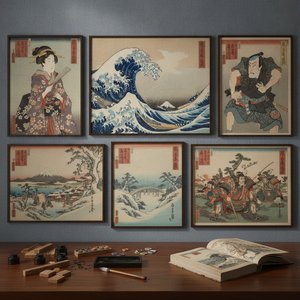 Ukiyo-e: The Art of the Floating World and the Legacy of Japanese Woodblock Masters
The Dawn of the Floating World: Historical Context of Edo-Period Japan Edo period The Edo period, also known as the Tokugawa period, is the period between 1600 or 1603 and 1868 in the history of Japan, when the country was under the rule of the Tokug...
The influence of Ukiyo-e didn't die with the end of the Edo period; it simply evolved. You can trace a direct line from the bold outlines of Kuniyoshi to the dynamic panels of modern manga. The way an anime director uses dramatic camera angles, exaggerated facial expressions, and high-contrast lighting is deeply rooted in the visual vocabulary established by these woodblock masters. The "floating world" has been reimagined in every frame of contemporary Japanese animation.
Beyond Japan, the impact was global. When these prints reached the West, they helped trigger the Impressionist revolution, inspiring artists like Van Gogh to experiment with flatter perspectives and more vibrant palettes. Today, we see this DNA everywhere—in street art, in high-fashion editorial design, and in the digital illustrations that define our modern aesthetic. Ukiyo-e taught us that art doesn't have to be static or sacred; it can be loud, it can be moving, and most importantly, it can capture the beautiful, fleeting magic of the world around us.
At ArtsDot.com, we celebrate this enduring spirit of visual impact. Whether you are looking for a high-quality reproduction of a legendary masterpiece or seeking to transform your own modern memories into a hand-painted oil work, our mission is to bring the power of extraordinary art into your space. From custom portraits that bridge history and the present to large-scale murals that redefine interiors, we connect the bold energy of the past with the design-conscious lifestyle of today.