The Fractured Mirror: Defining the German Expressionist Movement
To understand German Expressionism is to step away from the tranquil, observational beauty of Impressionism and enter a world where the canvas serves as a mirror to the fractured human psyche. Emerging at the dawn of the 20th century, this movement was not merely a stylistic choice but a profound psychological necessity. It arose during a period of intense social upheaval, industrial acceleration, and an encroaching sense of existential dread in Europe. Unlike their predecessors who sought to capture the fleeting effects of light upon a landscape, the Expressionists sought to capture the weight of the soul upon the world.
The movement functioned as a rejection of academic tradition and the perceived superficiality of naturalism. Instead of depicting what the eye sees, these artists focused on what the heart feels—often through a lens of distortion, exaggeration, and jarring dissonance. It was an art of the internal, where the boundaries between the external reality and the internal emotion were intentionally blurred. This era marked a pivotal shift in the history of modernism, establishing that the artist's subjective experience holds more truth than any objective photographic representation.
A Symphony of Discord: Color, Distortion, and Emotional Intensity
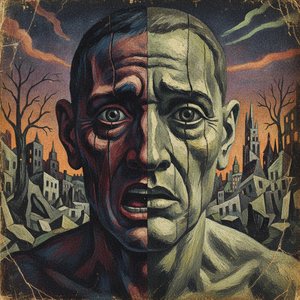
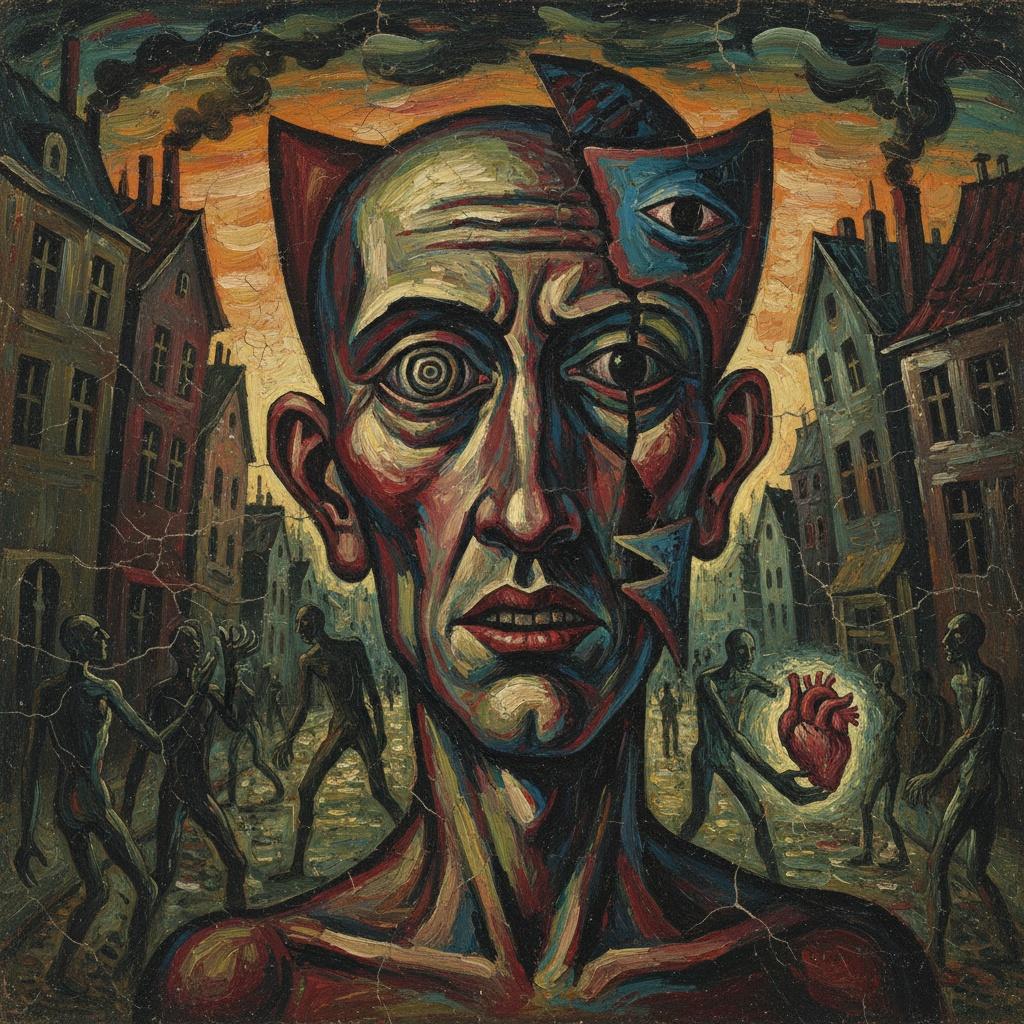
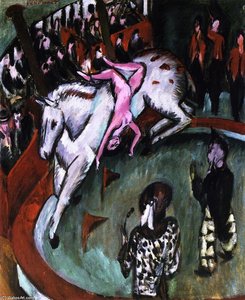
The visual language of German Expressionism is defined by its refusal to be polite. The palette is often characterized by a deliberate use of non-naturalistic, clashing colors that serve to provoke rather than soothe. Imagine a sky not of soft azure, but of a bruised, electric violet; or a face not rendered in flesh tones, but in sickly greens and harsh yellows. These choices were calculated to evoke specific psychological states—anxiety, passion, isolation, or even ecstasy.
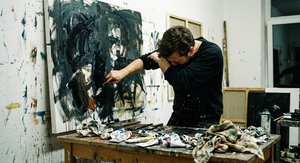
Complementing this chromatic aggression is the use of distortion. Forms are stretched, jagged lines dominate the composition, and perspectives are often tilted or collapsed. This technique creates a sense of instability, mirroring the precariousness of modern life. When we observe these works, the brushstrokes themselves become visible actors in the drama; they are thick, energetic, and sometimes violent, leaving behind a tactile record of the artist's movement. It is through this deliberate manipulation of form and color that the movement achieves its characteristic intensity, forcing the viewer to confront the raw, unvarnished essence of human emotion.
The Pioneers of Agitation: Analyzing Kirchner and Die Brücke
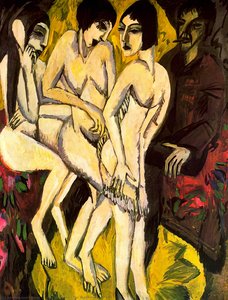
At the heart of this aesthetic revolution stood groups such as Die Brücke (The Bridge), a collective of artists who sought to create a bridge between the past and a radical, expressive future. Among their most influential figures was Ernst Ludwig Kirchner, a master of capturing the tension of the modern age. In works such as "The Judgement of Paris," one can witness the profound use of bold colors and intense emotionality that became the hallmark of his style. His ability to infuse even classical themes with a contemporary, nervous energy serves as a testament to his visionary approach.
Kirchner’s work often navigated the duality of the human experience—the vibrant, chaotic pulse of the city contrasted with the primal, searching spirit of nature. Through his lens, we see the tension of an era caught between tradition and the unknown. The members of Die Brücke utilized woodcut-style aesthetics, characterized by sharp, angular edges and high contrast, to strip away the decorative and reveal the structural truth of their subjects. Their collective legacy is one of unapologetic honesty, pushing the boundaries of what art was permitted to communicate.
Urban Anxiety and Natural Rawness: From Berlin Streets to Rugged Landscapes
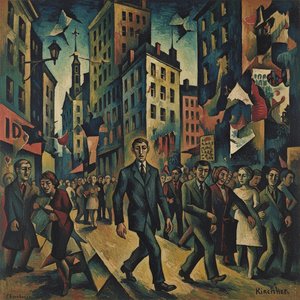
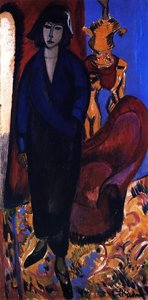
The geographic scope of Expressionist emotion spanned from the claustrophobic, neon-lit streets of Berlin to the untamed, rugged mountains. In the urban sphere, artists captured the alienation of the modern metropolis. Works like "Red Elisabeth Riverbank, Berlin" (1913) demonstrate how Kirchner could utilize dynamic brushstrokes and vibrant, almost aggressive hues to depict the electric, yet unsettling, energy of early 20th-century urban life. The city is portrayed not as a place of community, but as a stage for individual isolation amidst a crowd.
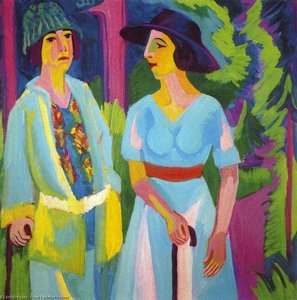
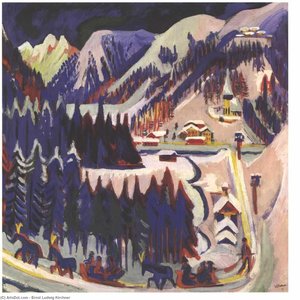
Conversely, when these artists turned toward the landscape, they did so with a sense of primal discovery. The natural world was not a backdrop for leisure, but a site of intense, spiritual encounter. In "Die Amselfüh," we see a dramatic landscape brimming with deep purple hues and adventurous figures navigating rugged terrain. Here, the mountains and valleys are imbued with a sense of movement and mystery, reflecting an exploration of the wilder, more instinctual aspects of human existence. Whether in the city or the wilderness, the Expressionist gaze remained focused on the underlying emotional truth of the environment.
Legacy of the Unseen: The Enduring Impact of Expressionism on Modern Aesthetics
The echoes of German Expressionism continue to resonate through the corridors of contemporary art and design. Its influence can be found in the raw textures of Neo-Expressionism, the psychological depth of modern cinema, and even the bold, emotive graphics of today's visual culture. The movement taught us that beauty does not always reside in harmony; sometimes, it is found in the fracture, the dissonance, and the profound honesty of a distorted line.
For the modern collector and enthusiast, these works offer more than historical interest; they offer a visceral connection to the human condition. To possess or contemplate an Expressionist masterpiece is to engage with a legacy of courage—the courage to look into the darkness and find meaning in the chaos. As we continue to navigate our own era of rapid change and uncertainty, the raw power of German Expressionism remains as relevant and as hauntingly beautiful as ever.
At ArtsDot.com, we celebrate this enduring legacy of human creativity. Our mission is to make the profound beauty of fine art accessible to everyone, from seasoned collectors to new enthusiasts. We specialize in creating authentic, hand-painted oil reproductions that capture the very soul of historical masterpieces. Whether you are drawn to the thick, impasto textures of an Expressionist landscape or wish to transform a personal memory into a classical portrait, our master artists use traditional techniques on 100% cotton canvas to ensure every brushstroke carries the weight of history. Explore our vast library and bring the transformative power of art into your own space.