The Dawn of Color Theory: From Goethe to Modern Perception
For centuries, artists intuitively understood the power of color – its ability to evoke mood, suggest depth, and guide the viewer’s eye. Yet, it wasn't until the late 18th and early 19th centuries that a systematic exploration of color began to emerge, moving beyond mere observation into the realm of scientific inquiry and philosophical debate. Johann Wolfgang von Goethe’s Theory of Colors (1810), though often criticized for its subjective approach, marked a pivotal moment. Goethe didn't seek objective truths about light wavelengths but rather explored the *psychological* impact of color on human perception – how colors felt, their associations, and their influence on emotional states. He posited that color arose from the interplay of light and darkness, a concept that resonated with Romantic sensibilities and challenged Newtonian notions of purely physical optics. This shift in perspective laid the groundwork for later investigations into color psychology, recognizing that our experience of color is not simply visual but deeply intertwined with subjective feeling.
The 19th century witnessed further advancements, notably Michel Eugène Chevreul’s work on simultaneous contrast – his observations of how colors alter each other's appearance when placed in proximity. Originally researching dye techniques for tapestries, Chevreul’s findings had a profound impact on artists, influencing their understanding of optical mixing and the creation of vibrant effects. These early explorations weren’t isolated; they coincided with broader cultural shifts – the rise of Romanticism, the burgeoning field of psychology, and an increasing fascination with the inner life. This confluence of factors set the stage for the radical innovations that would characterize the Impressionist movement.
Impressionism's Revolution: Capturing Fleeting Light & Emotional Resonance
Impressionism was a 19th-century art movement characterized by visible brush strokes, open composition, emphasis on accurate depiction of light in its changing qualities (often accentuating the effects of the passage of time), ordinary subject matter...
The artists who came to be known as the Impressionists – Monet, Renoir, Degas, Pissarro, Sisley, and others – didn’t explicitly set out to *theorize* about color; rather, they sought to capture the ephemeral qualities of light and atmosphere. Rejecting the academic tradition of carefully blended brushstrokes and studio-bound compositions, they embraced plein air painting, working directly from nature to record the fleeting effects of sunlight on landscapes and everyday scenes. Claude Monet’s “Impression, soleil levant” (1872), famously derided by critic Louis Leroy as a mere “impression,” perfectly encapsulates this approach. The painting isn't about precise representation; it’s about conveying the *sensation* of sunrise – the shimmering light on the water, the hazy atmosphere, and the overall mood of tranquility.
The Impressionists understood that color is not inherent in objects but rather a product of how light interacts with them. They employed broken brushstrokes of pure, unmixed colors, allowing the viewer’s eye to blend them optically – a technique directly influenced by Chevreul's research on simultaneous contrast. This approach created a sense of vibrancy and movement, capturing the dynamism of natural light in a way that had never been seen before. More than just technical innovation, however, Impressionism was an attempt to convey subjective experience – the artist’s personal perception of the world around them. The use of color became intrinsically linked to emotional expression, with brighter hues often associated with joy and optimism, while darker tones conveyed melancholy or introspection.
Neo-Impressionism & Pointillism: A Scientific Approach to Chromatic Harmony
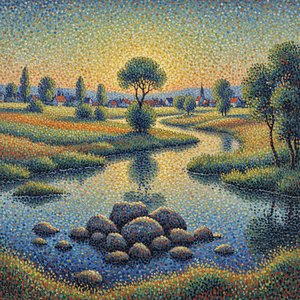
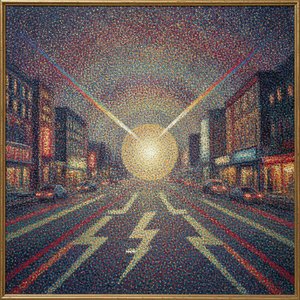
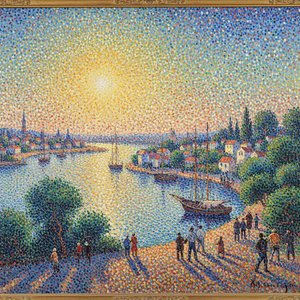
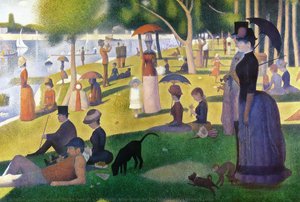
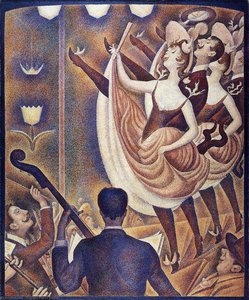
While Impressionism embraced a more intuitive approach to color, Neo-Impressionism – spearheaded by Georges Seurat and Paul Signac – sought to apply scientific principles to the art of painting. Inspired by Chevreul’s work and the theories of Eugène Delacroix on complementary colors, Seurat developed Pointillism, a technique that involved applying tiny dots of pure color to the canvas. The idea was that these dots would optically blend in the viewer's eye, creating a more luminous and harmonious effect than traditional mixing methods. Seurat’s “A Sunday Afternoon on the Island of La Grande Jatte” (1884-1886) is perhaps the most iconic example of this technique – a meticulously constructed composition built entirely from thousands of individual dots.
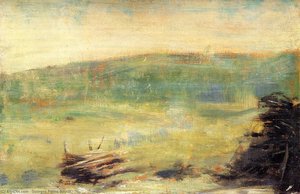
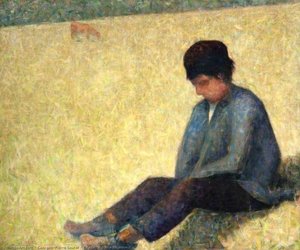
Georges Seurat, in his pursuit of optical precision, believed he could create paintings that were more scientifically accurate and visually impactful than those produced by the Impressionists. His works, such as “Farmer to Work” and “House with Red Roof”, demonstrate a deliberate application of color theory, aiming for maximum luminosity and visual vibration. The Neo-Impressionists weren’t simply interested in replicating nature; they sought to understand the underlying principles that governed our perception of it. This emphasis on scientific rigor distinguished them from their Impressionist predecessors, though both movements shared a common interest in capturing the effects of light and atmosphere.
Color as Emotion: Exploring the Psychological Impact in 20th Century Art
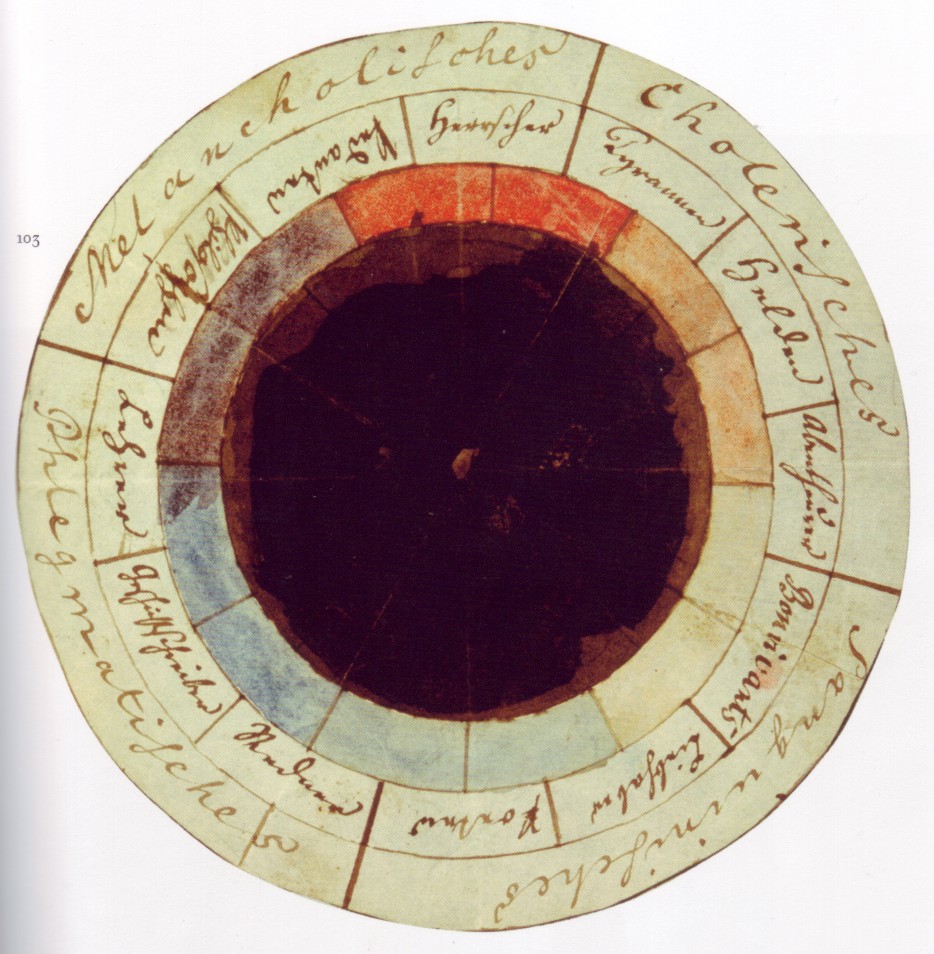 Wikipedia: Color psychology
Color psychology is the study of colors and hues as a determinant of human behavior. Color influences perceptions that are not obvious, such as the taste of food. Colors have qualities that may cause certain emotions in people. How color influences i...
The exploration of color’s psychological impact continued to gain momentum throughout the 20th century. Artists like Wassily Kandinsky, a pioneer of abstract art, believed that colors possessed inherent spiritual qualities and could directly evoke emotions in the viewer. In his seminal work, “Concerning the Spiritual in Art” (1911), Kandinsky developed a complex theory linking specific colors to particular feelings – yellow associated with excitement and energy, blue with depth and spirituality, red with passion and aggression. His abstract compositions weren’t intended to represent external reality; they were meant to be purely emotional expressions, conveyed through the interplay of color and form.
Mark Rothko, another key figure in abstract expressionism, similarly explored the power of color to evoke profound emotions. His signature style – large-scale canvases painted with luminous blocks of color – aimed to create immersive experiences that resonated deeply with viewers. Rothko believed that color could transcend representation and tap into universal human feelings, creating a sense of awe, contemplation, or even anguish. The Fauvist movement, led by Henri Matisse, also embraced bold, non-naturalistic colors as a means of expressing emotional intensity. These artists weren’t interested in depicting reality accurately; they sought to convey their subjective experience through the expressive power of color.
Cultural Significance of Color: Historical Symbolism and Contemporary Interpretations
The meaning of color is not universal; it varies significantly across cultures and historical periods. In ancient Egypt, green was associated with rebirth and regeneration, while in China, red symbolizes good fortune and prosperity. Western traditions often associate white with purity and innocence, but in many Eastern cultures, it represents mourning and death. Understanding these cultural nuances is crucial for interpreting the symbolism of color in art.
Contemporary artists continue to explore the cultural significance of color, challenging traditional associations and creating new meanings. Ghanaian artist El Anatsui, for example, uses recycled materials – often incorporating vibrant colors – to explore themes of transformation, historical memory, and globalization. His shimmering tapestries are imbued with layers of meaning, reflecting both his personal experiences and the broader cultural context of his work. The interplay between traditional symbolism and contemporary interpretations demonstrates the enduring power of color as a vehicle for expressing complex ideas and emotions.
Building a Collection with Intent: The Role of Color Psychology for the Discerning Collector
As an art collector, understanding the psychology of color can enrich your appreciation of artworks and inform your curatorial decisions. Do you gravitate towards calming blues and greens, seeking balance and tranquility in your surroundings? Or are you drawn to bold reds and oranges, embracing energy and passion? Your preferences reveal something about your personality, values, and emotional needs.
Consider the overall mood you want to create in a space – a serene living room might benefit from softer tones, while a vibrant dining area could be enlivened by bolder hues. Furthermore, exploring artists who masterfully employed specific color palettes can add depth and coherence to your collection. From the Impressionists’ fleeting light to Rothko’s immersive emotional landscapes, each artist offers a unique perspective on the power of color. At ArtsDot, we offer a vast selection of handmade oil paintings and museum-quality prints, allowing you to explore these chromatic narratives and build a collection that truly resonates with your individual taste and vision. Our free art consultation service can provide personalized guidance, helping you select artworks that align with your aesthetic preferences and create a harmonious visual experience.