Early Life & Artistic Foundations: From Birmingham Beginnings to London’s Stage
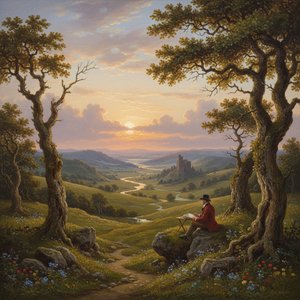
Landscape painting, also known as landscape art, is the depiction in painting of natural scenery such as mountains, valleys, rivers, trees, and forests, especially where the main subject is a wide view—with its elements arranged into a coherent compo...
David Cox, born in the bustling industrial heart of Deritend, Birmingham, in 1783, might seem an unlikely progenitor of the serene landscapes for which he became celebrated. His early life was steeped not in pastoral beauty but in the grit and industry of a blacksmith's family. This upbringing, however, instilled a keen observational skill – a sensitivity to texture, form, and light that would later define his artistic vision. Initial training under Joseph Barber focused on miniature painting, demanding precision and detail, yet Cox’s ambitions quickly outgrew this constrained medium. A move to London in 1804 proved pivotal, landing him an apprenticeship with John Augustus Atkinson, a theatrical scene painter. This experience was transformative; the need to create convincing illusions of space and atmosphere for the stage honed his compositional skills and fostered a bold approach to color – qualities that would distinguish his later work.
The Rise of a Landscape Painter: Cox's Technique and Early Influences
London proved fertile ground for Cox’s development. Joining the Associated Artists in Watercolour in 1805 marked a formal step towards establishing himself as a professional artist, and exhibitions at the Royal Academy followed soon after. His early paintings reveal an indebtedness to classical landscape traditions – echoes of Thomas Gainsborough and Richard Wilson are discernible in his compositions. However, even in these formative works, a unique sensibility began to emerge. Cox wasn’t merely replicating scenes; he was striving to capture their *feeling*, their transient beauty. He quickly developed a distinctive technique characterized by loose brushwork and an emphasis on atmospheric effects. This period also saw the publication of “A Series of Progressive Lessons” (1811), instructional books that not only showcased his technical mastery but democratized watercolour painting, making it accessible to a wider audience.
Capturing the Essence of Nature: Light, Atmosphere, and Romantic Sensibility in Cox’s Work
Romanticism (also known as the Romantic movement or Romantic era) was an artistic and intellectual movement that originated in Europe towards the end of the 18th century. The purpose of the movement was to advocate for the importance of subjectivity...
The core of Cox's artistic power lies in his ability to convey the ephemeral qualities of nature – the shifting light, the subtle nuances of weather, the very *mood* of a landscape. He wasn’t interested in meticulous topographical accuracy; rather, he sought to evoke an emotional response through suggestion and atmosphere. This sensibility firmly places him within the Romantic tradition, a movement that championed subjectivity, imagination, and the sublime power of nature. His paintings aren't simply depictions of places but invitations to experience them – to feel the chill of a damp morning mist, the warmth of the afternoon sun, or the drama of an approaching storm. He achieved this through a masterful manipulation of watercolour, layering washes of color to create depth and luminosity.
A Master of Watercolour: Exploring Key Paintings & Recurring Themes
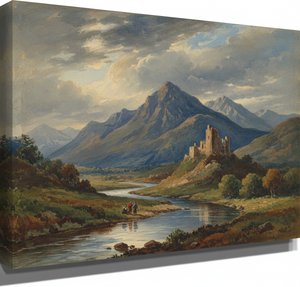
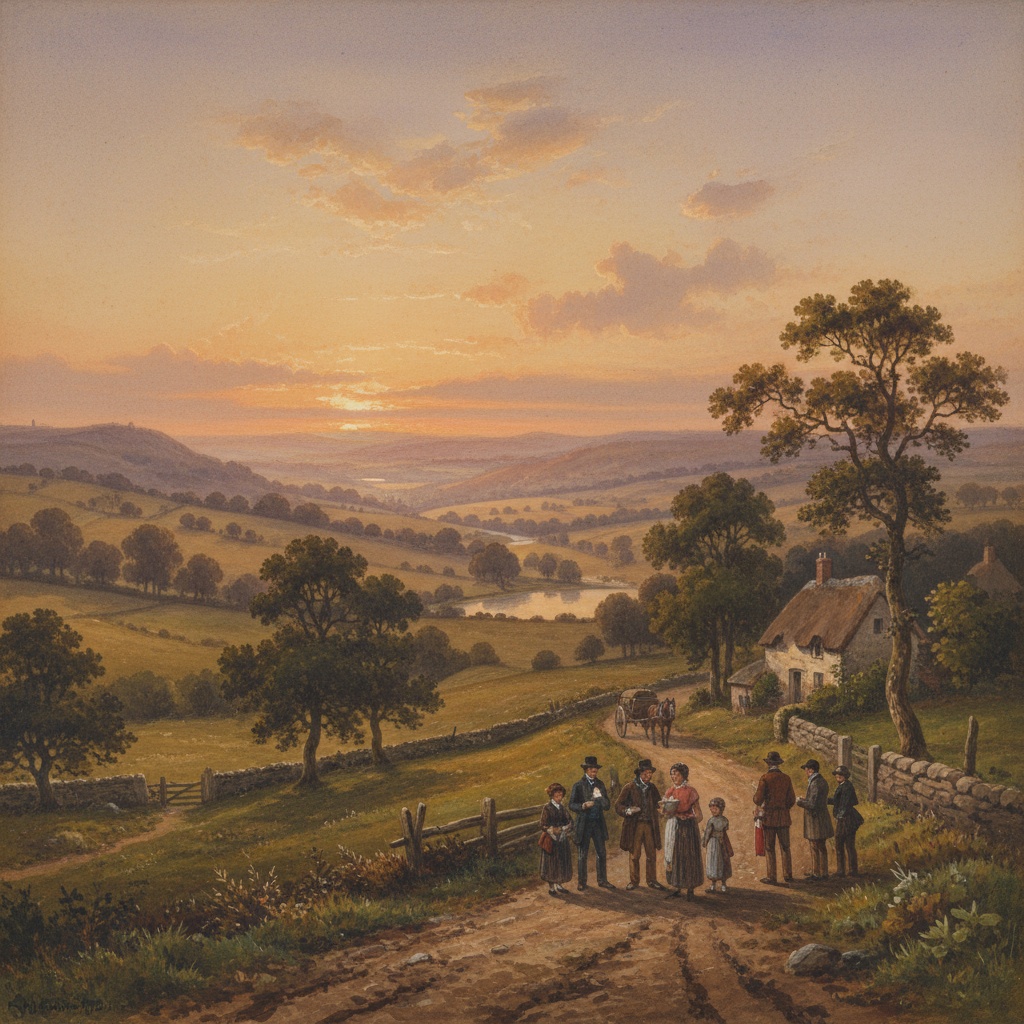
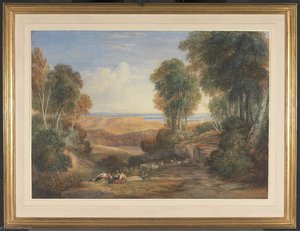
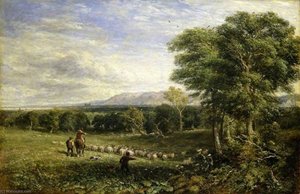
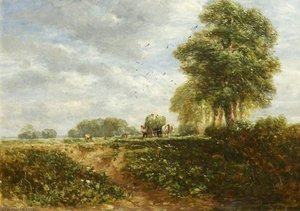
While Cox also worked in oil, it is his watercolours that truly define his legacy. “Welsh Funeral” (1836) stands as a testament to his ability to imbue even somber subjects with profound beauty and emotional resonance. The muted tones and dramatic lighting convey a poignant sense of solemnity, while the Welsh landscape itself becomes an integral part of the narrative. “The Hayfield” (1850) exemplifies his skill in blending meticulous detail with broader, impressionistic strokes, capturing the transient light and weather effects that fascinated him. Recurring themes emerge throughout his oeuvre: rural life, working people, and the beauty of the British countryside. He often depicted scenes along rivers, bridges – like “Figures Crossing A Bridge, Cattle Watering Below” – and in fields, showcasing a deep connection to the land and its inhabitants. Another notable work is “Near Knaresborough” (1844), which showcases his serene style.
Cox’s Legacy and Influence: A Precursor to Impressionism and Beyond
David Cox declined offers of formal recognition, choosing instead to forge his own path. Yet, his influence on British art was profound. He bridged the gap between Romantic landscape painting and the emerging Impressionist movement. Artists admired his bold use of color, his loose brushwork, and his focus on capturing fleeting moments in time. His simplification of forms and emphasis on atmospheric effects paved the way for a more subjective and expressive approach to landscape representation. He wasn’t merely recording what he saw; he was interpreting it through the lens of his own emotions and experiences. This legacy continues to inspire artists today, solidifying Cox's position as a pivotal figure in the history of British art.
Collecting David Cox Today: Finding Tranquility for Your Home
Acquiring a work by David Cox is more than simply purchasing a painting; it’s inviting a piece of tranquility and emotional depth into your home. His landscapes offer a respite from the modern world, a reminder of the enduring beauty of nature. Whether you seek an original watercolour or a high-quality reproduction, ArtsDot offers a range of options to suit every taste and budget. From intimate scenes of rural life to expansive views of the Welsh countryside, Cox’s paintings provide a window into a bygone era – a time when artists prioritized feeling and atmosphere above all else. Explore our collection today and discover the timeless appeal of David Cox's art.