Introduction: The Intimate World of Delphin Enjolras
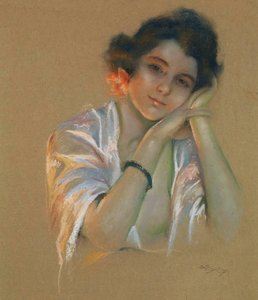 Delphin Enjolras
Delphin Enjolras: Explore intimate portraits of women in lamplight by this French Academic painter. Known for sensual scenes, masterful light & color.
Delphin Enjolras occupies a fascinating, often overlooked niche within the landscape of late 19th-century French painting. While not a household name like Monet or Renoir, his work possesses a quiet power and undeniable allure, drawing viewers into a world of intimate domesticity and subtle sensuality. He wasn’t striving to capture grand historical narratives or sweeping landscapes; instead, Enjolras focused on the fleeting moments of everyday life – a woman reading by a window, arranging flowers, lost in thought – transforming these seemingly mundane scenes into evocative studies of light, color, and feminine grace. His paintings are not bombastic declarations but rather whispered confessions, inviting contemplation and offering a glimpse into the private lives of his subjects.
From Academic Roots to Scenes of Domesticity: Enjolras’s Artistic Evolution
Delphin Enjolras (1857 Coucouron –1945 Toulouse) was a French academic painter. Enjolras painted portraits, nudes, interiors, and used mostly watercolours, oil, and pastels. He is best known for his intimate portraits of young women performing mundan...
Born in 1857 in Coucouron, Ardèche, Enjolras initially followed a traditional artistic path. He received formal training at the École de Dessin de la Ville de Paris under Gaston Gérard and later studied with Jean-Léon Gérôme and Pascal Dagnan-Bouveret at the prestigious Beaux-Arts. This academic foundation is evident in his meticulous technique, precise draftsmanship, and a commitment to realistic representation. However, Enjolras gradually diverged from the prevailing historical and mythological themes favored by many of his contemporaries. He found himself increasingly drawn to portraiture, specifically depictions of young women. Early landscapes gave way to interiors bathed in soft light, marking a distinct shift in his artistic focus. This wasn’t merely a change in subject matter; it represented a deeper exploration of mood, atmosphere, and the psychological nuances of his sitters.
The Influence of Neo-Impressionism and Pointillism on Enjolras's Style
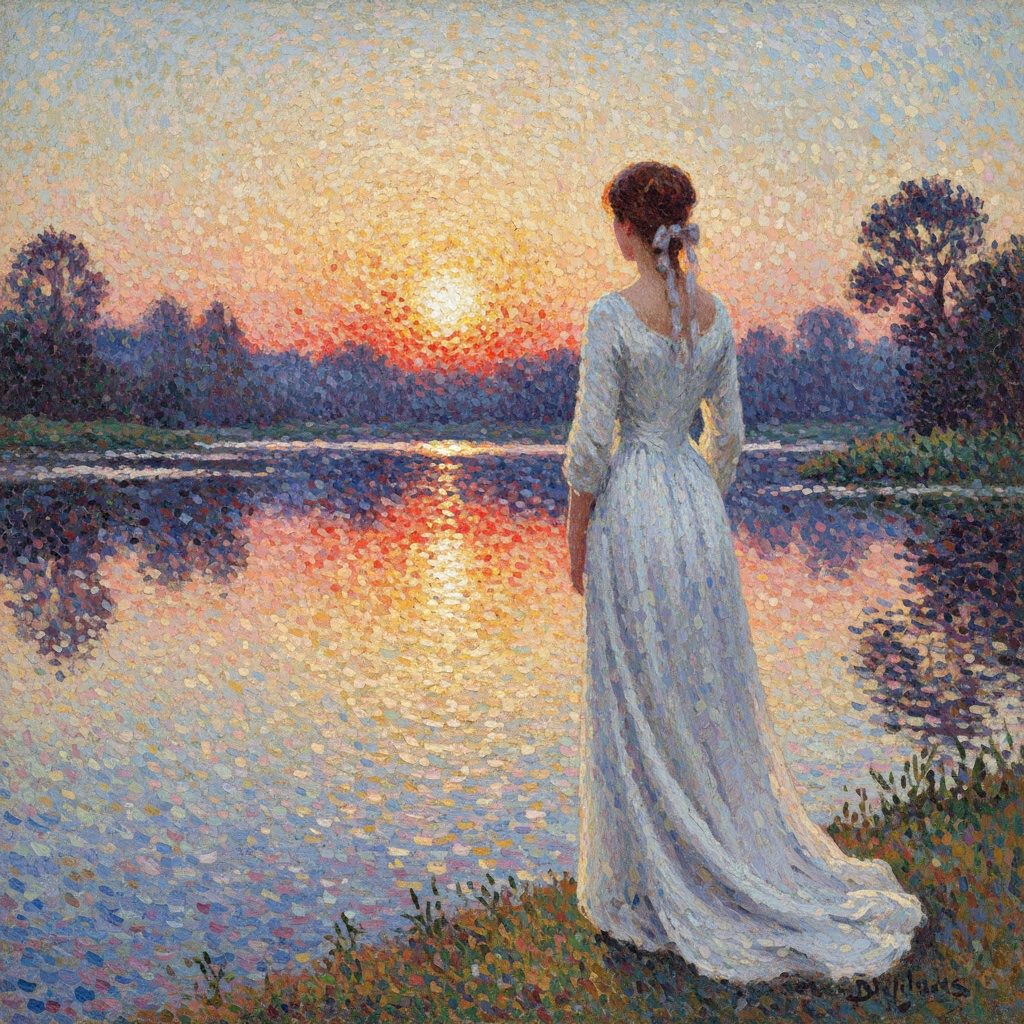
Neo-Impressionism is a term coined by French art critic Félix Fénéon in 1886 to describe an art movement founded by Georges Seurat. Seurat's most renowned masterpiece, A Sunday Afternoon on the Island of La Grande Jatte, marked the beginning of this ...
Though firmly rooted in academic tradition, Enjolras wasn’t immune to the currents of artistic innovation sweeping through France during the late 19th century. The emergence of Impressionism and, subsequently, Neo-Impressionism profoundly impacted his approach to color and light. While he never fully embraced the broken brushstrokes or vibrant palettes of the more radical Impressionists, Enjolras incorporated elements of their techniques into his own work. The influence of Georges Seurat’s Pointillism is particularly noticeable in some of his paintings – a deliberate application of small, distinct dots of color that create a shimmering effect and heighten the sense of luminosity. This technique wasn't simply about optical accuracy; it was a means of capturing the ephemeral quality of light and shadow, transforming ordinary spaces into realms of poetic beauty. He skillfully blended this scientific approach to color with his academic precision, creating a unique visual language.
Mastering Light and Shadow: A Technical Analysis of Enjolras’s Paintings
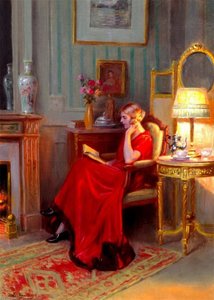
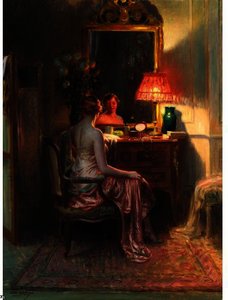
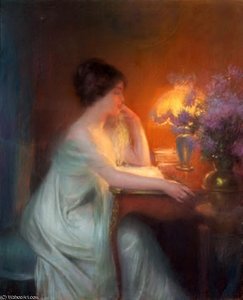
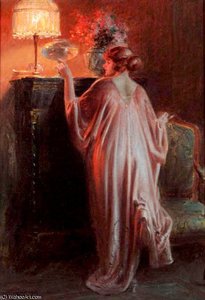
Enjolras's true genius lies in his masterful manipulation of light. He was particularly adept at depicting artificial light sources – the warm glow of a lamp illuminating a woman reading, the soft radiance filtering through a window. This wasn’t merely about accurately rendering illumination; it was about creating atmosphere and evoking emotion. He often employed chiaroscuro techniques, contrasting areas of bright light with deep shadow to create dramatic effect and draw attention to specific details. His use of color is equally sophisticated. He favored subtle harmonies and delicate gradations, avoiding harsh contrasts in favor of a more nuanced palette. The layering of oil paints, carefully applied brushstrokes, and the skillful blending of tones contribute to the paintings’ remarkable depth and realism. “In the Boudoir I”, for example, showcases his ability to capture the intimacy of a private moment through the interplay of light and shadow, creating a sense of warmth and tranquility.
Themes of Femininity and Modern Life in Enjolras’s Oeuvre
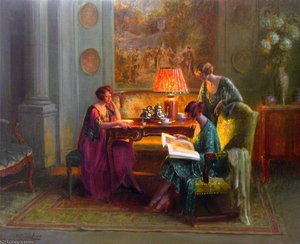
The women depicted in Enjolras's paintings are not idealized goddesses or allegorical figures; they are ordinary individuals engaged in everyday activities. They read, sew, write letters, or simply pause for contemplation. However, these seemingly mundane scenes are imbued with a subtle sensuality and psychological depth. Enjolras’s subjects often appear lost in thought, their expressions hinting at inner lives and unspoken emotions. He portrays them with empathy and respect, avoiding the overt objectification that characterized some of his contemporaries' work. His paintings offer a glimpse into the changing role of women in late 19th-century society – a world where domesticity was increasingly associated with refinement and intellectual pursuits. “Femme à la Lecture”, exemplifies this theme, portraying a woman absorbed in her book, suggesting both independence and quiet contemplation.
Enjolras’s Legacy and Place within Late 19th-Century French Painting
While Enjolras may not be as widely recognized as some of his more famous contemporaries, his work deserves greater attention. He represents a fascinating bridge between academic tradition and the emerging modern movements of the late 19th century. His paintings offer a unique perspective on the lives of women during this period, capturing their inner worlds with sensitivity and grace. His mastery of light and shadow, combined with his meticulous technique, creates works that are both visually stunning and emotionally resonant. Enjolras’s legacy lies in his ability to transform ordinary moments into extraordinary works of art, inviting viewers to contemplate the beauty and complexity of everyday life. His paintings continue to captivate audiences today, offering a timeless glimpse into a bygone era.