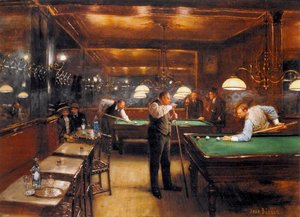
The Dawn of Modernity: Paris Transformed (1875)
The Belle Époque (French pronunciation: [bɛlepɔk]) or La Belle Époque (French for 'The Beautiful Era') was a period of French and European history that began after the end of the Franco-Prussian War in 1871 and continued until the outbreak of World W...
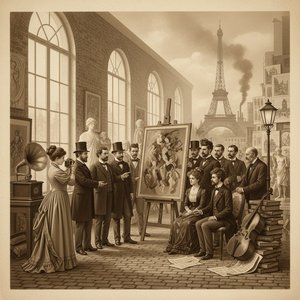
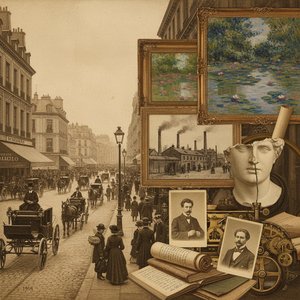
The year 1875 often feels like a quiet hinge point in history, nestled between the tumultuous aftermath of the Franco-Prussian War and the exuberant blossoming of the Belle Époque. Yet, beneath the surface calm lay a city undergoing radical transformation – a Paris poised on the cusp of modernity. The rebuilding efforts initiated by Baron Haussmann had reshaped the urban landscape, replacing medieval streets with grand boulevards designed to showcase power and control, but also inadvertently fostering a new sense of public space and social interaction. This physical restructuring mirrored a deeper shift in societal values, a burgeoning optimism fueled by economic prosperity and technological innovation. It was an era where the rigid academic traditions of art were beginning to crack under the weight of new perspectives, paving the way for artistic movements that would forever alter our understanding of beauty and representation.
The Exposition Universelle of 1878 served as a potent symbol of this newfound confidence. While not as monumental as its predecessor in 1900, it nonetheless showcased France’s industrial prowess and artistic achievements to the world. More importantly, it provided a platform for artists challenging the established norms, subtly introducing audiences to the revolutionary ideas that would soon define Impressionism and beyond. The very air of Paris seemed charged with possibility, attracting creative minds from across Europe and America, all drawn to the city’s vibrant energy and its promise of artistic freedom.
Impressionism's Bold Emergence: Capturing Fleeting Moments
Impressionism was a 19th-century art movement characterized by visible brush strokes, open composition, emphasis on accurate depiction of light in its changing qualities (often accentuating the effects of the passage of time), ordinary subject matter...
The term “Impressionism” itself arose from a critical dismissal – Louis Leroy’s satirical review of Claude Monet’s Impression, soleil levant in 1874. However, the label, intended as an insult, ultimately became the defining characteristic of this groundbreaking movement. Artists like Monet, Renoir, Degas, and Pissarro rejected the meticulous detail and historical grandeur favored by the Académie des Beaux-Arts, instead focusing on capturing the ephemeral qualities of light and atmosphere. They ventured outdoors – en plein air – to paint directly from observation, prioritizing the subjective experience of a moment over objective representation.
Visible brushstrokes, open compositions, and an emphasis on color became hallmarks of Impressionist technique. This wasn’t merely about depicting what they *saw*, but rather how they *perceived* it. The play of light on water, the bustling energy of city streets, the fleeting expressions of everyday people – these were the subjects that captivated the Impressionists. Their work was initially met with scorn and ridicule from the conservative art establishment, yet their unwavering commitment to their vision ultimately revolutionized painting, influencing generations of artists to come.
Beyond Impressionism: Luminism and the Poetic Realism of Julius Leblanc Stewart
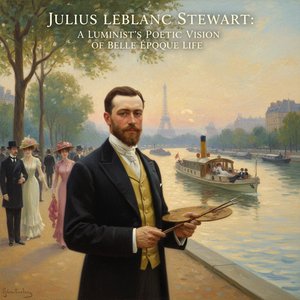 Julius Leblanc Stewart: A Luminist’s Poetic Vision of Belle Époque Life
Explore the captivating world of Julius Leblanc Stewart, a master of Luminism renowned for his Belle Époque portraits and serene landscapes. Discover his artistic journey & legacy with ArtsDot.
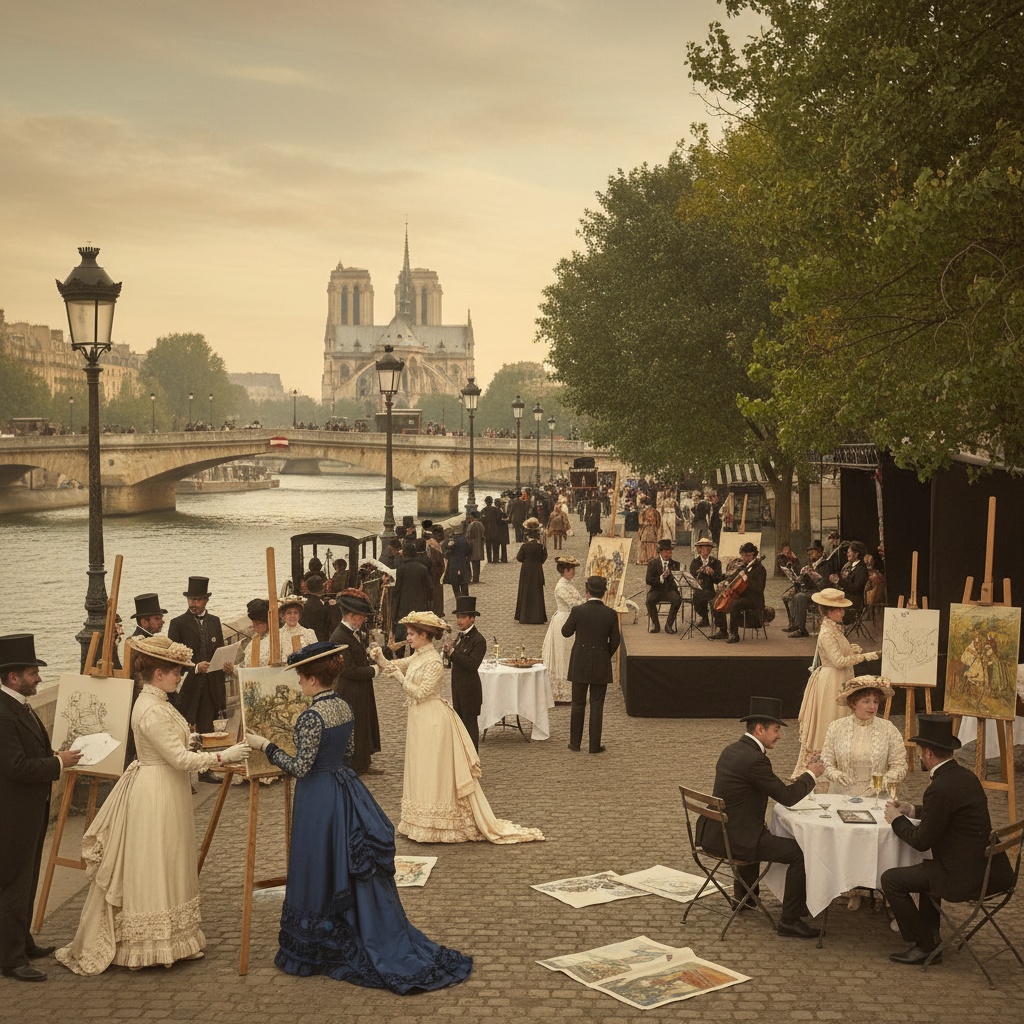
While often overshadowed by its more celebrated contemporaries, Luminism offered a distinct but related response to the changing artistic landscape. Artists like Julius Leblanc Stewart shared the Impressionists’ fascination with light and atmosphere, but approached it with a quieter, more contemplative sensibility. Stewart’s paintings are characterized by their serene landscapes and portraits, bathed in a soft, golden glow that evokes a sense of nostalgia and tranquility.
Stewart's mastery lay in his ability to capture the subtle nuances of light and shadow, creating scenes that feel both realistic and dreamlike. He often depicted scenes of everyday life along the Seine River, portraying Parisian society with a gentle realism that belies a deeper emotional resonance. Unlike the Impressionists’ focus on capturing fleeting moments, Stewart sought to create timeless images, imbued with a sense of poetic beauty and enduring grace.
Jean-Georges Béraud: A Chronicler of Parisian Society
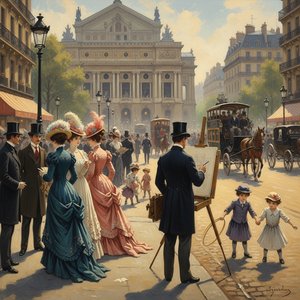 Jean-Georges Béraud: Capturing Parisian Life in the Belle Époque
Explore the captivating world of Jean-Georges Béraud, master painter of Belle Époque Paris. Discover his iconic scenes, artistic evolution, and social commentary. A deep dive into 19th-century French art.
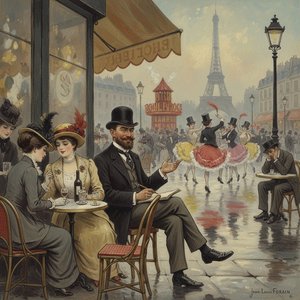
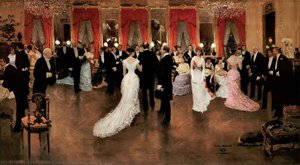
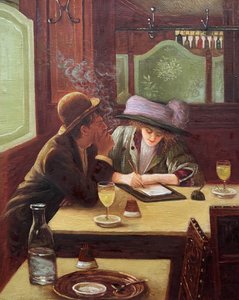
If the Impressionists captured the *impression* of modern life, Jean-Georges Béraud meticulously documented its social fabric. He wasn’t interested in grand narratives or dramatic gestures; instead, he focused on the everyday rituals and encounters that defined Parisian society during the Belle Époque. His paintings offer a fascinating glimpse into the cafes, theaters, and boulevards where Parisians gathered to socialize, flirt, and conduct business.
Béraud’s work is characterized by its keen observation of human behavior, his ability to capture subtle gestures and expressions that reveal character and social dynamics. He was a master of portraying the nuances of class and gender, offering a nuanced and often ironic commentary on the complexities of Parisian life. His scenes are populated with recognizable types – the dandy, the courtesan, the bourgeois gentleman – each rendered with meticulous detail and psychological insight.
Edgar Degas and the Dance: Movement, Observation & Belle Époque Life
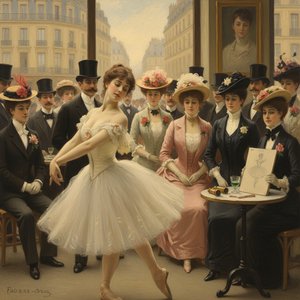 Edgar Degas: Capturing Modern Life – A Study of Movement, Observation, and the Parisian Belle Époque
Explore the captivating world of Edgar Degas! Discover his innovative techniques, iconic ballet paintings, and unique portrayal of Parisian life in this insightful art history study.
While often categorized as an Impressionist, Edgar Degas’s artistic vision extended far beyond the confines of that label. He was a relentless observer of movement, fascinated by the human form in motion – particularly the ballerinas who graced the stages of the Paris Opéra. His paintings and sculptures capture not just the grace and beauty of these dancers, but also the grueling discipline and often precarious lives behind the scenes.
Degas’s innovative compositions, unconventional perspectives, and masterful use of light and shadow set him apart from his contemporaries. He wasn't interested in idealizing his subjects; instead, he sought to portray them with unflinching realism, capturing both their physical beauty and their emotional vulnerability. His work offers a unique window into the world of Belle Époque Paris, revealing the hidden complexities and contradictions that lay beneath its glittering surface.
The Musée d'Orsay: Preserving a Legacy of 19th-Century Brilliance
Today, the Musée d’Orsay stands as a fitting tribute to the artistic achievements of this transformative era. Housed in a magnificent former railway station – itself a symbol of modernity – the museum boasts an unparalleled collection of Impressionist and Post-Impressionist masterpieces. Walking through its halls is like stepping back in time, immersing oneself in the vibrant energy and intellectual ferment of 19th-century Paris.
From Monet’s luminous water lilies to Degas’s captivating dancers, from Renoir’s intimate portraits to Stewart's serene landscapes, the Musée d’Orsay offers a comprehensive overview of this pivotal period in art history. It is a place where the past comes alive, inviting visitors to connect with the artists who dared to challenge convention and redefine our understanding of beauty and representation. At ArtsDot.com, we are dedicated to bringing these masterpieces into your home, offering high-quality reproductions that capture the essence and spirit of this extraordinary era.