The Classical Foundations: Polis, Virtue, and Early Representation
The very notion of “civic virtue” is inextricably linked to the ancient world, specifically the Greek polis – that vibrant city-state where citizenship wasn’t merely a legal status but a demanding practice. For the Greeks, participation in public life was not simply a right, but an essential component of a flourishing existence. This ethos found early expression in art, though perhaps not as directly as one might expect. Sculptures celebrating athletic prowess weren't solely about physical perfection; they embodied the discipline and dedication required for military service, vital to defending the polis. Similarly, depictions of mythological heroes like Heracles were often interpreted as allegories for ideal leaders – strong, just, and self-sacrificing. The emphasis wasn’t on individual glory but on how those qualities served the collective good. Early vase paintings frequently illustrate scenes of civic rituals, assemblies, and judicial proceedings, subtly reinforcing the importance of communal decision-making and adherence to law. These weren't grand pronouncements of political ideology; rather, they were woven into the fabric of daily life, visually communicating the values that held society together. The concept of *arete* – excellence in all things – permeated Greek culture, extending beyond physical ability to encompass moral character and responsible citizenship. This foundational understanding would later be rediscovered and reinterpreted by Renaissance thinkers.
Renaissance Florence: The Rediscovery of Civic Humanism in Art
The 15th-century Italian Renaissance witnessed a profound revival of classical learning, but it wasn’t simply a matter of replicating ancient forms. Florentine humanists, like Leonardo Bruni and Niccolò Machiavelli, actively sought to apply the principles of Greek and Roman thought to their own political realities. This led to the emergence of “civic humanism,” a belief that active participation in public life was not only virtuous but essential for maintaining a free republic. Art became a powerful vehicle for expressing these ideals. Consider Sandro Botticelli’s *Adoration of the Magi* (c. 1482). While ostensibly a religious scene, it's imbued with subtle political undertones. The richly dressed figures surrounding the Christ child can be interpreted as representing Florentine citizens, united in their devotion to a new order – a republic founded on humanist principles. More explicitly, paintings commissioned for the Palazzo Vecchio, Florence’s town hall, directly celebrated republican virtues. Domenico Ghirlandaio's frescoes depicting scenes from Roman history served as moral exemplars for contemporary leaders, reminding them of the responsibilities that came with power. The rediscovery of classical sculpture also played a crucial role. Donatello’s bronze *David* (c. 1440s) wasn’t merely a stunning artistic achievement; it was a symbol of Florentine liberty and defiance against tyranny – a youthful hero standing victorious over Goliath, representing oppressive forces. This period saw art move beyond religious devotion to actively engage with the political landscape.
Neoclassical Ideals: Reimagining Republican Rome & Athenian Democracy
Neoclassicism, also spelled Neo-classicism, emerged as a Western cultural movement in the decorative and visual arts, literature, theatre, music, and architecture that drew inspiration from the art and culture of classical antiquity. Neoclassicism wa...
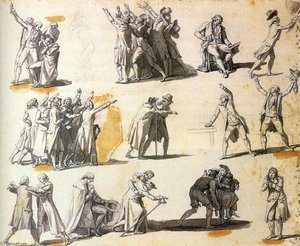
By the 18th century, Europe was captivated by the Enlightenment and a renewed interest in reason, order, and civic duty. This manifested powerfully in Neoclassicism, an artistic movement that consciously emulated the art and architecture of ancient Greece and Rome. Artists like Jacques-Louis David deliberately sought to evoke the grandeur and moral seriousness of these classical civilizations. His *Oath of the Horatii* (1784) is perhaps the quintessential example. The painting depicts a scene from Roman history, showcasing three brothers swearing an oath to defend Rome, even at the cost of their lives. The stark composition, dramatic lighting, and emphasis on self-sacrifice all convey a powerful message about civic responsibility and patriotic devotion. Similarly, Jean-Auguste-Dominique Ingres’s *Apotheosis of Homer* (1827) presents an idealized vision of artistic greatness within the context of classical learning and cultural heritage. Neoclassical architecture further reinforced these ideals. Buildings like the Panthéon in Paris were designed to resemble ancient temples, serving as monuments to national heroes and symbols of republican virtue. This wasn’t simply about aesthetic imitation; it was a deliberate attempt to create a visual language that promoted Enlightenment values and inspired civic engagement. The French Revolution, with its emphasis on liberty, equality, and fraternity, found potent expression in Neoclassical art.
The French Revolution and the Visual Language of Liberty
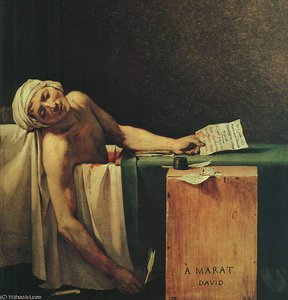
The tumultuous years of the French Revolution (1789-1799) saw a surge in artistic production dedicated to celebrating revolutionary ideals. Neoclassicism became the dominant style, perfectly suited to conveying themes of heroism, sacrifice, and civic duty. Jacques-Louis David, having already established himself as a master of historical painting, became the Revolution’s official artist. His *Death of Marat* (1793) is a powerful example of revolutionary propaganda – depicting the assassinated radical journalist as a martyr for the cause of liberty. The composition deliberately evokes religious iconography, elevating Marat to the status of a saint. More broadly, paintings and sculptures celebrating scenes from Roman history were used to legitimize the new republic and inspire patriotic fervor. The emphasis shifted from aristocratic patronage to public commissions designed to educate and mobilize the citizenry. Allegorical figures representing Liberty, Reason, and Equality became commonplace, visually embodying the Revolution’s core principles. Even fashion reflected this shift – women adopted classical hairstyles and clothing as a symbol of republican virtue and rejection of aristocratic excess. The visual language of ancient Greece and Rome was not merely employed; it was actively deployed to construct a new national identity and promote revolutionary ideals.
Beyond Antiquity: Civic Duty in 19th-Century Historical Painting
While Neoclassicism eventually gave way to Romanticism, the theme of civic duty continued to resonate throughout the 19th century. Historical painting remained a powerful medium for exploring questions of national identity, sacrifice, and moral responsibility. Artists like Eugène Delacroix, though associated with Romanticism, frequently depicted scenes that celebrated heroic resistance against oppression – often drawing inspiration from contemporary events as well as historical precedents. His *Liberty Leading the People* (1830) is a prime example, capturing the spirit of the July Revolution in France and embodying the ideals of freedom and self-determination. Similarly, paintings depicting scenes from American history, such as Emanuel Leutze’s *Washington Crossing the Delaware* (1851), served to reinforce national narratives and promote patriotic sentiment. The emphasis shifted somewhat away from classical models towards a more emotionally charged and dramatic style, but the underlying theme of civic engagement remained central. Even in genres beyond historical painting, such as genre scenes depicting everyday life, artists often subtly conveyed messages about social responsibility and the importance of community. This enduring fascination with civic virtue reflects a fundamental human desire for collective purpose and a belief in the power of individual action to shape society.
Conclusion: The Enduring Legacy of Civic Virtue in Western Art
From the ancient Greek polis to the revolutions of the 18th and 19th centuries, the theme of civic virtue has been a recurring motif in Western art. While the specific forms of representation have evolved over time – from sculptures celebrating athletic prowess to paintings commemorating revolutionary heroes – the underlying message remains remarkably consistent: active participation in public life is essential for maintaining a free and just society. Artists haven’t simply documented historical events; they've actively shaped our understanding of citizenship, duty, and moral responsibility. The rediscovery of classical ideals during the Renaissance, the deliberate emulation of ancient forms by Neoclassical artists, and the emotionally charged depictions of civic engagement in 19th-century painting all demonstrate the enduring power of art to inspire patriotic fervor, promote social change, and remind us of our collective obligations. At ArtsDot, we believe that understanding these historical contexts enriches our appreciation of these masterpieces and allows us to connect with the timeless values they embody. Explore our collection today and discover the powerful legacy of civic virtue in Western art – a testament to the enduring human quest for a more just and equitable world.