Early Life and Artistic Formation: The Roots of Breton's Realism
 Wikipedia: Jules Breton
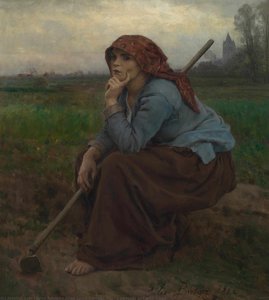
Jules Adolphe Aimé Louis Breton (French pronunciation: [ʒyl adɔlf ɛme lwi bʁətɔ̃]; 1 May 1827 – 5 July 1906) was a 19th-century French naturalist painter. His paintings are heavily influenced by the French countryside and his absorption of traditiona...
Jules Adolphe Aimé Louis Breton, born in 1827 in the small village of Courrières, France, wasn’t destined for a life steeped in artistic convention. His father, Marie-Louis Breton, managed land for a wealthy landowner – a connection to the earth and its rhythms that would profoundly shape the young artist's sensibility. This early immersion in rural existence was not merely geographical; it was deeply ingrained in his upbringing, fostered by an uncle who instilled a love of local history and tradition. While initially directed towards more conventional pursuits, Breton’s inherent artistic inclination proved too strong to ignore. His formal training began with studies in Belgium under Félix de Vigne, followed by a brief period with Gustave Wappers, both experiences grounding him in the academic techniques that would later serve as the foundation for his revolutionary approach. However, it was the upheaval of the 1848 Revolution that truly catalyzed his artistic direction, prompting a return to Courrières and a burgeoning desire to depict the realities of life around him – a stark contrast to the historical and mythological subjects favored by the established art world.
The Rise of Rural Subject Matter: A Departure from Academic Tradition
In art, realism is generally the attempt to represent subject-matter truthfully, without artificiality, exaggeration, or speculative or supernatural elements. The term is often used interchangeably with naturalism, although these terms are not necess...
The mid-19th century art scene was dominated by grand narratives, allegorical figures, and idealized landscapes. Breton’s decision to focus on the lives of peasants – harvesters, gleaners, and laborers – represented a significant departure from this norm. It wasn't simply about portraying everyday life; it was an attempt to elevate these often-overlooked individuals to a position of dignity and respect. This shift aligned him with the burgeoning Realist movement, spearheaded by artists like Gustave Courbet who sought to depict the world as it *was*, without romanticization or embellishment. Yet, Breton wasn’t merely replicating reality; he infused his work with a poetic sensibility that distinguished him from his contemporaries. He didn't abandon academic skill – quite the contrary. He utilized precise draftsmanship and masterful composition, honed through years of rigorous training, to create paintings that were both truthful and deeply moving. This unique blend allowed Breton to bridge the gap between traditional artistic values and the demands of a changing social landscape.
Breton’s Poetic Realism: Dignity, Labor, and the French Countryside
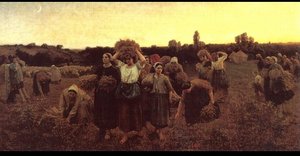 The Recall of the Gleaners
Experience 'The Recall of the Gleaners' by Jules Breton! A stunning Realist group portrait capturing rural French life. Hand-painted reproductions available – elevate your art collection today.
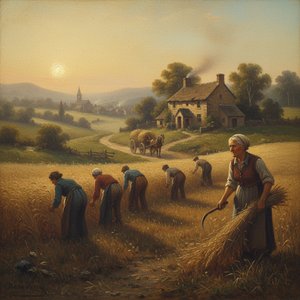
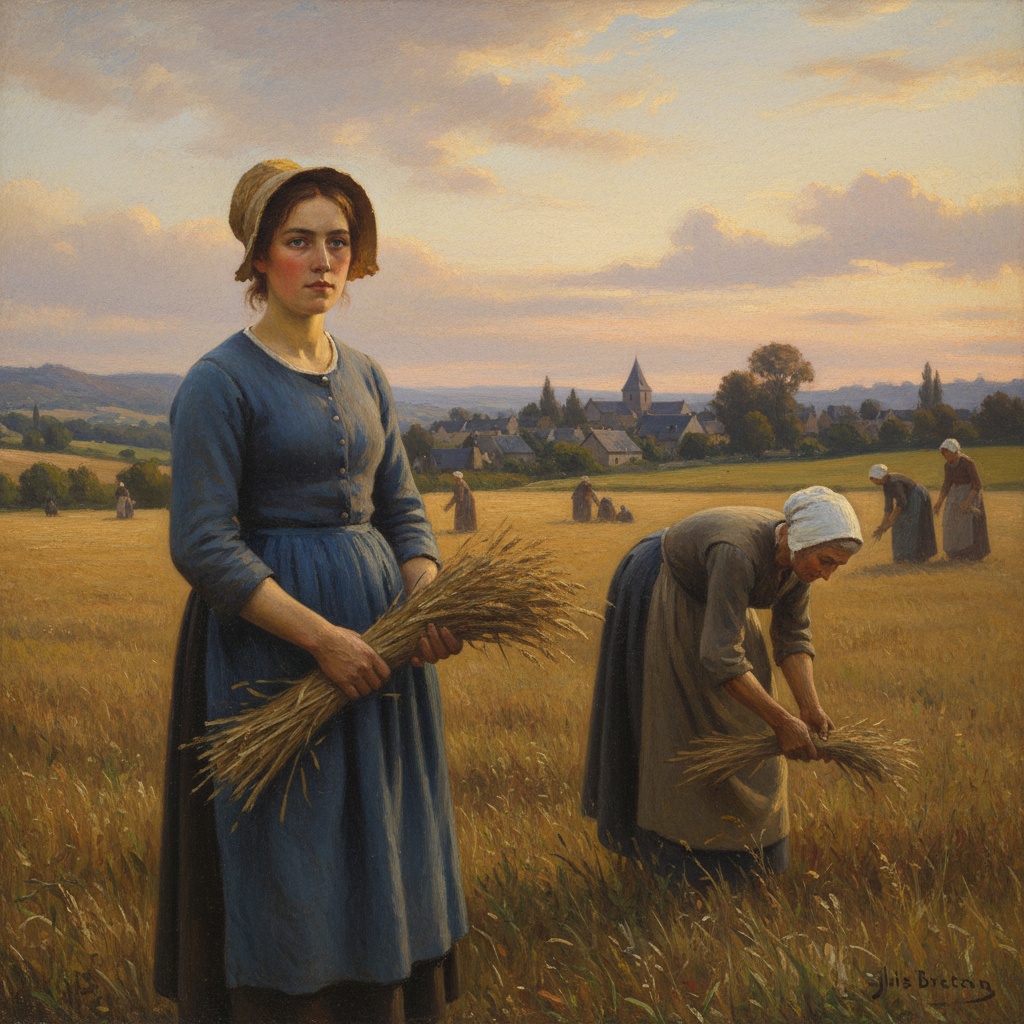
What sets Breton apart is his ability to imbue scenes of rural labor with an almost spiritual quality. His paintings aren't simply depictions of work; they are meditations on human endurance, community, and connection to the land. Consider “The Gleaners”, a powerful image of women gathering leftover grain after the harvest. While seemingly straightforward in its subject matter, the painting is rich with symbolism – a quiet acknowledgment of hardship, resilience, and the essential role these individuals played in sustaining rural life. Breton’s figures are not idealized; they possess a tangible physicality, their faces etched with the marks of labor. However, there's also a sense of grace and dignity in their movements, a testament to his ability to find beauty in the mundane. This poetic realism extended beyond individual portraits to encompass broader themes of rural life – religious devotion, communal gatherings, and the changing seasons.
Key Works and Recurring Themes: 'The Gleaners,' 'A Travers Champs,' and Beyond
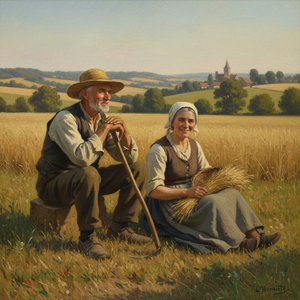
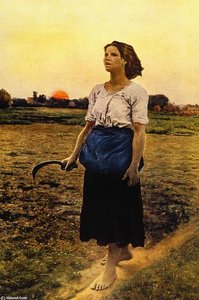
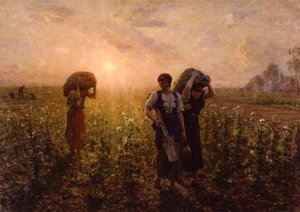
Throughout his career, Breton returned repeatedly to certain motifs. “Fin du travail (also known as A travers champs)”, for example, captures a moment of respite at the end of a long day’s work – a couple pausing in the fields, their weariness palpable yet their connection deeply felt. “The Song of the Lark”, another iconic work, depicts a young woman lost in song amidst the golden wheatfields, evoking a sense of freedom and harmony with nature. These paintings are not isolated incidents; they form part of a larger narrative – a celebration of rural life that resonated deeply with audiences of his time. Breton’s skillful use of light and shadow further enhances the emotional impact of these scenes, creating a sense of atmosphere and intimacy. He often employed a warm, golden palette, evoking the sun-drenched landscapes of northern France and lending a timeless quality to his work. His compositions are carefully balanced, drawing the viewer's eye to the central figures and emphasizing their connection to the surrounding environment.
Breton's Legacy and Influence: From Naturalism to Modern Appreciation
Jules Breton’s influence extended far beyond his immediate circle of contemporaries. He played a pivotal role in establishing rural life as a legitimate subject for artistic exploration, paving the way for subsequent generations of artists who sought to depict the realities of everyday existence. While initially embraced by the Realist movement, his work also foreshadowed elements of Naturalism – a more scientific and objective approach to representation. His paintings were admired not only for their technical skill but also for their emotional depth and social commentary. In later years, Breton’s work experienced periods of relative obscurity, overshadowed by the rise of modern art movements. However, in recent decades, there has been a renewed appreciation for his unique contribution to 19th-century painting. Scholars have recognized the complexities of his approach – his ability to blend academic tradition with Realist principles and infuse his work with a poetic sensibility that transcends mere documentation.
Collecting Breton Today: Finding Your Piece of Rural France
For collectors seeking to connect with the beauty and dignity of French rural life, Jules Breton offers a wealth of compelling options. His paintings are not merely historical artifacts; they are windows into a bygone era – glimpses of a world where labor was valued, community was essential, and connection to the land was paramount. Original works by Breton can be found in major museums around the globe, but acquiring one for private collection remains a significant investment. Fortunately, high-quality reproductions offer an accessible way to experience his art firsthand. ArtsDot specializes in handmade oil paintings meticulously crafted by skilled artists, capturing the nuances of Breton’s brushwork and palette. Whether you're drawn to the quiet dignity of “The Gleaners” or the serene beauty of “A Travers Champs,” a Breton reproduction can bring a touch of rural France into your home, serving as a constant reminder of the enduring power of art to connect us to our shared human experience.