The Rise of Realism: A Rejection of Romantic Idealism
Realism was an artistic movement that emerged in France in the 1840s. Realists rejected Romanticism, which had dominated French literature and art since the early 19th century. The artist Gustave Courbet, the original proponent of Realism, sought to ...
The mid-19th century witnessed a seismic shift in artistic sensibilities, a turning away from the dramatic flourishes and emotional intensity of Romanticism towards a more grounded, objective portrayal of the world. This burgeoning movement, known as Realism, wasn’t merely a stylistic change; it was a philosophical response to the rapidly evolving social landscape of Europe. Industrialization, urbanization, and political upheaval had irrevocably altered daily life, and artists began to question the idealized visions that had dominated art for generations. Gustave Courbet spearheaded this revolution, advocating for painting “what I see,” not what he *thought* he saw – a commitment to truth and accuracy that resonated with a growing desire for authenticity. This rejection of the exotic and fantastical paved the way for artists like Rosa Bonheur, who would masterfully capture the beauty and dignity of everyday life, particularly within the realm of the natural world.
Rosa Bonheur's Early Life & Artistic Formation: Nurturing a Passion for Nature
 Wikipedia: Rosa Bonheur
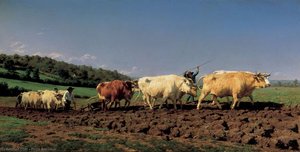
Rosa Bonheur (born Marie-Rosalie Bonheur; 16 March 1822 – 25 May 1899) was a French artist known best as a painter of animals (animalière). She also made sculptures in a realist style. Her paintings include Ploughing in the Nivernais, first exhibited...
Born Marie-Rosalie Bonheur in 1822, her path to artistic renown was anything but conventional. Her father, Oscar-Raymond Bonheur, a minor landscape painter himself, recognized and actively fostered his daughter’s exceptional talent from a young age. Crucially, he instilled within her a progressive worldview influenced by Saint-Simonianism – a socialist ideology that championed equality between genders and social classes. This unconventional upbringing allowed Rosa to pursue her passion without the societal constraints typically imposed upon women of the era. Denied formal art school admission, she received rigorous training from her father, beginning with meticulous copying exercises and progressing to direct observation of nature. Her early sketches reveal a remarkable aptitude for capturing animal anatomy and movement, honed through countless hours spent studying livestock markets and even the Parisian abattoirs – experiences that would prove foundational to her later success. These formative years weren’t simply about technical skill; they were about developing an intimate understanding of the natural world, a reverence that would permeate every brushstroke.
Capturing the Essence of Rural France: Bonheur’s Masterful Animal Paintings
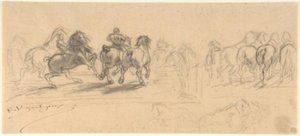 Sheet of Studies for ''The Horse Fair''
Discover Rosa Bonheur’s "Sheet of Studies for The Horse Fair." A captivating glimpse into her process, this exquisite study embodies Realism & French Impressionism. Commission a hand-painted replica today.
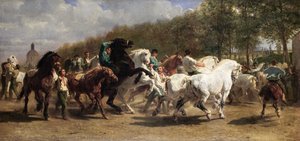
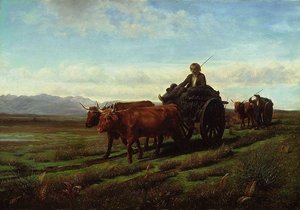
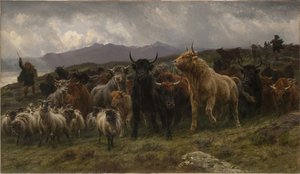
Bonheur's paintings are not merely depictions of animals; they are celebrations of their power, grace, and inherent dignity. Works like “Ploughing in the Nivernais” (1849) offer a compelling glimpse into the rhythms of rural life, portraying oxen laboriously tilling the soil with a realism that borders on photographic detail. However, Bonheur’s artistry extends far beyond mere imitation. She possessed an extraordinary ability to convey dynamic movement and emotional depth, imbuing her subjects with a palpable sense of life. Her most celebrated work, “The Horse Fair” (1853-1855), stands as a testament to this mastery. The monumental canvas explodes with energy, capturing the chaotic beauty of a bustling Parisian horse market. Bonheur’s meticulous studies – sheets filled with anatomical sketches and observations of equine behavior – allowed her to render each animal with breathtaking accuracy. The painting isn't simply *about* horses; it’s about their muscular power, their untamed spirit, and the complex relationship between humans and animals.
Breaking Barriers: Bonheur as a Female Artist in a Male-Dominated World
In an era where women were largely excluded from professional artistic circles, Rosa Bonheur defied expectations at every turn. She not only achieved critical acclaim but also commanded respect within a traditionally male domain. Her success wasn’t simply about talent; it was about unwavering determination and a refusal to conform. She famously requested – and received – permission from the police to wear men's clothing while working, a practical necessity for navigating environments like livestock markets and slaughterhouses, but also a bold statement of independence. This act challenged societal norms and paved the way for future generations of female artists. Bonheur’s ability to secure prestigious commissions previously reserved for male painters – including “The Horse Fair” which garnered international recognition and even the admiration of Queen Victoria – solidified her position as a leading figure in the art world, dismantling preconceived notions about women's artistic capabilities.
Beyond Representation: The Social Commentary Embedded in Bonheur's Work
While celebrated for her realistic depictions of animals, Bonheur’s work also subtly embedded social commentary. Her commitment to portraying all subjects – human and animal alike – with equal dignity reflected a broader concern for equality and justice. By focusing on the labor of working-class individuals and the inherent value of the natural world, she challenged prevailing societal hierarchies. The artist's meticulous approach, often involving dissections and extensive field studies, wasn’t merely about scientific accuracy; it was about understanding the inner workings of life itself. This holistic perspective informed her art with a quiet moral lesson – that all creatures deserve respect and attention, regardless of their size, species, or social standing. Her paintings can be seen as subtle critiques of industrialization and urbanization, celebrating the beauty and resilience of rural life before it was irrevocably altered by progress.
Bonheur's Enduring Legacy & Influence on Subsequent Artists
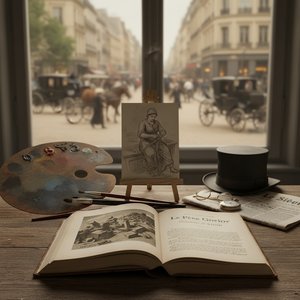 The Enduring Legacy of 19th-Century Realism: A Reflection of Society & Artistic Innovation
Explore the captivating world of 19th-century Realism! Discover key artists, masterpieces & the social commentary behind this influential art movement. Expert insights at .
Rosa Bonheur’s impact extends far beyond her own prolific output. She became a role model for countless artists who followed in her footsteps, particularly women seeking to break into the art world. Her pioneering spirit and unwavering commitment to realism continue to inspire generations of painters today. Artists like Edwin Landseer shared her dedication to animal portraiture, but Bonheur’s unique blend of scientific observation, emotional depth, and social consciousness set her apart. Her influence can be seen in the work of later Realist painters who sought to depict everyday life with honesty and authenticity. ArtsDot offers a stunning collection of reproductions of Bonheur's masterpieces, allowing art enthusiasts to experience the beauty and power of her work firsthand. From detailed pencil sketches like “Five Horses at the Trot” to monumental canvases like “The Horse Fair,” these reproductions capture the essence of Bonheur’s artistry, preserving her legacy for future generations. Explore our collection today and discover the enduring appeal of this remarkable artist.