The World of Art: Somov's Origins & Influences
 Wikipedia: Russian symbolism
Russian symbolism was an intellectual, literary and artistic movement predominant at the end of the 19th and beginning of the 20th century. It arose separately from West European symbolism, and emphasized defamiliarization and the mysticism of Sophio...
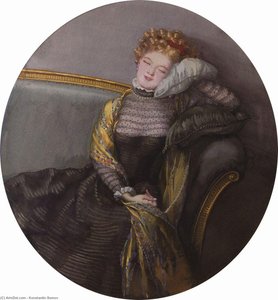
Konstantin Andreyevich Somov, born into a cultured St. Petersburg family in 1869, was destined for an artistic life. His father, Andrei Ivanovich Somov, a curator at the Hermitage Museum, instilled in him a deep appreciation for art from a young age, surrounding him with drawings, engravings, and paintings that sparked his imagination. This early exposure wasn’t merely observational; it was formative, shaping a sensibility attuned to detail, composition, and the subtle power of visual storytelling. However, Somov's path wasn’t solely dictated by familial influence. His education at the Imperial Academy of Arts, alongside future luminaries like Sergei Diaghilev and Léon Bakst, proved pivotal. It was within these walls that he encountered a burgeoning artistic movement – *Mir iskusstva* (The World of Art) – which would become inextricably linked to his name.
Mir iskusstva represented a rejection of the prevailing realist aesthetic in favor of a more refined, decorative style. It drew inspiration from 18th-century French art, particularly the Rococo period, and embraced symbolism as a means of conveying complex emotions and ideas. Somov quickly became a central figure within this group, not only contributing illustrations and designs to their influential magazine but also embodying its core principles. The movement’s emphasis on aestheticism – “art for art's sake” – resonated deeply with Somov, who believed in the intrinsic beauty of form and color over didactic or moralizing narratives. His early works already hinted at this inclination, showcasing a delicate touch and a fascination with elegant subjects.
Rococo Revival: Somov’s Distinctive Style & Aesthetic Sensibilities
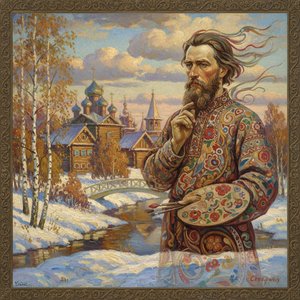
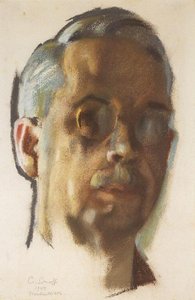 Self-Portrait
Admire Konstantin Somov’s ‘Self-Portrait,’ a captivating Symbolist painting from 1928. Explore this iconic work by the Russian master, known for his evocative portraits & unique style.
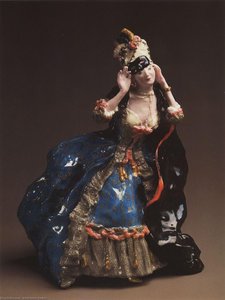
Somov didn't simply imitate Rococo; he reimagined it through a distinctly Russian lens. While deeply admiring masters like Antoine Watteau and Nicolas de Largillière, his paintings weren’t mere copies but rather evocative interpretations infused with a melancholic sensibility unique to the Silver Age of Russian art. He masterfully blended the playful lightness and aristocratic grace of 18th-century France with a subtle undercurrent of decadence and longing. This is particularly evident in his portraits, where figures are often depicted in opulent settings, adorned in luxurious fabrics and surrounded by symbolic objects.
His technique was equally refined. Somov excelled in watercolor, gouache, and oil painting, employing delicate brushstrokes and a muted color palette to create an atmosphere of intimacy and dreamlike beauty. He wasn’t interested in bold statements or dramatic contrasts; instead, he sought to capture fleeting moments of elegance and grace. The influence of Aubrey Beardsley is also discernible in his work, particularly in the stylized lines and decorative details that often adorn his compositions. This fusion of influences – Rococo, Symbolism, and Art Nouveau – resulted in a truly distinctive style that set him apart from his contemporaries.
Portraits of an Era: Capturing Russian Society in Symbolist Form
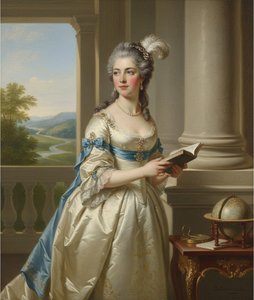
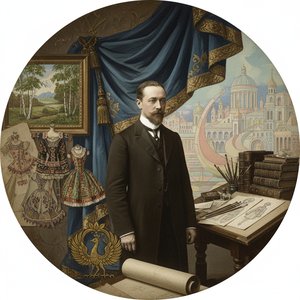
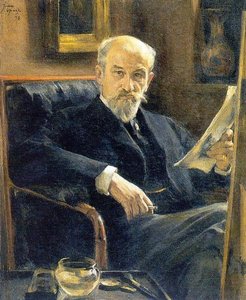 Portrait of A. Somov
Admire Konstantin Somov’s ‘Portrait of A. Somov’ (1897). A captivating Russian Symbolist portrait featuring a distinguished gentleman. Hand-painted reproduction available.
Somov’s portraits are more than just likenesses; they are windows into the soul of Russian society at the turn of the century. He captured not only the physical appearance of his sitters but also their inner lives, anxieties, and aspirations. His subjects were often members of the intelligentsia – writers, artists, musicians – individuals who embodied the cultural ferment of the era. “Portrait of A. Somov” (1897), for example, depicts a distinguished gentleman radiating intelligence and refinement, yet there’s also a hint of weariness in his expression, perhaps reflecting the uncertainties of the time.
He possessed an uncanny ability to convey personality through subtle gestures, facial expressions, and carefully chosen props. A seemingly innocuous object – a book, a flower, a piece of jewelry – could reveal volumes about a sitter’s character and social standing. Somov's portraits weren’t simply celebrations of wealth or status; they were nuanced explorations of identity and the complexities of human experience. His use of symbolism further enriched these compositions, adding layers of meaning that invite viewers to delve deeper into the lives of his subjects.
Ballet and Beyond: Exploring Somov’s Diverse Subject Matter
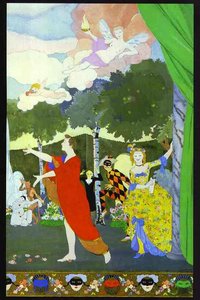
While renowned for his portraits, Somov's artistic range extended far beyond this genre. He was deeply fascinated by ballet, capturing the grace and dynamism of performances in a series of stunning watercolors and paintings. “Russian Ballet. Champs-Elysees. Sylph” (1932) is a prime example, showcasing a vibrant scene filled with movement, color, and energy. These works weren’t merely depictions of dancers; they were celebrations of beauty, artistry, and the ephemeral nature of performance.
Beyond ballet, Somov explored a variety of subjects, including mythological scenes, literary illustrations, and genre paintings. He frequently revisited themes of love, pleasure, and nostalgia, often evoking a sense of wistful longing for a bygone era. His illustrations for works by Alexander Blok are particularly noteworthy, capturing the poet’s lyrical sensibility with delicate lines and evocative imagery. This versatility demonstrates Somov's mastery of various techniques and his ability to adapt his style to suit different subjects.
Personal Life and Artistic Relationships: Methodiy Lukyanov & Boris Snezhkovsky
Somov’s personal life was as intriguing as his art. He maintained a long-term, devoted relationship with Methodiy Lukyanov, who served not only as his companion but also as a frequent model and source of inspiration. Their bond provided stability and emotional support throughout Somov's career. However, his artistic and personal connection with Boris Snezhkovsky, a young boxer, adds another layer of complexity to his biography.
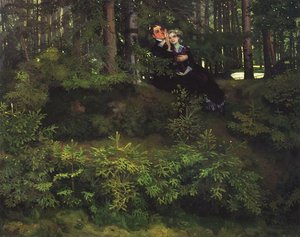
Snezhkovsky became a muse for Somov, appearing in numerous paintings that captured his youthful beauty and athletic physique. The nature of their relationship remains ambiguous, but it’s clear that Snezhkovsky had a profound impact on Somov's work during the 1920s and 30s. These portraits often depict Snezhkovsky in idealized settings, evoking a sense of classical mythology and youthful exuberance. This exploration of male beauty and homoerotic themes was relatively unconventional for the time, adding to the artist’s reputation as a progressive and independent thinker.
Somov's Legacy: Influence, Auction Records & Enduring Appeal
Konstantin Somov’s influence on Russian art is undeniable. As a founding member of *Mir iskusstva*, he helped shape the aesthetic landscape of the Silver Age and paved the way for future generations of artists. His distinctive style – a fusion of Rococo, Symbolism, and Art Nouveau – continues to inspire contemporary painters and designers.
In recent years, Somov’s paintings have achieved record-breaking prices at auction, demonstrating their enduring appeal to collectors worldwide. “The Rainbow” (1907) sold for GBP 3,716,000 in 2007, a testament to his status as a master of Russian art. His works are now held in major museums and private collections around the globe, ensuring that his legacy will continue to thrive for years to come. ArtsDot.com offers exquisite reproductions of Somov’s masterpieces, allowing you to experience the beauty and elegance of this remarkable artist firsthand. Explore our collection today and discover the captivating world of Konstantin Somov.