 Preview
 Send
Send Share
Share
 Details

 Download
 Similars
 X-Ray
X-Ray Diaporama
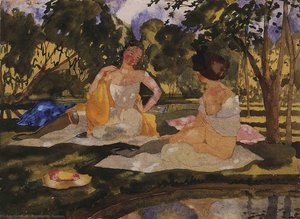
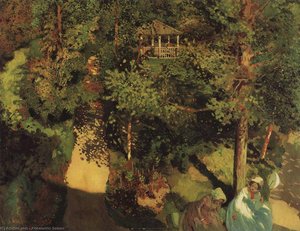
In the Forrest


 Read More
Hand Made Oil Reproduction
Hand-painted oil on canvas in your size and frame, made to order by our artists. ( Buy Print Buy Image)




P118B $10

P118H $10

P118W $10

P438Z $10

P508JH $12

P508YH $12

P805H $10

P805Z $10

P919BZ $10

P919G $10

P919XJ $10

P959ZH $10

P968JZ $12

W106C $8

W218G $10

W218JH $8

W218Y $10

W307PJ $10

W316G $10

W316PJ $8

W316Y $10

W398PJ $8

W4111J $10

W500HY $15

W500JH $15

W692G $12

W849H $8

W940BG $15

W953PJ $8




Pick from our preset sizes that match the artwork's original proportions.

You may enter your own dimensions to fit a specific frame or space. If your selected size does not match the original image's proportions, we will either crop the artwork or extend the painting with additional hand-painted elements. A digital mockup will be sent for your approval before production begins.
Please note that the on-screen preview does not reflect the actual cropping or extension. Only the mockup will accurately show the final composition.
While custom sizes are available, we recommend selecting a dimension from the predefined list to preserve the original proportions.
After order, ArtsDot.com team will email client for instructions and provide a mockup preview
Worldwide Delivery () in 3/4 weeks instead of standard 5 weeks. (21 August). No compromise on quality.

Free Worldwide Express Shipping

High-Quality Linen Canvas

Full Shipping Insurance

Customs Tax Refund Guarantee

True Color Matching Guarantee

60-Day Return Policy (Defects Only)

100% Money-Back Guarantee

Bulk Discount Offer
 Glass option is only available in size under 110 CM

In the Forrest
Reproduction Medium
Reproduction Size
-


Total Price
$ 263
Artwork Description
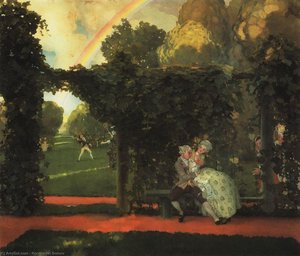
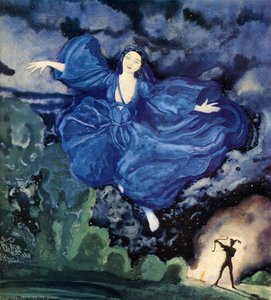
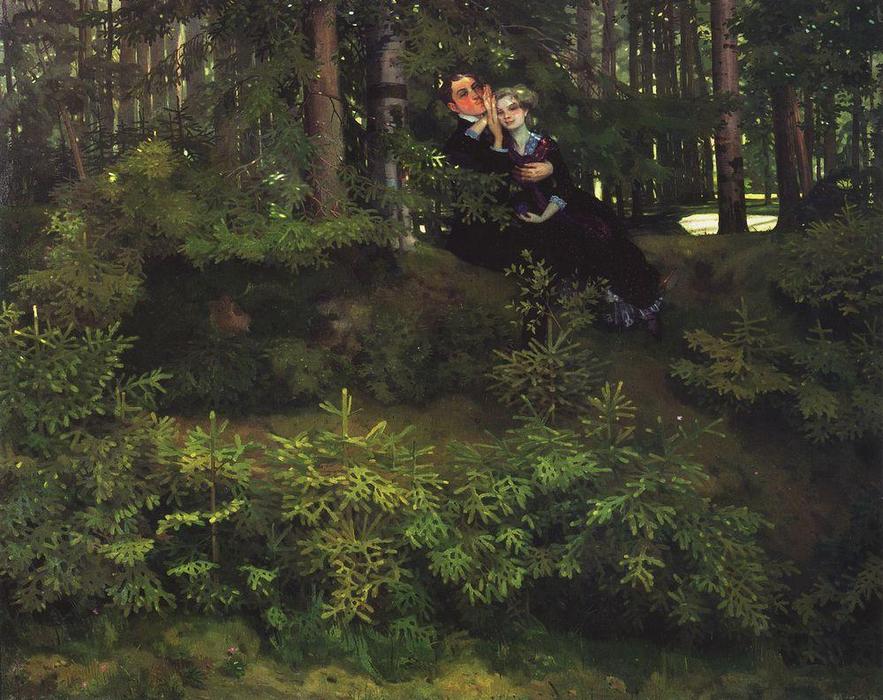
A Moment of Intimacy: "In the Forest" by Konstantin Somov
This captivating watercolor painting, “In the Forest,” created in 1914 by Russian artist Konstantin Andreyevich Somov, offers a glimpse into a fleeting moment of tranquility and intimacy within a secluded woodland setting. The scene depicts a man and woman seated together on a weathered tree stump, seemingly lost in quiet conversation or shared contemplation. A third figure stands further back, subtly integrated into the background amongst the trees, suggesting a sense of watchful presence without disrupting the central couple's connection. The overall impression is one of gentle serenity and understated elegance.Style and Technique: Echoes of Rococo and Symbolism
Somov was a master of watercolor, employing delicate washes and precise detailing to create an atmosphere both ethereal and richly textured. "In the Forest" exemplifies his signature style – a unique blend of late 19th/early 20th-century Symbolism and a nostalgic reverence for Rococo aesthetics. Unlike the bolder strokes of Impressionism prevalent at the time, Somov favored a refined, almost dreamlike quality in his work. Notice how he uses subtle gradations of color to define form and create depth within the forest setting. The composition itself is carefully balanced, with the figures positioned to draw the eye while maintaining a sense of spaciousness and natural harmony. His technique demonstrates an exceptional control over watercolor's fluidity, achieving both transparency and opacity to evoke the dappled light filtering through the trees.Historical Context: A Glimpse into Pre-Revolutionary Russia
Painted just before the tumultuous years of the Russian Revolution, "In the Forest" reflects a yearning for beauty and refinement amidst societal change. Somov’s work often served as an escape from the increasingly turbulent political climate. The painting's aristocratic sensibility – evident in the figures' attire and posture – speaks to a fading era of Russian nobility. While not overtly political, it captures a sense of nostalgia for a bygone world characterized by leisurely pursuits and refined aesthetics. Somov’s artistic circle included prominent figures like Konstantin Korovin and Konstantin Makovsky, all navigating evolving artistic trends while maintaining their own distinct styles.Symbolism and Emotional Impact
Beyond its surface beauty, "In the Forest" resonates with subtle symbolic undertones. The forest itself can be interpreted as a metaphor for the subconscious or a realm of hidden emotions. The couple's quiet intimacy suggests themes of love, companionship, and perhaps even a sense of melancholy – a reflection of the uncertainty surrounding their future. Somov’s deliberate use of muted colors—greens, browns, and soft blues—contributes to the painting’s overall mood of introspection and gentle sadness. The presence of the third figure adds an element of mystery, prompting questions about their relationship to the couple and the narrative unfolding within the scene. Ultimately, "In the Forest" evokes a feeling of quiet contemplation, inviting viewers to pause and reflect on the beauty of fleeting moments and the complexities of human connection.Related Artworks
Artist Biography
Konstantin Andreyevich Somov: A Life in Art
Early Life and Education
Konstantin Andreyevich Somov, a prominent figure in Russian art, was born on November 30, 1869, in Saint Petersburg, Russia. His upbringing within an artistic family profoundly shaped his future path. His father, Andrey Ivanovich Somov, served as a distinguished art historian and curator at the renowned Hermitage Museum. This environment instilled in young Konstantin a deep appreciation for 18th-century art and music from an early age.
Somov pursued formal artistic training at the Imperial Academy of Arts between 1888 and 1897, studying under the tutelage of the celebrated realist painter, Ilya Repin. However, Somov’s artistic inclinations soon diverged from the strictures of realism, leading him to explore more decorative and evocative styles.
Artistic Development and Influences
Somov's artistic development was significantly influenced by his fascination with the Rococo period. He admired the elegance, grace, and playful themes prevalent in the works of 18th-century French artists like Jean-Antoine Watteau and François Boucher. This influence is readily apparent in his paintings, characterized by delicate brushwork, pastel colors, and a focus on aristocratic subjects.
He experimented with various mediums, but became particularly adept at watercolors and gouache, which allowed him to achieve the luminous effects he desired. His association with the Mir iskusstva (World of Art) movement further solidified his position within the Russian art scene, fostering a spirit of innovation and aestheticism.
Key Characteristics and Style
- Rococo Revival: Somov consciously revived the Rococo style, imbuing it with a modern sensibility.
- Symbolism & Aestheticism: His works often possess symbolic undertones and prioritize aesthetic beauty over strict realism.
- Elegant Portraits: He excelled in creating refined portraits of Russian society, capturing their elegance and psychological depth.
- Pastel Palette: Somov’s paintings are known for their delicate pastel colors and subtle gradations of tone.
Notable Works and Achievements
Somov created a diverse body of work encompassing portraits, landscapes, and genre scenes. Some of his most celebrated pieces include:
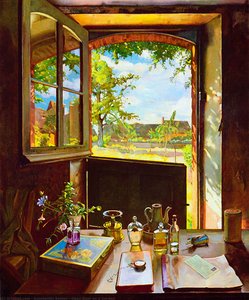
- Open Door on a Garden: A quintessential example of his Art Nouveau style, showcasing his mastery of color and composition.
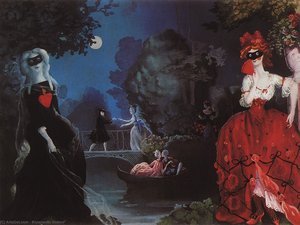
- Lady Taking Off a Mask: Demonstrates Somov’s exploration of Symbolist themes and psychological complexity.
- The Rainbow (1927): This painting achieved significant recognition when it was sold at Christie's for US$7.33 million, setting a record for a work at an auction of Russian art.
- Portrait of A. Somov, the Artist’s Father: A poignant and intimate portrayal of his father, reflecting his skill in portraiture.
Historical Significance and Legacy
Konstantin Somov played a crucial role in shaping the landscape of Russian art at the turn of the 20th century. His embrace of aestheticism and his revival of Rococo sensibilities challenged prevailing artistic norms and paved the way for new forms of expression.
He was a key member of Mir iskusstva, contributing to its mission of promoting artistic innovation and cultural renewal. Somov’s work continues to inspire artists and art enthusiasts alike, solidifying his legacy as a significant figure in Russian art history. His paintings are exhibited in museums worldwide, including the Yaroslavl Arts Museum in Russia, and remain part of numerous prestigious collections.
Later Life and Death
Somov continued to paint throughout his life, adapting to changing artistic trends while maintaining his distinctive style. He passed away on May 6, 1939, leaving behind a rich and enduring artistic legacy.
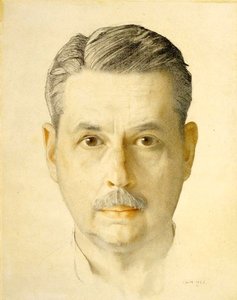
konstantin andreevic somov
1869 - 1939 , Russia
Quick Facts
- Birth Date: November 30, 1869
- Birth Place: Saint Petersburg, Russia
- Death Date: May 6, 1939
- Influenced By:
- Watteau
- Fragonard
- Movement: Art Nouveau, Symbolism
- Name: Konstantin Andreyevich Somov
- Nationality: Russian
- Notable Works:
- Open Door on a Garden
- The Rainbow
- Lady Taking Off a Mask
Related Articles

Watercolor Wonders: 10 Masterpieces That Redefined Art History | ArtsDot
Journey through 10 legendary watercolor masterpieces by Sargent, Turner & Homer! Explore iconic landscapes, portraits & floral art that redefined history. Find museum-quality reproductions and curated decor ideas at ArtsDot.com.
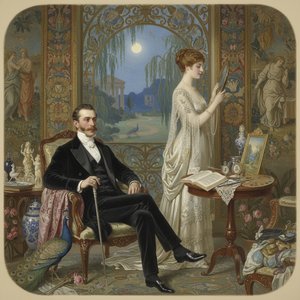
Konstantin Somov: A Master of Russian Aestheticism & Symbolist Elegance
Explore the captivating world of Konstantin Somov, a leading figure of Russian Symbolism & Aestheticism. Discover his exquisite portraits, ballet scenes, and Rococo-inspired masterpieces. Learn about his life, influences, and enduring legacy.

Ephemeral Visions: Exploring the Artistic Legacy & Contemporary Practice of Watercolor Painting
Explore the captivating world of watercolor painting! Discover its rich history, essential techniques, influential artists & collecting tips. A comprehensive guide for art enthusiasts from ArtsDot.

Ephemeral Visions: Exploring the History & Emotional Resonance of Watercolor Painting
Explore the captivating history of watercolor painting, from ancient techniques to modern masters like Kandinsky & Blake. Discover essential artists, collecting tips & the emotional power of this luminous medium. Expert insights for art enthusiasts.

Ephemeral Visions: Exploring the Artistic Legacy & Nuances of Watercolor Painting
Explore the captivating world of watercolor painting! Discover its rich history, essential techniques, influential artists & collecting tips from art experts. A comprehensive guide for enthusiasts.