The World of Art Origins: Bakst's Early Influences & Artistic Formation
Léon Bakst, a name synonymous with the dazzling spectacle of the Ballets Russes, wasn’t born into a world of theatrical grandeur but rather emerged from the fertile artistic landscape of late 19th-century Russia. Born Leyb-Khaim Izrailevich Rosenberg in Grodno in 1866, his journey to becoming one of the most influential designers of the early 20th century was marked by a restless spirit and an insatiable appetite for artistic exploration. His initial training at the St. Petersburg Academy of Arts provided him with a solid foundation in traditional techniques, yet it was his engagement with the burgeoning *World of Art* (Mir iskusstva) movement that truly ignited his creative vision. This group, founded by Alexandre Benois, sought to break away from academic constraints and embrace a more subjective, emotionally resonant form of expression. Bakst’s early works—portraits like his captivating depiction of Alexandre Benois himself in 1898—reveal a fascination with intellectual figures and an emerging style that blended Russian realism with European influences. These paintings weren't merely representations; they were imbued with atmosphere, hinting at the psychological complexities beneath the surface. His grandfather’s tailoring business also left a lasting impression, fostering an early appreciation for texture, color, and the transformative power of clothing – skills he would later deploy to breathtaking effect on the ballet stage.
Diaghilev's Vision & The Ballets Russes: A Stage for Revolution
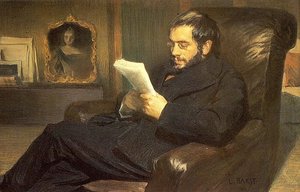 Portrait of Alexandre Benois
Admire Léon Bakst's captivating 'Portrait of Alexandre Benois.' This 1898 painting showcases an intellectual figure within a richly detailed room, blending Russian and European artistic styles.
The pivotal moment in Bakst’s career arrived with his collaboration with Sergei Diaghilev. Diaghilev, a charismatic and ambitious impresario, recognized Bakst’s unique talent and invited him to join the nascent Ballets Russes in 1909. This wasn't simply an artistic partnership; it was a meeting of minds that would redefine the boundaries of performance art. Diaghilev envisioned a ballet company unlike any other—one that fused Russian musicality, choreographic innovation, and visual splendor. He sought to elevate ballet from mere entertainment to a sophisticated art form capable of expressing complex emotions and challenging conventional aesthetics. Bakst became instrumental in realizing this vision, designing sets and costumes that were not merely decorative but integral to the narrative itself. The company’s debut season in Paris was a sensation, captivating audiences with its exoticism, sensuality, and sheer audacity. It marked the beginning of an era where ballet transcended national boundaries and became a global phenomenon.
Opulence and Exoticism: Defining the Aesthetic of Bakst’s Costume Designs
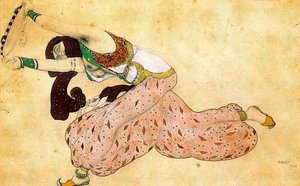
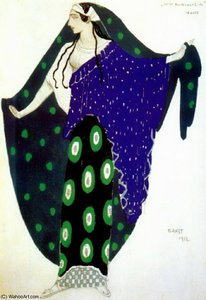
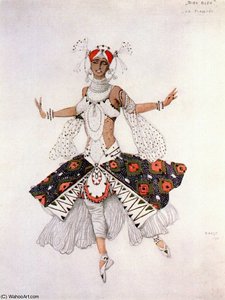 le dieu bleu the bride
Leon Bakst’s ‘Le Dieu Bleu The Bride’ (1912) is a stunning Art Deco costume design sketch. Explore this detailed pencil & watercolor piece, showcasing vibrant patterns & dynamic movement.
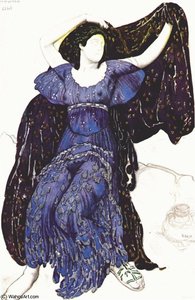
Bakst's costume designs were nothing short of revolutionary. He rejected the traditional tutus and romantic frocks in favor of opulent, richly colored creations that drew inspiration from diverse cultures—Orientalism, Byzantine art, and historical periods. His costumes weren’t historically accurate; they were *evocations* of these styles, filtered through his own artistic sensibility. “Le Dieu Bleu The Bride” (1912), a stunning pencil and watercolor sketch, exemplifies this approach—vibrant patterns, dynamic movement, and an almost hallucinatory use of color create a sense of otherworldly beauty. Similarly, “Helene de Sparte, Ida Rubinstein in Act IV” (1912) captures the dancer’s dramatic performance with a blend of Art Nouveau elegance and Russian flair. Bakst masterfully employed luxurious fabrics—velvets, silks, and brocades—often adorned with jewels and intricate embroidery. These weren't simply garments; they were wearable works of art that transformed the dancers into mythical creatures and captivating characters. The emphasis on exoticism wasn’t merely aesthetic; it reflected a broader cultural fascination with the “other” and a desire to escape the constraints of Western convention.
Beyond the Ballet: Bakst’s Broader Impact on Art, Fashion, and Design
The influence of Bakst extended far beyond the stage. His designs captivated not only ballet audiences but also the wider artistic community, profoundly impacting fashion, interior design, and graphic arts. The bold colors, intricate patterns, and exotic motifs that defined his costumes were quickly adopted by Parisian couturiers, influencing the Art Deco movement. His work resonated with a generation seeking to break away from Victorian restraint and embrace a more flamboyant and expressive aesthetic. Bakst’s designs also found their way into interior decoration, inspiring lavishly decorated spaces filled with oriental carpets, ornate furniture, and vibrant textiles. He even ventured into portraiture himself, creating striking images of contemporary figures that reflected his distinctive style. His influence can be seen in the work of artists like Erte, who similarly embraced theatricality and exoticism in their designs.
Key Works & Lasting Legacy: Exploring Iconic Creations and Enduring Influence
While Bakst designed numerous iconic productions for the Ballets Russes—including *Carnaval* (1910), *Spectre de la Rose* (1911), and *Daphnis and Chloe* (1912)—his legacy extends beyond any single work. He fundamentally altered the way stage design was conceived, transforming it from a supporting element into an integral component of the overall artistic experience. His emphasis on color, texture, and exoticism continues to inspire designers today. The Metropolitan Museum of Art’s recent exhibition of his drawings highlighted the breadth and depth of his creative process, revealing the meticulous planning and artistry that went into each production. Though he passed away in 1924 at the relatively young age of 58, Léon Bakst left an indelible mark on the world of art. His work remains a testament to the power of imagination, the beauty of opulence, and the transformative potential of performance. At ArtsDot.com, you can explore high-quality reproductions of Bakst’s iconic designs, bringing his dazzling vision into your own home.