The Essence of Art Nouveau: A Symphony of Organic Lines and Natural Forms
To step into the world of Art Nouveau is to enter a realm where the rigid boundaries between the man-made and the natural dissolve into a singular, flowing grace. Emerging at the turn of the 20th century, this movement was far more than a mere aesthetic trend; it was a profound philosophical response to the industrial age. As the smoke of factories began to shroud the landscape, artists sought refuge in the rhythmic, undulating curves of the living world. This era, often referred to as the Belle Époque, celebrated a symphony of organic lines, where every stroke and silhouette whispered of the vitality found in vines, lilies, and dragonflies.
The movement’s soul lies in its rejection of the straight line, which was viewed as sterile and mechanical. Instead, practitioners embraced the whiplash curve—a dynamic, energetic line that mimics the sudden, graceful movement of a stem caught in a breeze. This pursuit of organic unity sought to infuse everyday objects with the same spiritual depth found in high art. Through this lens, a simple lamp or a chair was no longer just furniture; it became a sculptural extension of nature itself, breathing life into the domestic sphere through intricate, sinuous ornamentation.
Ultimately, Art Nouveau served as a bridge between the classical past and the modern future. By distilling the essence of biological growth into decorative motifs, designers created a visual language that felt both ancient and revolutionary. It was an era defined by the belief that beauty should be pervasive, wrapping the human experience in a cocoon of botanical elegance and rhythmic movement.
Architectural Elegance: The Ornate Facades of Riga and Tallinn
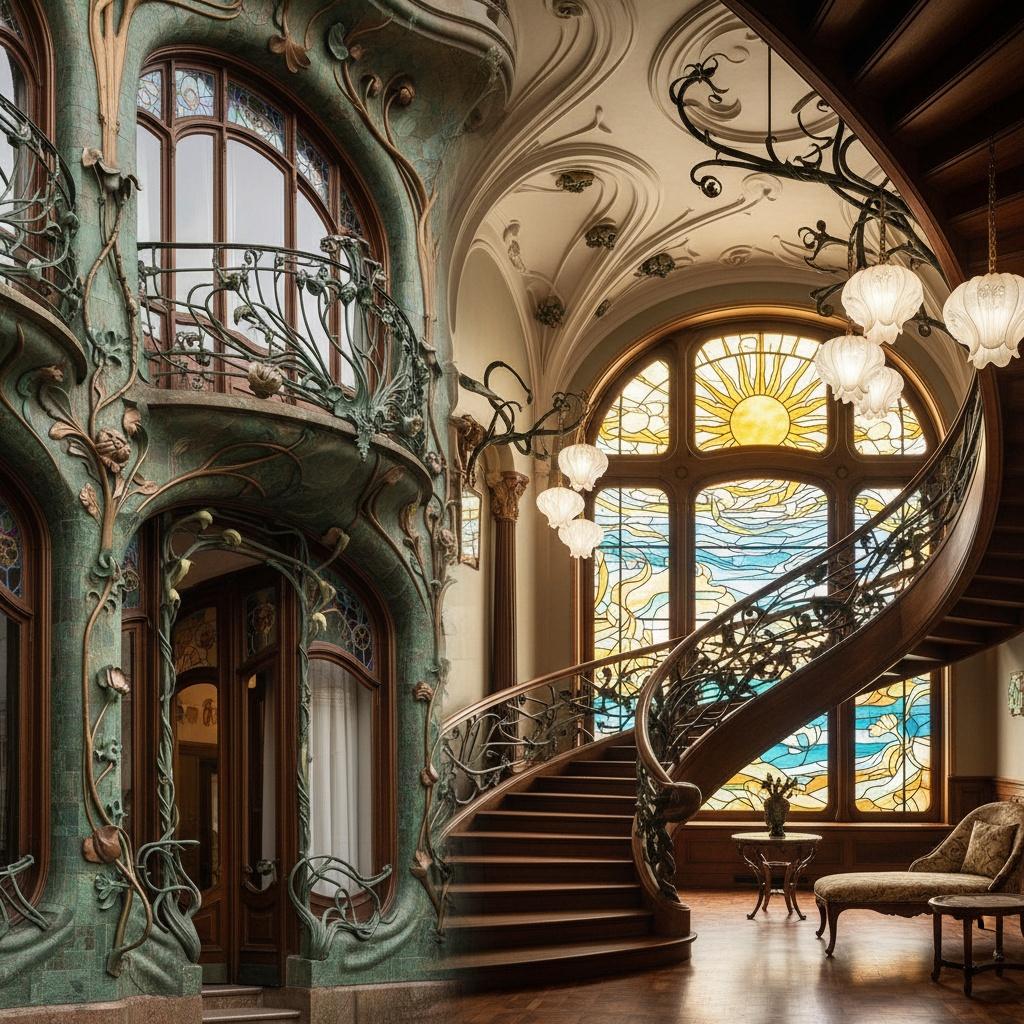
Nowhere is the grandeur of Art Nouveau more palpable than in the stone and mortar of Europe’s historic urban centers. In cities like Riga and Tallinn, the movement transformed the very skin of the city, turning streetscapes into open-air galleries of sculptural storytelling. The architecture of this period does not merely stand; it breathes through its intricate reliefs and expressive facades, inviting the passerby to linger and contemplate the artistry embedded in the masonry.
In Riga, Latvia, one finds the breathtaking work of Konstantins Pēkšēns, whose mastery is evident in the delicate peacock reliefs that adorn prestigious buildings. These architectural details serve as symbolic anchors, where the iridescent beauty of the bird is translated into stone, celebrating Latvian identity through a lens of international sophistication. Similarly, the streets of Tallinn, Estonia, offer a journey through time, particularly when observing the works influenced by Jacques Rosenbaum-Ehronbush. Here, the facades are adorned with winged figures and ethereal forms that seem to float against the backdrop of the city’s historic skyline, capturing a sense of timeless elegance.
These buildings represent more than just structural achievements; they are monuments to a period when architecture was viewed as a holistic art form. The integration of sculptural elements into the building's envelope ensures that the transition from the natural world to the urban environment is seamless and poetic. To walk through these streets is to witness the triumph of design over mere utility, where every window frame and cornice tells a story of organic splendor.
Mastering the Curve: Pioneers of Design from Mackmurdo to Gaillard
The evolution of Art Nouveau was driven by a cadre of visionary designers who possessed the rare ability to translate biological complexity into functional elegance. These pioneers were not merely decorators; they were architects of a new lifestyle, reshaping everything from furniture to graphic arts. Their work required an intimate understanding of both the structural integrity of materials and the fluid geometry of nature.
The lineage of this movement can be traced back to figures such as Arthur Heygate Mackmurdo, a seminal force in the British Arts and Crafts and early Art Nouveau movements. His contributions were foundational, establishing the principles of integrated design where architecture, furniture, and ornament exist in perfect harmony. Following this path of organic innovation, French designers like Eugène Gaillard pushed the boundaries even further. Gaillard was renowned for his opulent, nature-inspired forms, creating furniture that appeared to grow directly from the floor, characterized by a luxurious craftsmanship that celebrated the tactile beauty of wood and precious metals.
These masters shared a common devotion to the organic metamorphosis of objects. Through their meticulous attention to detail, they proved that the principles of nature could be applied to the most complex industrial processes. Their legacy remains a testament to the power of design to elevate the mundane into the magnificent, providing a blueprint for how craftsmanship can honor the natural world.
Symbolism and Ornamentation: The Language of Flora and Fauna
At the heart of Art Nouveau lies a deeply symbolic vocabulary, a secret language written in the shapes of petals, insects, and mythical creatures. For the Art Nouveau artist, nature was not merely a subject to be copied, but a source of profound metaphor. Every motif carried an emotional weight, intended to evoke feelings of rebirth, fragility, or enduring strength. This use of symbolism allowed the movement to communicate complex human emotions through the familiar imagery of the natural landscape.
The flora chosen for these designs were rarely simple; they were often exotic or highly stylized, emphasizing the dramatic tension between life and decay. The lily, with its pure yet drooping form, symbolized both innocence and mortality, while the vine represented the unstoppable persistence of growth. Similarly, fauna played a crucial role in this ornamental narrative. The dragonfly, with its translucent wings and rapid movement, became an emblem of lightness and ephemeral beauty, while the peacock offered a sense of regal splendor and eternal vigilance.
This intricate layering of meaning transformed decorative arts into a form of visual poetry. By weaving these symbols into textiles, jewelry, and glasswork, designers created an immersive environment where every glance revealed a new layer of interpretation. It was an era where the distinction between ornament and meaning was entirely erased, leaving behind a rich tapestry of cultural and emotional significance.
Art Nouveau in Modern Interiors: Preserving Timeless Sophistication
In the contemporary era, the influence of Art Nouveau continues to resonate within the most sophisticated interior design circles. While modern minimalism often favors austerity, there is a growing movement toward "maximalist elegance"—a desire to reintroduce the warmth, texture, and soul that only organic ornamentation can provide. Integrating elements of this period into a modern home allows for a curated dialogue between historical grandeur and contemporary comfort.
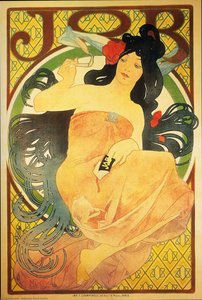
Achieving this balance requires a discerning eye for texture and composition. One might introduce a single, large-scale reproduction of an Art Nouveau masterpiece to serve as a focal point, or perhaps utilize the flowing lines of the movement in custom metalwork or wallpaper. The key is to treat these elements not as relics of the past, but as living components of a modern aesthetic. Much like the way a single piece of fine jewelry completes an ensemble, an Art Nouveau-inspired element adds a layer of depth and narrative to a room.
Ultimately, the enduring appeal of Art Nouveau lies in its ability to evoke emotion and inspire awe. Whether through the tactile brushstrokes of a hand-painted oil reproduction or the delicate curves of a bespoke frame, the movement offers a way to reconnect with the beauty of the natural world. By embracing this legacy, we ensure that the elegance of the Belle Époque continues to flourish in the homes and hearts of future generations.
For those seeking to bring the splendor of art history into their personal collections, ArtsDot.com offers an unparalleled gateway to excellence. From meticulously handcrafted oil reproductions that capture the very soul of the Old Masters to bespoke commissions that allow you to reimagine your own memories through a historical lens, we specialize in preserving human creativity for the modern connoisseur. Whether you are searching for a museum-quality Giclée print or a large-scale mural to transform an architectural space, our commitment to academic precision and artistic integrity ensures that every piece is a timeless investment in beauty.