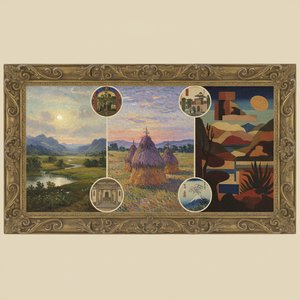
The Evolution of the Landscape: From Symbolic Backdrops to Subjective Truth
 Evocations of Open Air: A Comprehensive Exploration of Outdoor Scenes in Art History
The Dawn of Landscape: From Ancient Worlds to Renaissance Visions Wikipedia: Landscape painting Landscape painting, also known as landscape art, is the depiction in painting of natural scenery such as mountains, valleys, rivers, trees, and forests, e...
For much of art history, the natural world was rarely the protagonist of the canvas. In the grand narratives of the Renaissance and the classical eras, landscapes functioned primarily as stage settings—meticulous, yet secondary, environments designed to frame mythological dramas, religious icons, or aristocratic portraits. These early depictions were often concerned with a sense of permanence and idealized order rather than the raw, unmediated experience of nature. The mountains, valleys, and rivers rendered by ancient masters served as symbolic elements, providing a sense of place that anchored the human drama within a divine or historical context.
As we transitioned through the centuries, particularly with the emergence of the Barbizon school in mid-1s9th-century France, a subtle but profound shift began to occur. Artists like Jean-Baptiste Camille Corot started to move away from the rigid, academic pursuit of idealized landscapes toward a more sincere engagement with the earth. In works such as Fisherman Boating along a Wooded Landscape, we see the seeds of a new philosophy: the landscape was no longer merely a backdrop; it was becoming a vessel for tranquility and emotional resonance. This evolution marked the beginning of a journey where the subject matter moved from the external narrative to the internal, subjective experience of the observer.
En Plein Air: The Revolution of Direct Observation and Portable Innovation
 Capturing Ephemeral Light: Plein Air Painting from Impressionism to Today
The Genesis of 'En Plein Air': From Studio Tradition to Landscape Portraiture Wikipedia: En plein air En plein air (pronounced [ɑ̃ plɛ.n‿ɛʁ]; French for 'outdoors'), or plein-air painting, is the act of painting outdoors. This method contrasts with s...
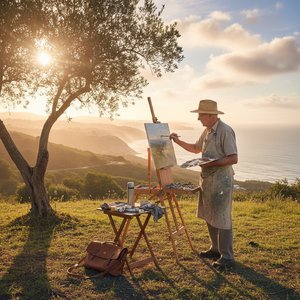
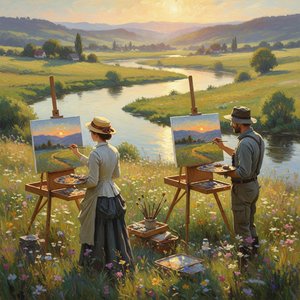
The true radicalism of the Impressionist movement was rooted in a physical relocation of the artist. For centuries, the studio had been the sacred sanctuary of creation, a controlled environment where compositions were meticulously constructed from sketches and memory. However, the advent of en plein air—the practice of painting outdoors—shattered these academic walls. This was not merely a change in scenery; it was a fundamental shift in artistic philosophy that prioritized direct observation over intellectualized interpretation.
This revolution was facilitated by remarkable technological advancements that changed the very chemistry of art. The invention of the collapsible tin paint tube by Winsor & Newton in 1841 was perhaps the most critical catalyst. Before this, artists were burdened with the logistical nightmare of grinding pigments and mixing them with oils on-site. With portable tubes and lightweight easels, masters could now venture deep into the countryside, chasing the fleeting nuances of a passing cloud or the specific glow of a sunset. This newfound mobility allowed for a more immersive and responsive approach, enabling artists to capture the eporiescence of light as it actually unfolded in the open air, rather than recreating it through the filtered lens of studio convention.
Chasing the Sun: The Impressionist Mastery of Light, Color, and Atmosphere
Impressionism was a 19th-century art movement characterised by visible brush strokes, open composition, emphasis on accurate depiction of light in its changing qualities (often accentuating the effects of the passage of time), ordinary subject matter...
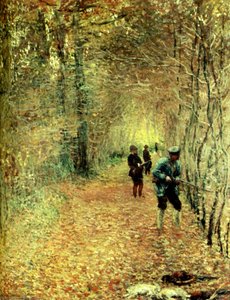
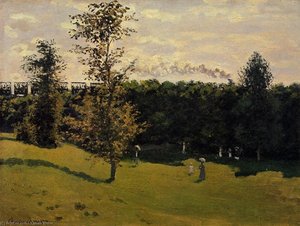
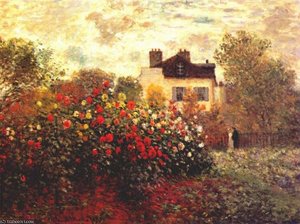
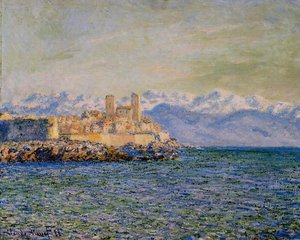
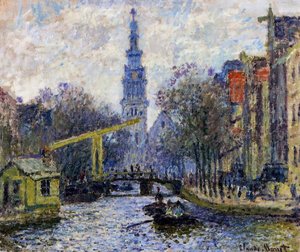
At the heart of Impressionism lies an obsession with the ephemeral. The movement’s pioneers—Claude Monet, Pierre-Auguste Renoir, and Camille Pissarro—sought to document the transient effects of sunlight as it danced across the landscape. They abandoned the traditional use of dark shadows and heavy contours, opting instead for short, "broken" brushstrokes of pure, unmixed color. This technique created a visual vibration on the canvas, simulating the way light actually hits the human retina, making the atmosphere itself feel alive and moving.
To study an Impressionist landscape is to witness a masterclass in color theory. Instead of using black to denote shadow, these artists utilized complementary colors, finding depth in violets, deep blues, and warm ochres. They understood that light is never static; it is a living element that transforms a meadow at dawn into something entirely different by midday. This emphasis on the passage of time turned every painting into a captured moment, an attempt to freeze the very breath of the natural world. The result is a sensory experience that transcends mere representation, inviting the viewer to feel the warmth of the sun and the coolness of the evening mist.
Beyond the Moment: The Transition from Impressionism to Post-Impressionist Structure
 Post-Impressionism
Post-Impressionism (also spelled Postimpressionism) was a predominantly French art movement which developed roughly between 1886 and 1905, from the last Impressionist exhibition to the birth of Fauvism. Post-Impressionism emerged as a reaction agains...
While the Impressionists succeeded in capturing the fleeting moment, a new generation of artists began to feel that something essential had been lost in the pursuit of light: structure. As the movement progressed toward Post-Impressionism between 1886 and 1905, artists like Paul Cézanne, Vincent van Gogh, and Georges Seurat sought to restore a sense of permanence and symbolic depth to the canvas. They were not content with the "triviality" of purely optical impressions; they desired to explore the underlying geometric forms and emotional weight of their subjects.
This period saw a fascinating divergence in technique. Where Seurat utilized the systematic, scientific application of tiny dots through Pointillism, Cézanne worked to make Impressionism something "solid and durable," treating nature as a collection of cylinders, spheres, and cones. This era bridged the gap between the naturalistic depiction of light and the more abstract, expressive qualities of modern art. It was a period of profound experimentation where color began to serve not just the eye, but the soul, often utilizing modified or even unnatural hues to convey deep psychological truths.
The Enduring Legacy: How Impressionistic Landscapes Redefined Human Perception
 Capturing Ephemeral Light: A Comprehensive Exploration of Plein Air Painting's History & Enduring Legacy
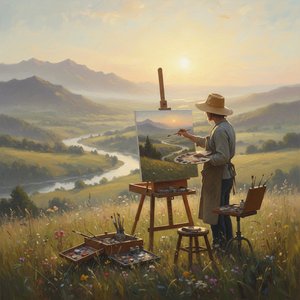
The Dawn of Direct Observation: From Studio Tradition to En Plein Air Wikipedia: En plein air En plein air (pronounced [ɑ̃ plɛ.n‿ɛʁ]; French for 'outdoors'), or plein-air painting, is the act of painting outdoors. This method contrasts with studio pa...
The legacy of these movements continues to resonate in how we perceive the world today. The Impressionist revolution taught us that truth is not found solely in the precise rendering of detail, but in the emotional resonance of an atmosphere. They broke the boundaries between the observer and the observed, teaching us to value the subjective, the momentary, and the beautiful in the ordinary. From the soft, feathery brushstrokes of the Barbizon masters to the vibrant, structural intensity of the Post-Impressionists, landscape art has become a profound dialogue between humanity and the earth.
For the modern collector, owning a piece of this history is an opportunity to bring that sense of light and tranquility into one's own environment. At ArtsDot.com, we specialize in preserving this legacy through exquisite, hand-painted oil reproductions. Our master artists, trained in the finest academic traditions, recreate these iconic works on 100% cotton canvas, ensuring that every visible brushstroke and tonal depth is captured with museum-grade precision. Whether you seek a serene Monet-inspired landscape or a structured Post-Impressionist masterpiece, our collections allow you to inhabit the beauty of the masters.