The Luminous Dawn: Historical Context of the Dutch Golden Age
Dutch Golden AgeThe Dutch Golden Age (Dutch: Gouden Eeuw [ˈɣʌudən ˈeːu, ˈɣʌudə ˈʔeːu]) was a period in the history of the Netherlands which roughly lasted from 1588, when the Dutch Republic was established, to 1672, when the Rampjaar occurred. During this period, th...
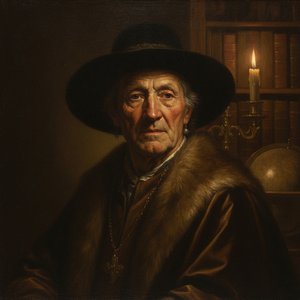
To step into the world of the seventeenth-century Netherlands is to enter a realm where the very air seems heavy with the scent of salt spray, damp earth, and the quiet hum of a nation finding its soul. This was the era of the Dutch Golden Age, a period of unprecedented artistic flourishing born from the crucible of independence and the burgeoning prosperity of the Dutch Republic. Following decades of struggle for liberation from Spanish rule, the Netherlands emerged not merely as a sovereign state, but as the most prosperous nation in Europe, leading the world in trade, science, and, most vibrantly, art. Unlike the grand, often intimidating displays of power found in the royal palaces of France or the religious monuments of Italy, the art of this era was profoundly intimate. It was a revolution of the everyday. As the new Republic moved away from monarchist and Catholic traditions, the demand for religious iconography waned, replaced by a hunger for something more personal—a mirror held up to the lives of the people themselves. This newfound wealth, fueled by global maritime trade through ports like Amsterdam, allowed a burgeoning merchant class to become the new patrons of beauty, seeking canvases that reflected their own domestic virtues and worldly successes.
Chiaroscuro and the Drama of Contrast: Mastering Light and Shadow
 Chiaroscuro & Character: Mastering the Dramatic Light of Dutch Golden Age Art
The Golden Glow: How 17th-Century Prosperity Fueled an Artistic Revolution Illuminating Realism: Exploring the Dutch Golden Age of Painting (1600-1700) The Rise of a Republic: Historical Context & Artistic Flourishing The 17th century Netherlands, a ...
At the heart of this artistic revolution lies a technical mastery of light that continues to captivate the modern eye. The use of
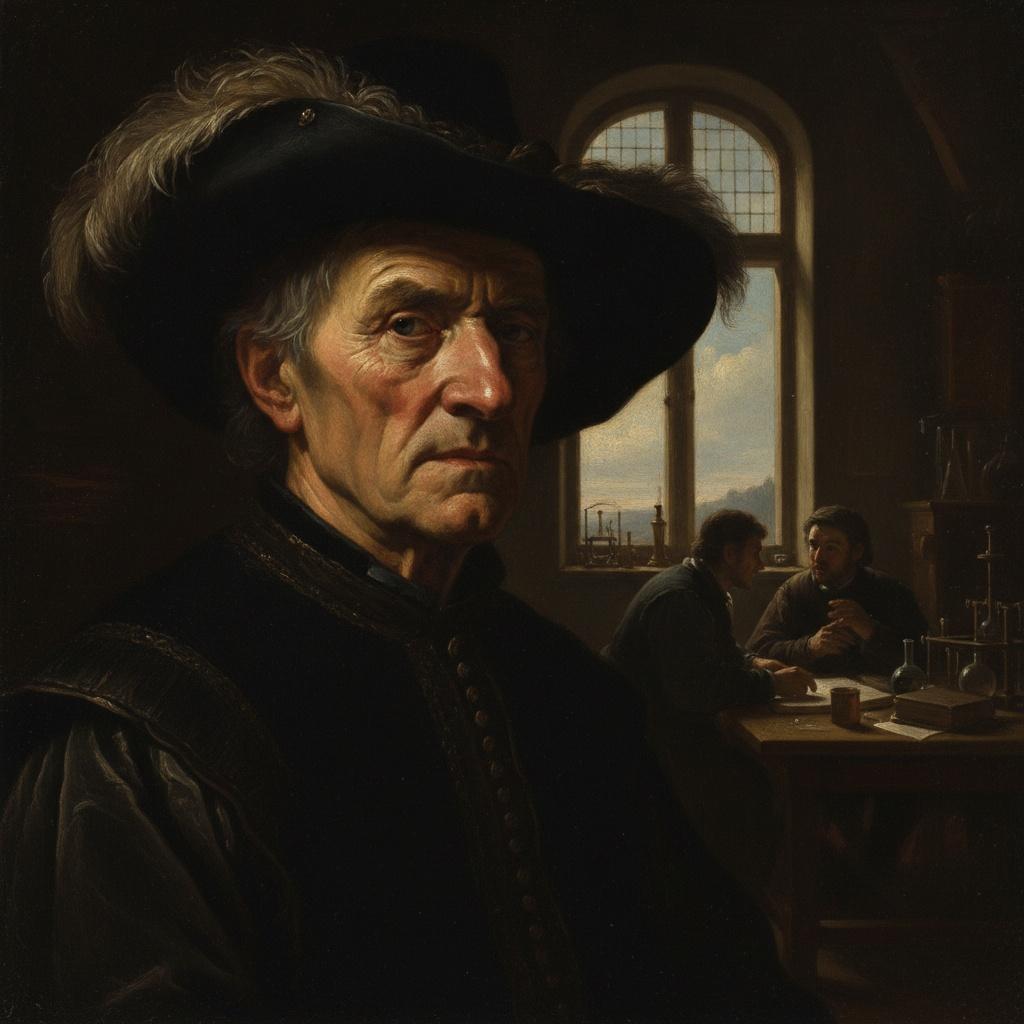
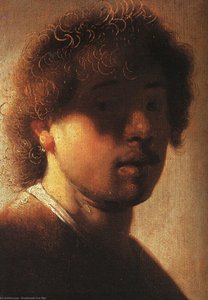
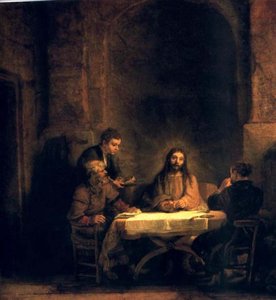
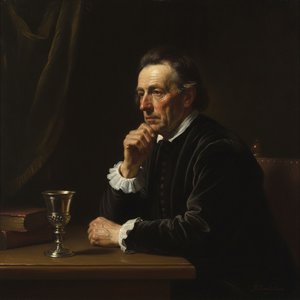
chiaroscuro—the dramatic interplay between intense brightness and deep, enveloping darkness—became the signature language of the era. This was not merely an aesthetic choice but a profound tool for psychological depth. By manipulating the transition from light to shadow, masters could direct the viewer's gaze, creating a sense of three-dimensional volume and theatrical tension. Consider how a single, directional light source might illuminate a face or a hand, leaving the rest of the composition to dissolve into mystery. This technique breathes life into the canvas, imbuing static figures with an inner vitality and a palpable sense of presence. The shadows are never truly empty; they are rich, textured spaces that hold the weight of the unseen, providing a necessary counterpoint to the brilliance of the highlights. It is through this delicate balance of opposites that the Dutch Masters achieved a level of realism that feels less like a depiction and more like an encounter.
Genre Painting and Intimacy: Capturing Everyday Life through Light
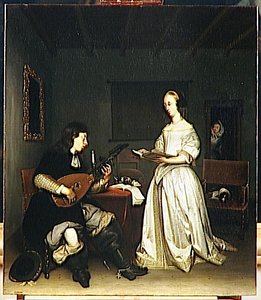 LE DUO CHANTEUSE ET JOUEUR DE LUTH THEORBE
LE DUO CHANTEUSE ET JOUEUR DE LUTH THEORBE – A Window into Dutch Golden Age Intimacy Gerard ter Borch’s “Le Duo: chanteuse et joueur de luth théorbé,” painted around 1669-1670, stands as a quintessential example of Dutch genre painting—a movement tha...
While the landscapes captured the vastness of the nation, the genre painters sought to illuminate the quiet corners of the human experience. These works, often referred to as "scenes of everyday life," elevated the mundane to the extraordinary. In the hands of artists like
Gerard ter Borch, a modestly furnished interior becomes a stage for profound psychological insight. In his masterpiece,
Le Duo: chanteuse et joueur de luth théorbé, we witness a serene domestic tableau where light gently falls upon a man playing the lute and a woman singing. The dark background serves to heighten the visual impact of these central figures, creating an atmosphere of quiet contemplation and artistic expression. Similarly, the works of
Pieter Janssens Elinga offer windows into the heart of Dutch domesticity, where the light captures the order, cleanliness, and quiet labor of a household. These paintings do not demand awe through scale or subject matter; instead, they invite the viewer to linger in the soft, northern light, finding beauty in the subtle nuances of a shared moment or a solitary task.
Atmospheric Landscapes: The Internetic of Sky, Water, and Natural Light
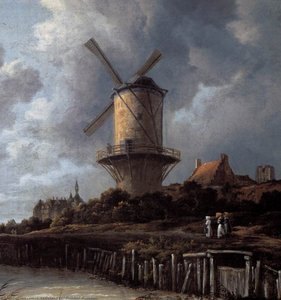 The Windmill at Wijk bij Duurstede (detail)
The Windmill at Wijk bij Duurstede: A Dutch Masterpiece of Light and Atmosphere Jacob Isaackszoon van Ruysdael’s “The Windmill at Wijk bij Duurstede” isn't merely a depiction of a rural scene; it’s a profound meditation on light, space, and the endur...
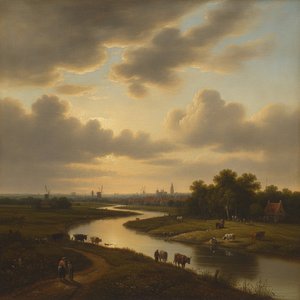
The Dutch landscape is perhaps the most enduring emblem of the Golden Age, characterized by a profound meditation on space and atmosphere. Artists such as
Jacob Isaackszoon van Ruisdael mastered the ability to render the vast, dramatic skies that define the Low Countries. In works like
The Windmill at Wijk bij Duurstede, the sky is not merely a backdrop but a living protagonist, filled with layers of muted blues and grays that seem to press down upon the earth. The use of light in these landscapes creates a palpable sense of depth; strong directional lighting casts long shadows across fields and rivers, defining the forms of windmills and trees with architectural precision. There is a rhythmic quality to these compositions, where the winding river or a patchwork of fields provides a grounding counterpoint to the expansive heavens. Even in more maritime scenes, such as
Abraham Storck’s depictions of whalers near Spitsbergen, the light serves to capture the biting cold and the immense scale of exploration, turning a scene of industry into an emblem of national pride and atmospheric wonder.
Texture and Materiality: The Painterly Brilliance of the Dutch Masters
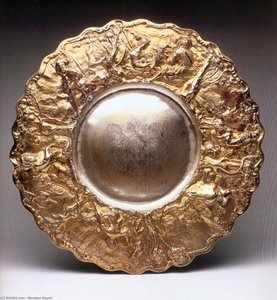 nicolaes keyser
Nicolaes Keyser: The Golden Weaver of Delft Nicolaes Keyser, a name often whispered in the halls of Dutch art history, remains an enigmatic figure despite his undeniable brilliance. Active primarily during the mid-17th century, he stands as one of De...
Beyond the grand themes of light and landscape, the true genius of the Dutch Masters resides in their meticulous attention to texture and materiality. To look closely at a period-correct painting is to witness a symphony of surfaces. There is the shimmering, almost metallic quality of silk and satin, as seen in the portraits by
Nicolaes Keyser, whose background as a goldsmith informed his ability to render light reflecting off opulent fabrics. One can almost feel the weight of the heavy drapery or the smoothness of polished wood. This tactile realism is achieved through sophisticated layering of oils—using specific pigments like safflower for whites to prevent yellowing and fine glazes to create depth. The visible brushstrokes, particularly in the more expressive works, provide a sense of movement and life that a flat print can never replicate. It is this physical presence—the
impasto, the subtle cracks of age, and the rich tonal range—that allows these artworks to transcend their era, offering a sensory experience that remains as potent today as it was in the seventeenth century.
Preserving the Golden Glow: Collecting and Appreciating Masterpiece Reproductions
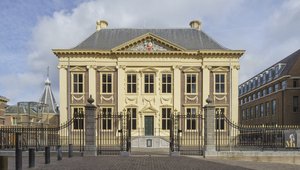 Royal Picture Gallery Mauritshuis
A Palace of Light and Shadow: The Mauritshuis Nestled beside the tranquil waters of the Hofvijver pond in The Hague, the Mauritshuis stands as a breathtaking testament to the golden age of Dutch artistic brilliance and royal ambition. This architectu...
For the modern enthusiast, the desire to surround oneself with the brilliance of the Dutch Golden Age is a pursuit of timeless elegance. While the original masterpieces reside in the hallowed halls of museums like the
Mauritshuis or the
Frans Hals Museum, the legacy of this era can be brought into the contemporary home through high-quality, hand-painted reproductions. At
ArtsDot.com, we believe that fine art should be accessible to all who appreciate its history and soul. Our artists, holding degrees from prestigious academies, specialize in recreating these works on 100% cotton canvas, ensuring that the physical texture, the depth of shadow, and the luminous highlights are preserved with museum-grade accuracy. Unlike mere digital prints, our handmade oil reproductions offer the tactile depth of real paint, allowing you to experience the true essence of the Dutch Masters. Whether you seek a large-scale landscape to anchor a room or an intimate genre scene for a study, these works serve as lasting legacies of human creativity, meticulously crafted to endure for generations.