The Genesis of Surrealism: From Dadaist Rebellion to the Freudian Revolution
 Beyond Reality: A Definitive Guide to the Dreamlike World of Surrealism and Its Artistic Legacy
The Genesis of Dreams: Unveiling the Origins of Surrealism To understand the profound impact of Surrealism, one must first look toward the fractured landscape of the early twentieth century. Emerging from the ashes of World War I and the disillusionm...
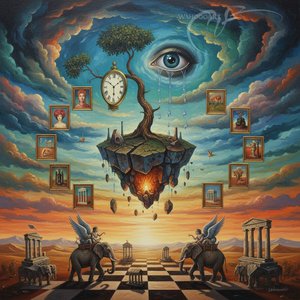
To understand the profound impact of Surrealism, one must first look toward the fractured landscape of the early twentieth century. Emerging from the ashes of World War I and the pervasive disillusionment of the Dada movement, Surrealism was far more than a mere aesthetic choice; it was a revolutionary attempt to liberate the human experience from the suffocating constraints of logic and societal norms. The movement sought to dismantle the rational structures that had failed to prevent global catastrophe, looking instead toward the untamed territories of the mind. This period of profound cultural upheaval, marked by rapid industrialization and the growing shadow of war, fostered an atmosphere where the boundaries between the waking world and the dream state began to blur.
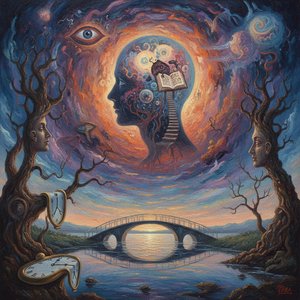
The intellectual engine driving this revolution was heavily influenced by the burgeoning field of psychoanalysis, particularly the groundbreaking theories of Sigmund Freud. The Surrealists borrowed extensively from Freudian techniques, seeking to bring to the surface the subconscious thoughts and repressed desires that lay beneath the veneer of civilization. By embracing the irrational, artists aimed to bridge the gap between the conscious mind and the hidden depths of the psyche, creating a new reality—a surreality—where contradictions between dream and reality could coexist without conflict. This was not merely an artistic experiment but a philosophical rebellion against a world that had become too rigid, too predictable, and ultimately, too broken.
Architects of the Unconscious: Analyzing the Visions of Dalí and Magritte
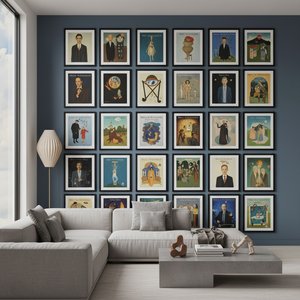 René Magritte's Masterpieces: 25 Surrealist Paintings for Art Lovers | ArtsDot
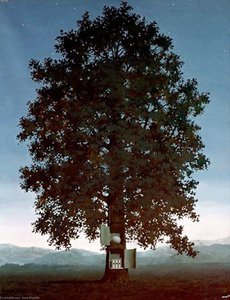
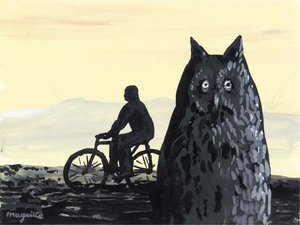
Introduction To embark on a journey through the top 25 artworks of René Magritte is to enter a realm where the familiar dissolves into the enigmatic, and reality itself becomes a question mark. These paintings are not merely images; they are portals—...
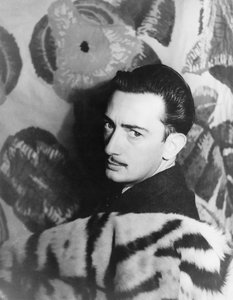
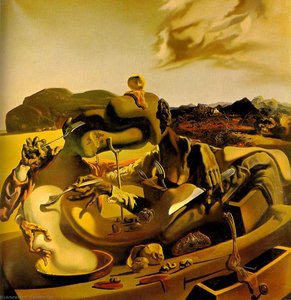
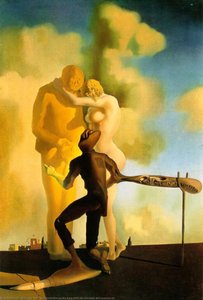
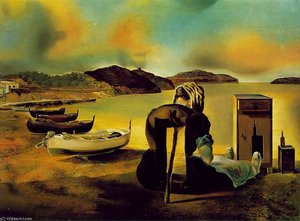
Among the pantheon of Surrealist masters, few names resonate with as much authority as Salvador Dalí and René Magritte. Dalí, born in the sun-drenched Catalan town of Figueres, became the movement's most recognizable icon through his unparalleled ability to render the impossible with startling precision. His unique contribution lay in what he termed the paranoiac-critical method—a deliberate cultivation of a hallucinatory state that allowed him to access and translate the imagery of his own subconscious onto canvas. In works such as Autumn Cannibalism, Dalí invites viewers into a world where reality and fantasy intertwine, utilizing meticulous detail to make the most unsettling distortions feel tangibly real.
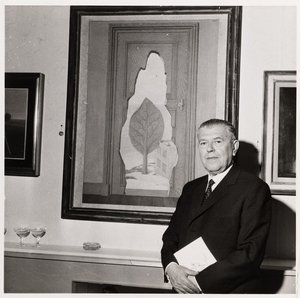
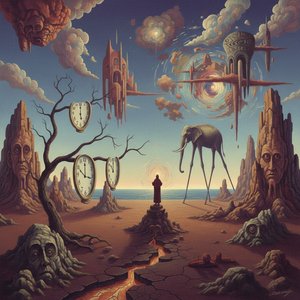
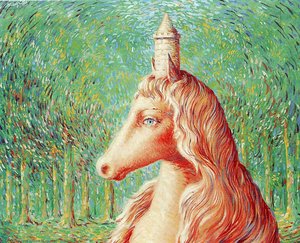
While Dalí explored the visceral and the grotesque, René Magritte approached the subconscious through the lens of the enigmatic and the familiar. A Belgian master, Magritte’s canvases serve as portals into a world where reality itself becomes a question mark. His paintings are meticulously crafted to unsettle our perceptions, challenging the very foundations of what we believe to be true by presenting ordinary objects in extraordinary, illogical contexts. Where Dalí might present a melting clock or a bleeding figure to evoke anxiety, Magritte might present a man with an apple obscuring his face, forcing the viewer to confront the gap between an object and its representation. Together, these two architects of the unconscious provided the movement with its dual capacity for both psychological terror and philosophical wonder.
The Visual Language of Dreams: Symbolism, Automatism, and Distorted Reality
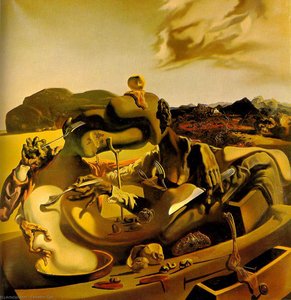 Autumn Cannibalism
Exploring Surrealism: A Masterpiece by Salvador Dalí "Autumn Cannibalism," created in 1936 by the renowned surrealist artist Salvador Dalí, is a captivating exploration of the subconscious mind. This intricate artwork invites viewers into a dreamlike...
The aesthetic power of Surrealism is rooted in a highly specialized visual vocabulary, characterized by the use of symbolism, automatism, and the deliberate manipulation of space. Techniques such as automatism—the practice of creating art without conscious control—were employed to bypass rational thought and allow the hand to follow the dictates of the subconscious. This often resulted in fluid, organic forms that seemed to emerge from a primordial state of being. Conversely, many artists utilized a hyper-realistic technique to depict impossible scenes, a method that heightened the sense of the uncanny by rendering the irrational with the clarity of a photograph.
Symbolism within these works often serves as a bridge to deeper psychological truths. In Dalí’s Figure with Flag, for instance, the presence of a starfish can be interpreted as a symbol of regeneration and the merging of organic and inorganic forms, mirroring the movement's preoccupation with blurring boundaries. Similarly, his use of distorted perspectives and illogical juxtapositions—such as placing a flag as a necklace around a human figure—serves to fragment logical order and invite the viewer to participate in the construction of meaning. This language of dissociation and metamorphosis ensures that every brushstroke carries the weight of an underlying, often unsettling, narrative.
Modern Echoes: The Evolution from Classic Surrealism to Lowbrow and Afro-Surrealism
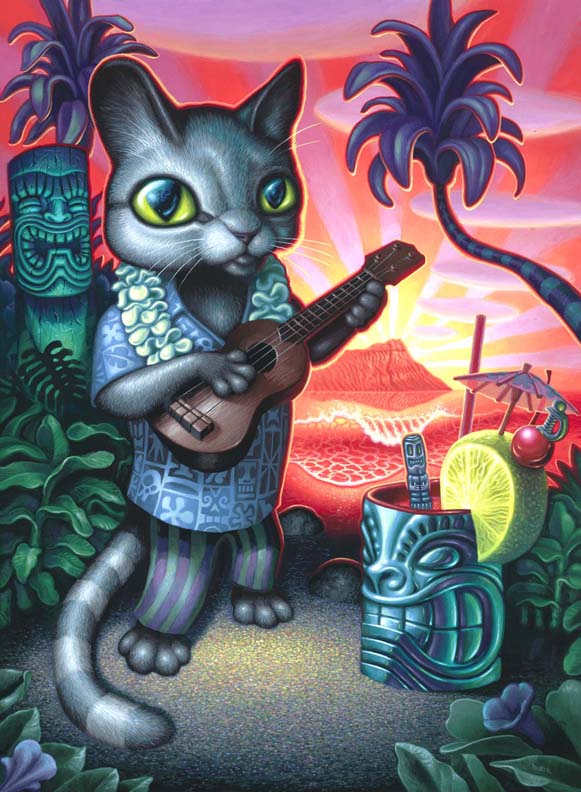 Lowbrow (art movement)
Lowbrow, or lowbrow art, is an underground visual art movement that arose in the Los Angeles, California area in the late 1960s. It is a populist art movement with its cultural roots in underground comix, punk music, tiki culture, graffiti, and hot-r...
The legacy of the original Surrealist movement did not remain confined to the early twentieth century; rather, it evolved and branched into new, culturally distinct directions. In the late 1960s, the Lowbrow movement, also known as Pop Surrealism, emerged from the underground scenes of Los Angeles. Rooted in punk music, graffiti, and street culture, Lowbrow art maintains the Surrealist sense of humor—often impish or sarcastic—while embracing a more populist, accessible aesthetic. It defies traditional "high art" rules by incorporating elements from comic books and hot-rod culture, proving that the impulse to explore the absurd is a universal human trait.
Furthermore, the emergence of Afro-Surrealism in the 1970s provided a profound new dimension to the movement. As articulated by figures like Amiri Baraka and later expanded upon by contemporary theorists, Afro-Surrealism views the lived experience of those within the African diaspora as inherently surreal due to the contradictions and absurdities of their social reality. This branch of the movement does not merely mimic the aesthetics of Dalí or Magritte but uses the Surrealist framework to address themes of identity, history, and resistance. These modern evolutions demonstrate that the core tenets of Surrealism—the confrontation with irrationality and the exploration of the hidden self—remain vital tools for navigating the complexities of the contemporary world.
Preserving the Dreamscape: Bringing Masterpiece Surrealism into the Modern Home
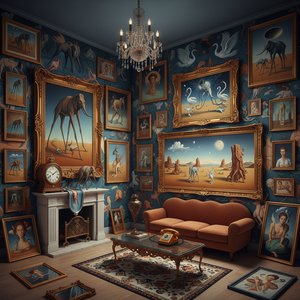 Salvador Dalí's Masterpieces: 25 Surrealist Visions for Your Home | ArtsDot
Introduction To embark on a journey through the top 25 artworks of Salvador Dalí is to enter a realm where dreams and reality intertwine, logic dissolves into absurdity, and the subconscious takes breathtaking form. These paintings are not merely ima...
For the discerning collector or student of art history, owning a piece of this movement is akin to possessing a window into the human soul. The enduring power of these works lies in their ability to provoke thought and evoke deep emotional responses long after the initial viewing. Whether it is the architectural hallucination of the Dalí Theatre and Museum or the quiet enigmas found in a Magritte print, Surrealism offers an unparalleled intellectual and aesthetic experience.
At ArtsDot.com, we believe that such profound beauty should be accessible to all. We specialize in creating museum-quality reproductions that honor the technical brilliance of the original masters. Our Handmade Oil Reproductions are meticulously painted by skilled artists on 100% cotton canvas, capturing the visible brushstrokes and deep tonal ranges that digital prints simply cannot replicate. For those seeking a more accessible way to celebrate these visions, our high-quality Giclée prints offer archival durability and stunning accuracy.
Whether you wish to transform a modern space with a large-scale multi-panel Surrealist set or commission a custom piece that reimagines a personal memory in the style of Dalí, our team is dedicated to preserving the integrity of art history. We invite you to explore our vast collection and bring the transformative power of the subconscious into your own environment.