


The Rejection of Reason: The Intellectual Origins of Romanticism
 The Evocative Brushstroke: Exploring Emotion, Individuality & the Sublime in Romanticism's Artistic Landscape
The Dawn of Feeling: Romanticism's Rejection of Enlightenment Rationality The late 18th century witnessed a seismic shift in intellectual and artistic currents, a turning away from the cool precision of the Enlightenment towards a fervent embrace of ...
To understand the seismic shift that occurred at the dawn of the nineteenth century, one must first envision the rigid, sunlit world of the Enlightenment. For decades, European thought had been anchored in the cool precision of logic, scientific inquiry, and the structured symmetry of Neoclassicism. It was an era that celebrated the measurable, the observable, and the rational. However, as the industrial revolution began to reshape the landscape with burgeoning factories and crowded, alienating cities, a profound sense of spiritual discontent began to take root. The clinical order of the age started to feel insufficient for capturing the true complexity of the human experience.
The birth of Romanticism was not merely an aesthetic alternative; it was a fundamental re-evaluation of what it meant to be human. Influenced by thinkers such as Jean-Jacques Rousseau, who championed subjectivity and argued that genuine understanding stems from personal feeling rather than objective analysis, the movement sought to reclaim the soul from the grip of pure intellect. This was a passionate rebellion against the perceived coldness of modernity. Artists began to turn away from the mathematical perfection of classical forms, seeking instead refuge in the past—particularly a reimagined medieval era characterized by chivalry and organic community—and in the untamed reaches of the human psyche.
This intellectual transition paved the way for an art that prioritized intuition over instruction. It was a period where the artist’s internal landscape became just as significant as the external world, allowing for a new kind of intimacy between the viewer and the canvas. As we look back on this era, we see the first tremors of a movement that would forever change our relationship with beauty, moving it away from mere representation toward a deeper, more visceral truth.
Defining the Sublime: Nature’s Untamed Power and Human Vulnerability
 Sublime (philosophy)
In aesthetics, the sublime (from Latin sublīmis 'uplifted, lofty, exalted, etc.; elevated, raised') is the quality of greatness, whether physical, moral, intellectual, metaphysical, aesthetic, spiritual, or artistic. The term especially refers to a g...
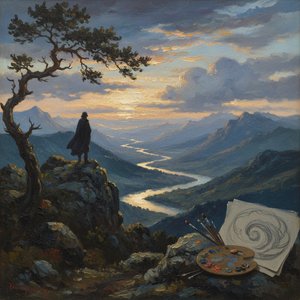
At the very heart of the Romantic spirit lies one of the most breathtaking concepts in all of art history: the Sublime. While beauty often implies harmony and pleasure, the Sublime evokes something far more complex—an overwhelming sensation of awe inextricably mixed with terror. It is the aesthetic experience of confronting the infinite, a realization of greatness that exists beyond all possibility of calculation or measurement. In Romantic art, nature ceased to be a mere backdrop for human activity; it became a powerful, unpredictable protagonist capable of cataclysmic extremes.
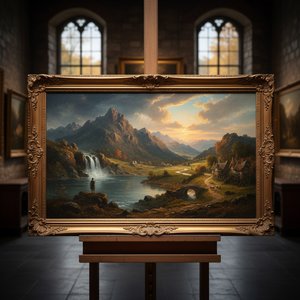
The Sublime is found in the roar of a storm-tossed sea, the haunting mist that obscures a distant mountain peak, and the terrifying majesty of an erupting volcano. Through these depictions, artists explored the profound vulnerability of human life when set against the backdrop of an unpredictable universe. This fascination with the irrational and the dramatic allowed for a mastery of chaos. When we gaze upon works that capture such scale, we are invited to experience the tension between our own fragility and the eternal, unbridute power of the natural world.
This pursuit of the extraordinary often led artists to utilize light and shadow in ways that felt almost supernatural. By embracing the shadows and the chaotic, Romantic painters created a window into the mysterious and the unseen. This era did not merely seek to depict the world as it appeared to the eye, but as it was felt by the heart, capturing those fleeting moments of spiritual yearning that occur when we stand on the precip de of the infinite.
Masters of Emotion: Exploring the Works of Delacroix, Friedrich, and Bryullov
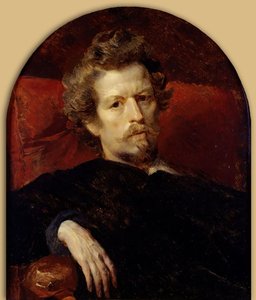 karl pavlovich bryullov
Karl Pavlovich Bryullov: A Life in Romanticism Early Life and Training Karl Pavlovich Bryullov (born Karl Briullo) was born on December 23, 1799, in Saint Petersburg, Russia. His father, Pavel Ivanovich Briullo, was an academician, woodcarver, and en...
The execution of these profound themes required a new vocabulary of brushwork and color. Eugène Delacroix, a titan of French Romanticism, revolutionized the use of pigment to breathe life into movement. Unlike his contemporaries who favored clean, controlled lines, Delacroix utilized texture and vibrant color to create a sense of kinetic energy. In masterpieces such as The Death of Sardanapalus, one witnesses a deliberate descent into chaos, where every stroke contributes to a narrative of tragic excess and overwhelming sensory input.
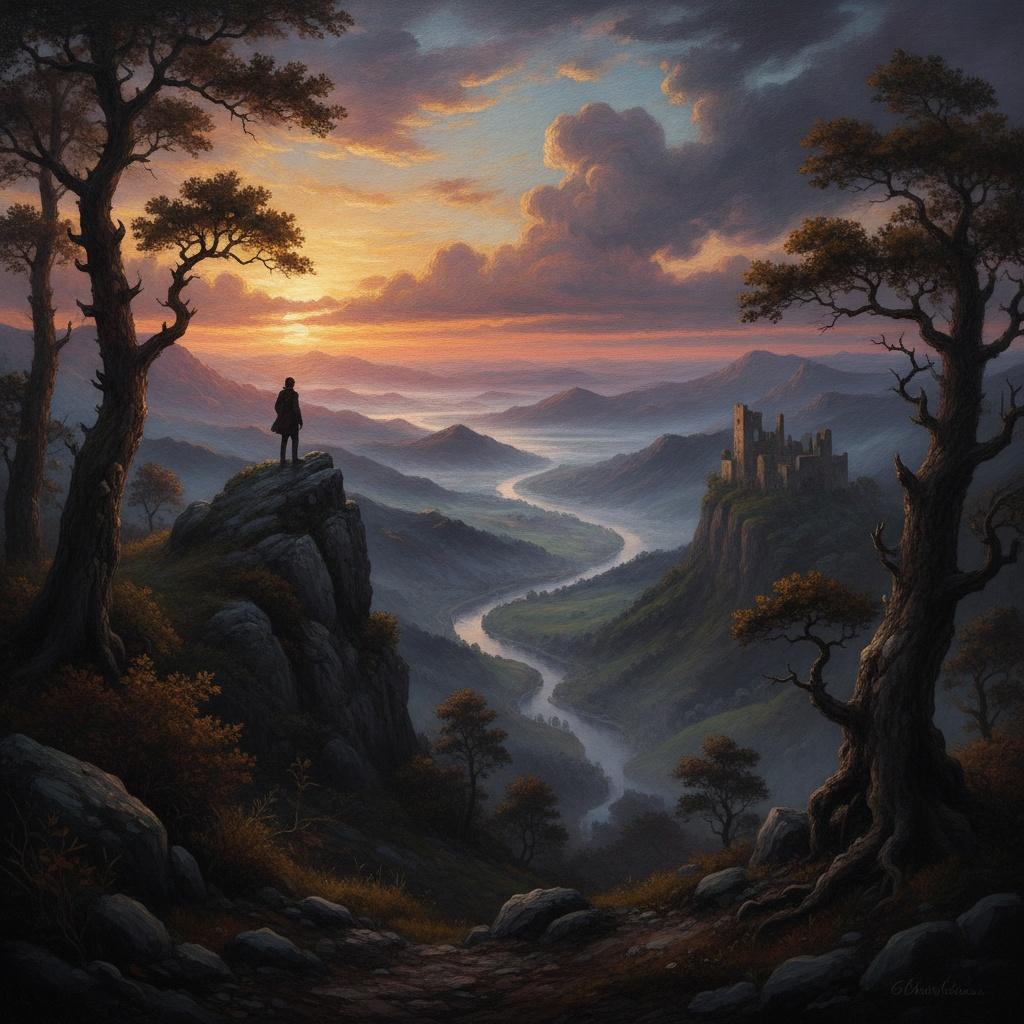
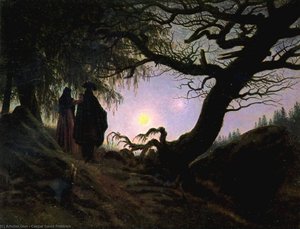
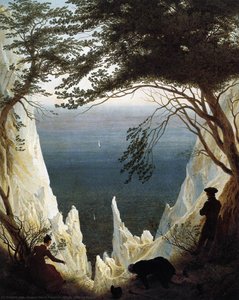
In contrast to the turbulent human dramas of the French school, the German tradition, led by figures like Caspar David Friedrich, found the divine in the stillness of the landscape. For Friedrich, the contemplation of nature served as a gateway to understanding the human psyche. His works often feature solitary figures contemplating vast, misty horizons, inviting the viewer to share in a moment of profound spiritual introspection. Similarly, the polymath Carl Gustav Carus brought a unique scientific clarity to the movement; his deep understanding of botany and geology allowed him to see the divine within the anatomical precision of a leaf or the shifting mists of a riverbank.
The movement also found powerful expression in the East, through artists like Karl Pavlovich Bryullov. His monumental work, The Last Day of Pompeii, serves as a pinnacle of Romantic historical painting, blending technical brilliance with an intense emotional charge. Through the diverse hands of these masters, we see that while their subjects varied from the anatomical to the atmospheric, their goal remained singular: to use the canvas as a vessel for longing, awe, and even despair.
The Internal Landscape: Subjectivity and the Cult of Individual Experience
Key characteristics include a profound appreciation for nature, an exaltation of emotion over reason, and a focus on the inner self and personal experiences.
Perhaps the most enduring legacy of Romanticism is the elevation of the individual. Before this era, the artist was often viewed as a detached observer, a recorder of history or a decorator of religious dogma. Romanticism transformed the artist into a protagonist engaged in a direct, often agonizing, dialogue with existence itself. This shift placed an unprecedented emphasis on subjectivity—the idea that truth is found within the unique perspective and personal experience of the individual.
This era celebrated the "inner self," making the artist's dreams, passions, and even their darkest impulses worthy of monumental scale. The boundaries between the viewer and the canvas began to dissolve as artists sought to evoke a shared emotional resonance. Every brushstroke became an expression of the artist's convictions, inviting the observer to step into a world where the heart dictates the narrative. This focus on the personal allowed for a new level of intimacy in portraiture and landscape alike, as the external world was increasingly used as a metaphor for the internal state.
This cult of individuality also fostered a fascination with the exotic and the historical, as artists looked to distant lands and ancient legends to find themes that resonated with their sense of longing. By prioritizing the subjective, Romanticism provided a sanctuary of feeling in an increasingly fragmented world, ensuring that the human soul would always have a place of prominence in the grand tapestry of art history.
Romanticism's Legacy: From Historical Drama to the Modern Emotional Lens
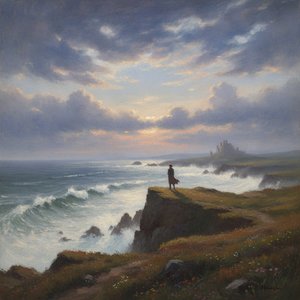 The Soul of Romanticism: Embracing Emotion and the Sublime in Impressionist Masterpieces
The Heartbeat of Emotion: Defining the Romantic Spirit To step into the world of Romanticism is to surrender oneself to the profound, often turbulent, currents of human feeling. Unlike the rigid structures of Neoclassicism that preceded it, Romantici...
As we reflect on the trajectory of art history, it is impossible to overstate the impact of the Romantic movement. It broke the shackles of rigid Neoclassicism and set the stage for the expressive freedom that would define much of modern art. The movement's emphasis on color, texture, and emotional intensity paved the way for the Impressionists, who would later take the study of light to even more radical conclusions. The Romantic preoccupation with the artist's unique vision remains a cornerstone of contemporary creative practice.
Today, we continue to find solace in these evocative works. In an age often dominated by digital precision and rapid-fire information, the raw, unadulterated emotions captured in Romantic masterpieces offer a much-needed connection to our own humanity. Whether it is through the turbulent skies of a storm or the quiet tension of a historical tragedy, the movement continues to challenge us to look inward and to find meaning in the profound, the mysterious, and the beautiful.
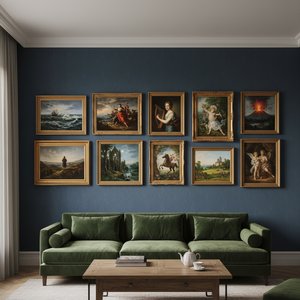
For those seeking to bring this enduring passion into their own lives, ArtsDot.com offers a curated collection of these canonical masterpieces. We specialize in high-quality, hand-painted oil reproductions that capture the very essence of the Romantic spirit—from the visible, textured brushstrokes of Delacroix to the atmospheric depths of Friedrich. Our master artists use traditional techniques on 100% cotton canvas to ensure that every piece serves as a faithful, tactile tribute to the legends of the past. Whether you are a student of history or a dedicated collector, our mission is to make these profound windows into the human soul accessible to your home.