The Florentine Roots & Early Life of Piero della Francesca
Renaissance art (1350 – 1620) is the painting, sculpture, and decorative arts of the period of European history known as the Renaissance, which emerged as a distinct style in Italy in about AD 1400, in parallel with developments which occurred in phi...
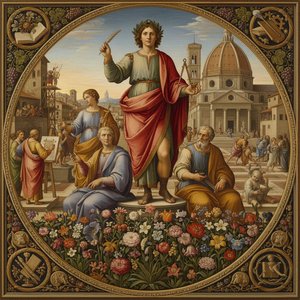
Piero della Francesca, a name synonymous with serene beauty and intellectual rigor, emerged from the artistic ferment of early Renaissance Italy. Born around 1415 in Borgo Sansepolcro, a small Tuscan town near Perugia, his beginnings were steeped not in the bustling workshops of Florence—though he would undoubtedly be influenced by its innovations—but in a more provincial, contemplative environment. His father, Benedetto de’ Franceschi, died before his birth, and Piero adopted his mother’s name, “Francesca,” a subtle indication perhaps of the close bond that shaped his early life. Unlike many artists of the period who benefited from established guild training, Piero's education was somewhat unconventional. He likely received initial instruction from local Sienese masters active in Sansepolcro, absorbing their traditions before venturing further afield. This formative period instilled in him a meticulous attention to detail and a restrained palette that would become hallmarks of his style. While the precise details of his early training remain elusive, it’s clear that Piero possessed an innate curiosity—a thirst for knowledge that extended beyond mere artistic technique and into the realms of mathematics and geometry.
Mastering Perspective: A Revolutionary Approach to Space and Form
Linear or point-projection perspective (from Latin perspicere 'to see through') is one of two types of graphical projection perspective in the graphic arts; the other is parallel projection. Linear perspective is an approximate representation, gener...
The Renaissance was a period obsessed with rediscovering classical antiquity, and with this came a renewed interest in representing the world realistically. Central to this endeavor was the development of linear perspective—a system for creating the illusion of depth on a two-dimensional surface. While not the *inventor* of perspective, Piero della Francesca became its most eloquent exponent. He didn’t simply employ perspective as a technical tool; he elevated it to a philosophical principle. His understanding wasn't merely optical but deeply rooted in mathematical theory. He meticulously calculated vanishing points and recession lines, constructing spaces that felt both logically coherent and profoundly harmonious. Consider his “Perspective Study of a Chalice,” a seemingly simple exercise that reveals the artist’s profound grasp of geometric principles. It is not just a depiction of an object; it's a demonstration of order, reason, and the underlying structure of reality. This mastery allowed him to create paintings where figures inhabit spaces with a palpable sense of weight and presence, moving beyond the flat, decorative style of earlier medieval art.
Divine Proportion and Mathematical Harmony in Piero’s Compositions
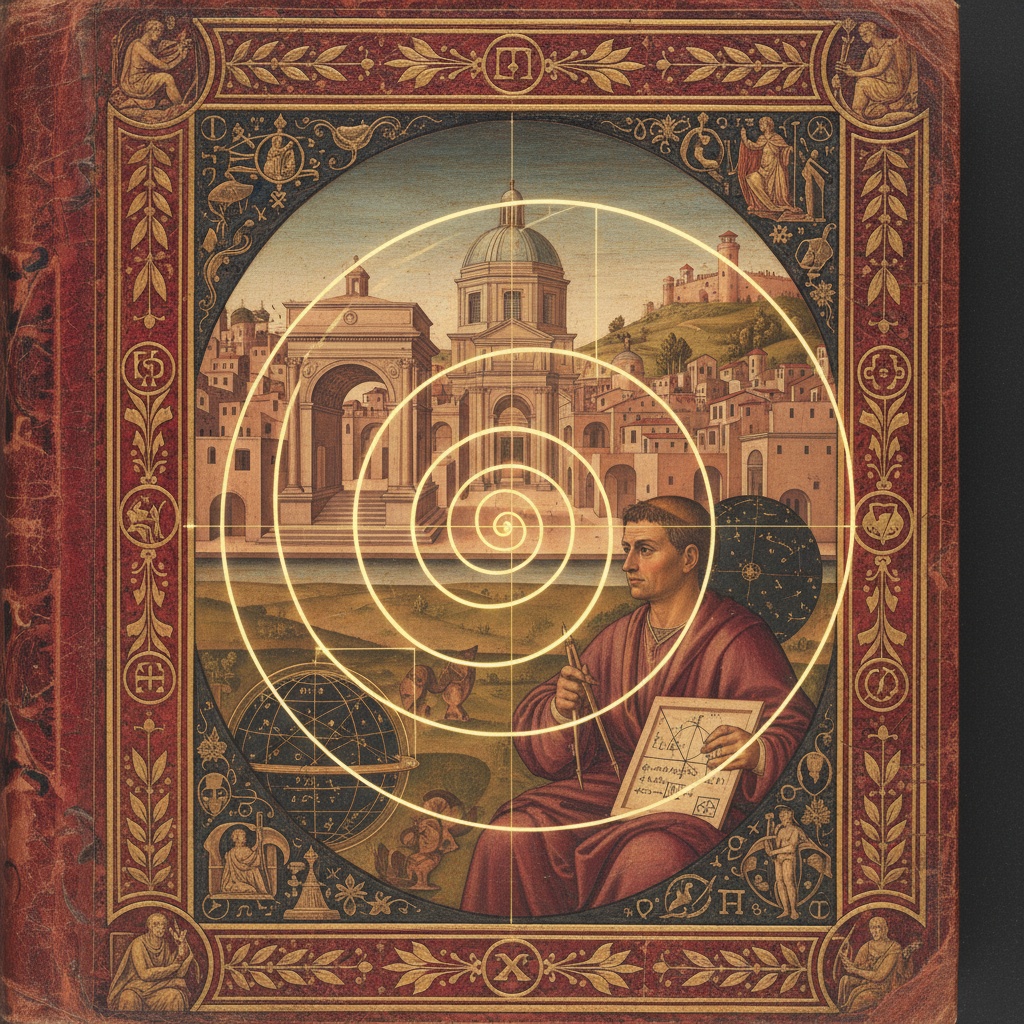
Piero's fascination extended beyond linear perspective to encompass the concept of divine proportion—the belief that mathematical ratios held the key to aesthetic beauty. He believed that these proportions, found throughout nature, were a reflection of God’s order and could be applied to art to achieve perfect harmony. His paintings are replete with subtle geometric relationships – golden rectangles, carefully balanced compositions, and figures arranged according to precise numerical sequences. This isn't immediately apparent; it doesn’t shout for attention. Instead, it operates on a subconscious level, contributing to the overall sense of serenity and balance that characterizes his work. The “Polyptych of the Misericordia,” commissioned in 1445, exemplifies this approach. Despite taking seventeen years to complete, the polyptych showcases Piero’s deliberate arrangement of figures within a geometrically structured space, creating a visual rhythm that draws the viewer's eye and reinforces the painting’s spiritual message. The gold background, though dictated by the patron’s wishes, didn’t deter him from utilizing form and figure placement to achieve his desired effect.
Iconography and Narrative: Exploring the Spiritual Depth of His Paintings
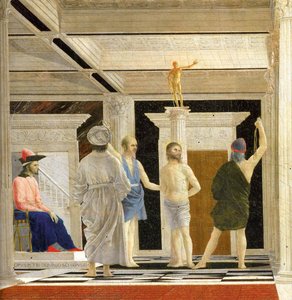
While Piero della Francesca is celebrated for his technical prowess, it's crucial to remember that he was first and foremost a religious painter. His works are not simply exercises in perspective or mathematical harmony; they are deeply imbued with spiritual meaning. He often chose subjects from biblical narratives—the Annunciation, the Baptism of Christ, the Resurrection—and approached them with a unique blend of reverence and intellectual curiosity. His figures aren’t given to dramatic displays of emotion; instead, they possess a quiet dignity and contemplative stillness. Take “The Flagellation of Christ,” for example. The scene is rendered with remarkable clarity and precision, yet it lacks the overt emotionalism found in earlier depictions. This restraint isn't coldness but rather an invitation to contemplation—a call for viewers to engage with the theological implications of the event. He often placed his narratives within meticulously constructed architectural settings, further emphasizing the order and rationality of God’s creation. The use of light is also significant; it illuminates key figures and creates a sense of depth and atmosphere.
Piero's Legacy: Influence on Subsequent Artists & Modern Reappraisal
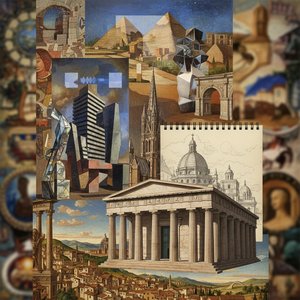
Despite his undeniable genius, Piero della Francesca remained relatively obscure for centuries after his death in 1492. He didn’t establish a large workshop or attract numerous followers during his lifetime. However, his work experienced a remarkable revival in the 20th century, captivating artists and art historians alike. Georges Seurat, fascinated by his pointillist technique, found inspiration in Piero's meticulous application of color and form. Giorgio de Chirico, a pioneer of Surrealism, acknowledged Piero’s influence on his own architectural landscapes. Even Balthus and Philip Guston drew upon the artist’s serene compositions and enigmatic figures. Today, Piero della Francesca is recognized as one of the most important painters of the early Renaissance—a master who seamlessly blended artistic skill with intellectual rigor. His paintings continue to resonate with viewers, offering a glimpse into a world where beauty, order, and spirituality converge.
Key Works by Piero della Francesca: A Closer Look
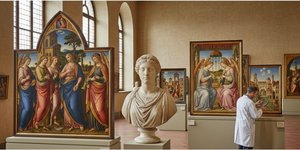
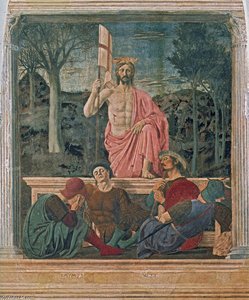
To truly appreciate Piero’s genius, one must examine his key works in detail. The Baptism of Christ, perhaps his most famous painting, showcases his mastery of perspective and light. The angel's graceful form and the serene landscape create a sense of ethereal beauty. The Flagellation of Christ, with its stark architectural setting and restrained emotionality, invites contemplation on the nature of suffering and redemption. The Brera Madonna, exemplifies his use of geometric harmony and balanced composition. And finally, The Resurrection, a monumental fresco, demonstrates his ability to create figures that possess both physical weight and spiritual presence. These paintings—and many others—are not merely historical artifacts; they are timeless expressions of human creativity and faith.