The Enigma of Banksy: Anonymity, Authorship & the Cult of Personality
Street art is visual art created in public locations for public visibility. It has been associated with the terms "independent art", "post-graffiti", "neo-graffiti" and guerrilla art. Street art has evolved from the early forms of defiant graffiti in...
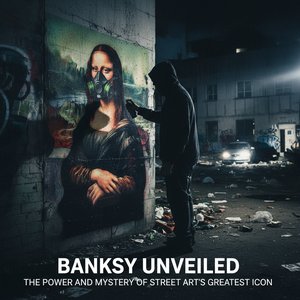
Banksy is not a name so much as a phenomenon. A cipher wrapped in layers of urban grit and political defiance, the artist’s very identity remains shrouded in mystery – a deliberate act that has become inextricably linked to their work. This anonymity isn't merely a publicity stunt; it’s fundamental to understanding Banksy’s critique of authorship, commodification, and the art world itself. The question of “who is Banksy?” consistently overshadows the *what* and the *why*, forcing viewers to confront the inherent value we place on an artist’s persona versus the artwork's intrinsic message. Early speculation centered around Bristolian graffiti artists, fueled by geographic clues embedded within their pieces, but the lack of definitive proof only amplifies the legend. This deliberate obfuscation allows Banksy to operate outside the traditional constraints of artistic celebrity, focusing attention solely on the work’s potent commentary rather than the individual behind it. The cult of personality that has nonetheless sprung up around the name is a fascinating paradox – a testament to the power of art to transcend its creator and become a symbol in itself.
From Street Vandalism to Global Icon: The Evolution of Banksy's Artistic Style
Guerrilla art is a street art movement that first emerged in the UK, but has since spread around the world and is now established in most countries that already had developed graffiti scenes. In fact, it owes so much to the early graffiti movement, i...
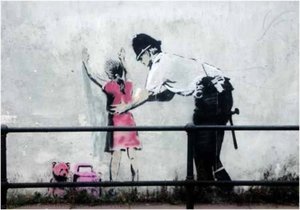
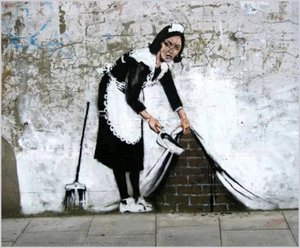
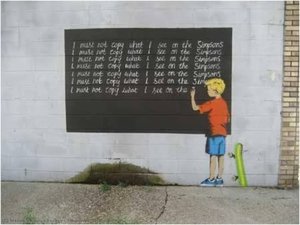
The origins of Banksy lie firmly rooted in the Bristol underground graffiti scene of the 1990s. Initially employing freehand spray paint, the artist quickly adopted stencils as a means of rapid execution and wider dissemination of their messages. This shift wasn’t simply about efficiency; it was a strategic move towards accessibility. Stencils allowed for the quick replication of images in public spaces, bypassing gallery walls and directly engaging with the urban landscape. Early works were characterized by anti-establishment slogans and darkly humorous imagery – rats, pigeons, police figures engaged in absurd acts – often deployed in locations that heightened their satirical impact. The evolution from these early interventions to more complex compositions demonstrates a growing technical skill and conceptual depth. Pieces like “Girl with Balloon,” initially a simple yet poignant image, have become globally recognized symbols of hope and resilience. The artist’s willingness to experiment with different mediums – sculpture, film, even entire installations – further solidifies their position as a versatile and innovative force in contemporary art. The self-shredding artwork at Sotheby's in 2018 wasn’t just a stunt; it was a pointed commentary on the art market’s inherent absurdity and the fleeting nature of value.
Activism as Aesthetic: Deconstructing Power Structures Through Visual Commentary
 Wikipedia: Activism
Activism consists of efforts to promote, impede, direct or intervene in social, political, economic or environmental reform with the desire to make changes in society toward a perceived common good. Forms of activism range from mandate building in a ...
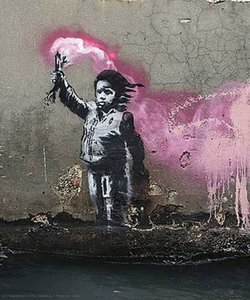
Banksy’s work is fundamentally rooted in activism. It isn't simply *about* political issues; it *is* a form of political action. The artist consistently targets themes of war, capitalism, consumerism, and social injustice with biting wit and unflinching honesty. The use of irony and juxtaposition is central to their approach – images of peace doves juxtaposed with military hardware, children playing amidst the ruins of conflict, romantic scenes overlaid with contemporary anxieties. This deliberate dissonance forces viewers to confront uncomfortable truths and question established narratives. The artist’s interventions in politically charged locations—the West Bank barrier, Gaza Strip, Calais refugee camp—are particularly potent examples of art as direct protest. These aren't passive observations; they are active attempts to disrupt the status quo and spark dialogue. Consider the impact of works addressing the plight of refugees, or those critiquing the arms trade – these pieces transcend mere aesthetic value, becoming powerful symbols of resistance and solidarity. The influence of street art pioneers like Blek le Rat is evident in Banksy’s technique, but their work distinguishes itself through a uniquely focused political lens.
Banksy and the Art Market: Commodification, Authenticity & Institutional Critique
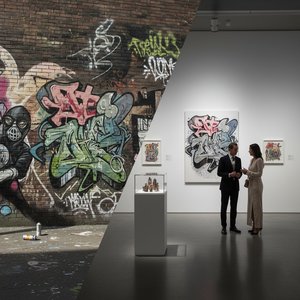
The relationship between Banksy and the established art market is fraught with tension. While initially rejecting traditional gallery systems, the artist’s works have inevitably become highly sought-after commodities, fetching exorbitant prices at auction. This inherent contradiction – an anti-capitalist artist whose work fuels capitalist speculation – lies at the heart of much critical debate surrounding Banksy's legacy. The artist has repeatedly challenged the notion of authenticity through unauthorized prints and interventions, blurring the lines between original artwork and reproduction. The Dismaland bemusement park in 2015 was a particularly scathing critique of consumer culture and the commodification of dissent. By creating a dystopian parody of Disneyland, Banksy exposed the hypocrisy inherent in turning even protest into entertainment. The self-shredding “Girl with Balloon” at Sotheby’s further underscored this tension, questioning the very foundations of art valuation and ownership. The artist's playful subversion of copyright laws – releasing images for free download while simultaneously selling limited edition prints – highlights a complex relationship with intellectual property and artistic control.
The Legacy of Guerrilla Art: Influence on Contemporary Street Art Movements
Banksy didn’t invent guerrilla art, but they undeniably popularized it. Drawing inspiration from the early graffiti movement and artists like Keith Haring, Banksy elevated street art from a marginalized subculture to a globally recognized form of artistic expression. The artist's success has paved the way for countless other street artists, inspiring a new generation to use public spaces as canvases for social commentary. Guerrilla art, by its very nature, is ephemeral and often illegal, making documentation crucial. The rise of social media has played a significant role in disseminating images of street art, allowing works to reach wider audiences than ever before. The influence of Banksy can be seen in the proliferation of politically charged murals around the world, addressing issues ranging from climate change to racial injustice. Cities like São Paulo and Paris have become hubs for vibrant street art scenes, fostering a sense of community and artistic innovation. The Women’s Forum Street Art Project in Paris, celebrating female leadership through powerful murals, exemplifies this growing trend of socially conscious urban expression.
Beyond the Stencil: Banksy's Enduring Socio-Political Relevance in a Changing World
Despite – or perhaps because of – their anonymity, Banksy’s work continues to resonate with audiences worldwide. The artist’s ability to tap into universal themes of injustice, inequality, and hope ensures their enduring relevance in an increasingly complex political landscape. The use of simple yet powerful imagery allows for broad interpretation and cross-cultural understanding. While some critics dismiss Banksy's work as simplistic or sensationalist, its undeniable impact on public discourse cannot be ignored. The artist’s interventions force viewers to confront uncomfortable truths about the world around them, prompting dialogue and challenging established norms. As political polarization intensifies and social unrest grows, Banksy’s message of resistance and solidarity becomes increasingly vital. From their early graffiti interventions in Bristol to their large-scale installations today, Banksy has consistently used art as a tool for change. Explore ArtsDot.com's extensive collection of contemporary art and discover how artists continue to push boundaries and challenge conventions. Whether you view them as a subversive genius or a cynical provocateur, Banksy’s legacy as one of the most influential artists of our time is undeniable.