

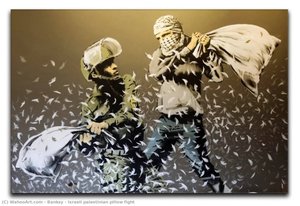
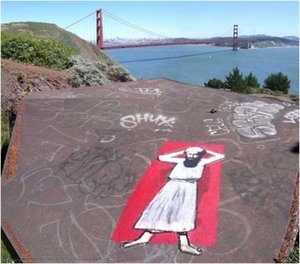
The Rise of Street Art: From Defiance to Discourse
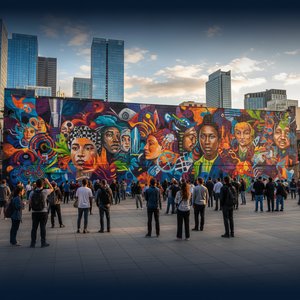 Beyond the Gallery Walls: The Rise of Contemporary Street Art
Explore the captivating world of contemporary street art! Discover its history, influential artists like Banksy, and evolving role in urban culture. Expert insights & analysis.
Before Banksy, the walls spoke a different language – one largely of territorial marking, youthful rebellion, and fleeting expressions of discontent. Graffiti’s origins are deeply rooted in ancient practices of inscription, but its modern iteration, born in the 1960s New York City subway system, was primarily about visibility, claiming space, and establishing identity. This early form, while undeniably energetic, often lacked the layered conceptual depth that would come to define street art as a distinct artistic movement. The shift wasn’t immediate; it was a gradual evolution fueled by artists seeking more than just recognition – they sought dialogue. The late 70s and 80s saw figures like Jean-Michel Basquiat and Keith Haring blurring the lines between gallery and street, but even then, a certain rawness prevailed. The true turning point arrived with a generation who understood that the power of art lay not just in its aesthetic qualities, but in its ability to disrupt, provoke, and challenge established norms. This is where Banksy enters the narrative, not as a founder, but as a catalyst – an anonymous figure who redefined the possibilities of public intervention.
Banksy's Signature Style: Stencil Technique & Visual Language
Stencil graffiti is a form of graffiti that makes use of stencils made out of paper, cardboard, or other media to create an image or text that is easily reproducible. The desired design is cut out of the selected medium and then the image is transfer...
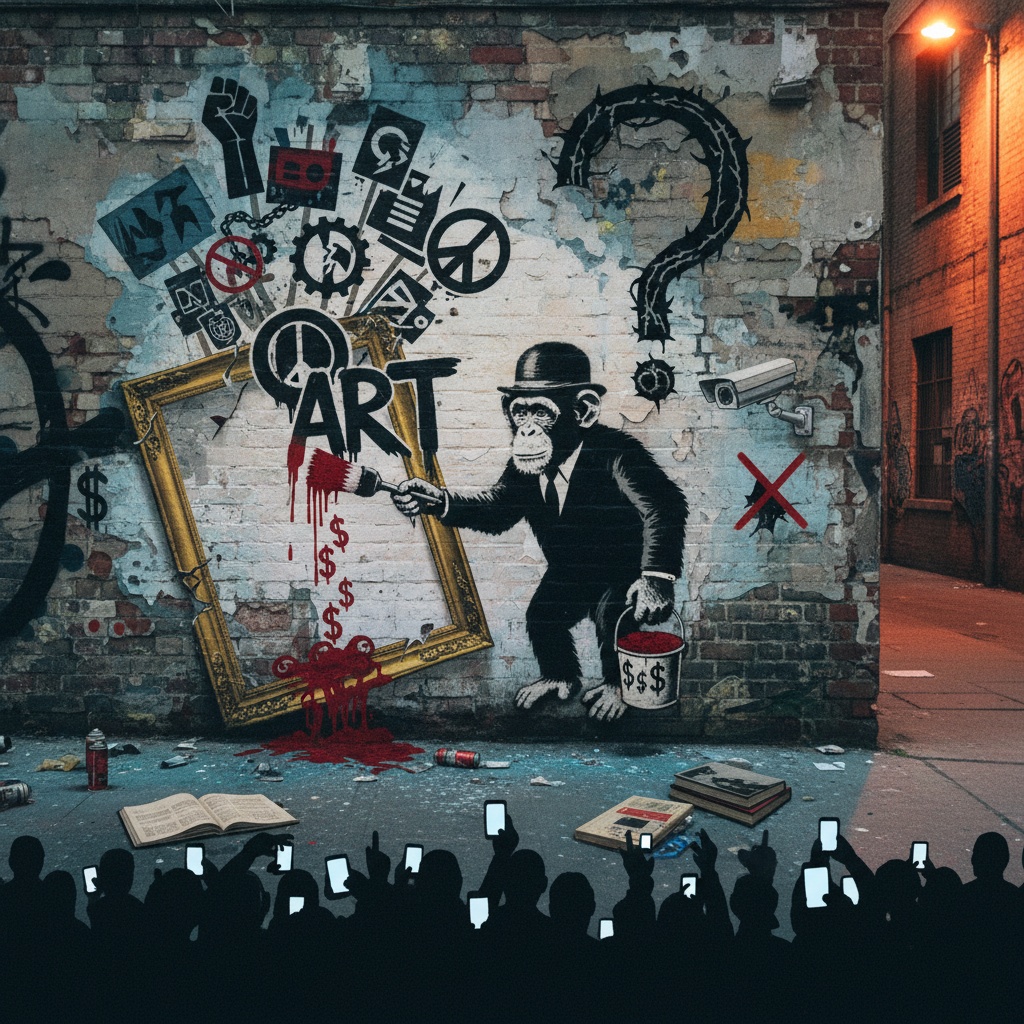
The defining characteristic of Banksy’s work isn’t simply *what* he says, but *how* he says it. The stencil technique, while not entirely novel, became his signature – a method perfectly suited to the demands of rapid execution and clandestine operation. Unlike traditional painting which requires time and deliberate layering, stencils allow for quick reproduction, enabling Banksy to deploy images across multiple locations with remarkable efficiency. This speed is crucial; it’s an art born of immediacy, responding directly to current events and societal tensions. But beyond the practicality, the stencil itself lends a unique aesthetic quality – a crispness, a graphic clarity that cuts through the visual noise of the urban landscape. His imagery often employs stark contrasts: innocence juxtaposed with brutality, hope battling despair, authority undermined by absurdity. The recurring motifs—rats, pigeons, police figures, children—are not arbitrary; they function as potent symbols, loaded with layers of meaning and open to multiple interpretations. Consider ‘Gorilla Pink Mask,’ a vibrant piece that immediately draws the eye, forcing contemplation on power dynamics and societal control through its striking color palette and iconic imagery. The simplicity is deceptive; beneath the surface lies a complex commentary on the human condition.
Political Commentary as Artistic Medium: Key Works & Themes
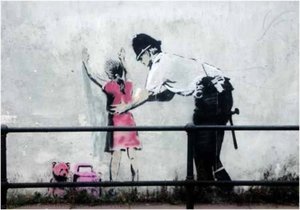 Policeman searching girl
Discover 'Policeman Searching Girl,' a powerful street art stencil by Banksy. This socially conscious urban artwork features bold contrasts, minimalistic style, and impactful themes of authority and innocence. Perfect for collectors.
Banksy’s art isn't merely aesthetically pleasing; it’s fundamentally political, functioning as a visual form of protest and social critique. His work consistently tackles issues of war, consumerism, inequality, and the abuse of power. ‘Policeman Searching Girl,’ for example, is a masterclass in minimalist storytelling, conveying a powerful message about authority and innocence with just a few carefully placed lines. The image’s impact lies in its ambiguity – is the police officer protecting the girl or threatening her? This deliberate lack of resolution forces viewers to confront their own biases and assumptions. Similarly, ‘Simpsons Blackboard,’ while seemingly playful, offers a biting satire on media influence and originality, questioning the very nature of artistic creation in a mass-produced culture. He doesn’t offer solutions; he poses questions, igniting conversations and challenging the status quo. This refusal to provide easy answers is central to his enduring appeal. His art isn't about telling people what to think, but about prompting them *to* think.
The Commercialization of Rebellion: Banksy and the Art Market
The irony inherent in an anti-establishment artist becoming a highly sought-after commodity is not lost on anyone – least of all, perhaps, on Banksy himself. His work’s meteoric rise in value has sparked considerable debate about the relationship between art, commerce, and authenticity. Initially dismissed as vandalism, his pieces now command exorbitant prices at auction, attracting collectors who once derided street art as a transient form. This paradox raises fundamental questions: can subversive art truly exist within the confines of the market? Does its meaning change when it’s divorced from its original context? Banksy has actively engaged with this tension, staging unexpected interventions – like shredding his own artwork after it was sold at auction—challenging the very structures that have embraced him. This self-awareness is a key component of his artistic practice; he understands the power dynamics at play and uses them to further his critique.
Legacy and Influence: Contemporary Artists Inspired by Banksy
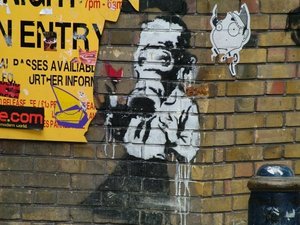 Banksy
Discover Banksy's iconic street art: satirical stencils & politically charged commentary on war, society & culture. Explore the anonymous England-based artist's impactful work.
Banksy’s impact extends far beyond his own prolific output. He has inspired a new generation of street artists, emboldening them to use public space as a platform for social commentary and artistic expression. His work legitimized the medium, elevating it from a marginalized subculture to a respected form of art with global reach. Artists like C215, known for their striking stencil portraits, and Shepard Fairey, whose ‘Hope’ poster became an iconic symbol of Barack Obama's 2008 presidential campaign, owe a clear debt to Banksy’s pioneering spirit. But his influence isn’t limited to stylistic imitation; it’s about the broader ethos – the willingness to challenge conventions, question authority, and engage directly with the public. He demonstrated that art doesn’t need to be confined to galleries or museums to have meaning and impact. It can exist in the streets, accessible to everyone, sparking dialogue and prompting change.
Collecting Banksy: Authenticity, Value, and Ethical Considerations
For collectors interested in acquiring Banksy's work, navigating the market requires careful consideration. Authenticity is paramount; given the prevalence of forgeries and unauthorized reproductions, provenance – the documented history of ownership—is crucial. Working with reputable galleries and auction houses is essential. Value fluctuates significantly based on rarity, subject matter, condition, and historical significance. However, beyond financial considerations, ethical questions arise. Is it right to profit from art that was originally intended as a public intervention? The debate continues, but responsible collecting involves acknowledging the artist’s original intent and supporting initiatives that promote access to art for all. At ArtsDot.com, we offer high-quality reproductions of Banksy's iconic works, allowing you to appreciate his artistry without contributing to the complexities of the primary market. We provide detailed information about each piece, its historical context, and the techniques employed, ensuring a transparent and informed collecting experience. Explore our collection today and discover the power and beauty of Banksy’s art—a testament to the enduring relevance of social commentary in a rapidly changing world.