


The Renaissance Flourishing: Patronage & the Visual Language of Status
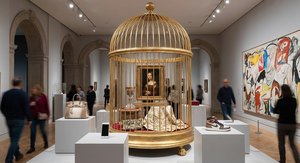
Luxury arts of the Renaissance included gold, precious stones, woven narratives, armor, music, and were used by elites to maintain social order.
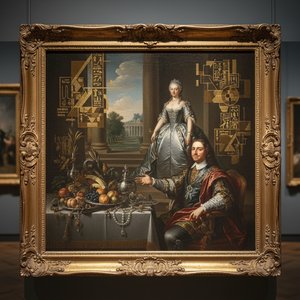
From the glimmering gold leaf adorning medieval icons to the lavish silks draped upon Renaissance nobility, art has long served as a potent visual language for expressing wealth and power. This fascination isn’t merely aesthetic; it's deeply interwoven with societal structures, political ambition, and the very human desire to immortalize status. The objects we create—and how we depict them—reveal not only artistic skill but also the values, beliefs, and hierarchies of a given era. To truly understand a masterpiece is to recognize its context: who commissioned it, why, and what message were they striving to convey? The Italian Renaissance witnessed an unprecedented flourishing of artistic patronage, fueled by the burgeoning merchant class and powerful families like the Medici. This wasn’t simply about acquiring beautiful objects; it was a strategic investment in social capital. Gold, precious stones, and intricately woven tapestries weren't merely decorative elements—they were tangible symbols of authority and divine favor. The very act of commissioning an artist demonstrated one’s financial prowess and refined taste. Consider the luxury arts detailed in scholarly resources like those from the Getty Museum; these included not only visual art but also armor, music, and elaborate courtly rituals – all designed to maintain a carefully constructed social order. Patrons weren't passive recipients of artwork; they actively shaped its content and style, often inserting themselves or their ancestors into scenes to solidify their lineage and legacy.
Beyond Portraits: Still Life, Material Culture, and the Display of Affluence
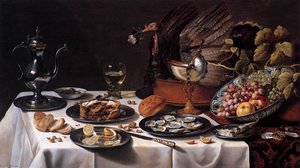 Still-life With Turkey-pie
Indulge in the opulence of Pieter Claesz Soutman's 'Still-life With Turkey-pie.' This Dutch Golden Age masterpiece showcases lavish details & rich colors, hinting at prosperity and celebration.
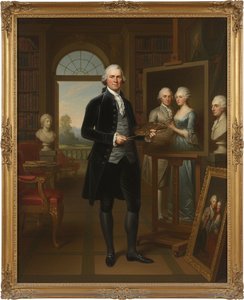
The Renaissance portrait evolved beyond mere likeness; it became a carefully constructed performance of status and power. Artists like Raphael masterfully captured not just the physical features of their sitters, but also their inner character and social standing. A painting wasn’t simply of someone—it was about them, meticulously conveying their wealth, education, and political connections. Observe a work such as “Portrait of a Man” by Raphael; the subtle details – the quality of the fabric, the cut of his clothing, even the expression in his eyes – all contribute to an impression of refined nobility. This emphasis on realism wasn’t accidental. It reflected a growing humanist interest in celebrating individual achievement and uniqueness. The use of perspective and chiaroscuro further enhanced these portraits, creating a sense of depth and lifelikeness that had never been seen before. These weren't just images; they were statements. However, the representation of wealth extended far beyond portraiture. Still life paintings began to feature opulent objects – gleaming silver, exotic fruits, and rare books – as symbols of affluence and intellectual pursuits. Pieter Claesz Soutman’s “Still-life With Turkey-pie” exemplifies this trend, showcasing lavish details and rich colors that hint at prosperity and celebration. These weren’t random choices; each item carried specific connotations.
Symbolism & Subtext: Decoding Hidden Meanings in Wealth Representation
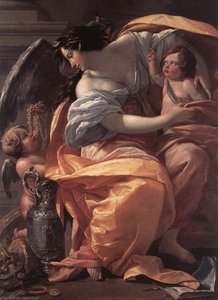 Allegory of Wealth
Simon Vouet's 'Allegory of Wealth' (1630) depicts opulent abundance & virtue. Explore the lavish Baroque scene, symbolic details, and a lady’s devotion amidst riches – a masterpiece of French art.
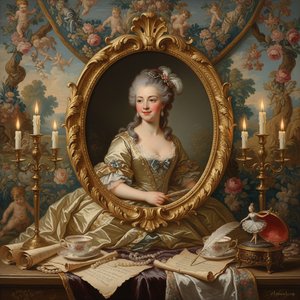
A glass vase might signify refinement, while a musical instrument could represent cultural sophistication. Even the materials themselves held meaning: velvet denoted luxury, while marble evoked classical grandeur. This fascination with material culture is evident throughout Renaissance art, reflecting a broader societal obsession with possessions and their ability to elevate one’s social standing. As Google Arts & Culture highlights, art has historically been inaccessible to the poor precisely because of its inherent cost; it was a domain reserved for those who could afford to commission or acquire such lavish creations. But the display wasn't merely about *showing* wealth—it was also about subtly encoding it. Artists often employed symbolism to convey hidden meanings and reinforce the patron's status. Certain colors, animals, or objects were associated with specific virtues or social positions. For example, a red cloak might signify power and authority, while a dog could represent loyalty and fidelity. The careful arrangement of elements within a composition wasn’t arbitrary; it was often laden with allegorical significance. Simon Vouet's “Allegory of Wealth” (1630) provides a compelling example, depicting opulent abundance alongside symbolic details that speak to virtue and devotion amidst riches.
The Global Baroque: Expanding Definitions of Opulence Across Cultures
As we move into the Baroque period (c. 1585-1750), the concept of opulence becomes even more complex, extending beyond Europe’s borders through colonization and trade. The forms and surfaces of Baroque artworks from across the globe reflect countless permutations, as well as overlapping histories and cultural encounters. Diego Velázquez’s “Las Meninas” presents us with an apparently candid snapshot of daily life at the Spanish court, where one of the various European monarchies exerted political power through the absolute power of the King. The monumental painting combines many pictorial genres at once, some of them developing specifically in the baroque period. The spread of Catholicism and trade led to a movement of materials, objects, and artists across distant geographies. Spain’s vast territories allowed for the inclusion of exotic items – like the *búcaro* featured in “Las Meninas” – connecting the artwork to themes of colonization and globalization. This interconnectedness is key to understanding the Global Baroque; it wasn't a monolithic style but rather a diverse phenomenon shaped by local contexts and artistic traditions.
Luxury Arts as Social Order: Maintaining Hierarchy Through Artistic Expression
Material culture itself—the physical objects and architecture of a society—is deeply intertwined with the maintenance of social order. The field considers artifacts in relation to their specific cultural and historic contexts, communities and belief systems. As outlined by scholars, luxury arts of the Renaissance included gold, precious stones, woven narratives, armor, music, and were used by elites to maintain social order. These objects weren’t simply beautiful; they were tools for reinforcing power structures and legitimizing authority. The commissioning of art became a way to demonstrate one's position within society and to project an image of stability and control. The intricate details and high-quality materials served as visual markers of distinction, separating the elite from the common populace. This is further exemplified in still life paintings by Juriaen van Streeck, which showcase opulent objects—fruit, porcelain, and silver—reflecting Dutch Golden Age wealth and symbolism. The very act of collecting these items was a statement about one’s social standing and refined taste.
Collecting Legacy: Investing in Art as a Timeless Symbol of Wealth and Taste
Today, the allure of opulence in art endures, not only for its aesthetic beauty but also for its historical significance and investment potential. Acquiring masterpieces—or high-quality reproductions from ArtsDot.com—is a way to connect with the past, celebrate artistic achievement, and preserve cultural heritage. The enduring appeal of still life painting, as explored in ArtsDot’s articles, lies not only in its visual richness but also in its ability to reflect societal values and historical contexts. For discerning collectors, art represents more than just a financial asset; it's a tangible symbol of wealth, taste, and intellectual curiosity. Whether you are drawn to the grandeur of Renaissance portraiture or the intricate details of Baroque still life, ArtsDot.com offers expert guidance and museum-quality reproductions to help you create a sophisticated and timeless collection. From free art consultations to custom reproduction services, we empower you to curate a space that reflects your unique vision and appreciation for the world’s great artworks.