
The Post-War Shift: From Abstract Expressionist Emotion to Pop Iconography
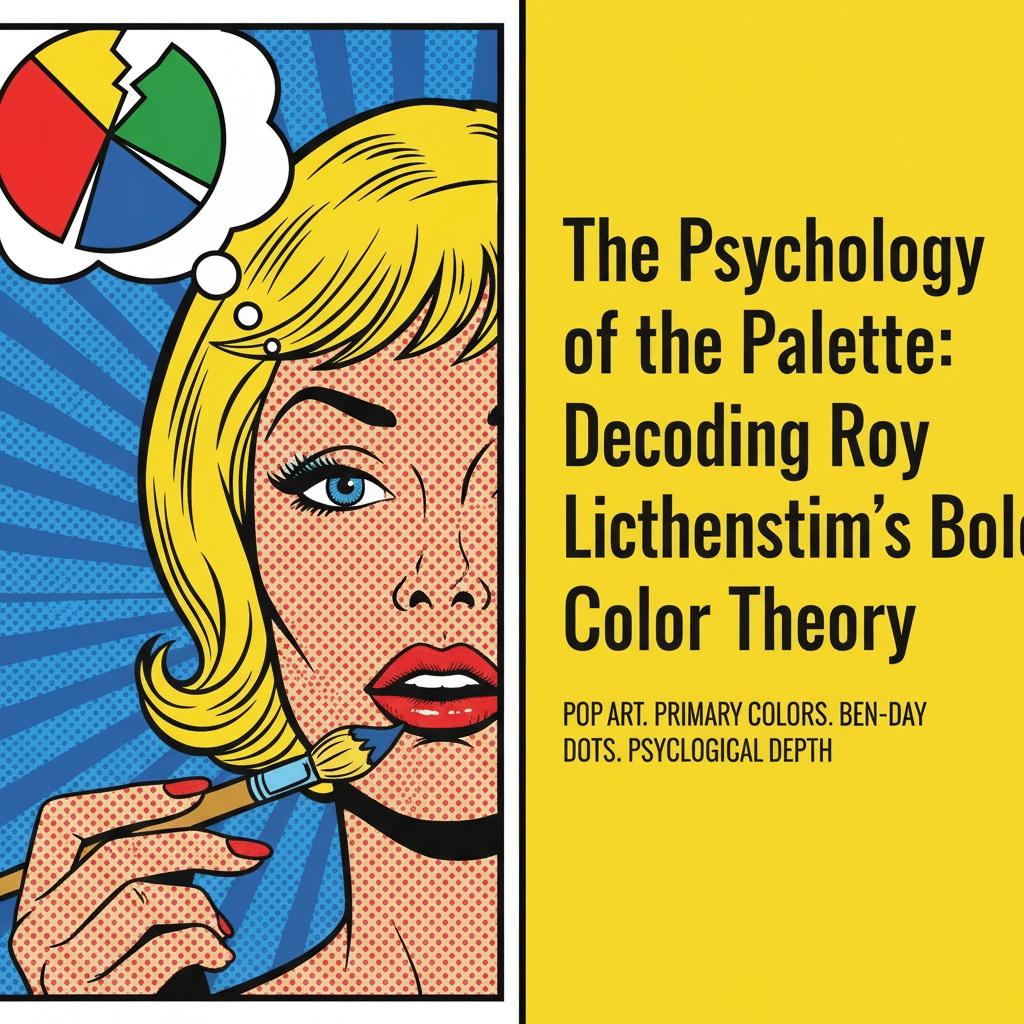
 The Psychology of the Palette: Decoding Roy Lichtenstein’s Bold Color Theory
The Post-War Shift: Moving from Emotion to Iconography The Psychology of the Palette: Decoding Roy Lichtenstein's Bold Color Theory The Post-War Shift: From Abstract Expressionism to Pop Iconography Beyond the Ben-Day Dots: Roy Lichtenstein's Pop Art...
To truly appreciate the seismic shift brought about by Roy Lichtenstein, one must first contemplate the heavy, emotive atmosphere of the post-swar era. Before his arrival, the art world was dominated by the profound and often turbulent landscapes of Abstract Expressionism. Figures such as Jackson Pollock and Mark Rothko had established a visual language rooted in subjective emotion, spontaneous gesture, and the pursuit of universal truths through non-representational forms. The canvas during this period was a site of existential struggle, where every drip and sweep of paint served as a direct conduit to the artist's internal psyche.
However, by the mid-1950s, a subtle undercurrent of dissatisfaction began to ripple through the artistic community. There was a growing yearning for an art that could reflect the burgeoning consumer culture and the tangible realities of a rapidly modernizing America. While pioneers like Jasper Johns and Robert Rauschenberg tentatively introduced recognizable symbols—flags, maps, and newspaper clippings—into their work, it was Lichtenstein who would ultimately dismantle the hierarchy between high and low art. He moved away from the internal world of the artist toward the external, vibrant, and often overlooked world of mass media, transforming the disposable imagery of comic books into a sophisticated subject for serious contemplation.
The Mechanics of Perception: The Ben-Day Dot as a Visual Language
 Beyond the Ben-Day Dots: Roy Lichtenstein's Pop Art Revolution & Enduring Legacy
The Precursors to Pop: Challenging Artistic Conventions Pop art Pop art is an art movement that emerged in the United Kingdom and the United States during the mid- to late 1950s. The movement presented a challenge to traditions of fine art by includi...
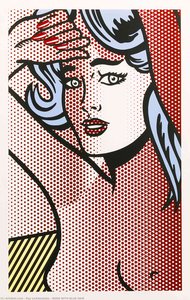
At the heart of Lichtenstein’s visual language lies a profound paradox of modernism: the elevation of the disposable into the eternal. To encounter one of his masterpieces is to witness the Ben-Day dot, a mechanical printing technique originally relegated to the cheap, pulpy pages of comic books and newsprint, transformed into a tool of high art. For the discerning collector, these dots are far more than mere stylistic flourishes; they represent a calculated interrogation of how we perceive reality in an age of industrial reproduction.
By meticulously recreating the appearance of low-cost commercial printing through the medium of fine art, Lichtenstein challenged the very definition of authenticity. In works such as Goldfish Bowl II, the dot serves as a bridge between the tactile world of the painter and the sterile precision of the machine. There is an inherent tension in seeing a hand-applied pattern that mimics a mechanical error or a printing limitation. This technique forces the viewer to engage with the surface of the canvas, recognizing that what appears to be a flat, printed image is actually a complex layering of pigment. It is this deliberate illusion of flatness that creates a hypnotic effect, drawing the eye into a rhythmic dance of light and shadow.
Primary Emotions: Decoding the Psychological Impact of Red, Yellow, and Blue
 The Psychology of the Palette: Decoding Roy Lichtenstein's Bold Color Theory
The Post-War Shift: From Abstract Expressionism to Pop Iconography Beyond the Ben-Day Dots: Roy Lichtenstein's Pop Art Revolution & Enduring Legacy The Precursors to Pop: Challenging Artistic Conventions Pop art Pop art is an art movement that emerge...
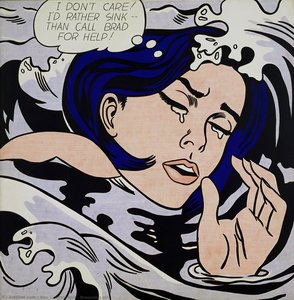
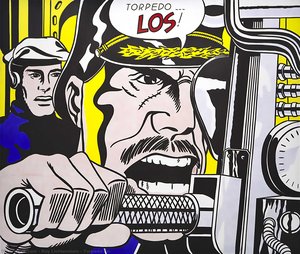
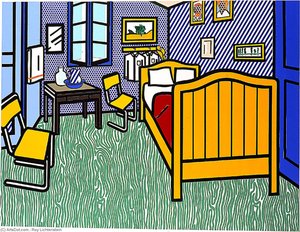
Lichtenstein’s palette was never merely decorative; it was a psychological instrument designed to evoke immediate, visceral responses. By stripping away the nuanced, muddy tones often found in traditional academic painting, he embraced a restricted spectrum that spoke directly to the collective consciousness of a consumer-driven society. His use of primary colors—red, yellow, and blue—served to strip the subject matter of its sentimentality, replacing it of deep, brooding shadows with a clarity that was both startling and confrontational.
The psychological impact of this choice cannot be overstated. The boldness of these hues creates an immediate visual impact that demands attention, yet within that brightness lies a controlled, almost clinical detachment. By utilizing the most fundamental colors available to the artist, Lichtenstein tapped into a universal visual vocabulary. This allowed him to communicate intense narratives—often involving romance or conflict—through a lens of objective representation, forcing the viewer to confront the pervasive influence of mass media and question the authenticity of emotional expression in an era of mass production.
The Paradox of Precision: Elevating Mass Media to Fine Art
 Roy Lichtenstein's Masterpieces: 25 Iconic Pop Artworks for Your Home | ArtsDot
Introduction To embark on a journey through the top 25 artworks of Roy Lichtenstein is to enter a world where the boundaries between high art and popular culture dissolve, replaced by bold lines, vibrant colors, and an audacious commentary on America...
Lichtenstein’s artistic journey was not a sudden leap into Pop aesthetics but a deliberate, technical evolution. Initially trained in traditional techniques at the Art Students League and Ohio State University, he possessed a robust technical foundation, mastering representational drawing before choosing to re-contextualize it through the lens of commercial aesthetics. He recognized that comic books, once considered disposable entertainment, were potent visual languages. His genius lay in his ability to take the "crude" aesthetic of the printed page and apply a level of precision that demanded respect from the art establishment.
This process involved an audacious commentary on American society. By appropriating imagery from everyday sources—advertising, comic strips, and popular culture—and meticulously recreating them with thick outlines and vibrant colors, he forced viewers to confront the boundaries between "high" and "low" art. He transformed the commonplace into something monumental. For the collector, this creates a fascinating tension: one is looking at a subject that is inherently trivial, yet it is presented with a formal rigor and a compositional strength that elevates it to the realm of the museum-grade masterpiece.
The Enduring Legacy: How Lichtenstein’s Palette Reshaped Modern Aesthetics
 Roy Lichtenstein
The Genesis of a Pop Visionary Roy Fox Lichtenstein, born in the vibrant metropolis of New York City on October 27, 1923, indelibly altered the landscape of twentieth-century art. Emerging as a pivotal figure within the Pop Art movement, Lichtenstein...
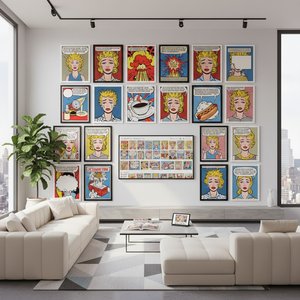
The legacy of Roy Lichtenstein continues to resonate within the contemporary art market and modern interior design. His ability to bridge the gap between the ephemeral nature of pop culture and the permanence of fine art has left an indelible mark on how we perceive color and form. He paved the way for a generation of artists to look outward, finding inspiration not just in the soul, but in the very fabric of the media-saturated world around us.
Today, his influence can be seen in the bold, graphic movements that continue to challenge our perceptions of reality. For those who curate spaces with an eye for historical significance and visual impact, Lichtenstein’s work offers a timeless dialogue between the past and the present. His mastery of color theory remains a cornerstone of modern aesthetic study, reminding us that even the most ordinary images, when viewed through the right lens, can reveal profound truths about our culture and our collective psyche.
At ArtsDot.com, we celebrate the enduring power of these historical movements. While our hearts remain deeply rooted in the soft, luminous textures of the Impressionists, we hold a profound respect for the bold, transformative visions of the Pop Art era. Whether you are seeking the delicate light of a Monet or the striking precision of a modern master, our mission is to make fine art accessible to all through exquisite, hand-painted reproductions that preserve the soul of the original work.