
The Aesthetic of Mass Production: Recontextualizing the Industrial Image
To understand the profound revolution of Pop Art, one must first look beyond the canvas and into the bustling machinery of the mid-twentieth century. At its core, this movement was not merely an aesthetic choice but a radical philosophical inquiry into the nature of value and the blurring lines between high culture and commercial utility. During an era defined by the rapid expansion of consumerism, artists began to look toward the ubiquitous imagery of advertisements, comic books, and industrial packaging, finding a strange, rhythmic beauty in the repetitive language of mass media. This was a period where the distinction between a museum-grade masterpiece and a supermarket flyer began to dissolve, inviting the viewer to find profound meaning within the mundane.
The brilliance of this movement lay in its ability to take the discarded artifacts of industrial life and recontextualize them through a lens of sophisticated irony. By elevating the ephemeral—the glossy magazine page or the brightly colored cereal box—to the status of fine art, these creators challenged the long-held sanctity of the unique, hand-painted gesture. They embraced the cold, mechanical precision of the factory, suggesting that the soul of modern life resided not in the singular brushstroke of a romanticist, but in the vibrant, reproducible pulse of the machine age.
The Mechanics of the Dot: Decoding Ben-Day Printing Techniques
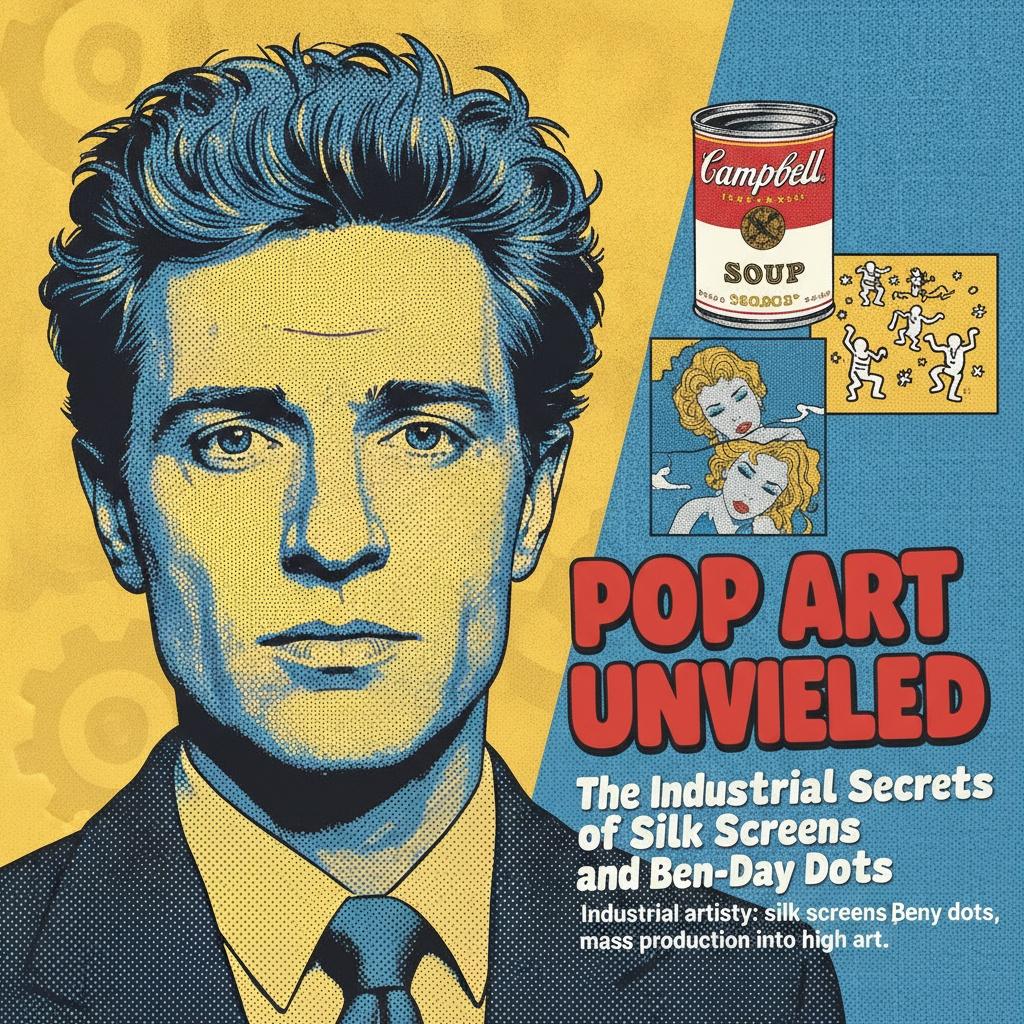
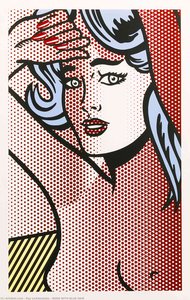
Central to this visual vocabulary was a technical phenomenon known as the Ben-Day dot. Originally developed for low-cost commercial printing, these tiny, closely spaced dots were a functional necessity used to create secondary colors and tonal gradients through the optical illusion of overlap. In the hands of a printer, they were an invisible tool of efficiency; however, in the hands of the Pop Art masters, they became a powerful symbol of modern fragmentation. When viewed closely, the image dissolves into a constellation of isolated points, yet from a distance, they coalesce into a seamless, emotive whole.
This technique introduced a fascinating tension between perception and reality. The Ben-Day dot serves as a constant reminder of the artificiality of the image, a subtle nod to the fact that what we see is a constructed layer of ink and paper rather than a direct window into nature. For the discerning collector, these dots represent more than just a stylistic quirk; they are the DNA of a movement that sought to deconstruct the very fabric of visual communication. The rhythmic repetition of these dots creates a texture that is both clinical and captivating, bridging the gap between the mechanical process and the human eye.
Silk Screen Mastery: The Alchemy of Layered Color and Texture
If the Ben-Day dot provided the texture, then the silk screen process provided the structural brilliance. Often associated with the industrial application of stencils, screen printing—or serigraphy—allowed for the application of bold, flat planes of color that possessed an almost supernatural vibrancy. This method is inherently additive, a meticulous layering of pigment where each pass of the squeegee brings a new dimension to the composition. It is an alchemy of pressure and permeability, where the resistance of the mesh dictates the density of the ink.
The allure of the silk screen lies in its ability to achieve a level of saturation and flatness that traditional oil painting rarely touches. There is a certain architectural strength in these layers; each color sits atop the last with a definitive edge, creating a graphic impact that commands attention within any curated space. While the process may appear mechanical, the mastery required to balance opacity and transparency is profound. It is this very interplay of light and pigment—the way a translucent yellow might dance over a solid blue to create a luminous green—that gives screen-printed aesthetics their enduring, sophisticated allure.
Roy Lichtenstein and the Elevation of Comic Strip Iconography
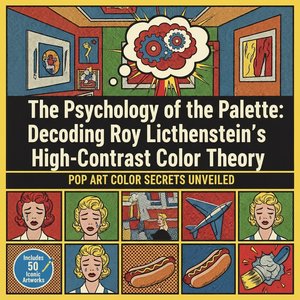
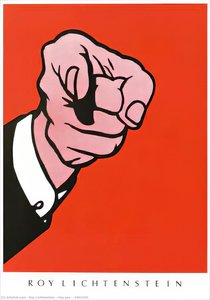
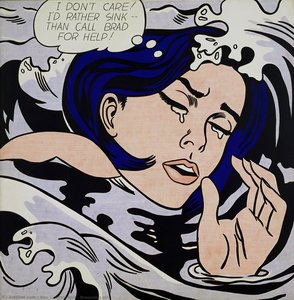
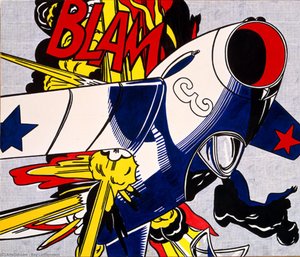
No discussion of this era is complete without acknowledging the monumental influence of Roy Lichtenstein. He was the architect of a new visual language, one that took the most "low-brow" elements of American culture—the melodramatic panels of comic strips—and infused them with an unprecedented intellectual depth. In works such as Thinking of Him or Woman in a Bath, Lichtenstein did not merely copy existing imagery; he distilled it. He stripped away the narrative clutter to focus on the essential geometry of emotion, using bold outlines and heavy Ben-Day dotting to frame moments of intense, stylized drama.
Lichtenstein’s genius resided in his ability to manipulate the viewer's gaze. By magnifying the small, often overlooked details of a comic panel, he forced an encounter with the sublime within the trivial. His portraits, such as Head or the poignant Woman in a Wheelchair, utilize the mechanical aesthetic to explore themes of isolation and longing, proving that even the most rigid, industrial techniques can convey profound human vulnerability. He transformed the "cheap" aesthetic into a sophisticated commentary on how we consume emotion through the media we inhabit.
From Commercial Print to High Art: The Legacy of Pop Art Aesthetics
The legacy of Pop Art is etched into the very foundation of contemporary visual culture. It fundamentally altered the trajectory of art history by legitimizing the use of found imagery and industrial processes as valid subjects for high-level inquiry. This revolution paved the way for subsequent movements, from Neo-Expressionism to the digital art of the current century, all of which owe a debt to the Pop movement's fearless embrace of the popular. The movement taught us that art does not need to retreat into the shadows of history to find meaning; it can find its most potent truths in the bright, neon glare of the present.
Today, we see this influence in everything from graphic design and fashion to the way we curate our modern living spaces. The bold color palettes, the emphasis on graphic clarity, and the celebration of the reproducible have become hallmarks of a sophisticated, global aesthetic. The movement successfully broke down the walls of the academy, creating a democratic visual language that remains as impactful and relevant in the digital age as it was in the mid-century.
Curating Modernity: Integrating Pop Art Masterpieces into Sophisticated Interiors
For the contemporary collector and interior designer, integrating Pop Art elements into a curated environment offers an opportunity to inject vitality and intellectual discourse into a space. A well-placed reproduction of a Lichtenstein-inspired piece can serve as a powerful focal point, providing a striking contrast to more traditional or minimalist decor. The key to successful integration lies in balance; the bold, graphic nature of Pop Art works best when paired with textures that offer depth, such as heavy linens, dark woods, or polished metals.
When selecting pieces for a professional or residential project, consider the interplay of color and scale. A large-scale, multi-panel arrangement can transform a wide hallway or a grand salon into a gallery-like experience, while smaller, more intimate works can add unexpected moments of wit to a study or library. Whether through the use of hand-painted oil reproductions that capture the tactile essence of the original brushwork or high-quality prints that celebrate graphic precision, Pop Art remains an unparalleled tool for creating spaces that are not only aesthetically pleasing but also deeply evocative of our shared cultural history.
At ArtsDot.com, we specialize in preserving this vibrant legacy through museum-quality reproductions. From the meticulous hand-painting of oil canvases that honor the texture of the masters to bespoke commissions that allow you to reimagine your own memories through a Pop Art lens, our mission is to bring the profound beauty of art history into the modern home. Whether you are an established collector or an interior professional seeking large-scale architectural solutions, our expertise ensures that every piece becomes a lasting testament to the enduring power of creativity.