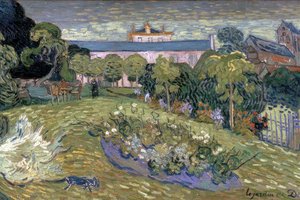
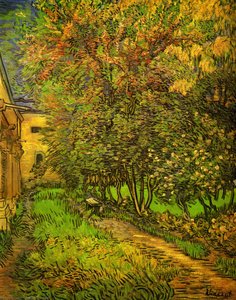
The Dissatisfaction with Fleeting Light: Transitioning from Impressionism to Post-Impressionism
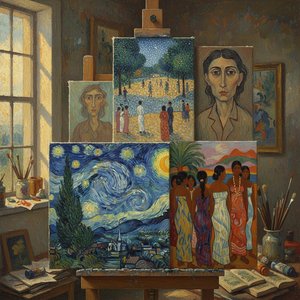 Beyond Impressionism: Exploring the Emotional Depth of Post-Impressionist Painting
The Seeds of Rebellion: From Impressionism’s Light to New Visions Wikipedia: Post-Impressionism Post-Impressionism (also spelled Postimpressionism) was a predominantly French art movement which developed roughly between 1886 and 1905, from the last I...
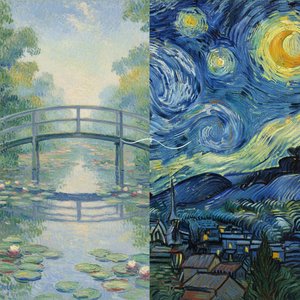
To look upon a Monet or a Renoir is to witness the world through a veil of shimmering, ephemeral beauty. For decades, we have been captivated by the way the Impressionists captured the precise moment a sunbeam dances across a lily pond or how the morning mist softens the edges of a Parisian boulevard. Yet, as the late 19th century progressed, a quiet restlessness began to stir within the hearts of a new generation of painters. They found themselves standing before these breathtaking scenes of light and color, feeling a profound sense of incompleation. While they admired the liberation of the brushstroke and the brilliance of the palette, they began to question whether the mere recording of optical sensations—the fleeting, the transient, the purely visual—was enough to capture the true weight of human existence.
This was not a movement of outright rebellion, but rather a nuanced evolution, a desire to find something more permanent beneath the surface of the shimmering light. The artists who would come to define Post-Impressionism felt that the Impressionist focus on the ephemeral lacked a certain structural and emotional gravity. They sought to move beyond the retina and into the soul. Where the Impressionists sought to capture how the eye perceives a moment, the Post-Impressionists sought to express how the heart understands it. This transition marked a seismic shift in the history of art, moving away from naturalism toward a more subjective, symbolic, and structured reality that would eventually pave the way for the modern era.
A Symphony of Emotion: How Van Gogh Transformed Inner Turmoil into Vibrant Color
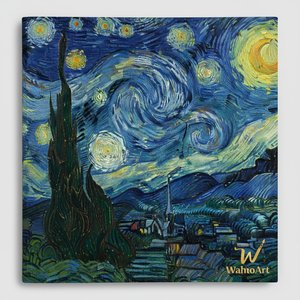 Decoding Van Gogh's Turmoil: ArtsDot’s Masterful Reproductions of Emotional Depth
Decoding Van Gogh’s Turmoil: ArtsDot’s Masterful Reproductions of Emotional Depth Wikipedia: Vincent van Gogh Vincent Willem van Gogh (Dutch: [ˈvɪnsɛnt ˈʋɪləɱ vɑŋ ˈɣɔx] ; 30 March 1853 – 29 July 1890) was a Dutch Post-Impressionist painter who is am...
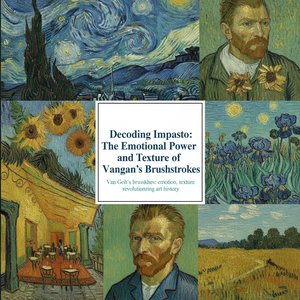
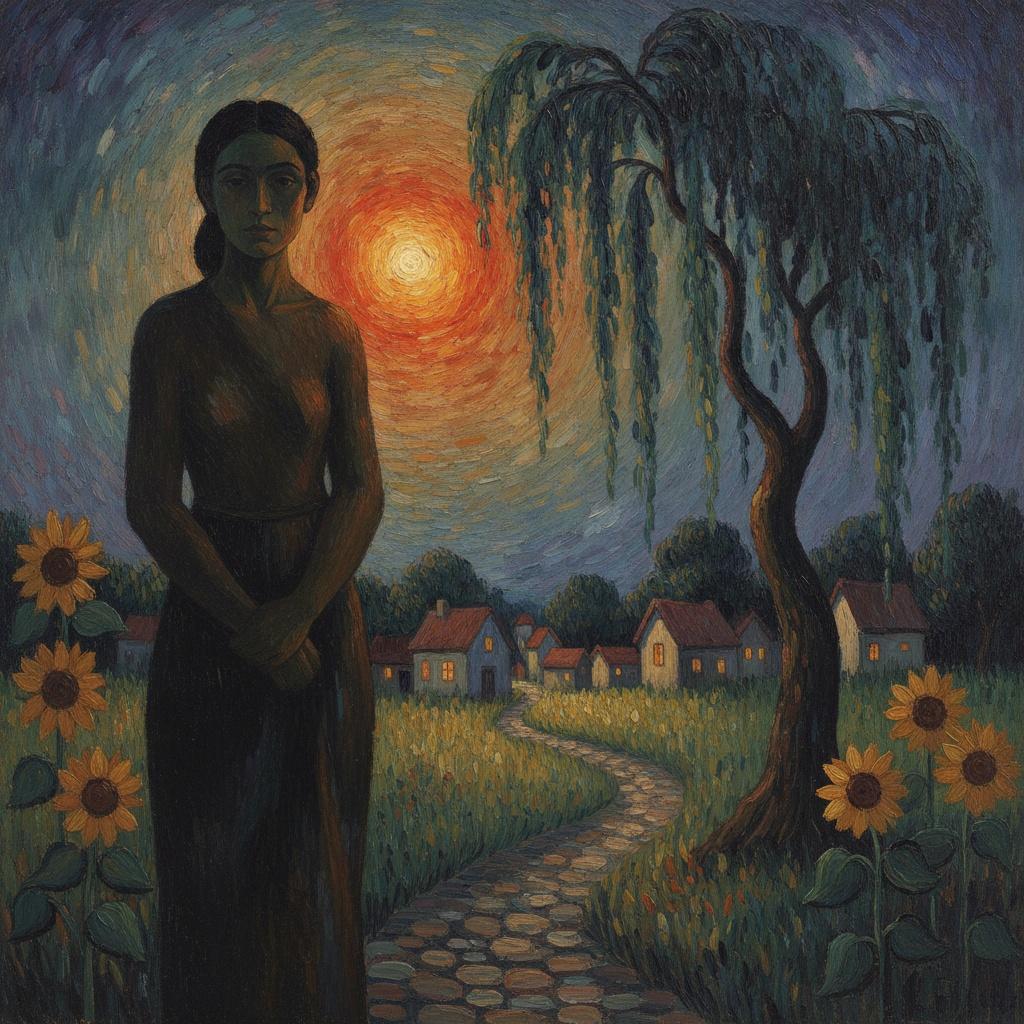
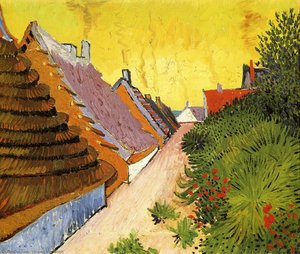
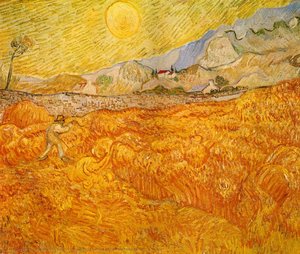
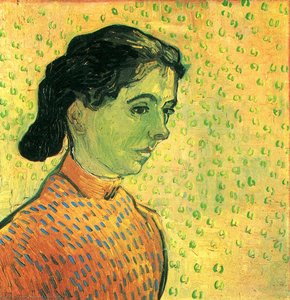
No figure embodies this shift toward emotional intensity more profoundly than Vincent van Gogh. To encounter his work is not merely to view a landscape, but to step directly into the incandescent, often turbulent, spirit of a man who painted with his very lifeblood. His journey was one of immense struggle—a path marked by unfulfilled aspirations and profound loneliness—yet it was through this very crucible that his unique visual language was forged. In his early years, influenced by the somber realism of Millet, his palette was earthy and heavy, reflecting the hardships of peasant life. However, his move to Paris in 1886 acted as a transformative catalyst, exposing him to the vibrant light of the Impressionists.
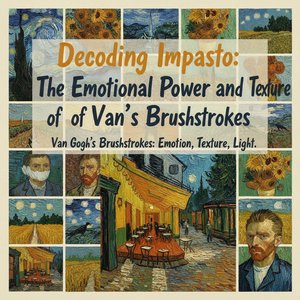
Yet, Van Gogh did not simply adopt their techniques; he reimagined them through the lens of his own psychological landscape. He took the broken brushstrokes and bright colors of his contemporaries and infused them with an unprecedented emotional weight. In his hands, a swirling night sky becomes a rhythmic, breathing entity, and a simple sunflower takes on a sun-like vitality that borders on the divine. His use of impasto—the thick, textured application of paint—allows us to feel the physical energy of his movement, making the canvas a tactile record of his passion. Through his work, we see that color is not just a descriptive tool for light, but a powerful vehicle for expressing joy, despair, and the eternal struggle of the human condition.
Seeking Structure and Symbol: The Intellectual Depth of Cézanne and Seurat
--- title: Post-Impressionism - The Metropolitan Museum of Art author: James Voorhies url: https://www.metmuseum.org/essays/post-impressionism hostname: metmuseum.org description: Through their radically independent styles and dedication to pursuing ...
While Van Gogh explored the heights of emotional expression, other masters of this era sought depth through structure and scientific precision. Paul Cézanne, often regarded as the father of modern art, looked at the Impressionist revolution and famously declared his intention to make it something solid and durable, like the art of the museums. He was dissatisfied with the lack of form in the fleeting impressions of light. For Cézanne, the world was composed of fundamental geometric shapes—the sphere, the cone, and the cylinder. His meticulous approach to building form through color patches allowed him to reconstruct the landscape with a sense of permanence and architectural strength that would later inspire the Cubist movement.
In a different but equally revolutionary vein, Georges Seurat approached the canvas with the precision of a scientist. He looked at the optical theories of his time and developed Pointillism, a technique of applying tiny, distinct dots of pure color that the viewer's eye would blend at a distance. This was not an attempt to capture a fleeting moment, but to create a highly structured, almost mathematical depiction of light and atmosphere. In works like A Sunday Afternoon on the Island of La Grande Jatte, there is a stillness and a monumental quality that stands in stark contrast to the spontaneous energy of Impressionism. Together, Cézanne and Seurat proved that Post-Impressionism was as much an intellectual pursuit of order and science as it was an emotional exploration.
Beyond the Surface: Exploring Personal Symbolism in the Works of Gauguin
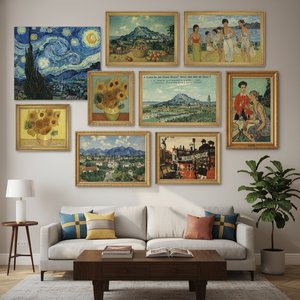 Post-Impressionism's 10 Defining Masterpieces: Art for Your Home |
Introduction Imagine stepping back in time to a world brimming with artistic revolution—a moment where painters dared to break free from the constraints of realism and embrace subjective vision. This is the essence of Post-Impressionism, a movement t...
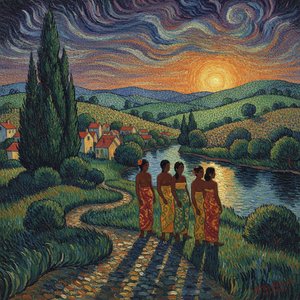
As the movement matured, a third path emerged, led by artists like Paul Gauguin, who sought truth through symbolism and the exotic. For Gauguin, the pursuit of art was inseparable from a quest for spiritual authenticity. He moved away from the urban centers of Europe, seeking inspiration in the lush, primal landscapes of Tahiti, believing that the "civilized" world had lost its connection to the essential mysteries of life. His work is characterized by bold, flat areas of color and heavy outlines, a style known as Cloisonnism, which rejected the three-dimensional illusions of traditional painting in favor of a more decorative and symbolic approach.
In Gauguin’s canvases, color is used not to mimic nature, but to evoke a mood or convey a mythic meaning. His landscapes are dreamlike and saturated with a sense of the sacred and the primitive. By stripping away the unnecessary details of realism, he was able to tap into a universal language of symbols, inviting the viewer to contemplate deeper truths about life, death, and the divine. This emphasis on the subjective and the symbolic further pushed the boundaries of what art could achieve, ensuring that the canvas was no longer just a window onto the world, but a mirror reflecting the deepest recesses of human belief and imagination.
The Enduring Legacy: Bringing the Emotional Resonance of Post-Impressionism into the Modern Home
The legacy of the Post-Impressionists continues to resonate with a profound intensity in our contemporary lives. Their courage to break free from the constraints of realism and to embrace the power of individual expression remains a source of endless inspiration. When we bring these works into our homes, whether through a meticulously hand-painted oil reproduction or a carefully curated print, we are doing more than decorating a wall; we are inviting a conversation with history. We are surrounding ourselves with the textures of Van Gogh’s passion, the structural elegance of Cézanne, and the symbolic mysteries of Gauguin.
At ArtsDot.com, we believe that this emotional resonance should be accessible to every art lover. Our mission is to preserve the soul of these movements by offering authentic, hand-painted reproductions that honor the original masters. Each piece is a labor of passion, created by artists who understand the weight of every brushstroke and the importance of every hue. Whether you seek a large-scale multi-panel masterpiece to anchor a room or a custom commission that reimagines a personal memory in the vibrant style of Van Gogh, we invite you to rediscover the profound beauty that lies beyond the light.