The Historical Crucible: Counter-Reformation and the Birth of Baroque Emotion
 Decoding Baroque Grandeur: A Guide to the Drama and Emotion of 17th-Century Art
The Historical Crucible: Counter-Reformation and the Rise of Absolutism Baroque Classicism: The Grandeur of Order and Drama in 17th-Century Art History The Historical Crucible: Counter-Reformation and the Rise of Absolutism Baroque Classicism: Reconc...
To understand the breathtaking tension that vibrates within a Baroque canvas, one must first look beyond the pigment and into the fractured soul of seventeenth-century Europe. This was an age defined by profound upheaval, where the serene stability and mathematical clarity of the High Renaissance had given way to a landscape of religious and political struggle. The Protestant Reformation had challenged the very foundations of papal authority, prompting the Catholic Church to launch the Counter-Reformation—a period of spiritual resurgence known as the Catholic Revival. This movement was far more than a theological debate; it was a visual campaign of immense proportions. Through the decrees of the Council of Trente, the Church sought to reclaim its dominance by commissioning art that could move the soul, inspire awe, and visually demonstrate the triumph of faith.
As the religious landscape shifted, so too did the political architecture of Europe through the rise of absolutist monarchies. As sovereigns consolidated their power, they demanded an aesthetic that projected strength, wealth, and a divine right to rule. This convergence of religious fervor and political ambition created a unique demand for art that could be both emotionally stirring and intellectually imposing. The era required a new visual language—one that moved away from the artificiality of Mannerism toward something more direct, visceral, and human. It was within this crucible of conflict and reconstruction that the seeds of Baroque Classicism were sown, promising a style that could reconcile the raw energy of human emotion with the enduring dignity of classical tradition.
Chiaroscuro: The Masterful Manipulation of Light and Shadow
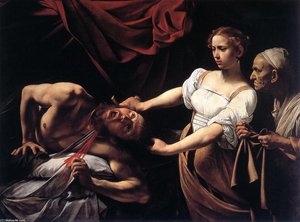 Judith Beheading Holofernes
A Masterpiece of Baroque Drama and Emotion Caravaggio's "Judith Beheading Holofernes" is a powerful depiction of the biblical story where Judith, a Jewish widow, beheads the Assyrian general Holofernes to save her people. This painting exemplifies Ca...
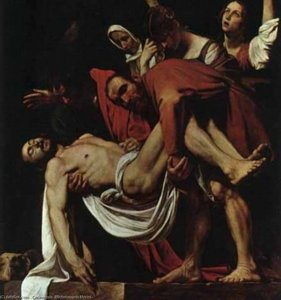
At the heart of this dramatic revolution lies the technical marvel known as chiaroscuro. This technique, characterized by the intense contrast between deep, impenetrable shadows and brilliant, piercing light, became the primary tool for sculpturing form and heightening emotional stakes. In the hands of masters like Caravaggio, light was no longer merely a way to illuminate a scene; it became a protagonist in its own right. By selectively illuminating specific figures against an abyssal darkness, artists could direct the viewer's gaze with surgical precision, making a single moment feel both intensely private and cosmically significant.
Observe how this interplay of light does more than just reveal anatomy; it breathes life into the very atmosphere of the painting. In works such as Da Pier Francesco Mola’s
St. Peter Freed from Prison, the masterful use of chiaroscuro creates a sense of three-dimensional weight and palpable spiritual energy. The warm ochres and rich browns defining the earthly figures are sharply contrasted by pale, almost incandescent whites, suggesting an ascent toward the sublime. This selective illumination allows the artist to sculpt forms out of nothingness, creating a sense of depth that draws the viewer into the very center of the drama, where the boundary between the physical world and the divine becomes beautifully blurred.
Theatricality and Tension: Capturing the Moment of Action
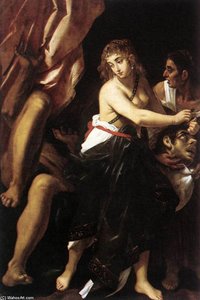 Judith and the Head of Holofernes
Judith and Holofernes: A Baroque Triumph of Courage and Virtue Giovanni Baglione’s “Judith and Holofernes,” painted in 1608, stands as a cornerstone of Baroque art—a dramatic distillation of biblical narrative into visual splendor. More than just a d...
Unlike the Renaissance masters, who often preferred to depict the calm moment before or after a significant event, Baroque artists sought the peak of the narrative arc. They chose the most dramatic point—the precise second when action is occurring and tension is at its breaking point. This fascination with theatricality transformed the canvas into a stage where movement was caught in mid-motion. We see this in the works of Bernini or Rubens, where compositions are not merely arranged but seem to writhe with implied motion, pulling the viewer into a state of breathless anticipation.
This sense of captured movement is perhaps most hauntingly realized in depictions of heroic or violent narratives. Consider Giovanni Baglione’s
Judith and the Head of Holofernes. Here, the artist utilizes the Baroque aesthetic to distill a biblical tale into visual splendor, emphasizing the psychological weight of the act. By contrasting Judith’s dignified composure with the horrified vulnerability of her victim, Bagliente creates a tension that is both physical and moral. The mastery of anatomical detail and the use of light to highlight the gruesome reality of the scene ensure that the viewer cannot look away, making the painting an immersive experience of courage and consequence.
Spiritual Grandeur: Devotion and Divine Intervention in Baroque Narrative
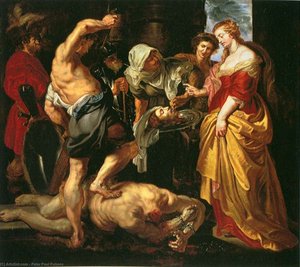 Beheading of St. John the Baptist
A Dramatic Tableau of Faith and Mortality The Beheading of St. John the Baptist stands as a monumental achievement in Baroque art—a visceral depiction of martyrdom that encapsulates the fervor and theatricality characteristic of the era. Painted by P...
The ultimate aim of much Baroque art was didactic—to teach, to inspire, and to provoke contemplation on themes of sacrifice, divine justice, and human vulnerability. The era’s religious works were rarely intended for mere decoration; they were designed to be windows into the miraculous. Whether through the depiction of martyrdom or the sudden arrival of an angel, the art sought to make the invisible visible. This is evident in the monumental altarpieces of Flemish masters like Gaspar de Crayer, whose work reflects the profound religious shifts of the Counter-Reformation, serving as a bridge between older traditions and the burgeoning, emotive Baroque style.
This spiritual fervor can be felt in the very architecture that houses such works. In places like the Parish Church of Pápa or the magnificent
Il Gesù in Rome, the art and architecture work in tandem to create an environment of overwhelming grandeur. The sculptures and paintings within these spaces are designed to evoke a sense of the infinite. Even in more personal depictions, such as the martyrdom of St. John the Baptist by Rubens, the artistry transcends mere representation. It becomes a choreographed narrative of faith, where every brushstroke serves to remind the faithful of the eternal struggle between the earthly and the divine, inviting a profound, meditative connection with the sacred.
Beyond the Canvas: The Legacy of Baroque Drama in Modern Aesthetics
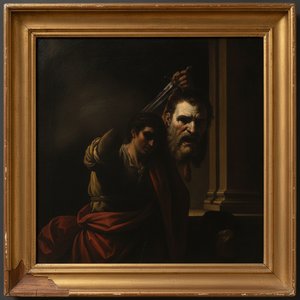
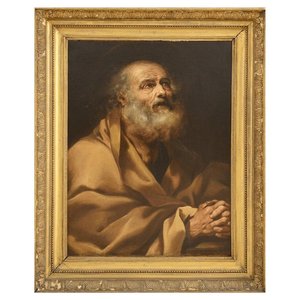 aureliano milani
A Life Immersed in Baroque Splendor Aureliano Milani, a name resonating with the echoes of late-Baroque artistry, was born in Bologna in 1675—a city already steeped in artistic tradition. While not hailing from one of the most prominent Bolognese art...
The echoes of the Baroque era continue to resonate through the centuries, leaving an indelible mark on the evolution of Western art. While later movements like Impressionism would seek to capture the fleeting nuances of light and atmosphere, they inherited from the Baroque a fundamental respect for the emotional power of visual storytelling. The dramatic tension found in the works of late-Baroque artists like Aureliano Milani, who sought to revive the dynamic energy of the Carracci, paved the way for a more expressive approach to figure and form that would eventually influence the very foundations of modern composition.
Today, we find the spirit of the Baroque in any art that dares to embrace the full spectrum of human experience—from the darkest shadows of grief to the most luminous heights of joy. The techniques developed in the 17th century, from the profound depth of chiaroscuro to the visceral impact of impasto, remain essential tools for artists seeking to evoke a response. As we look back upon this era of unparalleled drama, we do not merely observe history; we participate in a continuous dialogue with the masters, finding in their shadows and light a timeless reflection of our own complex, beautiful, and dramatic human condition.