The Great Migration: The Human Current Behind the Artistic Tide
 The Harlem Renaissance: A Definitive Guide to the Era That Redefined American Visual Culture and Identity
The Great Migration and the Birth of the New Negro Movement Soul, Jazz, and Street Style: The Unstoppable Visual Energy of the Harlem Renaissance The Original Cultural Explosion: Setting the Scene in Harlem The Harlem Renaissance: A Masterclass in Bl...
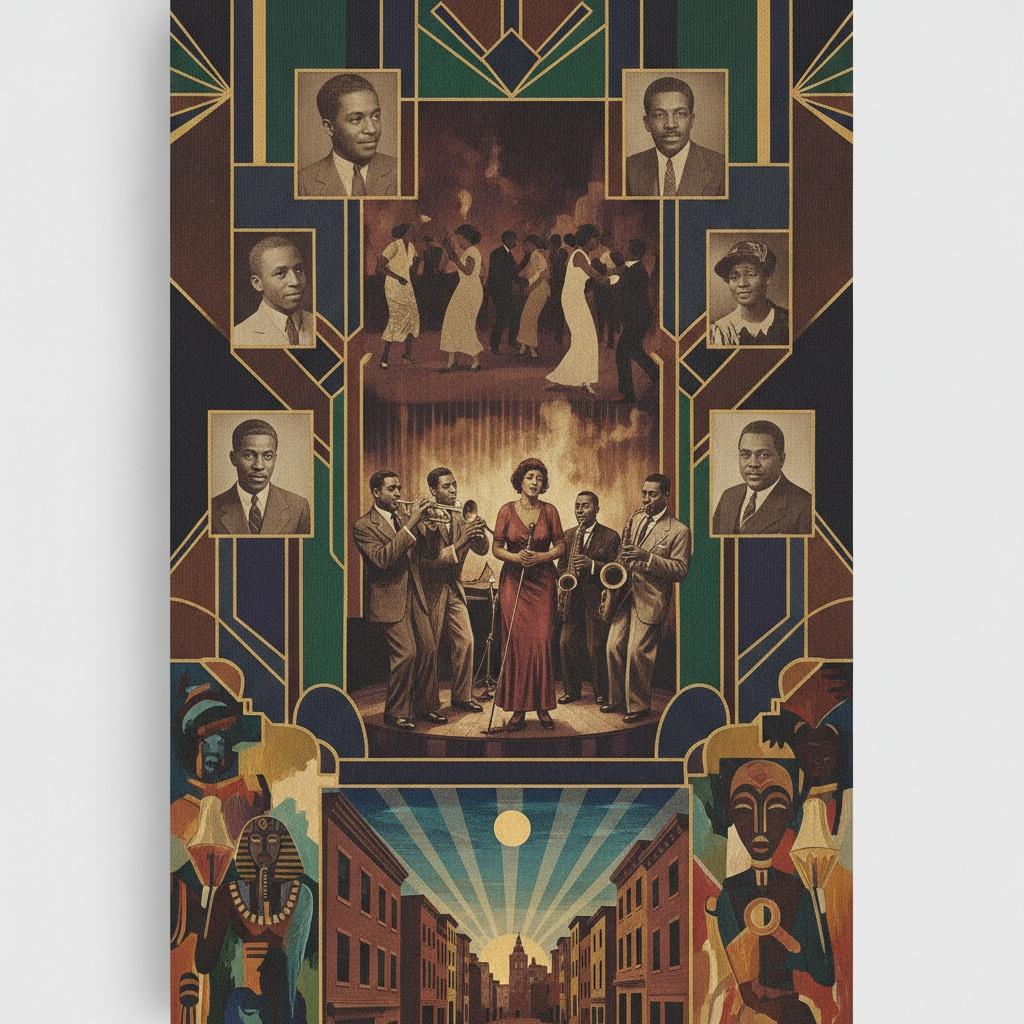
To truly understand the luminous explosion of creativity that defined Harlem in the 1920s, one must first look to the movement of people that preceded the movement of art. It was not merely a localized artistic flourish, but a profound cultural byproduct of the Great Migration. As African Americans fled the oppressive, systemic shadows of the Jim Crow South, they sought refuge in the urban North, bringing with them an unyielding tapestry of traditions, rhythms, and stories. This seismic shift in the American landscape transformed Harlem into a high-voltage epicenter of identity reclamation.
This influx of souls from the Deep South and the Caribbean islands created a unique cultural crucible. The streets of Manhattan became a laboratory for a new American soul, where the shared experiences of displacement and hope coalesced into something entirely unprecedented. It was a period where the very air seemed charged with the energy of a people claiming their narrative in the urban North, setting the stage for an era that would redefine the visual and auditory boundaries of a nation.
The New Negro Movement: Reclaiming Identity Through the Visual Arts
 Soul, Jazz, and Street Style: The Unstoppable Visual Energy of the Harlem Renaissance
The Original Cultural Explosion: Setting the Scene in Harlem The Harlem Renaissance: A Masterclass in Black Identity, Visual Modernism, and Cultural Resurgence The New Negro Movement: Redefining Identity Through the Visual Arts A New African American...
At the heart of this era was what philosopher Alain Locke famously termed the "New Negro Movement." Named after his seminal 1925 anthology, this movement was far more than a literary flowering; it was a deliberate, sophisticated reclamation of Black identity. It represented a period defined by a renewed militancy in the struggle for civil rights, paired with an unprecedented intellectual and artistic flowering. This was not just about survival; it was about the construction of a modern Black identity that refused to be sidelined by traditional Western narratives.
Through painting, sculpture, and literature, artists sought to establish a foundation where art could serve as a potent tool for political empowerment and social resilience. The movement established a new visual language—one that embraced modernism while honoring ancestral roots. It was an era of visual modernism, where the creation of art became an act of self-determination, turning the canvas into a site of resistance and a celebration of a burgeoning, multifaceted identity.
Rhythms of Color: How Jazz and Soul Defined a Modern Aesthetic
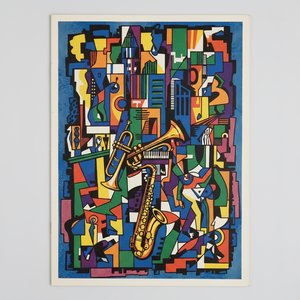 Stuart Davis: Modernist Abstraction & the Vibrant Spirit of the Jazz Age
Early Influences & The Ashcan School: Davis's Formative Years Stuart Davis Stuart Davis: Explore bold American Modernism! Jazz-inspired paintings & proto-pop art from this Ashcan School pioneer. Discover his vibrant style today! Stuart Davis, a name ...
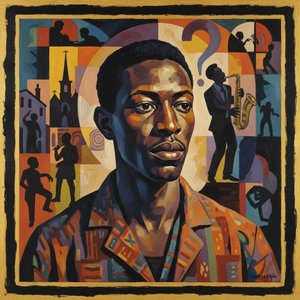
If one wishes to understand the visual language of this era, one must listen to its music. The Harlem Renaissance was an era where the pulse of jazz dictated the rhythm of the brush. Imagine New York in the 1920s—a high-voltage explosion of sound and soul. This energy was infectious, spreading from the dance halls to the very pigments used by artists. The improvisational nature of jazz, with its syncopated beats and sudden shifts in tone, found a mirror in the vibrant, often abstract, visual compositions of the period.
The aesthetic was one of movement and light. Much like the way a saxophone solo might swell and recede, the art of this era utilized bold hues and dynamic compositions to evoke emotion. We see echoes of this rhythmic vitality in works that celebrate the joy of performance, where figures are imbued with an unrestrained energy. This connection between sound and sight created a sensory experience so profound that it transcended the boundaries of individual mediums, weaving together a unified cultural tapestry that felt as alive as the music itself.
A Legacy of Resilience: From Street Photography to Narrative Quilts
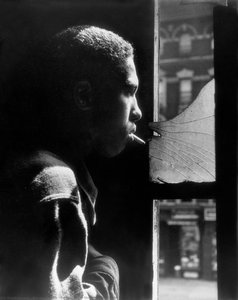
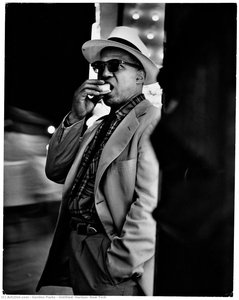
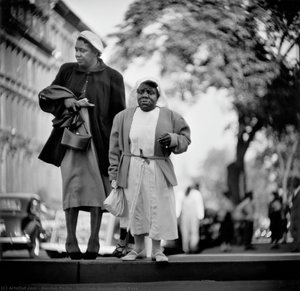 Untitled, Harlem, New York
A Moment Frozen in Harlem’s Soul: Gordon Parks' "Untitled, Harlem, New York" Gordon Parks’ “Untitled, Harlem, New York,” created in 1952, isn’t merely a photograph; it’s a distilled essence of an era and a poignant testament to the dignity of everyda...
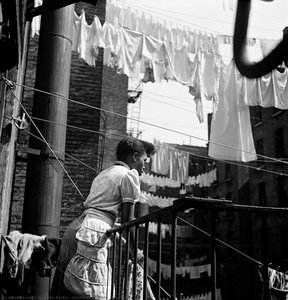
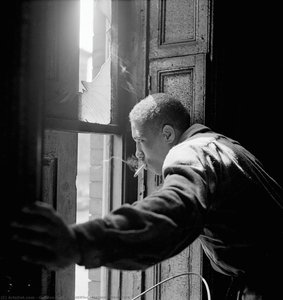
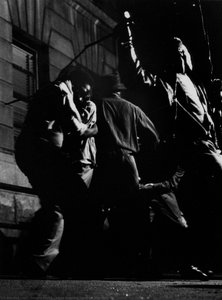
The visual legacy of this era is not found solely in grand galleries but also in the intimate, quiet moments captured through the lens and the needle. The movement’s strength lay in its ability to find dignity in the everyday. We see this in the poignant photography of figures like Gordon Parks, whose work often captured the distilled essence of Harlem’s soul. His images, such as those documenting the purposeful stride of elderly women on a bustling street, offered an unvarnished realism that celebrated the quiet resilience and unspoken stories of the community.
This narrative thread extends into the very fabric of American folk art, seen later in the works of artists like Faith Ringgold. Her iconic narrative quilts serve as vibrant tapestries woven with threads of history and personal storytelling. Through layered painting and quilting techniques, she captures the exuberant energy of African American life, much like a symphony of color. From the gritty realism of photography to the tactile warmth of quilted art, the era’s visual output remains a testament to the enduring spirit and extraordinary creativity of Black Americans, documenting both their struggles and their triumphs.
The Enduring Pulse: The Harlem Renaissance’s Influence on Global Culture
 Harlem Renaissance
The Harlem Renaissance was an intellectual and cultural movement of African-American music, dance, art, fashion, literature, theater, politics, and scholarship centered in Harlem, New York City, spanning the 1920s and 1930s. At the time, it was known...
Though geographically tied to the streets of Harlem, the influence of this movement radiated far beyond the borders of Manhattan. Its reach extended to the urban landscapes of the Midwest and even influenced Francophone Black writers in Paris. The Harlem Renaissance was a creative crucible that helped institutionalize African American art within the broader context of global modernism. It provided a blueprint for how culture could be used to navigate and reshape identity in the face of adversity.
Today, the echoes of this era continue to pulse through our global culture. The movement’s emphasis on self-expression, its mastery of visual modernism, and its profound connection to musical heritage remain foundational to contemporary art. It remains a period of extraordinary growth that taught the world how art can serve as a sanctuary for resilience and a beacon for social transformation, ensuring that the vibrant spirit of Harlem will never truly fade.