The Divine Script: The Spiritual Essence of Illuminated Manuscripts
To hold a fragment of the early medieval world is to touch the very breath of devotion. Long before the soft, dappled light of Impressionism invited us to contemplate the fleeting moment, the artists of the Middle Ages sought to capture the eternal. In the quiet, candlelit corners of monastic scriptoriums, the act of writing was not merely a recording of text, but a profound liturgical performance. Every stroke of the quill upon aged parchment was an act of prayer, a rhythmic movement intended to bridge the gap between the earthly and the divine.
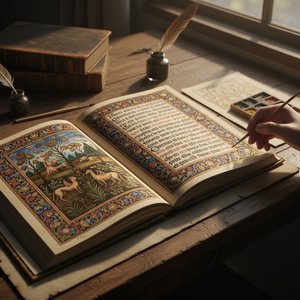
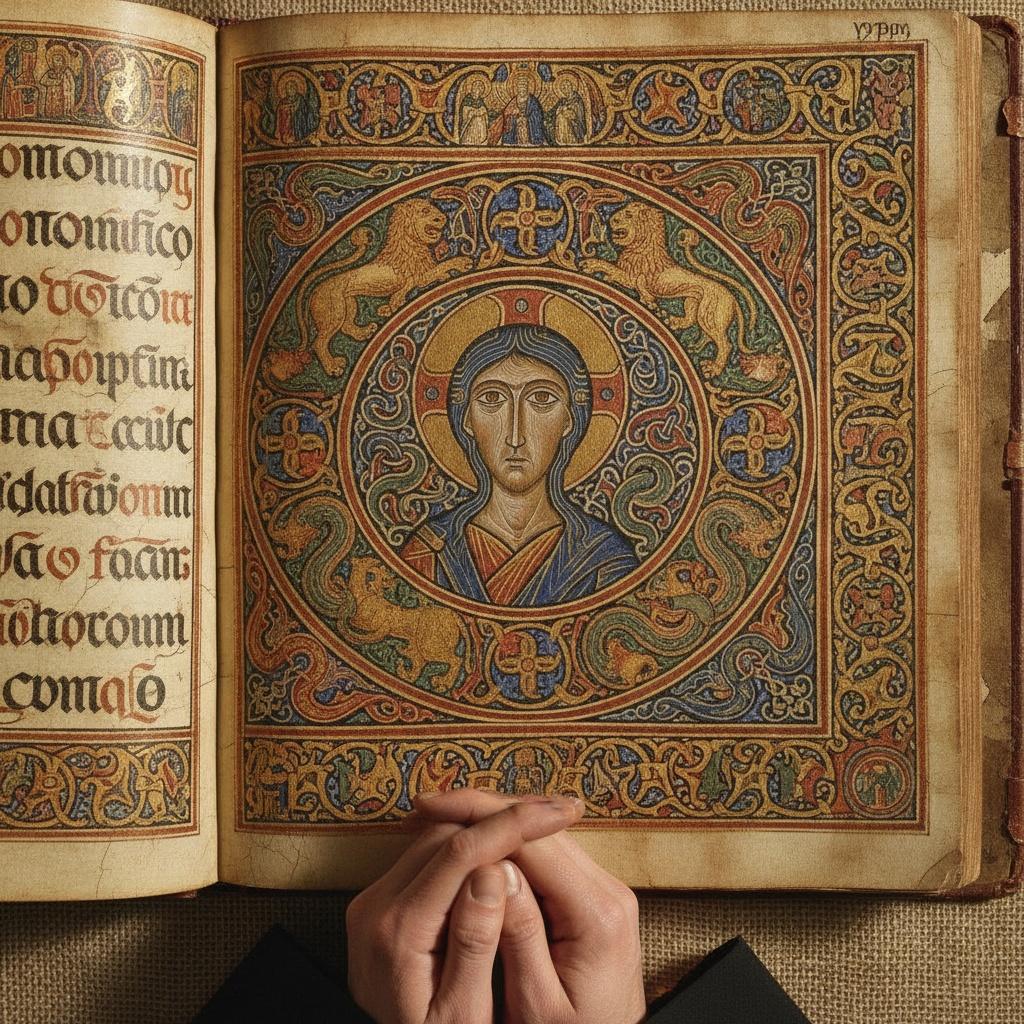
Consider the exquisite Vercelli Book, Mendaleo, where the Latin script dances across the page with an organic, almost living vitality. Here, the boundaries between calligraphy and illustration dissolve; the intricate floral details that bloom around the letters are not mere decorations but are deeply intertwined with the sacred word itself. This era of art reminds us that beauty was never intended to be a distraction from faith, but rather a luminous gateway toward it. The meticulous care taken in every flourish suggests a belief that even the smallest serif could reflect the grandeur of the Creator.
As we gaze upon these ancient leaves, we find ourselves transported to an age where time moved at the pace of a scribe’s steady hand. There is a profound intimacy in the way the ink settles into the grain of the parchment, creating a texture that feels both fragile and indestructible. It is a testament to a period when art was the primary vessel for the soul's deepest whispers, preserved through centuries of silent contemplation.
Gilded Heavens: Gold Leaf and the Radiance of Byzantine Devotion
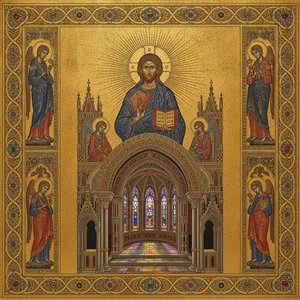
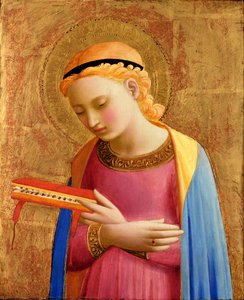
If the manuscript provided the voice of the medieval era, then gold leaf provided its light. In the Byzantine tradition, gold was far more than a display of wealth; it was a theological necessity. To use gold in an icon or a manuscript leaf, such as the magnificent 1101 Byzantine work by Joannes K\u00f6lix, was to introduce a piece of the uncreated light into our physical realm. When candlelight flickered against these surfaces, the gold would appear to pulse and breathe, creating an ethereal atmosphere that defied the heavy shadows of the material world.
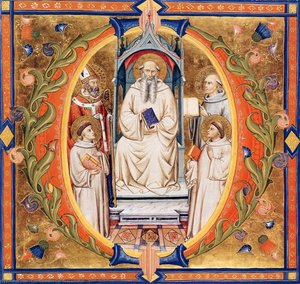
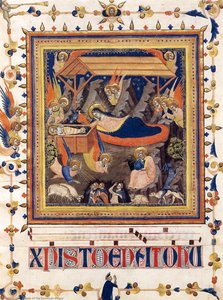
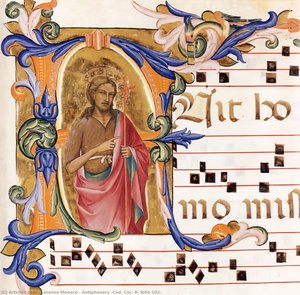
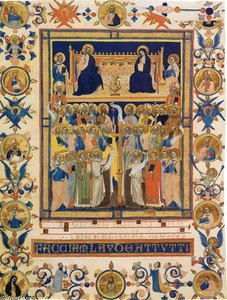
This radiance is perhaps most breathtakingly realized in the Gradual from Santa Maria degli Angeli. In this stunning Gothic masterpiece, the use of intricate gold leaf works in harmony with vibrant floral motifs to depict Augustine's ascent. The light does not simply sit upon the surface; it seems to emanate from within the very fibers of the artwork. This technique creates a sense of depth that is not perspectival in the modern sense, but spiritual—a layering of meaning where the brilliance of the gold represents the clarity of divine truth.
The mastery required to apply such delicate layers of precious metal without obscuring the underlying artistry is nothing short of miraculous. It requires a patience that mirrors the very devotion it seeks to illustrate. For the modern observer, this gilded splendor serves as a reminder of a time when art was designed to overwhelm the senses, pulling the viewer upward from the mundane into a state of awe-struck reverence.
Sacred Geometry and Symbolism: Decoding the Visual Language of Faith
In the early medieval period, nothing was accidental. Every curve, every color choice, and every geometric arrangement served as a coded language for the faithful. The artists of this era were masters of symbolism, weaving complex theological narratives into patterns that could be read like a map of the cosmos. This was an art of deep intellect and even deeper emotion, where a single lily or a specific shade of blue could evoke entire passages of scripture.
The North Western Italy Scriptorium, renowned for works like the Codex XLV, exemplifies this sophisticated use of visual rhetoric. The artistry found within these legendary Italian halls demonstrates how geometry was used to impose divine order upon the chaos of the world. Through the repetition of motifs and the careful balance of composition, artists created a sense of stability and eternal truth. This was not art for the sake of novelty, but art as an architectural structure for the spirit.
To study these works is to learn a forgotten dialect. We see the interplay of light and shadow not as a study in realism, but as a struggle between good and evil; we see the arrangement of figures not as a study in anatomy, but as a hierarchy of holiness. It invites us to slow down, to look closer, and to listen to the silent stories told through the language of form and color.
A Fusion of Worlds: The Graceful Intersection of Greco-Buddhist Aesthetics
While much of our focus remains on the European tradition, the true beauty of early medieval art lies in its ability to transcend borders and blend disparate cultures. One of the most poignant examples of this global dialogue is found in Greco-Buddhist art from the Gandhara region. Between the 3rd and 5th centuries CE, a breathtaking fusion occurred where Greek classical realism met the profound serenity of Buddhist philosophy.
In these works, we witness the emergence of figures that possess the realistic drapery and anatomical grace of the Hellenistic tradition, yet carry the unmistakable, meditative expressions of Buddhist enlightenment. This intersection created a new aesthetic language—one that was both physically grounded and spiritually transcendent. It reminds us that even in an era of fragmented empires, the human impulse toward beauty and spiritual expression was a unifying force that could bridge the gap between East and West.
This cross-cultural alchemy proves that art has always been a medium of connection. The influence of these Gandharan aesthetics on later Indian art demonstrates how a single moment of cultural intersection can ripple through history, changing the course of artistic evolution for centuries to come.
From Scriptorium to Sanctuary: Preserving the Legacy of Medieval Craftsmanship
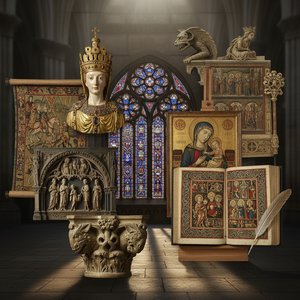
The legacy of the medieval masters lives on not just in museums, but in the very way we perceive the value of the handmade. The transition from the monastic scriptorium to the grand Gothic cathedrals and eventually to the refined workshops of the late Middle Ages—seen in the vibrant colors of Belbello da Pavia or the elegant illustrations of the Co\u00ebtivy Master—shows a continuous thread of human excellence. These artists, though separated by centuries and geography, shared a singular devotion to the perfection of their craft.
As we look back upon these masterpieces, from the early Carolingian mosaics to the late Gothic flourishes, we find a profound inspiration for our own modern appreciation of art. The meticulousness of the Renaissance-bound illuminators and the structural grandeur of the High Medieval era all point toward a fundamental truth: that art is the most enduring way we leave a mark upon the world. It is a preservation of human thought, emotion, and faith.
At ArtsDot.com, we hold this legacy of craftsmanship in the highest regard. Our mission is to ensure that the profound beauty of these historical eras remains accessible to all. Whether through our museum-quality reproductions or our bespoke hand-painted oil commissions, we strive to honor the spirit of the masters. We invite you to explore our vast library and discover how the whispers of the medieval soul can find a permanent, luminous home in your own collection.