The Floating World: Contextualizing Ukiyo-e and Edo Period Japan
 Wikipedia: Ukiyo-e
Ukiyo-e (浮世絵) is a genre of Japanese art that flourished from the 17th through 19th centuries. Its artists produced woodblock prints and paintings of such subjects as female beauties; kabuki actors and sumo wrestlers; scenes from history and folk tal...
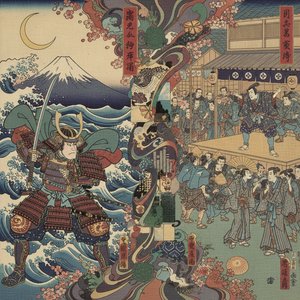
To truly appreciate the artistry of Ando Hiroshige, one must first understand the world from which it sprang – the vibrant, ephemeral realm of ukiyo-e, or “pictures of the floating world.” Emerging during the Edo period (1603–1868), a time of relative peace and prosperity under the Tokugawa shogunate, Japan experienced a flourishing urban culture centered in Edo (modern Tokyo). This era saw the rise of the chōnin class – merchants, craftsmen, and workers – who developed their own distinct tastes and desires. Traditional artistic patronage focused on religious or aristocratic themes; however, the chōnin sought art that reflected their everyday lives: beautiful women, popular actors, captivating landscapes, and scenes of leisure. This demand fueled the growth of ukiyo-e as a distinctly popular art form, accessible and affordable thanks to the woodblock printing process.
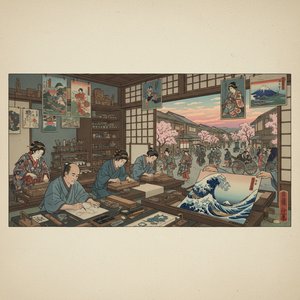
Woodblock printing itself was an intricate collaboration between artist, carver, printer, and publisher. The artist would create a preliminary design, which was then meticulously carved into wooden blocks – one for each color layer. These blocks were inked and pressed onto paper, creating multiple impressions. This method allowed for mass production, making art available to a wider audience than ever before. The subject matter of ukiyo-e often celebrated the fleeting pleasures of life—a beautiful geisha’s smile, a dramatic kabuki performance, or a picturesque view enjoyed during a journey. It was an art that embraced transience and captured the spirit of a dynamic, evolving society.
Ando Hiroshige: Biography, Apprenticeship & Early Influences
 Wikipedia: Hiroshige
Utagawa Hiroshige (歌川 広重) or Andō Hiroshige (安藤 広重), born Andō Tokutarō (安藤 徳太郎; 1797 – 12 October 1858), was a Japanese ukiyo-e artist, considered the last great master of that tradition. Hiroshige is best known for his horizontal-format landscape s...
Born Andō Tokutarō in 1797, Hiroshige’s early life offered little indication of the artistic mastery he would achieve. Descended from a samurai family, his father was an official within the Tsugaru clan, and young Tokutarō initially followed a more conventional path. However, a burgeoning interest in art led him to become an apprentice to Toyohiro of the Utagawa school around the age of twelve. Toyohiro’s influence proved pivotal, instilling in Hiroshige a deep appreciation for landscape painting, particularly the traditions of Chinese scroll painting and the earlier Kanō school.
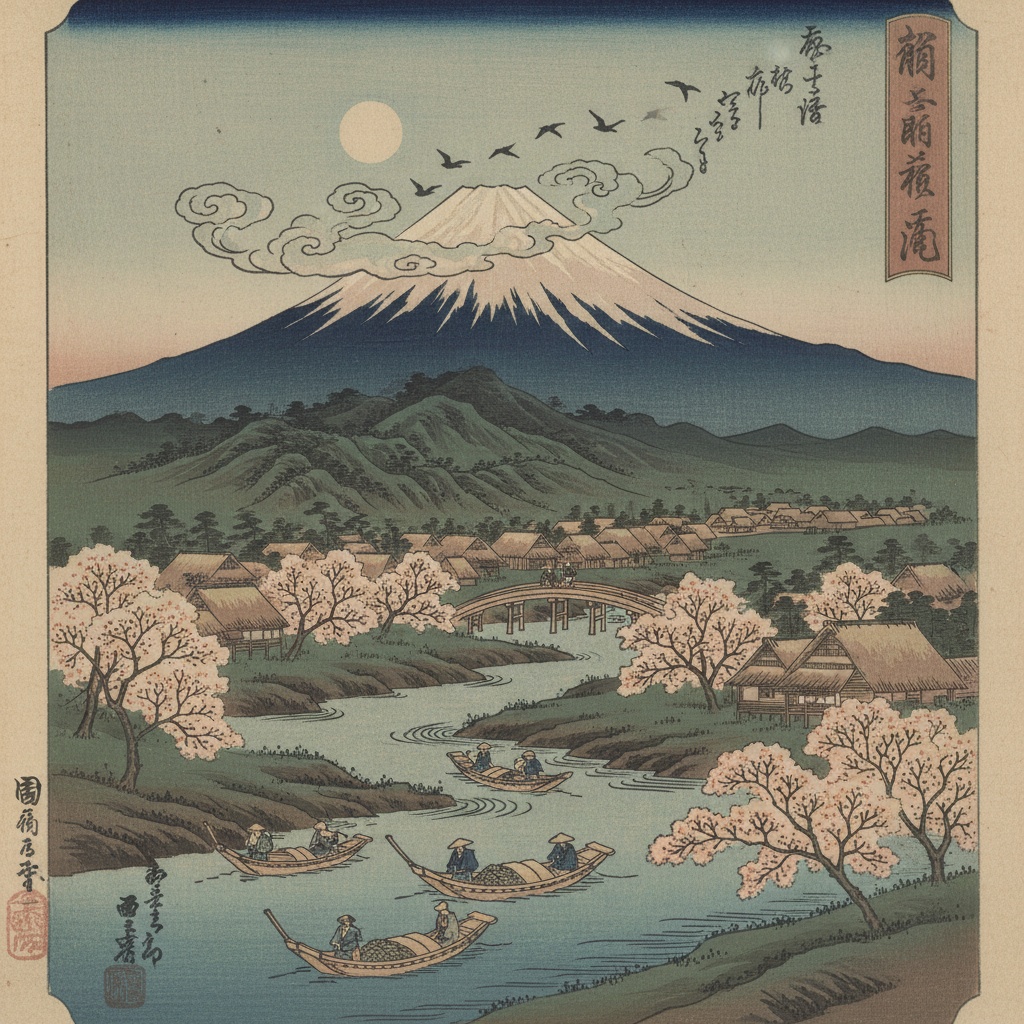
Hiroshige's early works reflected this training, featuring delicate depictions of thatched houses nestled amongst cliffs and charming vignettes of birds perched on flowering branches. While proficient, these initial pieces lacked the distinctive voice that would later define his style. He supplemented his income with various jobs – serving as a censor for books and even working as a fireman – experiences which undoubtedly informed his keen observation of everyday life in Edo. It wasn’t until the 1830s, spurred by a journey along the Tōkaidō road, that Hiroshige truly began to forge his own path.
The Fifty-Three Stations of the Tōkaidō: A Landmark Series and its Innovations
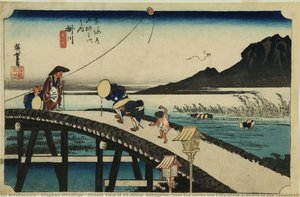
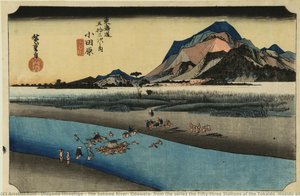
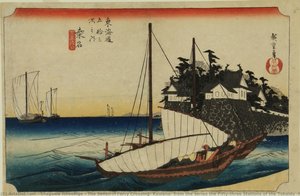
The Fifty-Three Stations of the Tōkaidō, published between 1833 and 1834, stands as a cornerstone of Hiroshige’s oeuvre and a pivotal moment in ukiyo-e history. This series depicted the fifty-three post stations along the Tōkaidō road, the main route connecting Edo with Kyoto, the imperial capital. Unlike previous travel prints that focused on grand vistas or historical landmarks, Hiroshige emphasized the human element – travelers braving rainstorms, bustling market scenes, and the quiet beauty of rural landscapes.
What truly set this series apart was its innovative use of perspective and atmosphere. Hiroshige masterfully employed techniques like bokashi (color gradation) to create a sense of depth and evoke the mood of each station. He wasn’t merely documenting locations; he was capturing the feeling of being *on* the road, experiencing the changing weather, the warmth of human interaction, and the subtle beauty of the Japanese countryside. The series resonated deeply with the public, becoming immensely popular and establishing Hiroshige as a leading ukiyo-e artist.
One Hundred Famous Views of Edo: Capturing a City in Transition
Later in his career, Hiroshige turned his attention to his home city of Edo, culminating in the One Hundred Famous Views of Edo (1856–58). This series represented a shift in focus from travel scenes to urban landscapes, offering a poignant glimpse into a city undergoing rapid change. While earlier prints often idealized Edo’s beauty, Hiroshige presented a more nuanced view – capturing both the bustling energy and the quiet corners of the metropolis.
The series is characterized by its vertical format, which allowed for dynamic compositions and a greater emphasis on atmospheric effects. Prints like “Plum Blossoms at Kameido Temple” and “Moon Viewing at Kanaya” showcase Hiroshige’s mastery of color and composition, evoking a sense of tranquility and nostalgia. This work also reflects the changing social landscape; while overt displays of luxury were discouraged due to political reforms, Hiroshige subtly incorporated elements of everyday life, capturing the spirit of Edo without explicitly depicting forbidden subjects.
Hiroshige’s Artistic Style: Poetic Realism, Color & Composition
Hiroshige's artistic style is often described as “poetic realism.” He wasn’t interested in creating photorealistic depictions; rather, he sought to capture the *essence* of a scene – its mood, atmosphere, and emotional resonance. His use of color was particularly noteworthy. Unlike Hokusai’s bold, saturated hues, Hiroshige favored softer, more subtle palettes, often employing multiple impressions to create delicate gradations and atmospheric effects.
Compositionally, Hiroshige frequently utilized asymmetrical arrangements and dynamic perspectives, drawing the viewer into the scene. He was a master of suggestion, leaving enough space for the imagination to fill in the details. His prints are not simply representations of landscapes; they are invitations to experience them – to feel the warmth of the sun, smell the blossoms on the trees, and hear the sounds of everyday life. His work is imbued with a sense of quiet contemplation, inviting viewers to pause and appreciate the beauty that surrounds them.
Legacy and Influence: Hiroshige's Impact on Western Art
Hiroshige’s influence extended far beyond Japan’s borders. In the late 19th century, Japanese art – particularly ukiyo-e prints – began to exert a profound impact on Western artists. The opening of Japan to foreign trade after centuries of isolation sparked a wave of Japonism, as European and American artists eagerly embraced new aesthetic principles.
Artists like Manet, Monet, and Van Gogh were captivated by Hiroshige’s compositions, color palettes, and innovative use of perspective. Van Gogh, in particular, was deeply inspired by Hiroshige's prints, creating copies of several works and incorporating elements of his style into his own paintings. The influence of ukiyo-e can be seen in the flattened perspectives, bold outlines, and vibrant colors of Impressionist and Post-Impressionist art. Hiroshige’s legacy continues to resonate today, reminding us of the power of art to transcend cultural boundaries and capture the beauty of the world around us.
Discover more exceptional works by Hiroshige and other masters at ArtsDot.com, where you can explore high-quality reproductions and bring the timeless elegance of Japanese art into your home.