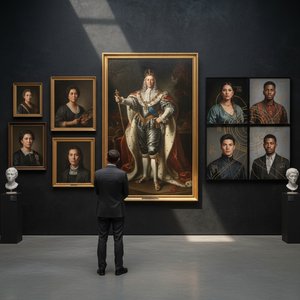
The Foundation of Observation: Moving Beyond Subject Matter to Pure Form
Formalism (art)In art history, formalism is the study of art by analyzing and comparing form and style. Its discussion also includes the way objects are made and their purely visual or material aspects. In painting, formalism emphasizes compositional elements such ...
To the untrained eye, a painting is often merely a window into a story—a depiction of a noblewoman, a tranquil landscape, or a dramatic historical event. However, for the true connoisseur and the dedicated student of art, the narrative is only the surface layer of a much deeper, more complex reality. To truly read a painting, one must first learn to look past the
what and begin investigating the
how. This practice, known in academic circles as formalism, invites us to strip away the distractions of biography and historical context to focus on the intrinsic properties of the work itself.
When we engage in this level of observation, we treat the canvas as a physical entity, an autonomous universe governed by its own laws of physics and aesthetics. We begin to notice that the power of a masterpiece does not reside solely in the recognition of its subjects, but in the way the artist has manipulated raw materials—pigment, oil, and fiber—to create a sensory experience. By focusing on form rather than content, we unlock a universal language that transcends era and culture, allowing us to appreciate the profound intellectual labor involved in every brushstroke. It is here, in the silent dialogue between the eye and the medium, that the true essence of art is revealed.
The Grammar of Vision: Decoding Line, Shape, and Geometric Structure
Understanding Formal Analysis - Getty Museum--- title: Line url: https://www.getty.edu/education/teachers/building_lessons/formal_analysis.html hostname: getty.edu description: This page provides definitions and examples of the elements of art and principles of design that are used by artists ...
Every great composition begins with a skeletal structure, a hidden architecture that directs our gaze and provides the work with its fundamental stability. The most basic unit of this visual grammar is the line. A line is far more than a simple boundary; it is a path of energy moving through space. Consider the psychological weight of different directions: horizontal lines often evoke a sense of profound rest, mirroring the horizon and suggesting a state of repose, whereas vertical lines command attention, communicating height, strength, and an upward aspiration toward the divine. Diagonal lines, conversely, introduce tension and movement, injecting a dynamic energy that can propel the viewer's eye across the canvas in a choreographed dance.
As these lines intersect, they give birth to shapes and forms, the building blocks of visual weight. In the realm of classical Renaissance art, these shapes were often governed by mathematical proportion and geometric harmony, creating a sense of ordered rationality. Yet, as we move into the radical innovations of the twentieth century, such as Kazimir Malevich’s Suprematism, we see the line and shape liberated from representational duties. In works like
Composition suprematistic elements, the artist utilizes stark, intersecting rectangles and planes to evoke a feeling of flight and pure abstraction. Here, the geometry does not describe an object; it describes a sensation. By analyzing how these shapes occupy space, we can understand how an artist creates either a sense of claustrophobic density or expansive, infinite emptiness.
The Emotional Palette: Analyzing Color Theory and Tonal Contrast
If line provides the skeleton, then color is the very soul of the painting. Color possesses an unparalleled ability to bypass the intellect and strike directly at the emotional core of the viewer. To analyze color is to understand a complex system of temperature, saturation, and relationship. Warm hues—the fiery reds, sun-drenched yellows, and deep oranges—tend to advance toward the viewer, creating intimacy or even aggression, while cool blues, greens, and violets seem to recede, offering a sense of depth and tranquility.
Beyond individual hues, the true mastery of an artist lies in their use of tonal contrast and color relationships. The interplay of light and shadow, often referred to as
chiaroscuro, can sculpt forms with dramatic intensity, as seen in the works of the Old Masters, where deep shadows provide a stage for luminous highlights. Furthermore, the strategic use of complementary colors—placing opposites like blue and orange in proximity—can create a visual vibration that energizes the entire composition. Whether it is the disciplined, primary-color restraint of Piet Mondrian’s Neoplasticism or the lush, emotive palettes of the Impressionists, color serves as the primary vehicle for atmosphere, dictative whether a work feels heavy with melancholy or light with joy.
Architectural Arrangement: Mastering Composition and Visual Balance
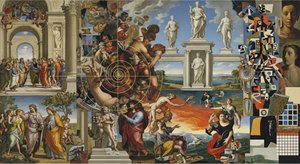 The Eloquence of Arrangement: Compositional Strategies in Western Art from the Renaissance to Modernism
Introduction: The Foundations of Visual Harmony Wikipedia: Renaissance art Renaissance art (1350 – 1620) is the painting, sculpture, and decorative arts of the period of European history known as the Renaissance, which emerged as a distinct style in ...
The arrangement of elements within a visual field—the composition—is perhaps the most critical decision an artist makes. A masterful composition acts as a silent conductor, guiding the viewer's eye through a deliberate sequence of visual encounters. This is achieved through the principles of balance, rhythm, and emphasis. Balance can be symmetrical, providing a sense of formal stability and dignity, or asymmetrical, where weight is distributed unevenly to create a more modern, dynamic tension.
In the Renaissance, artists often utilized the golden ratio or pyramidal structures to achieve a divine sense of proportion, ensuring that every element felt anchored within a cosmic order. In contrast, modern compositions may utilize rhythm—the repetition of shapes, colors, or lines—to create a visual tempo that can feel either soothingly melodic or jarringly syncopated. By identifying the focal point—the area where the artist has concentrated the most detail, contrast, or color—we can trace the intended path of our own gaze. Understanding this arrangement allows us to see how an artist manages the "weight" of a painting, preventing the eye from wandering aimlessly and instead ensuring a cohesive, impactful experience.
Texture and Light: The Tactile Dimension of the Painted Surface
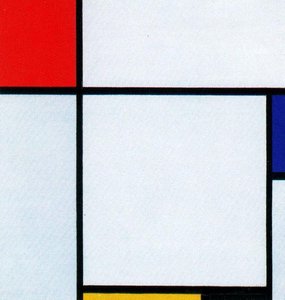 Composition, Composition with Red, yellow, blue and black
Abstractism Art Movement Abstract art is a visual language that uses shape, form, color, and line to create compositions independent from visual references in the world. It emerged as a distinct movement in Europe during the 19th century when artists...
To truly appreciate a fine art reproduction or an original masterpiece, one must acknowledge the tactile dimension of the medium. Texture is the quality of the surface that invites—or denies—the sense of touch. In the realm of oil painting, texture can range from the incredibly smooth, almost invisible brushwork of a classical portrait to the thick, sculptural
impasto of Van Gogh. These raised layers of pigment do more than just add physical depth; they catch the light, creating micro-shadows that change as the viewer moves around the work, lending the painting a living, breathing quality.
Light, too, is not merely something that illuminates a subject; it is a material element in itself. The way light interacts with texture defines the perceived volume of forms. We must observe how light dissolves edges in soft, atmospheric landscapes or how it sharply defines the contours of a figure in a dramatic Caravaggio. When we analyze the luminosity of a surface—whether it is the matte finish of a tempera work or the reflective sheen of a heavily varnished oil—we are engaging with the artist's mastery over the physical properties of light. This interplay between the brilliance of the pigment and the texture of the canvas is what gives a painting its enduring, palpable presence.
Synthesizing the Experience: Integrating Formal Elements into Interpretation
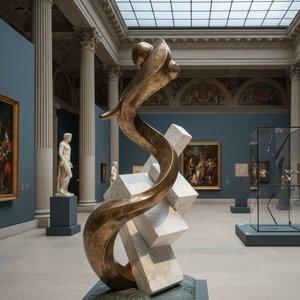 The Eloquence of Form: Aesthetic Principles & Conceptual Representations in Art History
Introduction: The Enduring Power of Formal Analysis For the seasoned collector, the allure of a work extends far beyond its subject matter—beyond the narrative depicted or the artist’s biographical details. It resides in something more fundamental, a...
The ultimate goal of formal analysis is not to reduce art to a mere technical checklist, but to synthesize these observations into a profound understanding of the work's impact. When we combine our knowledge of line, color, composition, and texture, we begin to see how they work in concert to produce meaning. We realize that the "feeling" of a painting is not an accident, but a calculated result of deliberate aesthetic choices.
As you continue your journey into art appreciation, remember that every element is interconnected. A sharp, jagged line contributes to a sense of tension that is amplified by a high-contrast color palette and a fragmented composition. Conversely, a soft, blended texture can harmonize with muted tones and a balanced, symmetrical arrangement to create a sense of eternal peace. By mastering this analytical framework, you move beyond being a mere spectator; you become an active participant in the artistic dialogue, capable of uncovering the hidden complexities that make the world's greatest masterpieces truly timeless.
Discover the Art of Excellence with ArtsDot.com
At ArtsDot.com, we celebrate this profound complexity through our commitment to authentic, hand-painted oil reproductions. Our master artists, trained in the prestigious academies of fine art, utilize the very techniques discussed in this guide—from meticulous layering and impasto textures to sophisticated color theory—to bring history to life on 100% cotton canvas. Whether you are seeking a transformative piece for a luxury hotel or a custom portrait that turns a personal memory into a masterpiece, our professional Project Coordinators ensure every detail meets museum-grade standards. Explore our vast library of over 465,000 works and experience the enduring power of true craftsmanship.